


The intersection of technology, privacy, and public persona has undergone a radical transformation since the late 1990s, a shift perhaps most acutely felt by Monica Lewinsky. As a contributing editor to Vanity Fair and the executive producer of high-profile media projects, Lewinsky’s current relationship with digital tools is defined not by early adoption or constant connectivity, but by a deliberate, protective distance. Having transitioned from a central figure in a global political scandal to a prominent advocate against cyberbullying, her approach to modern devices—including her iPhone 15 Pro and MacBook Air—serves as a case study in digital wellness and the management of a nervous system once strained by the relentless pace of the 24-hour news cycle.
The Architecture of Digital Defense
Lewinsky’s refusal to engage with certain ubiquitous tech features is rooted in the trauma of the early digital age. When Google introduced its news alert service in 2003, Lewinsky made a conscious decision to opt out, a choice driven by the anxiety of potential legal developments and media scrutiny. During the early 2000s, when legal proceedings related to the Clinton-Starr investigation were still a lingering reality, she noted that being away from her phone or seeing missed calls would trigger a physiological panic response, often leading her to fear she had been indicted or that a new public crisis had emerged.
This historical context informs her current "notification-free" lifestyle. Unlike the average smartphone user, Lewinsky disables all social media alerts and news notifications. Her screen time, which averages four hours and 28 minutes daily, is largely dedicated to professional necessities rather than passive consumption. She identifies herself as a person who has "never been a notifications person," a stance that predates the modern "digital detox" movement but aligns perfectly with its core tenets. By filtering out the noise of the internet, she maintains a level of impulse control and mental clarity that was unavailable to her during the height of her public vilification.
Historical Chronology: From the Drudge Report to Digital Activism
To understand Lewinsky’s tech habits, one must examine the timeline of her public life and its synchronization with the rise of the internet:
- 1998: The First Internet Scandal. The news of the Lewinsky-Clinton affair was first broken by the Drudge Report, marking the first time a major political story was spearheaded by an online outlet rather than traditional print or broadcast media. This era established the "viral" nature of news before the term was commonly used.
- 2003: The Launch of Google Alerts. As Lewinsky attempted to rebuild her life, Google’s new tracking tools threatened to keep her tethered to every mention of her name. Her decision to reject these alerts was an early act of self-preservation.
- 2014: "The Price of Shame." Lewinsky returned to the public eye with a powerful TED Talk, detailing her experience as "Patient Zero" of losing a personal reputation on a global scale. This marked her transition into advocacy.
- 2021-Present: Media Production and Podcasting. Lewinsky took on roles as a producer for Impeachment: American Crime Story and executive producer for The Twisted Tale of Amanda Knox, while also launching her podcast, Reclaiming With Monica Lewinsky.
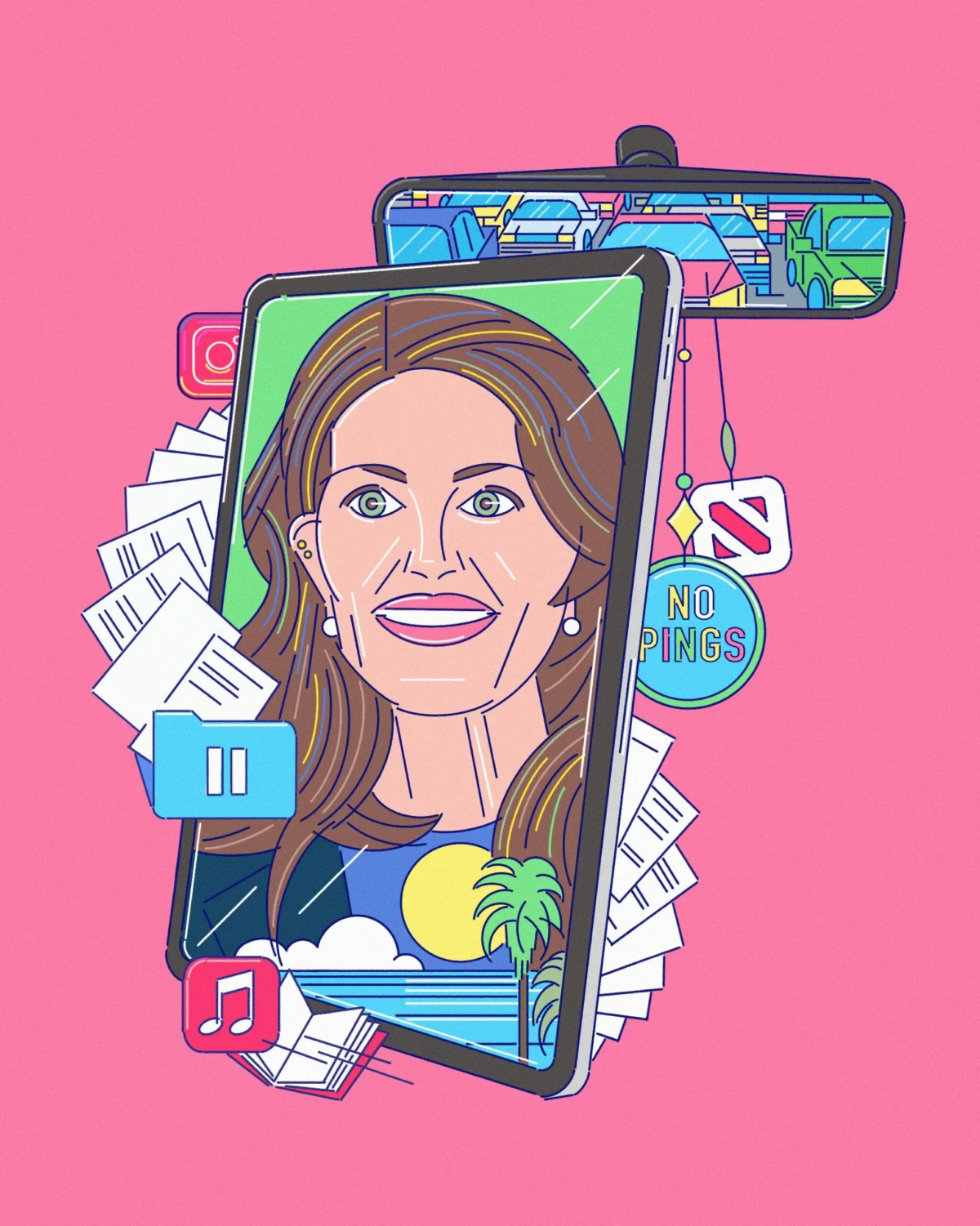
Her current use of technology—utilizing an iPad Air with a specialized car mount to conduct Zoom calls during Los Angeles traffic—reflects a professional who has reclaimed her narrative. The "doohickey" she uses for her iPad is more than a convenience; it is a tool for a woman whose time and voice are now managed on her own terms.
Supporting Data: The Landscape of Digital Overload
Lewinsky’s struggle with unread communications—3,916 unread emails and 1,025 unread texts—is a common phenomenon in the modern professional landscape, though she notes her email backlog once reached as high as 40,000. According to data from the Radicati Group, the average business user receives and sends over 120 emails per day, a volume that contributes significantly to "inbox anxiety."
Furthermore, her average screen time of nearly four and a half hours sits slightly below the American average. A 2023 report by DataReportal suggests that the typical internet user spends approximately six hours and 40 minutes online daily. Lewinsky’s mindful approach to "doomscrolling"—questioning whether she is trying to "escape something" when she finds herself lost in a feed—is a practice recommended by psychologists to combat the negative effects of social media on the nervous system.
Professional Integration and ADHD
Lewinsky’s professional workflow is heavily influenced by her self-identified ADHD, which she views as an asset in certain contexts. She frequently consumes research for her podcast interviews or audiobooks at double speed, allowing her to process information quickly. This high-speed consumption is a common coping and optimization strategy for individuals with ADHD, enabling them to stay engaged with content that might otherwise feel too slow to hold their attention.
Her choice of hardware, including the 13-inch MacBook Air and the iPhone 15 Pro, suggests a preference for portability and high-performance tools that can keep up with a bicoastal lifestyle. While she resides in Los Angeles and navigates its notorious traffic, her habits remain tethered to her New York sensibilities, such as her preference for walking and taking calls on the move rather than sitting idle.
Analysis of Implications: The Right to be Forgotten
The narrative of Monica Lewinsky is often cited by legal scholars and privacy advocates in discussions regarding the "Right to be Forgotten." This legal concept, codified in the European Union’s General Data Protection Regulation (GDPR), allows individuals to request the removal of personal data from search engines and other directories under certain conditions.
Lewinsky’s experience highlights the permanence of the digital record and the psychological toll it takes on those who are "canceled" or shamed online. Her proactive management of tech—choosing not to see what is being said about her—is a manual version of the protections that privacy laws seek to automate. Her story serves as a reminder that for public figures, technology is not just a tool for communication, but a landscape that must be navigated with extreme caution to prevent the reopening of historical wounds.
The Role of Media Production and Advocacy
Lewinsky’s recent work as an executive producer on The Twisted Tale of Amanda Knox further illustrates her commitment to exploring themes of media malpractice and public judgment. By stealing a candid photo of a cast member at a social event—a rare moment of personal photography she mentioned—she demonstrates a shift from being the subject of the lens to the person behind the creative vision.
Her podcast, Reclaiming, is a literal manifestation of her tech usage goals: using digital platforms to provide a space for others to tell their stories, rather than being defined by the stories told about them. The transition from a woman who feared her phone would deliver news of an indictment to a woman who uses her iPad to lead global conversations is a significant arc in the history of celebrity and technology.
Conclusion: A Blueprint for Digital Survival
Monica Lewinsky’s digital habits offer a blueprint for surviving an era of information overload. Her strategies—disabling notifications, questioning the impulse to scroll, and utilizing "drafts" folders for impulse control—are practical applications of mindfulness in a high-tech world.
While she admits she is not an "inbox-zero person," her focus on the quality of her digital interactions over the quantity of her connections reflects a mature understanding of the relationship between technology and mental health. As society continues to grapple with the effects of social media and the 24-hour news cycle, Lewinsky’s evolution from a victim of the internet to a master of her own digital domain provides a compelling narrative of resilience and intentionality.
Her story underscores a critical truth for the digital age: that the most powerful feature of any device is the ability of the user to turn it off, to opt out, and to reclaim the silence necessary for personal growth and professional success. In the landscape of 2024, where everyone is a potential subject of public scrutiny, Lewinsky’s mindful boundaries are no longer just a personal preference—they are a necessary strategy for psychological survival.