

Director Quentin Dupieux, known for his idiosyncratic and often surreal cinematic ventures, returns to the festival circuit with "Le Vertige," a feature-length animated film that boldly interrogates the pervasive notion of living within a simulated reality. Premiering in the Directors’ Fortnight at Cannes, the film presents a concise yet thought-provoking narrative, clocking in at an efficient 67 minutes. The story centers on Jacky, portrayed by Alain Chabat, who becomes convinced that his everyday existence is a manufactured construct. His revelation is shared with his friend Bruno, played by Jonathan Cohen, who, to Jacky’s surprise, engages with the theory with unexpected seriousness. This shared exploration of perceived glitches in the fabric of reality forms the core of the film, as Bruno’s ordinary day begins to unravel under the weight of their shared suspicion. The film also features Anaïs Demoustier as Fabienne and Jean-Marie Winling in supporting roles, contributing to Dupieux’s distinctive ensemble.
The Genesis of "Le Vertige" and its Thematic Resonance
The concept of simulation theory, while not new, has experienced a significant resurgence in popular discourse, particularly in the digital age. This philosophical and scientific hypothesis, which posits that our reality may be an artificial simulation, has roots stretching back to ancient philosophers and has been explored extensively in modern science fiction. However, it is the cultural adaptation and reinterpretation of this theory that Dupieux taps into. The "red pill" metaphor, popularized by the Wachowskis’ iconic film "The Matrix," has evolved from a symbol of awakening to a more complex, and at times, politically charged, signifier of dissidence. Its adoption by various online communities, including elements of the manosphere and far-right discourse, has lent it a new, and often predatory, connotation. The film’s title, "Le Vertige," translates to "The Vertigo" or "The Dizziness," a fitting descriptor for the disorienting experience of questioning one’s fundamental understanding of reality.
Dupieux, a filmmaker with a consistent track record of delivering unconventional narratives within tightly controlled runtimes, appears to leverage this contemporary anxiety surrounding manufactured realities. The film’s premise, as described, sees Jacky approaching Bruno at an unusually early hour, 05:52 am, with an urgent declaration: "I am absolutely certain that the world we live in is not real." This directness mirrors the film’s economical runtime, suggesting a narrative that eschews lengthy exposition for immediate engagement with its central conceit. Jacky’s purported evidence for this simulation theory is presented as a series of bizarre, almost Dadaist observations: a pigeon inexplicably trapped in a manhole, and the surreal detail of Bruno’s wife, Fabienne, giving birth in their Parisian apartment without an umbilical cord. These seemingly mundane yet deeply unsettling anomalies serve as the initial cracks in the façade of their perceived reality, prompting Bruno’s unusual receptiveness.
Innovative Animation and its Symbiotic Relationship with Narrative
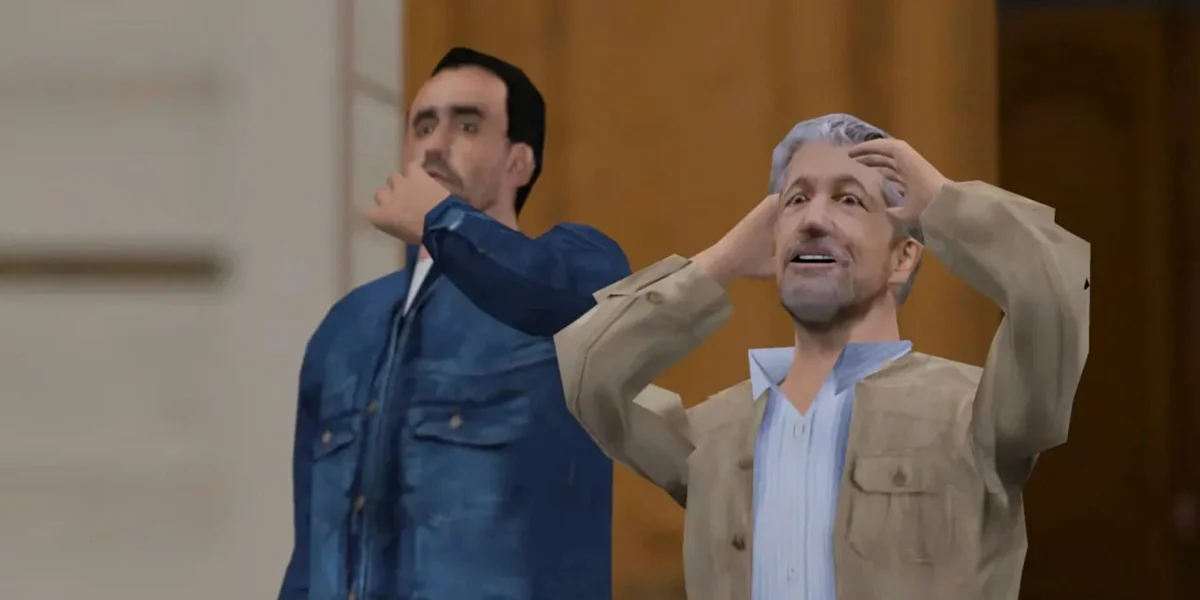
A significant aspect of "Le Vertige" that sets it apart is its distinctive visual style. The film is entirely animated, a departure for Dupieux, who has primarily worked with live-action. This animated approach was executed by a small team utilizing Blender software and iPhone motion capture technology. The resulting aesthetic is not the polished, hyper-realistic rendering found in mainstream animated features. Instead, it evokes the era of early 3D video games, drawing comparisons to titles like "Grand Theft Auto: Vice City" and the PlayStation 1 era. This deliberate choice in animation style is not merely an aesthetic preference; it is intrinsically linked to the film’s thematic exploration of simulation.
The "video-gamey" design creates a potent dialogue between the form and content of "Le Vertige." By embracing a visual language that mirrors digital constructs, Dupieux imbues the narrative with a heightened sense of artificiality, making the simulation theory feel not just plausible, but visually inherent to the film’s world. Terms like "bug" and "hotfix," common parlance in the gaming and software development world, become directly relevant within the film’s diegesis. The characters’ interactions and the unfolding events can be interpreted through the lens of algorithmic errors or programmed inconsistencies, allowing the audience to engage with Jacky’s quest to "solve the puzzlebox" of their perceived reality on multiple levels. This fusion of animation style and narrative theme suggests a meta-commentary on the nature of constructed realities, both in film and in life.
Performance and the Challenges of Maintaining Novelty
The success of "Le Vertige" hinges, in part, on the chemistry and performances of its lead actors. Alain Chabat and Jonathan Cohen are described as possessing "confident, electric chemistry," which is crucial for grounding the film’s outlandish premise. Their dynamic is the engine that drives the narrative forward as they grapple with Jacky’s increasingly elaborate theories. However, the review suggests that the film may struggle to sustain its initial impact. The novelty of the animation, with its "plasticky storefronts, unrendered backdrops, and cardboard-like characters," is noted to "wear off sooner than Dupieux reckons."
This diminishing return of visual quirks presents a challenge for the film’s third act. The reviewer indicates that the resolution may "buckle under the weight of its punchline-like resolution," implying a reliance on the animation’s inherent oddity for comedic effect, which eventually becomes repetitive. The article posits that "only so many times can an animation quirk being observed as fact elicit a reaction before a new kind of gag is warranted." This suggests a potential pitfall in Dupieux’s approach, where the unique aesthetic, while initially engaging, may not possess the narrative depth to sustain interest through to the film’s conclusion.
Broader Implications and Dupieux’s Signature Style
Despite these criticisms, "Le Vertige" is understood to engage with the broader societal implications of simulation theory. The film’s final "punchline," as it is referred to, reportedly circles back to the original premise, exploring how living in a simulation could be exploited for profit and highlighting the "functionally transactional nature of the matrix metaphor" as it has been adopted by certain contemporary ideologies. This points to Dupieux’s continued interest in dissecting and satirizing cultural trends, a hallmark of his filmmaking career.
Dupieux’s consistent approach to filmmaking, characterized by short, concept-driven narratives and a focus on dualities (two punchlines, two-handers, two-hour runtimes), is evident in "Le Vertige." The film is described as a "swiftly" delivered package, contained within an "iPhone-sized container," suggesting an intention to deliver a potent message in an accessible and digestible format. The reviewer contrasts its impact with his prior effort, "Full Phil," noting that "Le Vertige" lands with "firmer grit." The inclusion of a "Pixar-lite blooper reel" during the credits, set to the film’s closing sequences, further suggests a meta-commentary on the filmmaking process itself, and perhaps on the performative nature of reality. This addition implies Dupieux’s fascination with the "wider ramifications of his rendered ideology," hinting at a self-aware examination of directing, and the actors’ roles as potentially manipulated elements within the director’s constructed world. Ultimately, however, this final flourish, much like the film itself, is characterized as "short-lived," suggesting that while the film offers a unique and thought-provoking experience, its overall impact might be fleeting.
Contextualizing the "Matrix" Ideology
The article’s introduction contextualizes the resurgence of simulation theory within a broader cultural and political landscape. It draws a direct line from the "red pill" concept, as popularized by "The Matrix," to its contemporary interpretations. The author notes how this ideology has "metastasized into something else entirely," evolving from a gesture towards questioning conformity to a metaphor for dissidence. The reference to Andrew Tate, a controversial figure who claimed "the matrix has attacked me" upon his arrest, exemplifies this shift. The article argues that in the post-COVID era, "simulation theory… feels contextually predatory rather than wholeheartedly theoretical." This suggests that Dupieux’s film is not merely an abstract philosophical inquiry but a response to a contemporary cultural phenomenon that carries significant, and potentially harmful, social implications. By framing "Le Vertige" within this charged context, the article elevates the film from a quirky animated feature to a commentary on the anxieties and ideologies shaping our current world.
Production and Technical Data
- Director/Writer: Quentin Dupieux
- Cast: Alain Chabat, Jonathan Cohen, Anaïs Demoustier, Jean-Marie Winling
- Running Time: 67 Minutes
- Animation Software: Blender
- Motion Capture Technology: iPhone
The concise runtime of 67 minutes positions "Le Vertige" as a film that prioritizes concision and immediate impact. This duration is notably shorter than the average feature film, which typically ranges from 90 to 120 minutes. This brevity aligns with Dupieux’s established pattern of delivering potent, concept-driven narratives within tightly controlled temporal parameters. The reliance on Blender and iPhone motion capture suggests a lean production approach, potentially indicative of an independent production ethos or a deliberate artistic choice to embrace a less polished, more experimental aesthetic. This technical framework directly contributes to the film’s unique visual identity, reinforcing the theme of manufactured reality.
Conclusion: A Fleeting but Thought-Provoking Encounter
"Le Vertige" emerges as a film that, while potentially struggling to maintain its initial novelty, offers a distinct and timely exploration of simulation theory. Quentin Dupieux’s decision to utilize a deliberately retro 3D animation style, reminiscent of early video games, creates a powerful synergy between form and content. The film’s tight 67-minute runtime, coupled with the dynamic performances of Alain Chabat and Jonathan Cohen, promises an engaging, albeit perhaps brief, cinematic experience. By weaving in contemporary anxieties surrounding manufactured realities and the evolving interpretations of "the matrix" metaphor, Dupieux positions "Le Vertige" as more than just an animated feature; it is a commentary on our current digital existence and the philosophical questions it provokes. While the film’s ultimate impact may be characterized as "short-lived," its unique approach and thematic relevance ensure its place as a noteworthy entry in the landscape of contemporary independent cinema.