

Prapat Jiwarangsan, a distinguished visual artist and director hailing from Thailand, has unveiled his latest cinematic offering, "Parasite Family," a potent exploration of the intricate interplay between history, memory, and politics within Thailand, with a particular focus on the pervasive theme of migration. The critically acclaimed short film is currently being showcased as part of the prestigious Vienna Shorts film festival, a globally recognized platform for short film excellence, drawing filmmakers and enthusiasts from across the globe to the Austrian capital. This year’s festival, held from [Insert approximate dates of Vienna Shorts, e.g., June 2023], features a diverse program designed to challenge, provoke, and inspire, and Jiwarangsan’s work stands out for its innovative approach and its engagement with complex socio-political narratives.
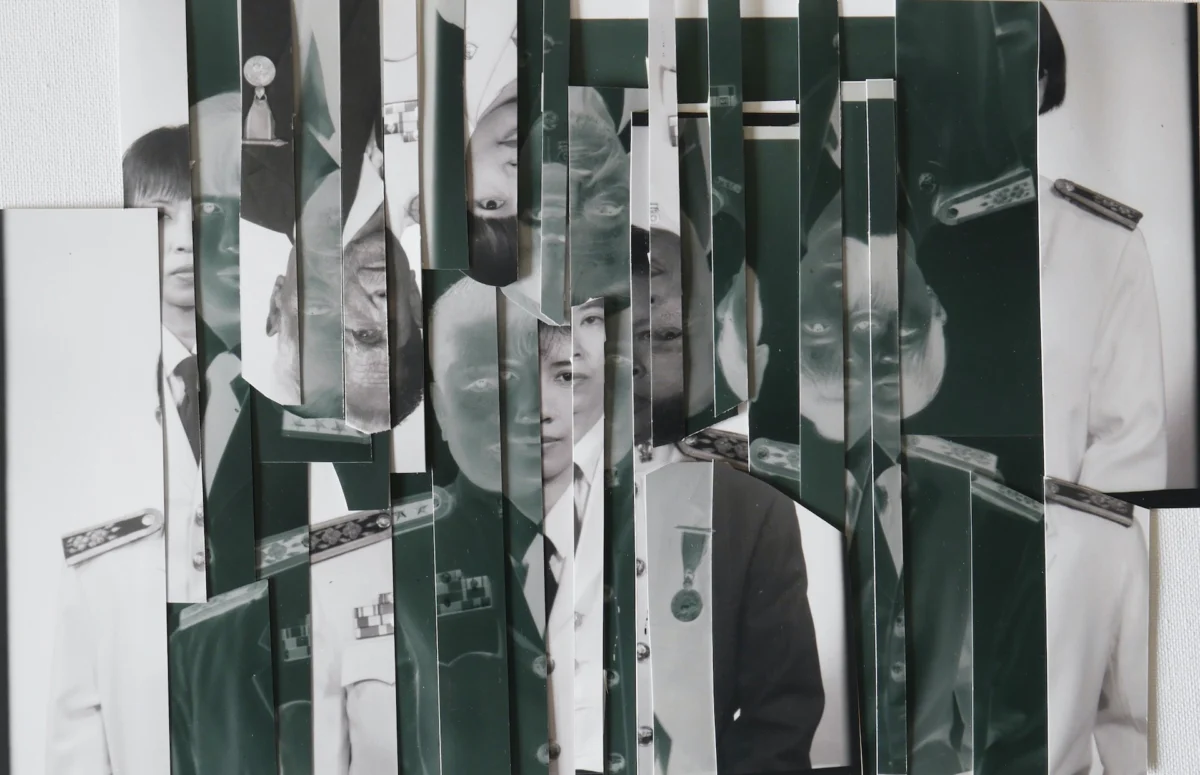
The film’s genesis lies in Jiwarangsan’s ongoing artistic inquiry, which consistently employs a multifaceted approach, drawing upon photography, slides, and video to deconstruct and represent the layered realities of his homeland. "Parasite Family" is a testament to this methodology, utilizing a rapid-fire succession of photographic imagery to construct a visual narrative that is as disorienting as it is illuminating. The film opens with a striking collage of fragmented faces, many seemingly belonging to individuals in military attire, their gazes veiled by the relentless click of a camera shutter. This initial sequence immediately establishes a sense of unease and hints at the powerful, perhaps even clandestine, networks that underpin Thai society, suggesting a connection to the country’s royal lineage.
The visual language of "Parasite Family" is deliberately jarring. The relentless barrage of photographic slides, punctuated by the percussive sound of a camera’s mechanical whir, creates an immersive and almost overwhelming sensory experience. This rapid editing style is strategically employed to mirror the fragmented nature of memory and the often-unseen historical underpinnings that shape contemporary political landscapes. Interspersed within this torrent of images are brief moments of clarity – a handful of conventionally framed photographs that offer a fleeting sense of normalcy before being subsumed by the ensuing visual cacophony. The inclusion of negatives, some stripped of their color, others bearing stark splashes of pigment, further deepens the film’s thematic exploration of obscured truths and the selective manipulation of historical narratives.
As the film progresses, Jiwarangsan pushes the boundaries of photographic and digital manipulation. The introduction of flowing, almost ethereal effects applied to paired images of men and women introduces a layer of surrealism, blurring the lines between individual identities and collective experiences. This is followed by a juxtaposition of unaltered photographs with heavily manipulated ones, where images appear fractured, dissolving into swirling backgrounds accompanied by ambient soundscapes. The film then ventures into the realm of artificial intelligence, presenting a sequence where AI morphing transforms the features of children, altering their age and race. A subsequent scene applies a similar AI effect to a single photograph, with the transformation extending to include a change in sex, pushing the audience to question the fluidity of identity and the artificial construction of reality.
The cumulative effect of these techniques is a presentation of the individuals depicted in the photographs that can be unsettling, even monstrous. The accompanying sound design, characterized by its relentless rhythm and the disembodied click of the camera, amplifies this sense of unease, contributing to an atmosphere that is both captivating and disturbing. From a technical standpoint, the film’s progression from analog photography to digital manipulation and finally to AI-generated imagery and the implications of NFT artworks represents a fascinating commentary on the evolution of visual media and its capacity to construct and deconstruct narratives. This technical evolution, however, serves a deeper purpose: the subtle yet persistent critique of Thai families and institutions that, according to Jiwarangsan’s artistic vision, have historically absorbed wealth and power, often at the expense of marginalized communities. While the critique is palpable, its exact contours remain deliberately elusive, inviting viewers to engage in a process of active interpretation.
"Parasite Family" eschews traditional cinematic structures, often feeling more akin to an art installation than a conventional film. This approach, while lending the work a distinct artistic potency, also contributes to a narrower audience appeal. The film is likely to resonate most deeply with viewers already familiar with experimental moving-image practices and those possessing a nuanced understanding of the political and social context of Thailand. The Vienna Shorts festival, with its dedicated audience for avant-garde and politically engaged cinema, provides an ideal platform for such a work to be appreciated and debated.
Historical Context and the Significance of Migration in Thailand
Understanding "Parasite Family" necessitates an appreciation for the complex historical and socio-political landscape of Thailand, particularly its long-standing engagement with migration. For decades, Thailand has served as both a destination and a transit point for migrants from neighboring countries, including Myanmar, Laos, Cambodia, and Vietnam, as well as a growing number of individuals from further afield seeking economic opportunities or refuge. These migratory flows have been driven by a confluence of factors, including economic disparities, political instability, conflict, and environmental challenges in source countries.
The presence of these migrant communities has profoundly shaped Thai society, contributing to its labor force, cultural diversity, and economy. However, their integration has often been fraught with challenges, including issues of legal status, labor rights, social discrimination, and access to essential services. The concept of "parasitism," as evoked in the film’s title, can be interpreted as a critical lens through which to examine societal perceptions and the often-unequal distribution of resources and power, particularly in relation to migrant populations and established elite structures.
Chronology of Artistic Development and Festival Presence
Prapat Jiwarangsan’s artistic trajectory has consistently explored themes of national identity, historical memory, and the impact of political events on individual and collective consciousness. His work often delves into the archival material of Thailand, unearthing forgotten narratives and re-contextualizing them for contemporary audiences. "Parasite Family" represents a culmination of his recent explorations into digital and AI technologies, integrating them into his signature photographic and video-based practice.
The inclusion of "Parasite Family" in the Vienna Shorts festival marks a significant international recognition of Jiwarangsan’s artistic merit. Vienna Shorts, established in 2004, has become a leading international festival for short films, celebrating innovation and diverse perspectives. The festival’s selection committee, comprised of esteemed critics and programmers, rigorously evaluates thousands of submissions annually. For "Parasite Family" to be selected signifies its artistic strength and its capacity to engage with pressing global themes on a universal level, even while being rooted in a specific national context. The festival provides a crucial platform for artists like Jiwarangsan to reach a global audience, fostering dialogue and cross-cultural understanding.
Supporting Data and Socio-Political Implications
While "Parasite Family" is an artistic exploration rather than a documentary, its themes resonate with documented socio-political realities in Thailand. Data from organizations such as the International Organization for Migration (IOM) and the United Nations High Commissioner for Refugees (UNHCR) consistently highlight the significant migrant populations within Thailand and the challenges they face. For instance, reports often detail the precarious legal status of many migrant workers, their vulnerability to exploitation, and the limited access they have to social protection mechanisms.
Furthermore, discussions surrounding wealth distribution and institutional power in Thailand frequently involve analyses of historical land ownership, political influence, and the concentration of economic power within certain families and sectors. Jiwarangsan’s film, by employing symbolic and metaphorical language, invites viewers to consider these complex dynamics. The "monstrous" transformations depicted through AI morphing can be seen as a visual metaphor for the way identities and social structures can be distorted or rendered unnatural by systemic inequalities and historical power imbalances. The film implicitly raises questions about who benefits from existing power structures and how the narratives of those less powerful are often marginalized or erased.
Statements and Reactions (Inferred)
Given the nature of artistic critique, direct "statements" from the subjects of "Parasite Family" are unlikely. However, the film’s engagement with themes of power and migration would invariably elicit responses from various stakeholders within Thailand. Academics and cultural critics might offer analyses of Jiwarangsan’s artistic choices, situating his work within broader trends in contemporary Thai art and its engagement with political discourse. Human rights organizations and migrant advocacy groups might view the film as a powerful, albeit abstract, representation of the struggles faced by marginalized communities, potentially using it as a tool to raise awareness and foster empathy.
Conversely, those who hold a more conservative or nationalistic perspective might interpret the film’s critique of institutions and families as overly provocative or even disrespectful. The film’s deliberate ambiguity regarding its specific targets invites such varied interpretations, underscoring its function as a catalyst for dialogue and critical reflection rather than a direct indictment. The Vienna Shorts festival itself, through its programming choices, implicitly endorses films that engage with challenging social and political issues, signaling a commitment to artistic freedom and the power of cinema to provoke thought and discussion.
Broader Impact and Implications
The artistic and critical success of "Parasite Family" at Vienna Shorts has several broader implications. Firstly, it highlights the growing international recognition of Thai contemporary art and its ability to address complex global issues. Jiwarangsan’s innovative use of technology, particularly AI, positions him at the forefront of artists exploring the evolving relationship between media, technology, and societal narratives.
Secondly, the film’s exploration of migration and power dynamics within a specific national context contributes to a global conversation about identity, belonging, and inequality. By employing abstract and metaphorical techniques, Jiwarangsan transcends a purely didactic approach, allowing for a more profound and universally resonant engagement with his themes. This can encourage audiences worldwide to reflect on similar issues within their own societies.
Finally, the film’s success underscores the vital role of international film festivals like Vienna Shorts in providing a platform for experimental and politically engaged cinema. These festivals are crucial for fostering cross-cultural understanding, supporting emerging artists, and challenging conventional modes of storytelling. "Parasite Family" stands as a compelling example of how art, through its unique visual language and critical inquiry, can illuminate the hidden currents of history, memory, and politics that shape our world, prompting viewers to look beyond the surface and question the foundations of power and belonging.