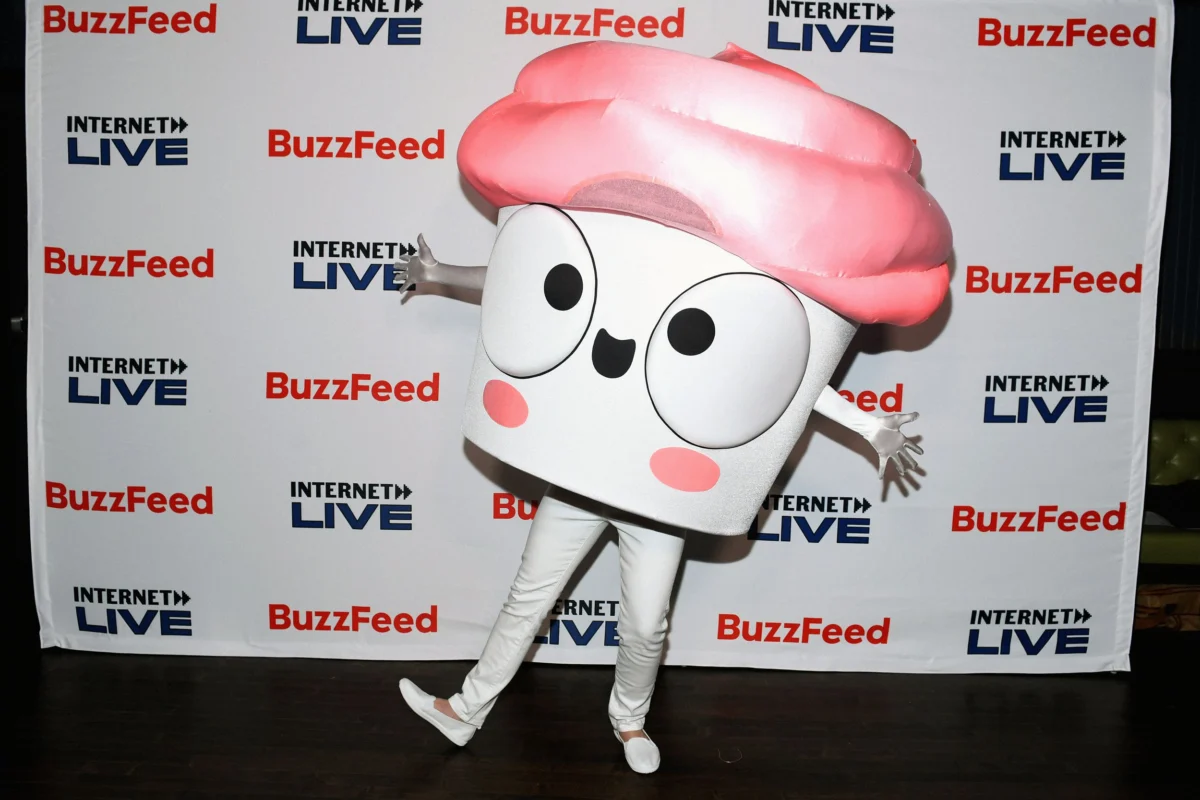
The intersection of legacy digital media, intellectual property law, and the rapid ascent of generative artificial intelligence has culminated in a high-profile dispute between illustrator Loryn Brantz and her former employer, BuzzFeed. At the center of the controversy is "The Good Advice Cupcake," a character created by Brantz that became a viral sensation during the late 2010s. The conflict erupted following the announcement that BuzzFeed, in partnership with Amazon MGM Studios and Amazon Web Services (AWS), would revive the character—colloquially known as "Cuppy"—for a new animated series titled Cupcake & Friends. The project is notable not only for its return to the screen but for its method of production: it is one of the first major series to be developed using generative AI (GenAI) tools through the newly established GenAI Creators’ Fund.
Brantz, who served as an executive creative director at BuzzFeed before moving to the children’s media powerhouse Ms. Rachel, has publicly denounced the project. Taking to social media, she characterized the use of AI to replicate her creation as an "assault on artists everywhere." The dispute highlights a growing rift in the creative industries as corporations seek to monetize "dormant" intellectual property (IP) through cost-effective automation, while original creators argue that such technology strips the work of its human essence and violates the spirit of their original agreements.
The Genesis of the Good Advice Cupcake
Loryn Brantz began her tenure at BuzzFeed in 2014, during an era when the digital media giant was aggressively expanding its original content footprint. In 2017, she introduced "The Good Advice Cupcake," an anthropomorphic, pastel-colored pastry whose persona combined "pathological positivity" with blunt, often profane motivational advice. The character’s unique voice—a reflection of Brantz’s own personality—resonated deeply with internet audiences. By 2019, the character had amassed millions of followers across Instagram and Facebook, leading to a web series produced by BuzzFeed Studios.
The character was originally conceived for a children’s book pitch. When traditional publishing houses passed, Brantz integrated the character into her work at BuzzFeed. Under the standard employment contracts of the time, the intellectual property created by employees within the scope of their work is typically owned by the employer under "work-for-hire" doctrines. Brantz acknowledges that BuzzFeed holds the legal title to the IP but contends that her decision to allow the company to manage the character was based on verbal assurances and a climate of mutual respect that predated the existence of modern generative AI.
Chronology of the Dispute
The timeline of the current conflict spans nearly a decade of digital media evolution, illustrating how quickly the landscape has shifted from human-centric content creation to AI-integrated production.
2014: Loryn Brantz joins BuzzFeed as an illustrator and writer.
2017: The Good Advice Cupcake (Cuppy) debuts on social media, quickly becoming a flagship IP for BuzzFeed’s animation wing.
2018–2019: BuzzFeed produces an eight-episode web series featuring Cuppy, tackling themes ranging from mental health to LGBTQ+ identity.
2023: Brantz departs BuzzFeed to join the creative team behind the YouTube sensation Ms. Rachel. She continues to license the Cuppy character from BuzzFeed for her independent social media content, maintaining a community of over 2 million followers.
Early 2024: Rumors begin to circulate within the animation industry regarding a deal between BuzzFeed and Amazon to reboot Cuppy using AI tools.
Late 2024: Amazon MGM Studios and AWS officially announce the GenAI Creators’ Fund, naming Cupcake & Friends as one of the inaugural projects.
Present: Brantz issues a public call for a boycott of BuzzFeed and AI-produced animation, while BuzzFeed executives defend the project as a natural evolution of technology in storytelling.
The Corporate Shift: Byron Allen and the AI Mandate
The context of the Cuppy dispute is inseparable from BuzzFeed’s broader corporate restructuring. In early 2024, media mogul Byron Allen, chairman and CEO of Allen Media Group, acquired a majority stake in BuzzFeed for approximately $120 million. Following the acquisition, Allen signaled a radical shift in the company’s strategy, aiming to transform BuzzFeed into a direct competitor to YouTube by leveraging artificial intelligence to scale content production.
This strategic pivot comes at a time when digital media companies are struggling with declining advertising revenues and the volatility of social media algorithms. For companies like BuzzFeed, which possess vast libraries of "dormant" IP, generative AI offers a path to revitalizing old characters without the overhead of traditional animation pipelines. The GenAI Creators’ Fund, a joint initiative of Amazon Web Services and Amazon MGM Studios, provides the technical infrastructure and financial backing to experiment with these workflows. For Amazon, the partnership serves as a high-profile case study for the capabilities of AWS’s generative AI tools in the entertainment sector.
Official Responses and the "Xerox" Comparison
In response to the backlash from Brantz and the wider artistic community, BuzzFeed leadership has maintained a firm stance on their legal rights and the creative validity of the project. A BuzzFeed spokesperson emphasized that the company owns the IP and expressed excitement about using "new technology to bring a dormant library series off the shelf."
Jonah Peretti, the founder and former CEO of BuzzFeed who now serves as President of BuzzFeed AI, addressed the controversy in a statement provided to the media. Peretti argued that human creativity remains at the core of the project, with AI serving as a "creation tool" rather than a replacement for human talent. He drew a historical parallel to Disney’s adoption of the Xerox process in the 1960s—a technology that allowed animators to transfer drawings directly to cels, bypassing the manual inking stage.
"We shared with [Brantz] that human creativity would remain at the core of this project, with writing, storytelling, and animation being developed by humans and AI being used as a creation tool to help facilitate that," Peretti stated. He further noted that while Brantz has the right to oppose AI personally, her opposition "cannot determine how BuzzFeed develops IP that it owns."
Brantz has vehemently rejected the Xerox comparison, calling it "deeply misleading." She argues that while Xerox technology assisted in the reproduction of hand-drawn lines, generative AI functions by training on vast datasets of existing art to synthesize new imagery, often without the consent or compensation of the original creators.
Supporting Data: AI in the Animation Industry
The dispute between Brantz and BuzzFeed is a microcosm of a larger trend across the global entertainment industry. According to a 2024 report by the Animation Guild (IATSE Local 839), nearly 30% of animation tasks are expected to be impacted by generative AI within the next three years. This includes everything from background generation and storyboarding to character design and voice acting.
Key data points regarding the integration of AI in media include:
- Cost Reduction: Industry analysts estimate that generative AI can reduce the cost of traditional 2D and 3D animation by 40% to 60% by automating labor-intensive "in-betweening" and rendering tasks.
- Market Growth: The global market for AI in media and entertainment is projected to reach $99 billion by 2030, growing at a compound annual rate of over 26%.
- Labor Unrest: The 2023 strikes by the Writers Guild of America (WGA) and SAG-AFTRA were driven in large part by the need for protections against the use of AI to replicate human performances and scripts. The animation sector is currently facing similar contract negotiations.
Legal and Ethical Implications
The legal battleground for this dispute is largely settled in favor of the corporation, as work-for-hire agreements are robust in U.S. copyright law. When an artist creates work as an employee, the employer is legally considered the "author." However, the ethical implications of using AI to mimic a specific artist’s style are more complex.
Legal experts suggest that while BuzzFeed owns the character, the use of AI to replicate the "soul" or specific aesthetic nuances of Brantz’s work without her involvement raises questions of "moral rights"—a concept more prevalent in European law than in the United States. In the U.S., artists have few protections once they sign away their IP, but the rise of generative AI is forcing a reconsideration of how "style" and "artistic identity" are protected.
Furthermore, Brantz claims that she was never formally consulted about the project until she heard rumors from other creatives. She alleges that BuzzFeed requested she sign a nondisclosure agreement (NDA) before they would share details about the AI’s role in the series—a request she declined. This lack of transparency has fueled the perception among artists that AI is being used to bypass the collaborative (and often more expensive) nature of traditional creator-led projects.
Broader Impact on the Creative Economy
The outcome of the Cupcake & Friends controversy may serve as a bellwether for the future of creator-led IP in the digital age. If BuzzFeed and Amazon successfully launch an AI-driven series over the objections of the original creator, it could embolden other media conglomerates to mine their archives for characters that can be "reanimated" through automation.
For young artists and digital creators, the case serves as a cautionary tale regarding the long-term implications of work-for-hire contracts. In an era where a viral comic can be transformed into an AI-generated franchise a decade later, the value of retaining IP rights has never been higher.
As Loryn Brantz explores her legal options, her public stance has already galvanized a segment of the animation community. The "boycott" she called for is less about a single show and more about the precedent it sets. As the industry moves forward, the tension between corporate efficiency and the "human core" of storytelling remains the most significant challenge of the generative AI era. Whether Cupcake & Friends will be remembered as a technological breakthrough or a "soulless" cautionary tale depends on how audiences—and the legal system—ultimately weigh the value of the creator against the power of the machine.