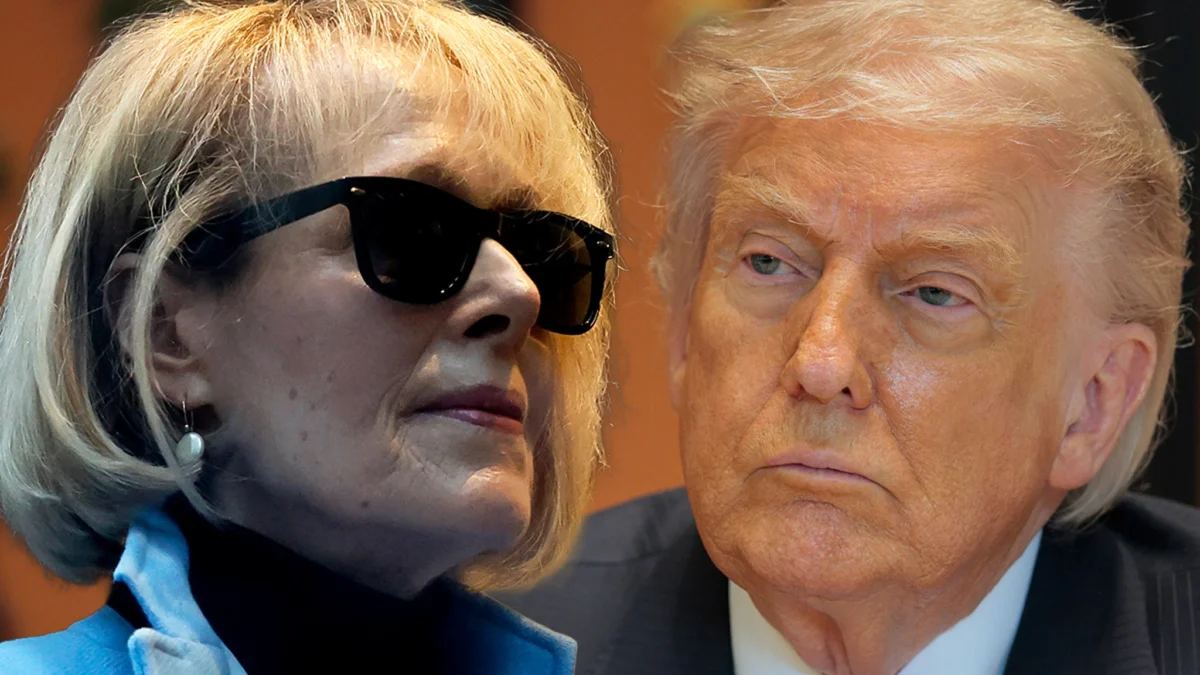
E. Jean Carroll, the prominent former magazine columnist whose accusations of sexual assault against Donald Trump led to significant civil litigation, is now reportedly the subject of a federal criminal investigation. The probe, confirmed by multiple reports on May 27, 2026, centers on allegations that Carroll may have committed perjury during her testimony in connection with her two civil lawsuits against President Trump. This development introduces a new and complex dimension to an already high-profile legal saga that has spanned several years and captivated national attention.
The Genesis of a High-Stakes Legal Battle
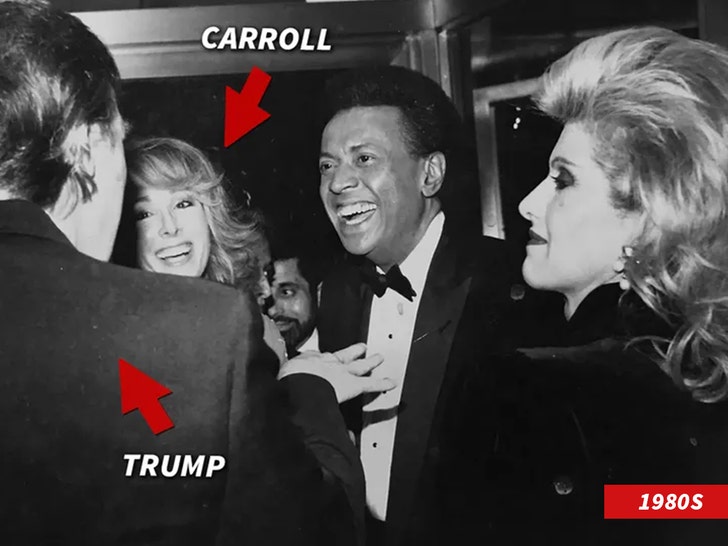
The legal confrontations between E. Jean Carroll and Donald Trump trace back to a harrowing account published in Carroll’s 2019 memoir, "What Do We Need Men For? A Modest Proposal." In the book, Carroll publicly accused Trump of sexually assaulting her in the mid-1990s within a dressing room at the Bergdorf Goodman department store in New York City. The alleged incident, which Carroll described in vivid detail, immediately sparked widespread public debate and political fallout, given Trump’s then-status as President of the United States.
Donald Trump vehemently denied Carroll’s allegations. His initial public responses included dismissive remarks, famously stating that Carroll was "not my type" and suggesting that she had fabricated the story to boost sales of her book. These denials, which Carroll considered defamatory, formed the basis for her subsequent legal actions.
Carroll’s first lawsuit, filed in November 2019, alleged defamation based on Trump’s public statements denying the assault and impugning her character. This case faced procedural delays, including disputes over whether Trump could be sued while serving as president and later, over the applicability of the New York Adult Survivors Act. This act, enacted in 2022, provided a temporary look-back window for adult survivors of sexual assault to file civil lawsuits even if the statute of limitations had expired.
The Civil Trials and Verdicts
Leveraging the Adult Survivors Act, Carroll filed a second lawsuit in November 2022, this time directly accusing Trump of battery (sexual assault) and additional defamation stemming from his continued denials. The two cases were eventually consolidated for discovery purposes, but the battery and initial defamation claims proceeded to trial in May 2023 in the U.S. District Court for the Southern District of New York.
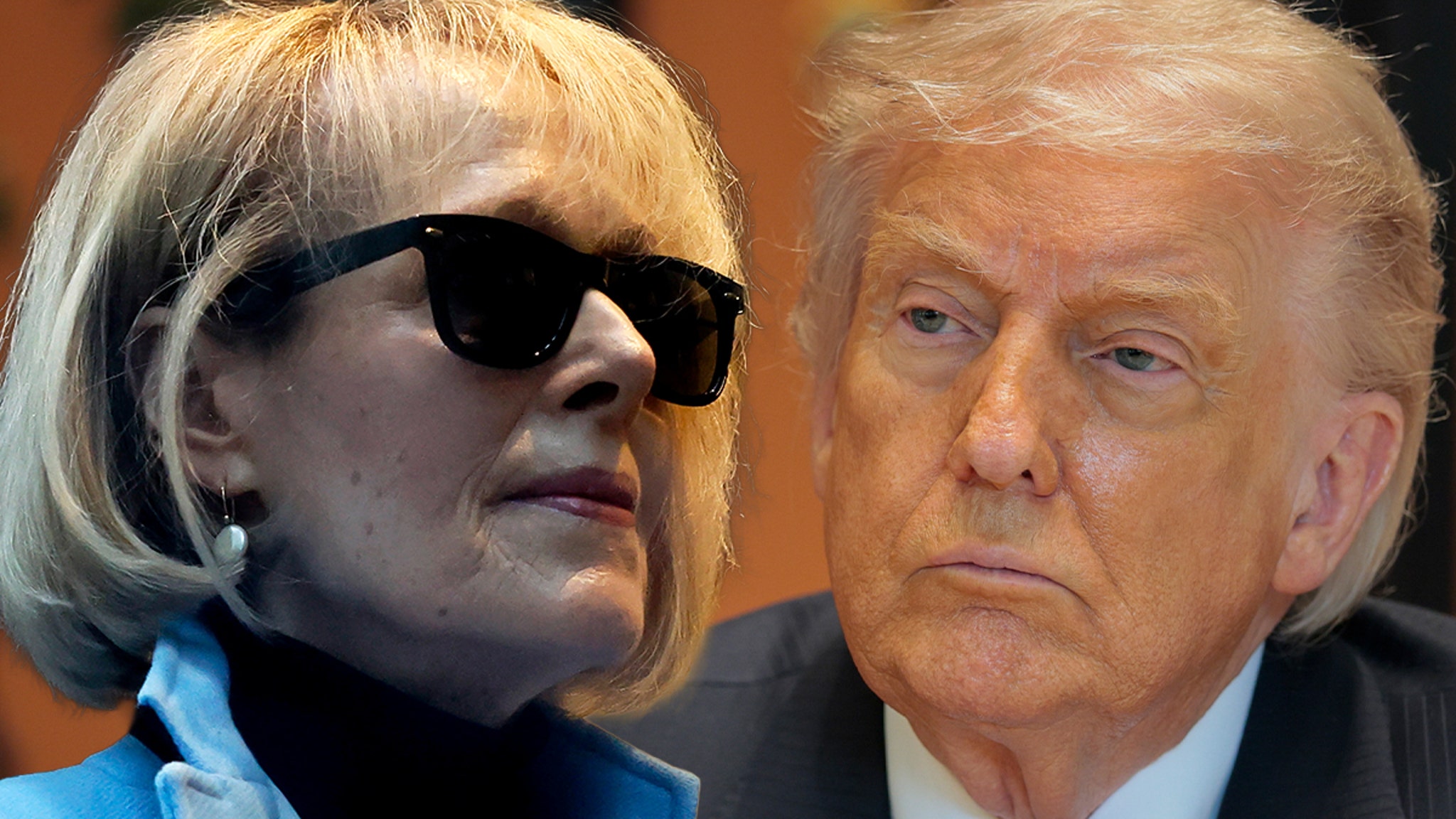
The civil trial, presided over by Judge Lewis A. Kaplan, saw Carroll and her legal team present evidence, including testimony from friends to whom she had confided shortly after the alleged assault, and other women who had accused Trump of similar misconduct. Trump, while not testifying in person, was heard in deposition tapes played for the jury.
On May 9, 2023, after deliberating for less than three hours, a nine-person jury delivered a landmark verdict. The jury found Donald Trump liable for sexually abusing E. Jean Carroll and for defaming her with his 2022 statements. However, the jury did not find him liable for rape under the strict legal definition presented in the civil case. Carroll was awarded $5 million in compensatory and punitive damages. This sum comprised $2 million for the sexual abuse claim and $3 million for the defamation claim.
Following the verdict, Trump’s legal team swiftly filed an appeal, seeking to overturn the judgment or secure a new trial. They argued, among other points, that the damages were excessive and that the trial was prejudiced. However, in a significant development reported on December 30, 2024, an appeals court upheld the jury’s verdict, rejecting Trump’s arguments and solidifying Carroll’s legal victory. This ruling meant that Trump remained legally obligated to pay the $5 million judgment.
A separate trial related to Trump’s original 2019 defamatory statements, which had been delayed by various legal maneuvers, eventually proceeded. In January 2024, another jury awarded Carroll an additional $83.3 million in damages, comprising $7.3 million in compensatory damages, $11 million for reputational repair, and $65 million in punitive damages, bringing the total judgments against Trump to over $88 million. Trump also appealed this verdict, with the legal process ongoing as of early 2026.
Focus of the Perjury Probe: Third-Party Funding Allegations
The federal criminal investigation into E. Jean Carroll reportedly stems from her testimony during a 2022 deposition. According to initial reports, particularly from CNN, which first broke the news of the probe, prosecutors are examining whether Carroll made false statements under oath when she asserted that she had not received outside funding for her lawsuit.
The crux of the allegation lies in subsequent news reports that surfaced after Carroll’s deposition. These reports claimed that billionaire LinkedIn co-founder Reid Hoffman had contributed financially to Carroll’s legal fees and expenses. Hoffman, a prominent Democratic donor and venture capitalist, is known for his involvement in various political and legal initiatives, including those aimed at opposing Donald Trump.
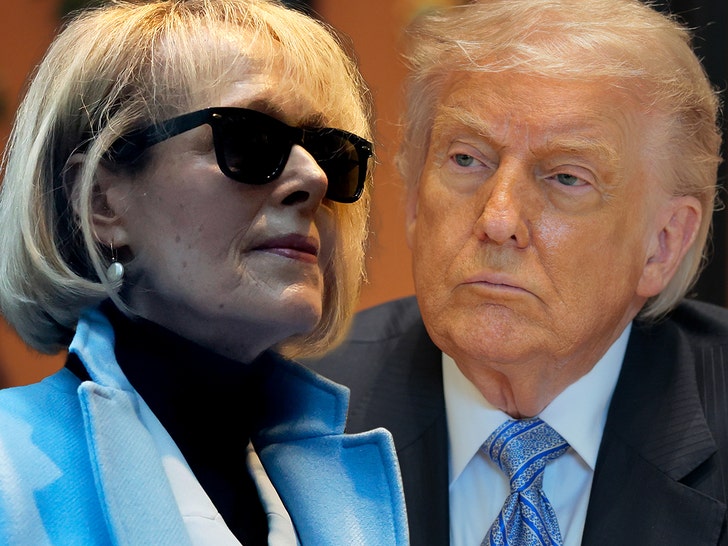
Perjury, under federal law (primarily 18 U.S.C. § 1621 or § 1623 for false declarations before grand jury or court), is a serious felony offense. It involves knowingly making a false material statement under oath or affirmation in any proceeding before or ancillary to any court or grand jury of the United States. For a perjury charge to stick, prosecutors typically need to prove that the false statement was made intentionally, that it was material to the case (meaning it had the potential to influence the outcome or course of the proceeding), and that the defendant knew it was false at the time it was made.
The question of third-party funding in litigation, also known as litigation finance, has become increasingly relevant in high-stakes civil cases. While not inherently illegal, the disclosure of such arrangements can be material for several reasons: it can reveal potential biases, demonstrate the financial backing and perceived strength of a case, and sometimes influence jury perception. In certain jurisdictions or contexts, failure to disclose such funding could be considered a breach of discovery obligations or, if directly contradicted under oath, lead to perjury charges.
The Department of Justice, presumably through a U.S. Attorney’s office, would be handling this investigation. Such probes are often initiated following referrals from other federal agencies, congressional committees, or, as appears to be the case here, from information that surfaces publicly or during legal proceedings suggesting a potential crime.
Potential Legal Ramifications and Investigative Process
If the federal investigation were to lead to an indictment and subsequent conviction for perjury, E. Jean Carroll could face severe penalties. Federal perjury convictions can carry a prison sentence of up to five years, along with substantial fines. Beyond criminal sanctions, a perjury conviction could also have significant implications for her prior civil victories against Donald Trump. While a criminal conviction for perjury typically does not automatically invalidate a civil judgment, it could potentially be used by Trump’s legal team as grounds for a new appeal or an attempt to revisit the civil judgments, arguing that her credibility was compromised. However, such attempts would face high legal hurdles, as the standard for overturning a jury verdict based on subsequent events is exceptionally stringent.
The investigative process itself is rigorous and often lengthy. Federal prosecutors would likely gather evidence, interview witnesses, review deposition transcripts, financial records, and communications between Carroll and her legal team, as well as any individuals or entities alleged to have provided funding. They would also likely examine the materiality of Carroll’s alleged false statement – how important was the question about outside funding to the overall context of her deposition and the civil cases? For instance, if the funding source was perceived as influencing her testimony or the litigation strategy, its non-disclosure under oath could be deemed material.
As of the reports, E. Jean Carroll’s representatives have not yet issued a public statement regarding the federal investigation. This is a common practice in the early stages of such probes, where legal counsel often advises silence to avoid prejudicing a potential case. Similarly, the Department of Justice typically refrains from commenting on ongoing investigations, adhering to long-standing policies designed to protect the integrity of the process and the rights of those involved.
Broader Impact and Implications
This federal investigation into E. Jean Carroll adds another layer of complexity to an already politically charged legal landscape. For Donald Trump, who has consistently portrayed Carroll’s lawsuits as politically motivated attacks, this development could be seized upon as vindication of his claims regarding her credibility. His legal team and allies may use the investigation to undermine the legitimacy of the prior civil judgments, even if the legal standard for doing so is high.
For the Department of Justice, the decision to pursue a perjury investigation against a prominent figure involved in a high-profile case is significant. It underscores the federal government’s commitment to upholding the integrity of the judicial process and ensuring that testimony given under oath is truthful. However, given the political sensitivities surrounding anything related to Donald Trump, the DOJ’s handling of this investigation will undoubtedly face intense scrutiny from both sides of the political spectrum.
The case also highlights the evolving landscape of litigation finance. As third-party funding becomes more common, the transparency surrounding these arrangements and the ethical obligations of litigants to disclose them, particularly under oath, will likely continue to be a subject of legal and public discourse. This investigation could set precedents or at least inform future discussions about disclosure requirements in civil litigation, especially when prominent public figures are involved.
Ultimately, the federal investigation into E. Jean Carroll represents a critical juncture. It places the accuser in a position of legal vulnerability, raising questions about the foundational elements of her claims against President Trump. The outcome of this probe will not only determine Carroll’s legal future but could also ripple through the ongoing public narrative surrounding Donald Trump’s various legal battles and the broader conversation about accountability, truth, and justice in a highly polarized society. The nation will watch closely as this new chapter unfolds in a saga that continues to defy conventional expectations.