

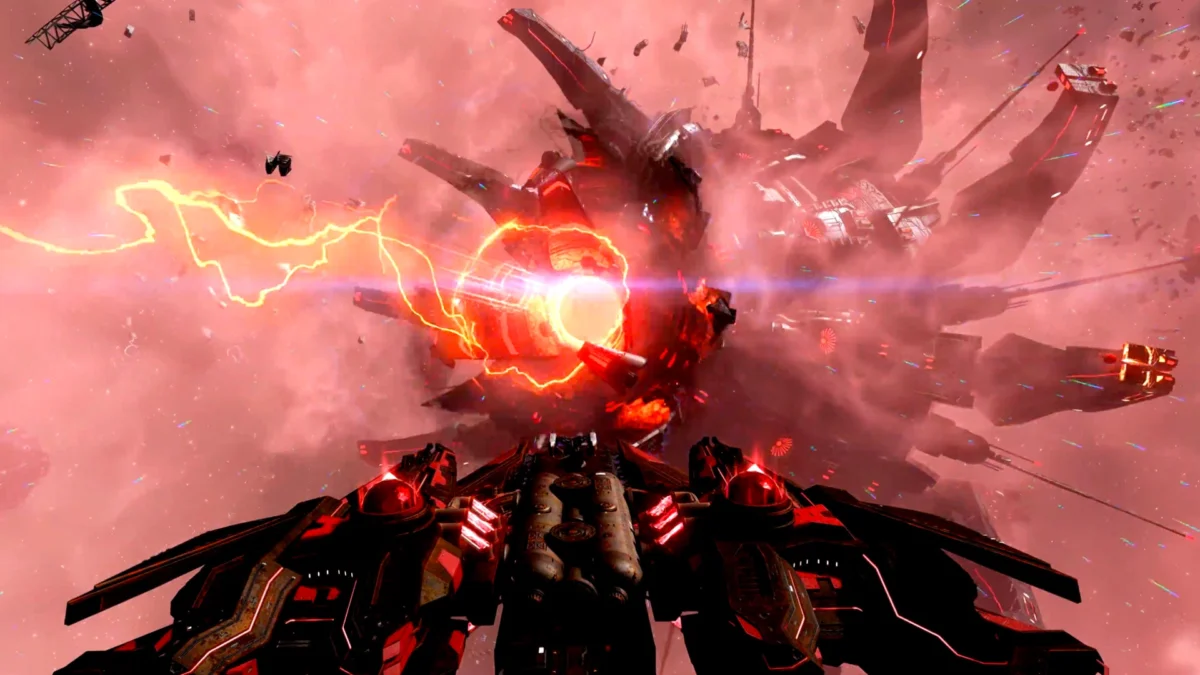
Hello Games has officially deployed the "Swarm" update for No Man’s Sky, marking the third major content release of 2024 and setting the stage for the game’s upcoming tenth anniversary in August. This latest expansion shifts the focus of the procedurally generated universe toward large-scale communal warfare and existential narrative stakes, introducing a mysterious and formidable antagonist known as the Hive of Glass. As players navigate the latest challenges, the update represents a significant escalation in the game’s ongoing narrative regarding the stability of its simulated universe.
The "Swarm" update follows a rigorous development schedule that saw the release of the "Remnant" update in February and the "Xeno Arena" update in April. By maintaining a roughly three-month cadence, Hello Games has effectively revitalized player engagement leading into the summer months. This latest release is characterized by a blend of cooperative community goals, faction-based competition, and high-intensity space combat that leverages the game’s evolving engine to simulate larger and more complex encounters than previously possible.
The Hive of Glass and the Lore of the World of Glass
Central to the Swarm update is the emergence of the Hive of Glass, a massive, orb-like construct that has begun appearing in the skies above various planets. To understand the significance of this threat, one must look toward the established lore of No Man’s Sky. The "World of Glass" has long been referenced in the game’s flavor text and terminal logs as a form of archival afterlife or a "discarded" layer of the Atlas simulation. It is a realm where deleted data and lost souls reside, existing parallel to the physical universe inhabited by the Travellers.
The Hive of Glass appears to be a physical breach from this digital purgatory into the material world. Described by developers as "something huge and foreboding," the construct serves as a mobile fortress and a harbinger of the Hive’s influence. Visually, the Hive is a massive, iris-like structure that emits a crackling red energy beam, capable of devastating large-scale assets such as freighter fleets and potentially even established space stations. This escalation suggests a shift from the localized threats of Sentinel forces to a systemic, universe-wide conflict.
Faction Dynamics and Community Engagement
In a departure from traditional solo exploration, Swarm introduces a structured social hierarchy through a new faction system. Upon initiating the event, players are required to undergo a "personality test"—a series of diagnostic questions that determine their assignment to one of three distinct factions. This mechanic serves to polarize the player base into cooperative units, encouraging a sense of camaraderie and healthy competition as the war against the Hive unfolds.
The progress of this war is tracked in real-time through the Space Anomaly and the Galactic Atlas, an external community hub that monitors player data across the universe. Hello Games has emphasized that this is a "combined community effort," where individual contributions toward the war effort influence the broader narrative outcome. The most effective faction at the conclusion of the event will be permanently memorialized within the Space Anomaly, providing a tangible sense of historical impact within the game’s persistent world.
Combat Mechanics and Planetary Salvage
The gameplay loop of the Swarm update focuses heavily on combat and research. In space, players will encounter the Hive and its defensive screen, which consists of hundreds of drone ships. These engagements are designed to be the largest space battles in the game’s history, requiring players to coordinate their attacks to bypass the Hive’s defenses while avoiding its primary laser iris. The scale of these battles marks a technical milestone for the studio, pushing the limits of the game’s procedural rendering and AI pathfinding.
On the planetary level, the conflict manifests through "miniature swarms" and crashed drone sites. Players are tasked with salvaging the remains of these drones to conduct research into the Hive’s origins and vulnerabilities. This research data is shared among the community, unlocking new strategies and narrative breadcrumbs. The cycle of combat and investigation ensures that players of various playstyles—whether they prefer dogfighting in the stars or exploring on foot—can contribute meaningfully to the overarching war effort.
Rewards and Tactical Advancements
As is customary with major No Man’s Sky updates, Hello Games has introduced a suite of exclusive rewards for participants. These items are themed around the aesthetic of retro-futurism and high-stakes warfare. Notable additions include:
- Retro-Inspired Sci-Fi Armor: A complete suit of protective gear designed with a classic space-age aesthetic.
- Heavy-Duty Jetpack: A "huge" new propulsion unit designed for extended mobility in high-threat environments.
- Tactical Rifle: A new multi-tool variant optimized for combat encounters against the Hive’s drone swarms.
- Cosmetic Commemorations: Various decals, titles, and base-building parts that allow players to display their faction allegiance and combat record.
These rewards are typically tied to the completion of specific milestones, suggesting that Swarm may function similarly to the game’s "Expeditions"—time-limited, curated gameplay events that provide a structured path through new content.
Historical Context: A Decade of Iteration
The timing of the Swarm update is critical. No Man’s Sky is approaching its tenth anniversary in August 2024, a milestone that few live-service games reach with such a high level of community goodwill. Since its controversial launch in 2016, the game has undergone a radical transformation. What began as a lonely, often criticized exploration simulator has evolved into a feature-rich universe encompassing base building, multiplayer hubs, biological horror elements, and complex economic systems.
The 2024 roadmap illustrates a studio operating at the height of its creative output. By releasing three substantial updates in the first half of the year, Hello Games is signaling that No Man’s Sky remains a primary focus even as the studio develops its next ambitious project, Light No Fire. The consistent delivery of free content updates without the implementation of microtransactions or battle passes has solidified the game’s reputation as a gold standard for post-launch support in the gaming industry.
Analysis of Implications and the Path to August
The introduction of a "Death Star-like construct" capable of destroying space stations suggests that Hello Games may be preparing for a significant status-quo shift in the game’s universe. Historically, No Man’s Sky has utilized major updates to reset or refine the procedural generation of the galaxy. If the Hive of Glass is indeed capable of station-scale destruction, it could serve as a narrative catalyst for a massive environmental overhaul or a new phase of the game’s central "simulation" storyline.
Industry analysts note that the faction-based community effort in Swarm mimics successful engagement strategies seen in titles like Helldivers 2 or Splatoon, where a shared sense of urgency and collective goals drive player retention. By centering the community around a singular, massive threat, Hello Games is fostering a level of social cohesion that was absent in the game’s early years.
Looking forward, the upcoming tenth anniversary in August is expected to be a landmark event. Speculation within the community suggests that the "Swarm" conflict will culminate in a major revelation or a "World-Reset" level event. Furthermore, the gaming public is looking toward the Summer Game Fest in June for potential news regarding Light No Fire, the studio’s procedurally generated fantasy planet sim.
Conclusion and Official Statements
In their official announcement, Hello Games expressed excitement over the scale of the new content. "The prospect of all existing Travellers converging on a single area of the universe to take the largest space battles to date… is going to make for some exciting weeks ahead," the studio stated. This focus on "weeks ahead" reinforces the idea that the Swarm update is a rolling event, likely to evolve as the community hits specific research and combat milestones.
As the Hive of Glass continues to loom over the systems of the Euclid galaxy and beyond, the Travellers of No Man’s Sky find themselves at a crossroads. The Swarm update is more than just a collection of new assets; it is a test of the community’s ability to organize and a harbinger of the changes to come as the game enters its second decade of existence. With the tenth anniversary on the horizon, the war against the Hive is merely the beginning of what promises to be a transformative year for the simulation.