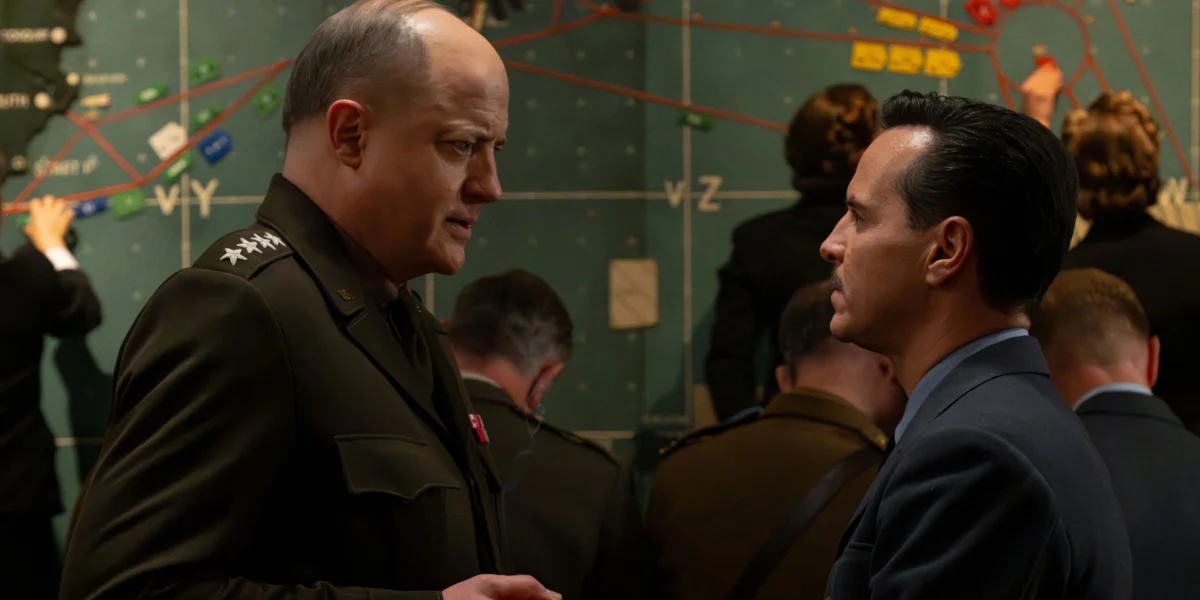
The crucial forecast that shaped D-Day, a nail-biting drama that plunges audiences into the heart of a historical turning point, attempts to illuminate the often-overlooked meteorological gamble that preceded the Allied invasion of Normandy. While historians and ardent World War II enthusiasts may be intimately familiar with the role of weather in Operation Overlord, this film, born from playwright David Haig’s deep fascination with the subject, endeavors to bring this pivotal element to the forefront of cinematic storytelling. Collaborating with filmmaker Anthony Maras, Haig sought to translate the immense stakes of this precarious decision onto the silver screen. However, the resulting production, "Pressure," while commendable in its ambition, ultimately presents a muted experience, struggling to fully translate its theatrical origins into a compelling Oscar-bait drama, likely to resonate most with an audience appreciative of historical depth.
H2: The Implacable Force of Nature and the Weight of Command
Director Anthony Maras opens "Pressure" with a visceral depiction of atmospheric forces, showcasing the raw power of nature. Sweeping shots of tempestuous skies and immense ocean waves crashing onto land serve as a potent metaphor for the volatile forces at play, both in the natural world and in the global conflict that defined the 20th century. This dramatic visual prelude establishes the precarious position of humanity, dwarfed by the elements and facing the devastating consequences of war.
The narrative centers on Captain James Stagg, portrayed by Andrew Scott, a military meteorologist whose expertise becomes indispensable to General Dwight D. Eisenhower, brought to life by Academy Award winner Brendan Fraser. Stagg, a man of meticulous discipline and adherence to scientific rigor, finds himself thrust into a high-stakes environment where his methodical approach clashes with the more flamboyant, perhaps even improvisational, style of meteorologist Irving P. Krick, played by Chris Messina. Stagg soon learns the gravity of his summons: Eisenhower requires an unprecedentedly accurate weather forecast for the next three days, a prediction that will dictate the timing of one of modern history’s most colossal amphibious assaults.
H2: A Race Against Time, A Battle of Minds
"Pressure" hinges on its compelling premise, propelling Stagg and his team into a frantic race against the clock. The film meticulously charts their efforts to decipher the complex and unforgiving meteorological patterns that hold the fate of thousands of soldiers and the trajectory of the war in their hands. Audiences witness Stagg embody the archetype of the brilliant, ostracized genius, his dire warnings about the volatile weather conditions often dismissed by colleagues who underestimate the peril. Despite the historical certainty of D-Day’s eventual success, "Pressure" falters in conveying the palpable sense of urgency that Eisenhower himself felt. The film’s pacing, at times, struggles to maintain the intense momentum necessary to fully engage viewers in Stagg’s personal and professional struggles.
H3: The Enduring Challenge of Stage to Screen Adaptation
The screenplay, a joint effort by Haig and Maras, occasionally betrays its theatrical roots. The inherent drama that thrives within a confined setting, a hallmark of stage productions, tends to dissipate when translated to the broader canvas of a war film. Maras’s direction, while competent in weaving the various narrative threads together, maintains a somewhat lethargic rhythm throughout much of the film. This deliberate pacing, while perhaps intended to mirror the methodical nature of meteorological forecasting, can sometimes dilute the dramatic tension.
H3: A Stellar Ensemble Navigating Scriptual Constraints
The ensemble cast delivers generally entertaining performances, though the script’s limitations prevent them from reaching their full potential. The characters, while serving their narrative functions, often remain one-dimensional. Stagg, portrayed with stoic resolve by Scott, is a figure of unwavering dedication. Scott endeavors to imbue him with subtle emotional nuances as the film progresses, hinting at the immense personal burden he carries. Chris Messina, as the boisterous Irving P. Krick, leans into the role of the confident antagonist, his character’s persistent adherence to past weather data becoming increasingly peculiar and frustrating for both Stagg and the audience. Kerry Condon, as Kay Summerby, a figure of support for Stagg, primarily serves to bolster his resolve amidst his daunting task.
Brendan Fraser’s portrayal of General Eisenhower, or "Ike," presents a more complex challenge. The sheer magnitude of Eisenhower’s historical persona may prove too expansive for even a seasoned actor to fully capture. While the role undoubtedly holds significant appeal for any performer, Fraser is largely confined to delivering impactful pronouncements and moments of righteous indignation, elements that might be particularly suited for awards season highlight reels. His interactions with Damian Lewis’s Bernard Montgomery, a British officer often at odds with Eisenhower’s authority, underscore the political and military complexities of the era. However, it is the evolving dynamic between Fraser’s Eisenhower and Scott’s Stagg that provides a crucial spark, hinting at a richer narrative that could have been explored further.
H2: Historical Context: The Storm Before the Storm
The decision to launch the Normandy invasion on June 6, 1944, was a monumental undertaking, fraught with peril at every level. Codenamed Operation Overlord, it represented the culmination of years of planning and preparation by the Allied forces. The invasion was not merely a military maneuver; it was a profound statement of intent, a commitment to liberating Western Europe from Nazi occupation. The scale of the operation was unprecedented, involving over 156,000 troops, nearly 7,000 ships, and more than 11,000 aircraft. The logistical challenges alone were staggering, but the most unpredictable factor remained the weather.
The initial plan was to launch the invasion on June 5th. However, a critical assessment of the weather forecast indicated a deteriorating situation, with a significant storm system approaching. This forced a agonizing delay, pushing the decision to the razor’s edge. The Allied command had to contend with a narrow window of opportunity. A successful invasion required relatively calm seas to facilitate the landing of troops and equipment, and sufficient cloud cover to mask aerial reconnaissance. Conversely, a prolonged delay would allow German forces to reinforce their defenses, and the crucial element of surprise would be jeopardized. Furthermore, the sheer cost of maintaining the assembled invasion fleet, both in terms of resources and morale, added immense pressure to make a timely decision.
H3: The Meteorological Challenge: A Scientific Gamble
Captain James Stagg, a Squadron Leader in the Royal Air Force seconded to the Allied Expeditionary Air Force, was the central figure in interpreting the complex meteorological data. Working with his team, Stagg was tasked with providing Eisenhower with the most accurate possible forecast. This involved analyzing information from various sources, including weather balloons, ships at sea, and reconnaissance flights. The challenge was immense, as predicting weather patterns with any degree of certainty, especially several days in advance, was a nascent science at the time.
The prevailing understanding of meteorology in the 1940s lacked the sophisticated computational models and satellite technology available today. Forecasts were heavily reliant on observational data and the experience of seasoned meteorologists. Stagg’s team had to contend with the inherent variability of atmospheric conditions, particularly in the volatile environment of the English Channel.
H3: The Critical Decision Point: June 5th-6th, 1944
The critical period unfolded between June 5th and June 6th, 1944. On June 5th, with the invasion poised to commence, Stagg presented his updated forecast to Eisenhower and his senior commanders. The outlook was grim: a major storm was developing, making a landing on June 5th highly risky, if not impossible. The decision was made to postpone the invasion by 24 hours. This was a moment of immense tension and uncertainty, as the fleet had already been mobilized, and any further delay could have significant strategic implications.
On the evening of June 5th, the situation remained precarious. Stagg and his team continued to monitor the evolving weather patterns. A slight, but crucial, lull in the storm was predicted for the early hours of June 6th, offering a narrow window of opportunity. This fragile forecast, based on the best available scientific understanding, became the basis for Eisenhower’s momentous decision to proceed with the invasion. The commitment was made: D-Day would commence on June 6th.
H2: Supporting Data and Implications
The success of D-Day, despite the perilous weather conditions, stands as a testament to the courage and determination of the Allied forces. The initial landings on the beaches of Normandy were met with fierce German resistance, and the weather, though better than it could have been, remained challenging. Rough seas and poor visibility hampered the effective deployment of troops and equipment.
The invasion’s success had profound and far-reaching implications. It opened a crucial Western Front against Nazi Germany, forcing the Germans to divert resources and attention from the Eastern Front. This ultimately contributed significantly to the eventual Allied victory in Europe. The invasion also marked a turning point in the war, signaling the beginning of the end for Hitler’s regime.
The role of meteorological forecasting in D-Day highlights the increasing importance of science and technology in military operations. While intuition and bravery have always been paramount in warfare, the ability to accurately predict and leverage environmental factors can provide a decisive strategic advantage. The story of Captain Stagg and his team underscores the human element behind scientific endeavors, demonstrating how meticulous analysis and a courageous adherence to evidence can influence the course of history.
H2: Broader Impact and Analysis
"Pressure" attempts to bring this vital, yet often overlooked, aspect of D-Day to a wider audience. By focusing on the meteorological gamble, the film seeks to offer a fresh perspective on a well-documented historical event. The narrative serves as a reminder that even the most meticulously planned military operations are subject to the unpredictable forces of nature.
The film’s exploration of the tension between scientific prediction and the demands of military leadership is a central theme. Eisenhower’s responsibility to his troops and his nation weighed heavily upon him, and the decision to proceed with the invasion, based on a forecast that was far from perfect, exemplifies the high-stakes decision-making inherent in wartime leadership. The film also touches upon the interpersonal dynamics within the weather team, showcasing the clash between different approaches to scientific inquiry and the pressure to deliver a favorable outcome.
While "Pressure" may not achieve the dramatic heights of some of its historical drama counterparts, its commitment to exploring the nuanced role of meteorology in D-Day provides a valuable educational and cinematic experience. It encourages audiences to consider the multifaceted elements that contributed to the success of this pivotal moment in history, reminding us that even the most formidable human endeavors can hinge on the whispers of the wind and the moods of the sky. The film, in its own way, pays tribute to the unsung heroes of scientific endeavor whose work, often behind the scenes, played a critical role in shaping the world we inhabit today.