


Chusei Sone’s 1981 Japanese youth drama, "Scars of the Sun," stands as a significant, albeit sometimes overlooked, entry in the director’s filmography. Marking his directorial debut for Toei Studios following a prolific period with Nikkatsu Roman Porno, the film, released theatrically on February 14, 1981, offers a raw and often disorienting glimpse into the lives of disaffected youth grappling with familial estrangement and a pervasive sense of aimlessness. Despite not garnering major awards, the film has cultivated a dedicated following among cinephiles, partly due to its inclusion in the annual best-of lists by notable critics such as Shigehiko Hasumi and Sadao Yamane. This enduring appreciation speaks to the film’s thematic resonance and Sone’s distinctive directorial approach, which prioritizes mood and character introspection over conventional narrative cohesion.
The narrative of "Scars of the Sun" unfolds with a palpable sense of immediate consequence. The opening sequence plunges the audience into the chaotic world of car racing, a visceral prelude to the emotional fallout that defines the film’s central conflict. Following this adrenaline-fueled introduction, the protagonist, Shuhei Mogi, finds himself attending the funeral of a friend who perished in a tragic traffic accident. His presence, alongside companions Takeshi and Tatsuo, is met with palpable hostility from the bereaved family, who overtly blame the group for the loss. This ostracization immediately establishes the characters’ marginalization and the weight of unspoken guilt that burdens them. The subsequent scene at "EDEN," Shuhei’s regular haunt, introduces another layer of familial tension. Here, he learns of his father, Rintaro, a writer, being nominated for the prestigious Japan Literary Prize. Rather than experiencing paternal pride, Shuhei’s reaction is one of heavy drinking, signaling a profound distance from his father, his home, and, by extension, himself. The film deliberately leaves the precise reasons for this alienation obscured initially, promising a gradual revelation of deeply ingrained familial wounds.
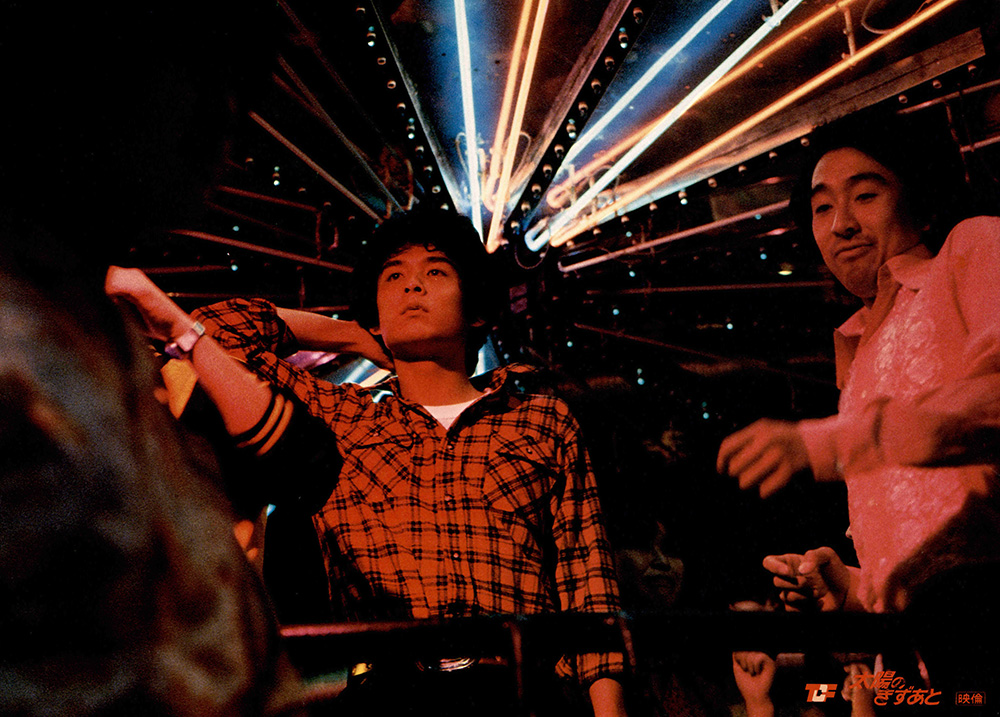
The catalyst for a more direct confrontation with his past arrives in the form of a phone call from Shuhei’s younger brother, Koji. Separated for eleven years following his parents’ divorce, Koji, who resides with their mother in Hakodate, has journeyed to Tokyo for winter cram school. Koji’s arrival initiates a reunion, introducing Shuhei to Koji’s classmate, Kaori. Shuhei, attempting to bridge the gap of years, integrates Koji and Kaori into his own social circle, which includes friends like Karasawa and Takeshi. This integration leads to a series of youthful escapades, from energetic disco nights in Akasaka to a contemplative sojourn at a beach house in Onjuku, Chiba. However, this attempted reconciliation is fraught with underlying tensions. Koji struggles to assimilate into Shuhei’s more worldly group, and Kaori finds herself drawn to the magnetic charisma of the group’s de facto leader. The reunion, therefore, morphs from a hopeful reconnection into a complex and often agonizing confrontation, exposing latent family resentments, simmering jealousy, and the pervasive malaise of youthful existential drift.
Thematic Depth and Stylistic Choices
As a youth drama, "Scars of the Sun" derives its fascination not from adherence to conventional narrative arcs, but from its deliberate eschewal of easy explanations. The characters engage in a constant cycle of fighting, drinking, swimming, dancing, and general carousing, yet the underlying motivations for these actions remain deliberately opaque. This can be perceived as a narrative weakness, leading to a sense of messiness and an almost haphazard assembly of episodes rather than a tightly woven plot. However, this very disorganization mirrors the lived experiences of the characters. These are young individuals adrift, lacking a defined purpose, a stable familial foundation, and the emotional vocabulary to articulate their anger and loneliness. Their actions, therefore, become the primary vehicle of drama, even when the surrounding plot elements do not coalesce into a seamless whole.
The film’s context is crucial to understanding its artistic choices. Sone’s prior experience in Nikkatsu Roman Porno, while not manifest in overt eroticism, is discernible in the film’s fluid sense of movement and its episodic structure. Certain moments feel almost improvised, as if the camera is an impartial observer of young people whose impulses defy organization into a conventional narrative. This approach can be both frustrating and remarkably distinctive. The film’s inherent disorder, at times, feels like a flaw, yet at others, it appears to be the most truthful representation of its subject matter. Furthermore, an ambiguously depicted rape scene and its subsequent aftermath introduce a particularly challenging element, aligning the film with a specific category of cinema that, by contemporary standards, would undoubtedly provoke significant debate and scrutiny.
Cinematographic Prowess and Auditory Impact
Technically, "Scars of the Sun" immediately establishes a sophisticated aesthetic, primarily through Akira Shiizuka’s striking cinematography and a potent use of sound design. The car sequences, in particular, stand out as some of the film’s most compelling achievements. The public-road action is imbued with a dangerous, almost illicit energy, characterized by vehicles swerving erratically, colliding with jarring impact, and navigating highway entrances with a recklessness that generates genuine tension. Even when the dramatic narrative falters, these sequences possess a raw, physical charge that is undeniably potent and memorable.
Shiizuka’s use of long takes also serves as a significant asset. A memorable scene on the beach, where characters converse around a bonfire while other figures engage in activities in the background, possesses a peculiar, dislocated beauty. Similarly, sequences involving boats, swimming, and bodies moving toward the shore effectively convey the characters’ collective confusion and emotional disarray with greater impact than dialogue could achieve. The editing, whether intentional or accidental, contributes to a disjointed rhythm, occasionally giving the impression that the film has abandoned traditional storytelling altogether. This uneven pacing, however, paradoxically mirrors the inherent randomness of the characters’ actions. The violent scenes, too, are rendered with a peculiar distance, sometimes presented from afar, a stylistic choice that does not always align with conventional narrative expectations but adds to the film’s disquieting atmosphere.
Performances and Familial Dynamics
The introduction of the father, Rintaro, becomes increasingly significant towards the film’s conclusion, injecting a compelling layer of tension. Ken Ogata delivers an impressive performance in this role, particularly in a scene involving journalists that remains etched in the viewer’s memory. Beyond Ogata, the acting across the ensemble cast is as varied as the film itself. Kenichi Kaneda effectively embodies Shuhei’s detached exterior and occasional hardness, though some of his line delivery and use of slang can feel somewhat dated. Koji Tanaka offers a more immediate and affecting portrayal of the younger, wounded brother, skillfully conveying a complex blend of resentment, vulnerability, and shame. Akiko Enami brings gravitas to the role of the mother, particularly in a poignant scene where she questions her son about his injuries, revealing the quiet strength and enduring concern of a parent navigating fractured family ties.
Even amidst the prevailing lack of narrative continuity, the staging of the scene with the mother and son demonstrates Sone’s adeptness in directing performance and utilizing cinematic space. The movement in and out of the room, the deliberate closing of the sliding door, and the mother’s action of rising to turn on the light all contribute to a sense of controlled chaos and emotional resonance, highlighting Sone’s directorial command over nuanced character interactions.
Enduring Legacy and Critical Reception
Ultimately, "Scars of the Sun" is not a film that offers complete narrative satisfaction. Its story is uneven, its characters occasionally underdeveloped, and its sense of causality often feels so vague as to approach carelessness. Nevertheless, Chusei Sone’s direction imbues the film with a restless, abrasive quality that remains compelling. The perilous car action, the evocative long shots, the volatile group dynamics, and the pervasive melancholy of broken family ties coalesce to create a film that is perhaps more captivating in its fragments than as a cohesive whole. While it may not rank among Sone’s most polished works, "Scars of the Sun" serves as a potent and enduring portrait of directionless youth, the lingering effects of emotional damage, and the poignant imagery of individuals navigating landscapes of leisure and existential void. Its rough fascination, born from its unconventional structure and raw emotional honesty, continues to resonate with those who seek out cinema that challenges conventions and delves into the complexities of the human condition. The film’s enduring appeal is a testament to its ability to capture a specific moment in time and the universal struggles of adolescence and familial discord.