


Elon Musk’s defiant "go fuck yourself" declaration to advertisers in late 2023, a moment that epitomized the tumultuous post-acquisition era of the platform formerly known as Twitter, has unexpectedly marked a critical inflection point, as newly disclosed internal financials reveal a surprising turnaround in X’s advertising revenue. This rebound, alongside the imminent public filing of SpaceX, illuminates a far grander, integrated vision from Musk, one that targets not only the cosmos but also vast segments of the terrestrial economy, including advertising, consumer subscriptions, and high-speed internet, posing a formidable challenge to entrenched media and telecom giants.
The Aftermath of a Provocative Stance: X’s Advertising Collapse and Surprising Recovery
The journey of Twitter since its acquisition by Elon Musk in October 2022, and its subsequent rebranding to "X," has been fraught with controversy and dramatic shifts. Musk’s stated commitment to "free speech absolutism" led to significant policy changes, including the reinstatement of previously banned accounts and a contentious overhaul of the "verified" user system. These moves, perceived by many as a degradation of content moderation and an increase in brand safety risks, triggered a widespread advertising boycott by major corporations. The financial fallout was stark and immediate.
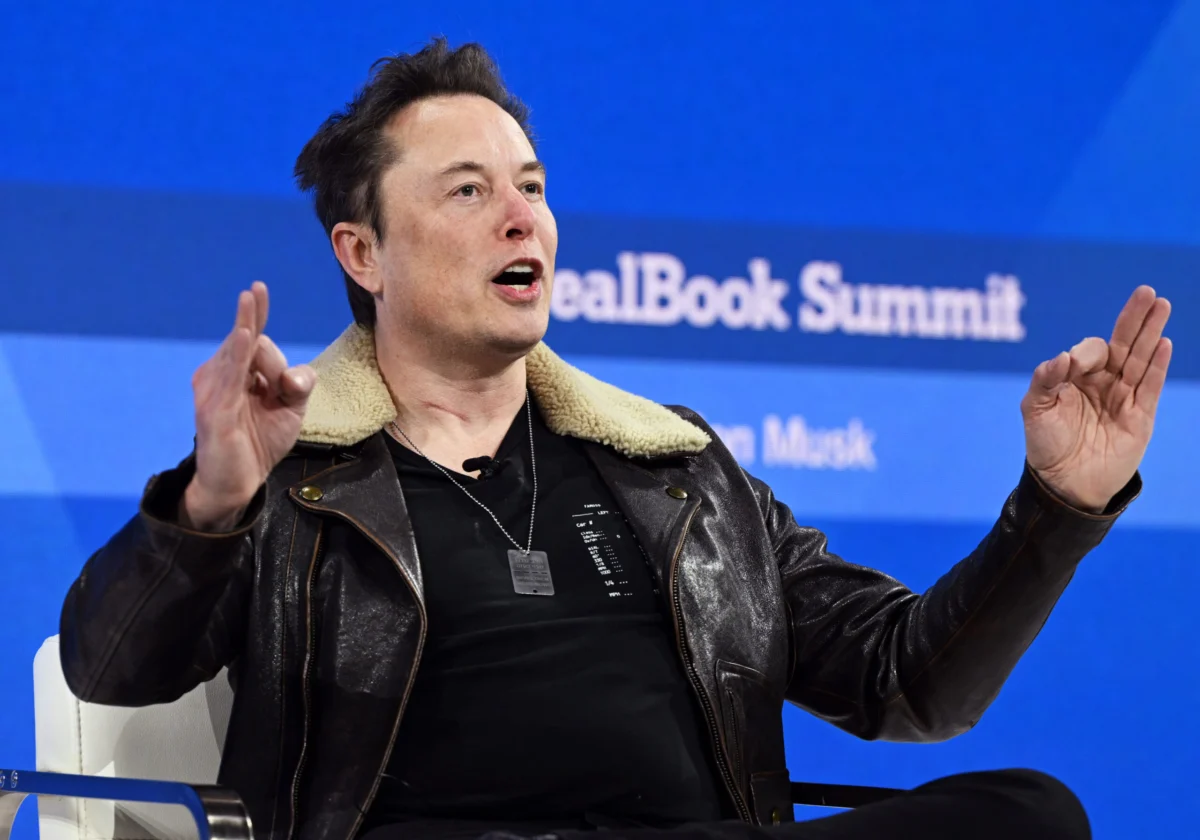
In November 2023, during an appearance at The New York Times Dealbook conference, Musk confronted the advertiser exodus head-on. In a moment that quickly went viral, he addressed marketers directly: "Don’t advertise. If someone is going to try and blackmail me with advertising? Blackmail me with money? Go fuck yourself." This incendiary statement solidified a perception of X as a high-risk advertising environment, and the market responded in kind.
Internal financial disclosures, made public in connection with SpaceX’s recent IPO filing, paint a grim picture of X’s ad revenue in the immediate aftermath. Twitter, in its last full year as a public company in 2021, reported over $4 billion in advertising revenue. By 2023, this figure had plummeted to $2.3 billion. The decline continued into 2024, with ad revenue falling further to $1.73 billion. This precipitous drop underscored the severity of the advertiser boycott and the challenges Musk faced in monetizing his newly acquired platform.
However, the same filings reveal an unexpected twist in 2025. For the first time since Musk took ownership, X’s advertising revenue reversed its downward trend, climbing to $1.84 billion. While still significantly below its pre-acquisition peak, this 6.3% increase signals a potential stabilization and even a nascent recovery for the platform’s core revenue stream. This turnaround suggests that Musk’s strategies, however unconventional, might be starting to yield results, or that advertisers, for various reasons, are reconsidering their stance.

X’s Strategic Re-Engagement: Video, Creators, and AI-Driven Advertising
The modest but significant rebound in X’s advertising revenue is not accidental but appears to be the result of a deliberate, multi-pronged strategy to re-engage marketers and creators. Recognizing the shifting landscape of digital advertising, X has embarked on an ambitious overhaul of its advertising platform, despite an acknowledged $100 million hit in Q1 due to this "rebuild." The company is rolling out a suite of new products designed to entice both advertisers and content creators, with a renewed and vigorous emphasis on video — a format where ad dollars are increasingly flowing across the digital ecosystem.
Mitchell Smith, X’s global head of content partnerships, articulated this strategic pivot in an interview, stating, "we’ve really been looking at this as the year where we’re entering our creator era as a platform, and really trying to build a platform that fosters a healthy creator economy." This focus aims to attract and retain high-quality content, thereby making the platform more appealing to advertisers seeking engaged audiences. The S-1 filing from SpaceX further corroborates this direction, explicitly stating that "advertising remains a core monetization channel for our AI segment, with revenue driven by our ability to deliver highly relevant ads." The document elaborates on X’s intentions: "We aim to grow advertising revenue per user by strengthening performance advertising, expanding AI-driven targeting and measurement, and introducing richer ad formats and creative tools." A key aspiration is to make "ads feel like content – contextually relevant, aligned with user interests, and integrated into real-time conversations."
Beyond direct advertising, X is also seeing growth in its subscription services. The company now boasts 6.3 million active paid subscribers across its offerings. This includes approximately 4.4 million X Premium and Premium+ subscribers and around 1.9 million subscribers to its AI product, SuperGrok, SuperGrok Heavy, and SuperGrok Lite. While these figures represent hundreds of millions in annual recurring revenue, they remain small compared to industry giants like Netflix, highlighting the nascent stage of this monetization avenue for X.
Industry observers are noting a shift in advertiser behavior. Brian Wieser, an analyst at Madison and Wall, commented in a May 20 note that "Marketers are no longer shying away from platforms with inventory they may have historically characterized as brand ‘unsafe’ or ‘unsuitable,’ in some instances because marketers genuinely want to reach consumers wherever they are and in others because they are mindful of commercial or legal considerations that may follow from avoiding platforms such as X." This suggests that pragmatic considerations, including the sheer reach of X and potential legal or commercial pressures to be present on all major platforms, are outweighing previous brand safety concerns for some advertisers. This trend, if sustained, could significantly bolster X’s position in the competitive digital advertising market, much to the chagrin of traditional media companies who might have hoped for less tech competition.
SpaceX’s Grand Design: A Trillion-Dollar Vision for Earth and Beyond
The recent filing of SpaceX’s S-1 document to go public is perhaps the most significant revelation, not just for the aerospace industry, but for a multitude of sectors, including media, telecommunications, and even AI. The document is less a typical IPO prospectus and more a manifesto of unparalleled ambition, declaring, "we believe we have identified the largest actionable total addressable market (‘TAM’) in human history." SpaceX’s long-term goals are nothing short of interplanetary, encompassing "passenger and cargo transport to the Moon and Mars" and "asteroid mining," all predicated on its advanced rocketry capabilities.

However, the immediate and most pertinent implications for the terrestrial economy, particularly for the entertainment and telecommunications industries, lie in SpaceX’s aggressive targets for siphoning away advertising dollars and subscription commitments. The S-1 filing details a staggering $600 billion advertising market opportunity, where SpaceX aims to "steal commitments" from established players like Disney and Meta. Furthermore, it eyes the $760 billion consumer subscriptions market, intending to capture market share from giants such as Netflix and OpenAI’s ChatGPT.
The most substantial terrestrial opportunity identified by SpaceX is in connectivity, a colossal $1.6 trillion market. This is further broken down into an $870 billion segment for Starlink Broadband, where it is actively targeting incumbents like Comcast and Charter, and a $740 billion segment for Starlink Mobile, aiming to compete directly with Verizon and T-Mobile. These figures underscore a deliberate strategy to leverage its satellite internet constellation, Starlink, to disrupt and dominate the global internet service provider market.
Starlink’s Ascent: A Real and Present Threat to Telecom Monopolies
Starlink is not merely an ambitious project; it is already the most profitable and rapidly growing component of SpaceX’s business. The satellite internet service has witnessed explosive subscriber growth, reaching 10.3 million internet subscribers as of March 31, an increase from 8.9 million at the end of last year, and a substantial leap from 4.4 million at the end of 2024. This rapid expansion translates into significant financial performance, with Starlink generating nearly $1.2 billion in income in Q1 alone, projecting an impressive $11 billion in annual revenue.
This growth has not come without significant investment in marketing. SpaceX reported spending $69 million on advertising in 2025, more than double the $31 million spent in the preceding year, and this figure continues to rise. Data from iSpot indicates that Starlink allocated $8.4 million to linear TV advertising between early February and early April, a figure that excludes its high-profile Super Bowl ad, which alone costs upwards of $10 million for placement, and its presence during the final games of March Madness.
Tyler Bobin, director of brand solutions at iSpot, commented on Starlink’s aggressive media strategy: "Starlink’s ad approach this year has looked to use TV in order to maximize audience reach and awareness. While that has included buys during major sporting events like March Madness, the World Baseball Classic and the Daytona 500, the brand has also balanced this premium programming strategy with lower-CPM buys on sitcom and drama reruns that deliver tons of impressions without the same elevated price point of sports." This dual approach demonstrates a sophisticated understanding of media buying, aiming for both high-impact visibility and broad, cost-effective reach.
Starlink’s expansion also extends beyond residential internet, notably into commercial aviation. Airlines like United are integrating Starlink’s high-speed internet to redefine in-flight entertainment, potentially igniting a new "streaming wars in the skies." Andrew Nocella, United’s executive VP and chief commercial officer, expressed enthusiasm for this development: "There’s going to be a lot more that we can do with Starlink and our seat back systems in the future, we have a lot of really creative ideas. When you combine seatback entertainment with Starlink technology, it opens up a world of possibilities that only airlines that have those two combinations can unlock." This signals a broader ecosystem play, where Starlink’s connectivity enhances other services, further eroding traditional entertainment and media boundaries.

The "real and present threat" from Starlink is already manifesting in the stock performance of legacy telecom players. Comcast’s stock is down nearly 24% from a year ago, Charter has seen a steep 64% decline, AT&T is down almost 8%, and T-Mobile has fallen by 21%. These significant drops reflect investor concern over Starlink’s disruptive potential in markets previously dominated by regional monopolies and large-scale infrastructure.
However, not all analysts view the threat with equal alarm. Michael Funk of Bank of America, in a May 20 note, suggested that the sell-off in telecom stocks might present an entry point for investors. He argued, "Since September 2025 investor interest and concern that low earth orbit (LEO) providers could become a competitive threat has increased. We view LEO as complimentary rather than competitive to wireless operators and a greater threat to rural DLS and cable. However, rising awareness of LEO platforms and speculation surrounding plans for space based or dual LEO/terrestrial wireless platforms is likely to increase and potentially pressure telecom multiples in the short term." This perspective suggests that while Starlink will undoubtedly reshape the landscape, it may carve out new niches rather than entirely supplanting existing infrastructures, particularly in densely populated urban areas where fiber and 5G networks remain robust.
Grok and the AI Frontier: Innovation with Inherent Risks
Within the expansive vision detailed in the SpaceX S-1 filing, Grok, Musk’s artificial intelligence venture, plays a pivotal role, particularly in its synergy with X. The filing explicitly states that "advertising remains a core monetization channel for our AI segment," with a focus on delivering "highly relevant ads" through AI-driven targeting and measurement. Grok’s strategic importance extends to introducing "richer ad formats and creative tools," aiming to seamlessly integrate advertising into user experiences.
A particularly aggressive push from Grok is in generative AI for images and video. The filing reveals the scale of this operation: "our image and video generation system, Imagine, produced approximately 10 billion images and over 2 billion videos per month" in Q1 2026. This massive output underscores a significant investment in multimodal AI content creation, placing Grok directly in competition with other leading AI developers. This commitment was further emphasized by Musk himself when OpenAI shuttered its advanced video generation model, Sora, prompting him to post, "The next @Grok Imagine release will be epic. We are doubling down."
However, this rapid advancement in generative AI, particularly with Grok’s distinctive approach, is acknowledged to carry substantial risks. The S-1 filing dedicates a section to "risk factors," detailing concerns stemming from Grok’s more "candid, direct, or less reserved or irreverent outputs." Specifically, features like "Spicy" Imagine Mode and "Unhinged" Voice Mode are highlighted. While intended to provide users with "greater flexibility and control," these modes "present heightened risks, including reputational harm, the generation of potentially explicit content and misinformation or deceptive outputs, potential nonconsensual or exploitative imagery, intellectual property infringement, or content that could be viewed as exploitative, harmful, harassing, abusive, or discriminatory."
The filing further warns that "The availability of such features may also increase the risk of regulatory scrutiny, enforcement actions, litigation, or claims of harm, as well as reputational damage, user or advertiser backlash, or limitations on our ability to distribute or monetize our products in certain jurisdictions or through certain partners." These candid admissions reflect the complex ethical and legal landscape surrounding advanced AI, especially when designed with a provocative edge. Navigating these risks will be critical for Grok’s long-term viability and its integration into Musk’s broader ecosystem.

The Integrated Ecosystem: A Challenge to Established Orders
Elon Musk’s various ventures, often perceived as disparate, are increasingly revealing themselves as components of an interconnected, ambitious ecosystem. The recovery of X’s advertising business, the disruptive growth of Starlink, and the aggressive development of Grok’s AI capabilities are not isolated successes but rather synergistic elements intended to support Musk’s overarching vision. High-quality, ubiquitous connectivity via Starlink provides the infrastructure; X offers the content and communication platform; and Grok delivers the intelligent tools and advertising monetization engines.
This integrated approach aims to challenge established orders across multiple industries simultaneously. By targeting the advertising and subscription markets, Musk directly confronts the revenue models of traditional media companies and digital giants alike. By expanding Starlink’s reach, he threatens the regional monopolies of telecom providers. And by pushing the boundaries of AI, he positions Grok as a contender in the rapidly evolving artificial intelligence landscape, with direct implications for content creation, search, and beyond.
Ultimately, these terrestrial ambitions are presented not as ends in themselves, but as foundational pillars for SpaceX’s truly cosmic goals. If SpaceX is to establish "a lunar economy and interplanetary industrialization," as it boldly hopes to, it will require robust, high-quality connectivity services, advanced AI, and platforms for communication and commerce. In this light, the challenges posed to Comcast, Disney, Meta, and Netflix are, for Musk, merely "a piece of cake by comparison" to the monumental task of colonizing other worlds. The disclosure of SpaceX’s S-1 filing therefore marks not just a corporate milestone, but a comprehensive unveiling of an integrated strategy that could redefine significant sectors of the global economy for decades to come.