The 2026 Cannes Film Festival, a perennial arbiter of global cinematic taste, witnessed a polarizing premiere midway through its prestigious program with the unveiling of Na Hong-jin’s fourth feature, Hope. The film, a sprawling 2-hour and 40-minute science fiction epic, debuted in the Main Competition, vying for the coveted Palme d’Or, but ultimately concluded its festival run without receiving any of the major awards. Its screening at the Debussy Theatre on May 24, 2026, became an immediate flashpoint, eliciting a cacophony of both fervent applause and vociferous boos, signaling a deeply divided critical and public reception that is likely to define its legacy.
A Grand Return and a Genre Departure
Na Hong-jin, a name synonymous with masterfully crafted Korean genre cinema, arrived at Cannes after a decade-long hiatus following his critically acclaimed and commercially successful horror-thriller, The Wailing (2016). Prior to that, his films The Yellow Sea (2010) and The Chaser (2008) cemented his reputation as a formidable storyteller with a penchant for intense narratives and visceral filmmaking. His return with Hope was therefore met with considerable anticipation, particularly given its selection for the Main Competition, a slot typically reserved for films of significant artistic merit and potential impact.
However, Hope marked a significant departure from Na’s previous works, venturing boldly into the realm of hard science fiction, a genre not previously explored by the director in such an overt manner. Billed as a passion project, written, directed, and produced by Na himself, the film was widely perceived as his statement piece, demonstrating a capability for large-scale, spectacle-driven filmmaking akin to major Hollywood blockbusters. This ambition, while commendable, ultimately contributed to the film’s contentious reception, as critics grappled with its blend of exhilarating highs and perceived narrative inconsistencies.
The Cannes Premiere: A Tempestuous Evening
The evening press screening at the Debussy Theatre was an event of considerable spectacle and emotional intensity. The auditorium was reportedly packed to capacity, buzzing with the characteristic anticipation that precedes a major Cannes premiere. Initial reactions were overwhelmingly positive as the film commenced, with reports indicating a highly engaged and "riled up" audience. However, as the narrative unfolded, the mood within the theatre shifted dramatically, culminating in the aforementioned cacophony of mixed reactions – a hallmark of films that challenge conventions and provoke strong responses. This dual reaction underscored the film’s capacity to both captivate and confound, positioning it as one of the most talked-about entries of the 2026 festival.
Such a polarized reception at Cannes is not unprecedented. The festival has a history of showcasing films that divide audiences and critics, from Lars von Trier’s Antichrist to Gaspar Noé’s Irreversible. These films, often boundary-pushing and challenging, frequently spark heated debates that extend far beyond the Croisette, shaping cinematic discourse for years to come. Hope appears poised to join this exclusive club, its divisive nature ensuring its continued discussion in film circles.
Narrative Ambition and Execution Challenges
Hope introduces audiences to a world grappling with the sudden arrival of extraterrestrial life. The narrative centers on an alien crash landing in a forest adjacent to a small Korean coastal town aptly named "Hope Harbor." Unlike conventional alien invasion narratives, the film explores the why of their presence and the chaotic repercussions for the local populace. A recurring motif identified by critics is Na Hong-jin’s portrayal of townspeople as "bumbling idiots," often exacerbating problems rather than solving them, a thematic thread present in his earlier works.
The film’s structure is marked by distinct phases. It opens with an extended, high-octane 45-minute action sequence. This initial segment, widely lauded for its intensity and technical prowess, features police chief Bum-seok, portrayed by veteran actor Hwang Jung-min, embroiled in a frantic chase involving a large extraterrestrial creature. This sequence drew comparisons to iconic sci-fi action openers, notably Steven Spielberg’s War of the Worlds and Bong Joon-ho’s The Host, showcasing Na’s ability to orchestrate large-scale spectacle. The sudden appearance of Korean model and actress Jung Ho-yeon as rookie cop Sung-ae, who intervenes to assist Bum-seok, reportedly elicited a massive cheer from the Cannes audience, highlighting the film’s moments of unadulterated excitement.
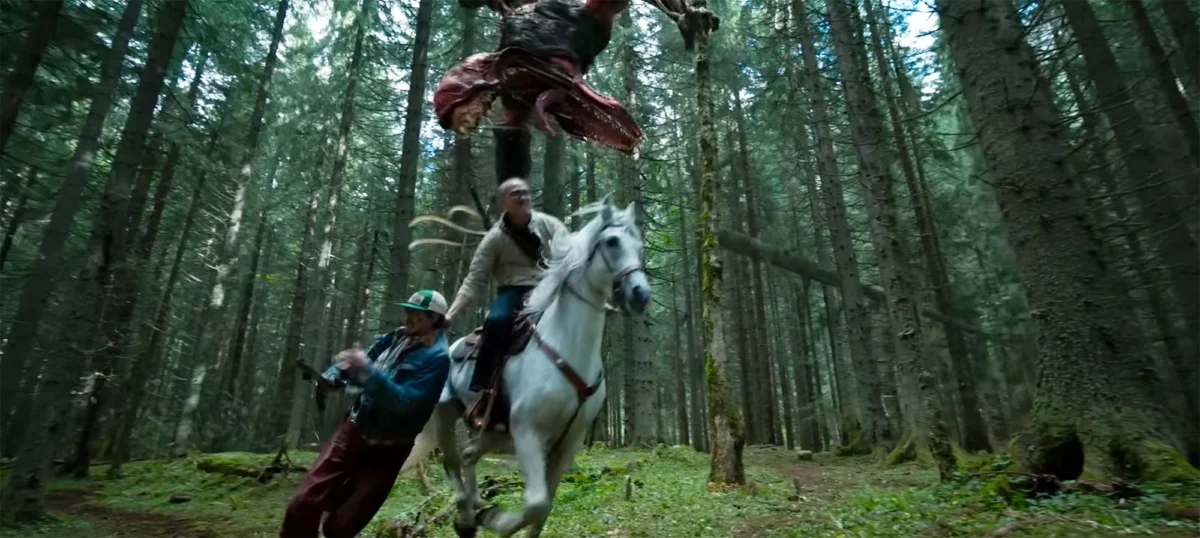
However, critical consensus suggests a significant shift in quality following this electrifying opening. The subsequent hour transitions into an investigative phase, as a group of hunters stumble upon the crashed spacecraft and its occupants. This segment, intended to build mystery and understanding, was frequently cited as contributing to the film’s narrative challenges. The final hour of Hope reverts to an action-heavy climax, featuring a barrage of sequences including horseback chases, a chaotic car chase, and extensive gun battles. It is in this prolonged finale that the film reportedly loses its footing, with critics pointing to a perceived decline in visual effects quality, jumbled editing, and an increasingly perplexing narrative that left many audience members struggling to comprehend the plot’s ultimate direction.

Technical and Thematic Scrutiny
The ambition of Hope is undeniable, drawing inspiration from a diverse array of sci-fi touchstones. References to Prometheus, Super 8, and other genre stalwarts underscore Na Hong-jin’s attempt to weave a complex tapestry of alien encounters, human folly, and cosmic mystery. However, the execution of these ambitious concepts became a primary point of contention.
Observers at Cannes noted significant inconsistencies in the film’s visual effects, particularly in the latter half. What began with impressive spectacle reportedly devolved into sequences described as "sloppy" and "confusing." This perceived decline in VFX quality, coupled with what many critics characterized as fragmented editing, contributed to a sense of narrative disorientation. The alien creatures themselves, while initially intriguing, became increasingly "strange and confusing" as the film progressed, further obscuring the audience’s grasp of the overarching plot. The film’s conclusion was widely described as bewildering, offering little in the way of resolution or clear explanation, leading some to speculate it functioned more as a teaser for future installments than a self-contained narrative.
Furthermore, Na Hong-jin’s attempts to reinvent classic sci-fi tropes, such as the "little green men" alien concept, while initially praised for their novelty, often resulted in additional "huh?" moments that further complicated the viewing experience. The film also incorporated elements of "goofy humor" involving the townspeople, a feature more prominent in Na’s earlier works. However, in Hope, this humor was largely deemed misplaced or ineffective, detracting from the core thrills and gravitas of the sci-fi narrative.
Implications for Na Hong-jin’s Career and Genre Cinema
The reception of Hope at Cannes 2026 presents a complex picture for Na Hong-jin’s career. On one hand, the film undeniably showcases his bold vision and willingness to take significant creative risks, venturing into uncharted genre territory with a massive scope. The sheer ambition behind Hope could be interpreted as a director refusing to be confined by past successes, seeking to push boundaries and explore new cinematic horizons. This audacious spirit, regardless of the film’s ultimate reception, solidifies Na’s reputation as an uncompromising auteur.
On the other hand, the widespread criticism regarding narrative coherence, inconsistent technical execution, and an unsatisfying conclusion raises questions about the balance between ambition and execution. A common sentiment expressed by critics was that while the ideas presented in Hope were compelling, they felt underdeveloped and lacked cohesion, suggesting that the project might have benefited from additional years of refinement in its script and post-production. The decade-long gap since The Wailing had built immense expectations, and while Hope delivered spectacle, it struggled to deliver a universally satisfying narrative.
For genre cinema, particularly sci-fi, Hope‘s Cannes journey offers valuable insights. Its selection for the Main Competition reaffirmed the festival’s willingness to embrace genre films, especially those with strong directorial voices. However, the film’s divisive reception also highlights the challenges of integrating complex, special-effects-driven narratives into the highly scrutinizing environment of a prestigious film festival. While Hope may not have secured the Palme d’Or, its capacity to provoke such strong, polarized reactions suggests a future as a significant "midnight cult classic." Its moments of exhilarating brilliance, coupled with its baffling narrative turns, position it as a film that will undoubtedly be revisited, debated, and analyzed by cinephiles for years to come.
Looking Ahead: A Legacy of Contention
The immediate aftermath of Hope‘s premiere saw intense discussions across critical outlets and social media platforms. The film’s inability to secure any awards at Cannes 2026, including the Palme d’Or which was awarded to Cristian Mungiu for Fjord, indicates that the jury, like many critics, found its overall execution problematic despite its undeniable ambition.
Regardless of its festival performance, Hope has indelibly stamped itself as a unique creation within Na Hong-jin’s filmography and the broader landscape of contemporary sci-fi cinema. Its journey from a highly anticipated return to a polarizing Cannes entry underscores the inherent risks and rewards of artistic ambition. While some may lament what they perceive as missed opportunities for an instant classic, the film’s capacity to inspire both profound admiration and significant frustration ensures its place in cinematic discourse. The questions surrounding its bewildering ending and the fate of its characters are likely to fuel continued speculation, perhaps leaving open the possibility, however remote, for future exploration of the expansive, albeit fragmented, universe Na Hong-jin began to craft in Hope. The film stands as a testament to a director’s audacious vision, a cinematic experience that, for better or worse, few who witnessed it are likely to forget.