


Production and Narrative Context
The film’s narrative follows eight-year-old Isabela, played by Arabella Olivia Clark, whose domestic environment is increasingly marred by the strained marriage of her parents, Russ and Ursula. As the familial foundation cracks, an entity known as "Other Mommy" emerges from the confines of Isabela’s closet. The antagonist takes the physical form of her mother, offering a distorted form of protection that demands the child surrender her "heart" to the entity.
The adaptation, scripted by Nathan Elston, maintains the original novel’s perspective by anchoring the narrative in Isabela’s point of view. This stylistic choice is central to the film’s unique, albeit contentious, tonal profile. By viewing the world through the lens of an eight-year-old, the screenplay balances mature, hyper-violent horror sequences with thematic delivery that mirrors the straightforward emotional processing of a child. This juxtaposition creates a distinct atmosphere that separates the film from traditional R-rated horror tropes, though it raises questions regarding the film’s target demographic and intended emotional impact.
Stylistic Execution and Directional Choices
Director Rob Savage, known for his work in found-footage and high-intensity horror, employs a variety of unconventional editing techniques to emphasize the supernatural surreality of the story. The film’s marketing campaign notably mirrored the film’s own internal rhythm; the official trailer utilized a structural gimmick where the title cards for "Other Mommy" were integrated directly into the trailer’s narrative beats.
While these visual flourishes provide a heightened sense of kinetic energy, critical discourse surrounding the film has noted a potential disconnect between these "cool" aesthetic choices and the structural integrity of the screenplay. Savage’s penchant for visual spectacle occasionally clashes with the more intimate, character-driven moments of the script. The film attempts to reconcile these elements through aggressive pacing, often relying on bursts of gore to punctuated scenes that otherwise lean toward emotional domestic drama.
Performance Analysis: The Role of Jessica Chastain
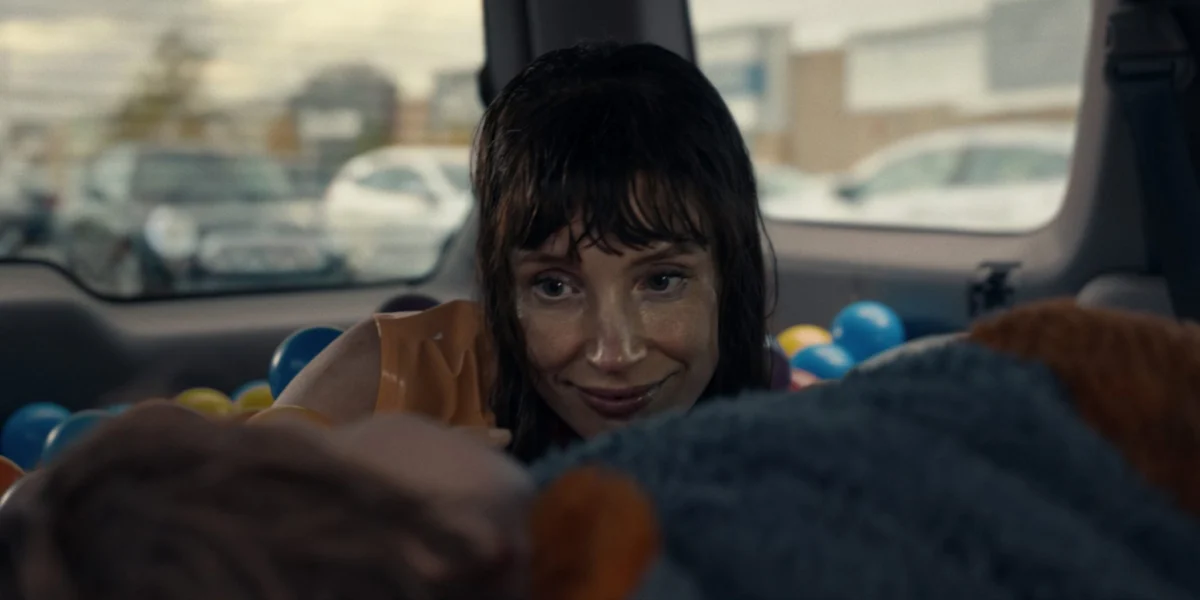
At the center of the film’s critical discussion is the dual performance of Jessica Chastain. Cast as both the biological mother, Ursula, and the malevolent "Other Mommy," Chastain utilizes the conventions of the "hagsploitation" subgenre—a term historically applied to horror films featuring veteran actresses in intense, unconventional roles.
Chastain’s approach to the dual role has been highlighted as the film’s primary anchor. Her portrayal of the entity relies on precise, calculated body language—stiff, alien movements and a crisp, modulated vocal delivery—which stands in stark contrast to her more grounded portrayal of the struggling mother, Ursula. The sound design team further enhances this duality, employing subtle audio echoes when the entity is present to differentiate it from the human character. Industry observers have noted that Chastain’s commitment to the material prevents the film from descending into parody, effectively providing a gravitational force that keeps the narrative from drifting too far into its more abstract, tonal inconsistencies.
Industry Implications and Market Positioning
The release of Other Mommy arrives at a time when the horror genre is undergoing a shift toward "elevated" domestic narratives that utilize supernatural threats as metaphors for real-world trauma. However, the film occupies a complex middle ground. Its R-rated status and graphic content position it for an adult audience, yet its narrative framing, largely limited by the perspective of a child, suggests a simplicity in theme that may alienate viewers accustomed to more complex, adult-centric horror narratives.
This creates a "tonal no-man’s-land," wherein the film is perhaps too intense for younger audiences but lacks the narrative depth required for a more mature demographic. The late-act exposition, delivered through a sudden monologue regarding the parents’ marital strife, serves as an example of the film’s difficulty in balancing its thematic ambitions with its horror-driven pacing.
Data and Comparative Context
The source material, Josh Malerman’s Incidents Around the House, was widely recognized for its internal consistency and focus on the child’s perspective. Malerman, also noted for the success of Bird Box, established a specific psychological framework in his writing that the screen adaptation struggles to translate into a purely visual medium.
In terms of market competition, the film faces a crowded landscape of supernatural horror features. Compared to recent successes in the genre, such as Smile (2022), which also utilized iconic, distorted facial expressions to generate dread, Other Mommy relies heavily on its lead performance to achieve similar levels of audience engagement. While the film’s makeup and visual effects teams successfully delivered disturbing imagery, the reliance on Chastain’s physical acting remains the production’s most effective tool for establishing menace.
Critical Reception and Future Outlook
The reception to Other Mommy highlights an ongoing debate in modern horror: the balance between visual style and narrative substance. Critics have lauded the film’s technical ambition and the prowess of its lead actress, yet the consensus suggests that the film’s reliance on "jump scares" and flashy transitions serves as a veneer for a screenplay that, while conceptually sound, lacks the necessary development to support its 93-minute runtime.
For audiences, the film offers a unique experience. Those drawn to strong character performances will likely find value in Chastain’s work, which remains consistent and professional regardless of the script’s limitations. However, those seeking a cohesive, frightening narrative experience may find that the film’s disparate tonal elements prevent it from reaching its full potential.
As the industry continues to explore the intersection of childhood perspective and horror, Other Mommy will likely be studied as an experiment in perspective-driven storytelling. Whether the film’s approach to tonal dissonance will be viewed as a bold artistic choice or a structural flaw remains to be determined by its long-term performance in the home media and streaming markets. For now, it stands as a testament to the ability of a seasoned performer to elevate material that might otherwise struggle to find a consistent audience, serving as a reminder that in the realm of supernatural horror, the human element—often represented by a single, powerful performance—remains the most essential component of the cinematic experience.