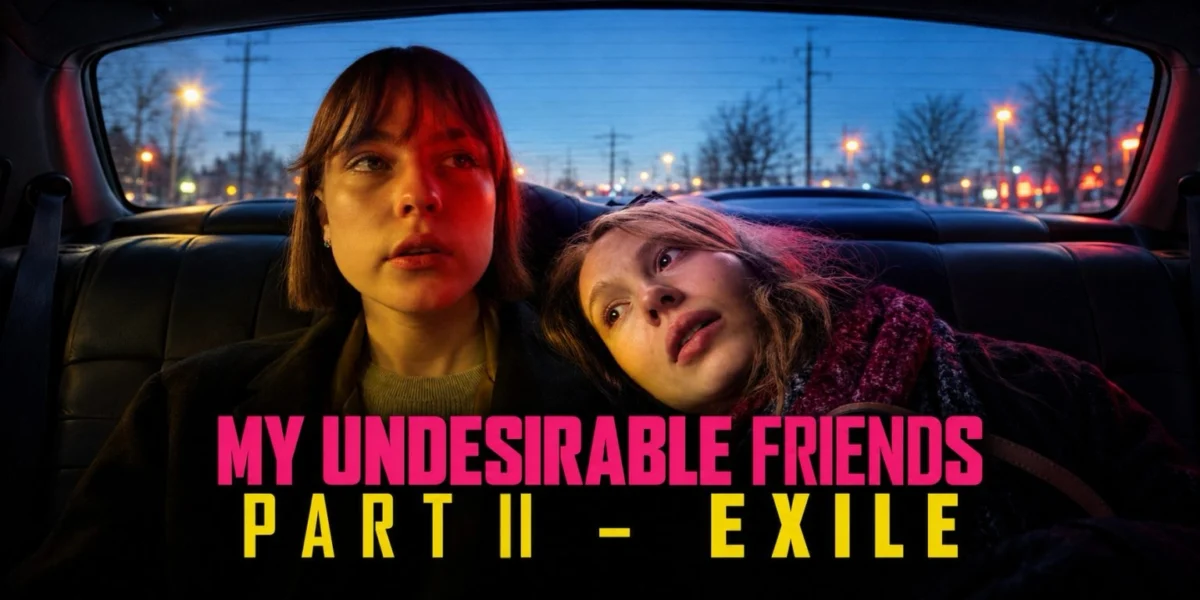
The 2026 documentary film My Undesirable Friends: Part II – Exile, directed and produced by Julia Loktev, stands as a sprawling, 355-minute cinematic examination of the erosion of independent journalism in contemporary Russia. As the direct sequel to the 2024 film My Undesirable Friends: Part I – Last Air in Moscow, this second installment chronicles the systematic dismantling of free speech and the subsequent forced migration of Russian journalists who found themselves at odds with the Vladimir Putin administration. Following a successful world premiere out of competition at the 83rd Venice International Film Festival, the film is scheduled for a theatrical release in New York at the Film Forum on October 9th, distributed by MUBI.
The Chronology of Repression: From Moscow to Exile
The narrative trajectory of the My Undesirable Friends series maps the tightening grip of state censorship in Russia. The first installment, Part I – Last Air in Moscow, focused on the final days of independent media outlets as they attempted to maintain operations under the mounting pressures of new "foreign agent" legislation and the restrictive atmosphere surrounding the state’s 2022 invasion of Ukraine.
Part II – Exile picks up where its predecessor left off, tracking the subjects—a cohort of courageous independent journalists—as they cross borders, leaving their lives and careers behind to escape potential incarceration or state-sanctioned harassment. The film acts as an observational record of the logistical and emotional toll of forced displacement. It captures the transition from working within the constraints of a hostile domestic environment to the precarious reality of life as a political exile, navigating new countries, lost institutional support, and the ongoing challenge of reporting on a nation that has effectively criminalized truth-telling.
Supporting Data and the State of Press Freedom
The context of the film is grounded in a well-documented decline in global press freedom within the Russian Federation. According to the 2024 World Press Freedom Index compiled by Reporters Without Borders (RSF), Russia ranks 162nd out of 180 countries, reflecting a consistent downward trend. The legislative apparatus used to silence the subjects of Loktev’s documentary includes the 2022 "fake news" law, which carries prison sentences of up to 15 years for disseminating information that deviates from the Kremlin’s official narrative regarding the war.
Since February 2022, thousands of independent journalists have fled the country, marking one of the largest exoduses of media professionals in modern history. Organizations such as the Committee to Protect Journalists (CPJ) have tracked an increasing number of arrests and the closure of historic outlets, such as the radio station Echo of Moscow and the television channel TV Rain (Dozhd), both of which were shuttered in the early stages of the conflict. Loktev’s film serves as a primary source document for this historical moment, providing a granular, longitudinal look at the people behind these statistics.
The Artistic Vision of Julia Loktev
In a recent interview regarding the production of the 355-minute epic, director Julia Loktev emphasized the necessity of a long-form documentary format to capture the nuances of displacement. By allowing the camera to linger on the quiet, agonizing moments of transition, Loktev moves beyond the headlines to explore the human dimension of geopolitical instability.
The film does not merely document the act of leaving; it examines the identity of the exile. Through her lens, viewers witness the journalists attempting to establish "newsrooms in exile," utilizing digital infrastructure to broadcast back into Russia, despite the government’s efforts to block their platforms. Loktev’s work highlights the resilience of these individuals, who, despite having their bank accounts frozen, their reputations smeared by state media, and their families threatened, continue to document the political reality of their homeland.

Official Responses and Media Reception
The premiere at the 83rd Venice International Film Festival was met with critical acclaim, with reviewers highlighting the film’s stamina and its profound commitment to its subjects. While the Russian state has not issued an official response to this specific production, the themes of the film align with the ongoing rhetoric from the Kremlin, which frequently characterizes independent journalists as "foreign agents" or "extremists."
International human rights organizations have praised the film for its archival value. Advocates for media freedom argue that documentaries like Part II – Exile provide an essential counter-narrative to state-controlled information flows. By providing an unvarnished look at the risks taken by those who report the truth, the film serves as a catalyst for international awareness regarding the safety of journalists operating in autocratic regimes.
Broader Implications for Global Journalism
The implications of the events depicted in My Undesirable Friends: Part II – Exile extend far beyond the Russian border. The film forces a confrontation with the fragility of democratic institutions and the ease with which independent media can be dismantled. The survival of these journalists in exile raises critical questions about the future of digital journalism: Can media outlets maintain their relevance and reach while operating from abroad? What are the ethical responsibilities of Western media organizations toward their exiled counterparts?
The struggle of the subjects in the film is emblematic of a broader, global trend where the digital age has provided both a platform for dissent and an efficient tool for state-led surveillance. As the journalists in Loktev’s film navigate the complexities of exile, they are also participating in a larger experiment regarding the viability of borderless journalism. Their work continues to reach audiences within Russia via VPNs and encrypted messaging apps, proving that while a state may force a journalist to leave its territory, it is significantly more difficult to erase their voice.
The Role of Film as Historical Record
As we move toward the October 9th release at the Film Forum, the cultural significance of the work becomes increasingly clear. Documentary filmmaking has long served as a repository for the stories that mainstream, state-aligned media outlets choose to ignore. By dedicating over five hours to the subject matter, Loktev ensures that the specific hardships, strategies, and existential crises of these journalists are preserved for posterity.
The film is not merely a record of defeat; it is a testament to the persistence of the human spirit under extreme duress. It challenges the audience to consider the cost of silence and the immense sacrifice required to maintain a functioning public sphere. For those interested in the intersections of politics, technology, and individual liberty, the documentary provides a comprehensive case study.
Production and Distribution Details
The project’s development underscores the collaborative nature of international filmmaking. With MUBI handling the distribution, the film is positioned to reach a global audience, further highlighting the urgency of the journalists’ stories. The choice of a theatrical release in New York is significant, as it positions the documentary within the broader conversation of international film and human rights activism.
For viewers seeking to understand the human cost of the current geopolitical climate, My Undesirable Friends: Part II – Exile offers a necessary, if demanding, viewing experience. The film’s length is intentional, mirroring the long, often tedious, and agonizing process of exile, ensuring that the audience experiences the weight of the journalists’ reality. As the film prepares to reach a wider audience, it serves as a stark reminder that the battle for information remains one of the most critical fronts in modern history. The documentation of this migration is not just a journalistic project; it is a vital archival effort that will undoubtedly inform future research into the decline of free speech in the early 21st century.