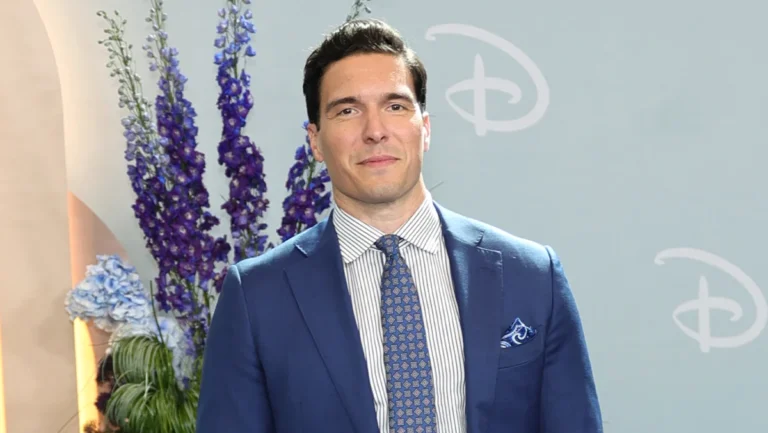



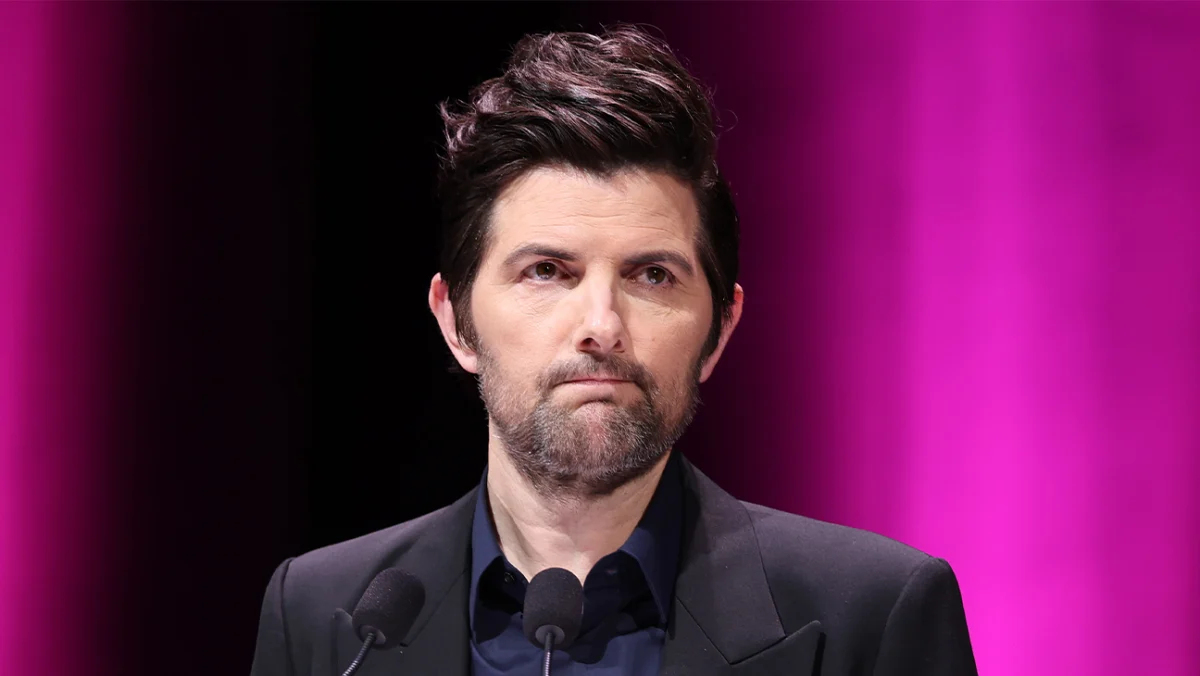
The acclaimed actor, known for his roles in Severance, Parks and Recreation, and Party Down, recently captivated audiences with a candid revelation regarding a peculiar chapter from his early career: a determined, albeit ultimately unsuccessful, attempt to secure a role in the Hellraiser franchise years after his original character had met a definitive demise. This anecdotal insight, shared during an appearance on Late Night With Seth Meyers, offers a humorous yet poignant glimpse into the relentless hustle and often unconventional paths actors navigate in their pursuit of sustained employment in the highly competitive entertainment industry. Scott’s audacious maneuver involved auditioning for 2002’s Hellraiser: Hellseeker, despite having played Jacques, a character explicitly killed off in 1996’s Hellraiser: Bloodline.
A Glimpse into Early Career Imperatives
Adam Scott’s journey in Hollywood began in the mid-1990s, a period marked by a series of smaller roles as he endeavored to establish himself. Like countless aspiring actors, the imperative for work, any work, often overshadowed concerns about character longevity or franchise continuity. His initial foray into the Hellraiser universe came with Hellraiser: Bloodline, the fourth installment in the iconic horror series. In this film, released in 1996, Scott portrayed Jacques, a servant entangled in the elaborate and perilous summoning rituals of a demon by his aristocratic employer. His character’s fate was unambiguous: Jacques was killed, a common occurrence in the brutal world of the Cenobites. At the time, landing any significant role in a feature film, even one destined for the burgeoning direct-to-video market, was a considerable achievement for a young actor. Scott himself reflected on this early opportunity, telling Seth Meyers, "I didn’t know about Hellraiser, but I was like, ‘Oh, this is an acting job?’ And so I was so excited." This statement underscores the pragmatism often required of actors in the nascent stages of their careers, where the prospect of employment itself is a primary motivator.
The Hellraiser Franchise: A Legacy of Pain and Pleasure
To fully appreciate the context of Scott’s attempt, understanding the Hellraiser franchise’s trajectory is crucial. Born from the dark imagination of Clive Barker, whose 1986 novella The Hellbound Heart introduced the world to the sadomasochistic Cenobites and their enigmatic leader, Pinhead, the franchise rapidly expanded beyond its cinematic debut in 1987. The first two films, Hellraiser (1987) and Hellbound: Hellraiser II (1988), were critical and commercial successes, cementing the series’ place in horror lore with its unique blend of philosophical terror, body horror, and psychological intensity. However, as with many long-running horror sagas, subsequent installments often struggled to maintain the original’s creative vision and critical acclaim, especially as production budgets shifted and a significant portion of the output transitioned to the direct-to-video market.
Hellraiser: Bloodline (1996): Production Woes and Character Demise
Hellraiser: Bloodline, released nearly a decade after the original, marked a pivotal point for the franchise. It was the first film in the series to receive an R-rating rather than the more restrictive NC-17, and it attempted to weave a complex narrative spanning centuries, tracing the lineage of a toymaker responsible for creating the Lament Configuration – the puzzle box that opens the gateway to the Cenobites’ dimension. The production was notoriously troubled, plagued by significant creative disagreements between director Kevin Yagher and Miramax’s Dimension Films. Yagher ultimately removed his name from the film, which was completed by Joe Chappelle and credited to the pseudonym Alan Smithee, a common practice for directors disowning their work due to studio interference.
It was within this tumultuous production environment that Adam Scott portrayed Jacques. His character, a subservient figure, was instrumental in his master’s dark machinations but ultimately met a gruesome end, a narrative certainty in the Cenobite’s realm. The film, despite its ambitious scope, received a largely negative reception, criticized for its convoluted plot, uneven pacing, and perceived departure from the series’ core themes. For Scott, however, it represented a credit on his burgeoning resume, a stepping stone in a career that would eventually lead to much broader recognition.
The Audition for Hellraiser: Hellseeker (2002): A Risky Gambit
Years passed, and by 2002, the Hellraiser franchise was firmly entrenched in the direct-to-video realm. Hellraiser: Hellseeker was the sixth film, notable for bringing back Ashley Laurence as Kirsty Cotton, the protagonist from the original two films. The narrative centered on Kirsty’s husband, Trevor Gooden (played by Dean Winters), who suffers from amnesia after a car accident and slowly uncovers a sinister plot involving the Cenobites and a string of murders. It was for this installment that Adam Scott found himself presented with an audition opportunity.
Scott recounted the surreal experience on Late Night With Seth Meyers: "My agent sends an audition for Hellraiser 6, and I’m like, ‘Wait a second… I was in Hellraiser 4.’" The immediate recognition of the conflict, the definitive death of his previous character Jacques, would have deterred many. However, the pragmatic realities of an actor’s life, especially one still climbing the ladder, often dictate bold decisions. "But I need a job. So I’m like, ‘Screw it.’ And I go to the audition just thinking, ‘Maybe they won’t notice that I was in Hellraiser 4.’" This internal monologue encapsulates the blend of desperation and optimistic self-delusion that can characterize the audition process.
The actual audition added another layer of comedic tension to the situation. Scott vividly recalled the moment of recognition: "I remember being in the waiting room, kind of looking around and seeing a door ajar to someone’s office and seeing a producer from Hellraiser 4 in the office." The sudden realization of a familiar face, a potential gatekeeper who could immediately expose his gambit, spurred him into a desperate attempt at concealment. "And just like holding my papers up, just like, ‘OK, if he doesn’t see me, and they think I do a good job, maybe I’ll get in Hellraiser 6 as well.’" This image of a young Adam Scott, paper shield held aloft, trying to navigate an awkward professional encounter while simultaneously pursuing a role he was technically ineligible for, is a testament to the sheer will required to succeed in Hollywood. Unfortunately for Scott, his elaborate scheme did not pay off; he did not secure the role in Hellraiser: Hellseeker.
Broader Implications: The Hollywood Hustle and Franchise Continuity
Scott’s anecdote offers several broader insights into the entertainment industry:
The Relentless Pursuit of Work:
His story is a stark reminder of the perpetual "hustle" inherent in an actor’s life. Even after securing a role, the search for the next one begins immediately. For actors not yet established, the desire for any paying job can override concerns about character death or franchise history. This drive is a fundamental aspect of surviving and eventually thriving in Hollywood.
Franchise Continuity in the Direct-to-Video Era:
The Hellraiser franchise’s transition to direct-to-video (DTV) releases in the late 1990s and early 2000s often came with lower budgets, quicker production schedules, and sometimes a less stringent adherence to continuity than theatrical releases. While Doug Bradley consistently returned as Pinhead, other aspects of the films could be more fluid. This environment might have subtly encouraged Scott’s belief that a return, even as a new character, was not entirely beyond the realm of possibility, banking on potential oversight or a willingness to cast familiar faces in new roles. Such practices are not unheard of in genre cinema, where actors sometimes reappear in different capacities within the same fictional universe (e.g., actors playing multiple roles across various Star Trek series).
The Role of Producers and Casting Directors:
The producer Scott recognized at the audition likely held institutional memory of past productions. While casting decisions prioritize talent and suitability for a new role, an actor’s previous, explicitly deceased character in the same franchise could indeed be a significant hurdle. It raises questions about creative integrity versus practical casting needs. Had Scott delivered an exceptional audition, would the producers have considered the optics of casting him again? This remains an intriguing "what if."
The Evolution of an Actor’s Career:
The journey from a struggling actor trying to get back into a horror franchise where his character died, to an Emmy-nominated lead in a critically acclaimed series like Severance, illustrates the profound evolution of Adam Scott’s career. His early pragmatic choices, driven by the need for work, laid the groundwork for his later successes. It underscores that every role, no matter how small or in what context, contributes to an actor’s experience and resilience.
Adam Scott’s Ascendance to Stardom
Following his early Hellraiser experience, Adam Scott steadily built a formidable career. He gained significant recognition for his comedic roles, particularly as Henry Pollard in Party Down (2009-2010, 2023) and, most notably, as Ben Wyatt in the beloved NBC sitcom Parks and Recreation (2010-2015). These roles showcased his unique blend of deadpan humor, vulnerability, and charm, solidifying his status as a talented comedic actor.
More recently, Scott has ventured into more dramatic and complex territory with his lead role as Mark Scout in Apple TV+’s dystopian psychological thriller Severance. His performance in Severance earned him critical accolades, including an Emmy nomination for Outstanding Lead Actor in a Drama Series in 2022, marking a significant milestone in his career and demonstrating his versatility across genres. His journey from an eager young actor in Hellraiser: Bloodline to a celebrated leading man exemplifies the dedication and adaptability required to thrive in Hollywood.
The Enduring Legacy of Hellraiser
The Hellraiser franchise, despite its varied critical reception across its numerous installments, maintains a significant cult following and cultural footprint. Based on Clive Barker’s vision, it has explored themes of desire, pain, pleasure, and the boundaries of human experience through its iconic Cenobites and the terrifying puzzle box. With 11 movies to its name, including a critically lauded 2022 reboot directed by David Bruckner, the series continues to evolve and captivate new generations of horror fans. The 2022 film, released on Hulu, garnered positive reviews for its fresh take on the source material while honoring the original’s essence, proving the enduring power of Barker’s creation.
Adam Scott’s lighthearted recollection of his Hellraiser audition serves as a charming footnote in the extensive history of both the actor and the horror franchise. It is a story that resonates with the universal struggle for opportunity, the occasional absurdities of the entertainment world, and the journey of an actor who, through perseverance and talent, transformed early career struggles into a remarkable and respected career. His tale, shared with millions on late-night television, not only provides entertainment but also offers a genuine, relatable insight into the often-unseen side of Hollywood’s glamour.