


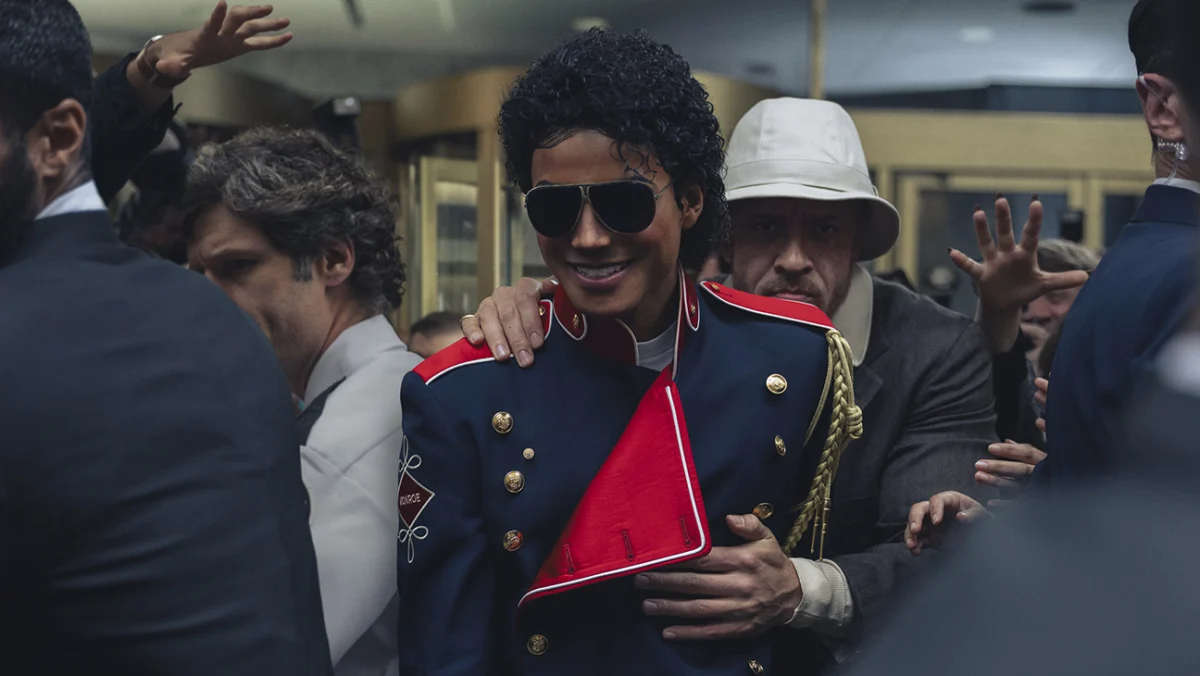
Filmmaker Spike Lee has publicly defended Lionsgate’s new Michael Jackson biopic, Michael, following criticisms that the film deliberately excludes the music icon’s widely reported child sexual abuse allegations. Lee, an Oscar-winning director and a longtime friend and collaborator of Jackson, argues that the film’s narrative timeline logically precludes the inclusion of these accusations, as they occurred years after the biopic’s concluding point in 1988. His comments highlight a significant divide between critical reception and overwhelming public success for the film, which has already grossed over $400 million worldwide.
Spike Lee’s Robust Defense of the Film’s Narrative Scope
In a recent interview with CNN, Spike Lee expressed profound admiration for Michael, stating he "loved" the film and had seen it "twice." His defense centered on a chronological argument, directly addressing critics who raised concerns about the absence of the abuse allegations. "First of all, if you’re a movie critic, and you’re complaining about the stuff — all this other stuff — but the movie ends at ’88," Lee explained, referring to the year the biopic concludes. "The stuff you’re talking about, accusations, happen [later]. So you’re critiquing the film on something that you want in, but it doesn’t work in the timeline of the film. But people showed up. Worldwide, people showed their love."
Lee’s statement underscores a fundamental principle of narrative filmmaking: the chosen scope and timeline of a story. By ending the film in 1988, a period encompassing Jackson’s meteoric rise to global superstardom with albums like Off the Wall, Thriller, and Bad, the filmmakers have established a clear boundary for their narrative. The first significant public allegations against Jackson emerged in 1993, five years after the film’s cutoff, with subsequent accusations and legal proceedings unfolding throughout the 2000s and even posthumously. From Lee’s perspective, demanding the inclusion of these later events within a film specifically framed to cover Jackson’s early life and career is a misapplication of critical judgment.
A Personal Connection: Lee’s Relationship with Michael Jackson
Spike Lee’s advocacy for the film is deeply rooted in his personal and professional relationship with Michael Jackson. He spoke emotionally about his connection to the "Thriller" singer, who passed away in 2009, and Prince, who died in 2016. "I miss Mike. I miss Prince. I mean, these are my brothers," Lee shared. "I worked with both of them. Both beautiful, beautiful people." This sentiment offers a glimpse into the perspective of an artist who knew Jackson intimately and collaborated with him during his career.
Lee’s collaborations with Jackson include directing the iconic music video for "They Don’t Care About Us," a powerful and politically charged song from Jackson’s 1995 album, HIStory: Past, Present and Future, Book I. He also helmed two acclaimed documentaries focused on different phases of Jackson’s career: 2012’s Bad 25, which commemorated the 25th anniversary of the Bad album, and 2016’s Michael Jackson’s Journey From Motown to Off the Wall, exploring the formative years leading up to his solo breakthrough. These projects demonstrate Lee’s long-standing engagement with Jackson’s artistry and legacy, positioning him as a voice with unique insight into the musician’s public and private persona. His defense, therefore, carries the weight of a personal endorsement from a fellow creative and a historical observer.
The Biopic’s Production Journey: From Controversy to Overhaul
The production of Michael itself was not without its own significant complexities and narrative adjustments, particularly concerning the very allegations at the heart of the current debate. The Hollywood Reporter previously detailed that the biopic underwent a substantial overhaul, a direct consequence of an oversight by the Michael Jackson Estate, which is a key backer of the film.
Initially, early drafts of the screenplay reportedly dedicated a significant portion of the film’s third act to addressing Jackson’s child sexual abuse allegations. However, a crucial legal development necessitated a dramatic shift. A past accuser had reportedly reached a settlement with the Jackson Estate that included a clause guaranteeing he would not be depicted in any future commercial projects. This contractual obligation forced the filmmakers to rework the narrative extensively. The decision resulted in an additional 22 days of shooting and a complete retooling of the film’s ending, pushing its release date from April 2025 to April 2026. This behind-the-scenes information provides critical context, suggesting that the omission was not merely an arbitrary creative choice but a legally mandated one, at least in part, for the version of the film that reached audiences. Filmmakers are reportedly considering a sequel to continue Jackson’s story, which would inevitably confront the later, more controversial periods of his life.
Chronology of Allegations Versus the Film’s Timeline
To fully understand Spike Lee’s defense and the critical reactions, it is crucial to establish a clear timeline of the child sexual abuse allegations against Michael Jackson in relation to the biopic’s 1988 conclusion.
- 1993 Allegations (Jordan Chandler): The first prominent accusation against Jackson emerged in August 1993 when 13-year-old Jordan Chandler alleged that the pop star had molested him. This led to a high-profile police investigation. Although no criminal charges were filed due to insufficient evidence, Jackson and the Chandler family reached an out-of-court civil settlement in 1994, reportedly for an amount exceeding $15 million. Jackson consistently maintained his innocence regarding these claims. This event clearly falls five years after the Michael biopic’s 1988 end date.
- 2003-2005 Trial (Gavin Arvizo): A decade later, in November 2003, Jackson was charged with seven counts of child molestation and two counts of administering an intoxicating agent to commit a felony, involving 13-year-old Gavin Arvizo. The highly publicized criminal trial lasted from January to June 2005. On June 13, 2005, a jury acquitted Jackson on all ten counts. These events transpired 15 to 17 years after the film’s narrative conclusion.
- Posthumous Allegations (Leaving Neverland, 2019): Following Jackson’s death in 2009, new allegations surfaced and gained significant public attention with the 2019 HBO documentary Leaving Neverland. In the film, Wade Robson and James Safechuck detailed claims of sexual abuse by Jackson when they were children. The Jackson Estate vehemently denied these allegations, calling the documentary a "tabloid character assassination" and pursuing legal action against HBO, though these efforts have faced challenges in court. These allegations, emerging a decade after Jackson’s death, are significantly removed from the film’s 1988 timeline.
Given this chronology, Spike Lee’s argument that the allegations "wouldn’t work in the timeline of the film" holds factual weight regarding the specific scope chosen by the filmmakers. The film aims to cover Jackson’s formative years and the pinnacle of his early career, deliberately stopping before the period when these controversies became public.
Critical Reception vs. Box Office Success: A Widening Chasm
Despite Spike Lee’s ardent defense and the film’s clear chronological framing, Michael has faced a largely negative reception from critics. Many reviews highlighted the omission of the abuse allegations as a significant flaw, arguing that it resulted in a sanitized, incomplete, or even hagiographic portrayal of a deeply complex and controversial figure. Critics questioned the film’s objectivity, suggesting that its close ties to the Jackson Estate inevitably led to a narrative that avoided uncomfortable truths. Terms like "whitewashed," "unflinching devotion," and "missed opportunity" frequently appeared in critical assessments, indicating a broad consensus among professional reviewers that the film failed to engage with the full scope of Jackson’s life, despite its self-imposed timeline.
However, this critical panning stands in stark contrast to the film’s phenomenal commercial performance. Michael has emerged as a massive box office success, grossing more than $400 million worldwide. This financial triumph positions it as one of the top-performing musical biopics ever made, demonstrating a significant disconnect between critical opinion and audience engagement. This phenomenon is not entirely unprecedented in the realm of biopics, particularly those centered on beloved but controversial figures.
Several factors could contribute to this audience-critic divide:
- Fan Base Loyalty: Michael Jackson retains a massive and devoted global fan base eager to celebrate his musical genius and artistry. For many fans, a film focusing on his groundbreaking music and iconic performances, even if incomplete, is a welcome tribute.
- Nostalgia and Escapism: The film offers a nostalgic journey through a golden era of pop music, allowing audiences to relive the cultural impact of Jackson’s early career without confronting the later, more painful aspects of his life.
- Pre-Existing Narrative Acceptance: Some audience members may have already formed their opinions on the allegations, either believing Jackson’s innocence or choosing to separate the art from the artist. For these viewers, the film’s narrative choice aligns with their preferred perspective.
- The Power of Music: Ultimately, Jackson’s unparalleled musical catalog remains a powerful draw. Audiences may be primarily interested in experiencing the spectacle of his performances and the story behind his creative process.
The Broader Implications for Biopics and Estate Involvement
The debate surrounding Michael extends beyond this specific film, touching upon broader questions about the nature of biopics, historical accuracy, and the influence of estates in cinematic portrayals of their subjects.
Biopics inherently face the challenge of condensing a life into a digestible narrative, often requiring difficult choices about what to include and exclude. When the subject is as multifaceted and controversial as Michael Jackson, these choices become even more scrutinized. The tension between artistic license, commercial viability, and historical fidelity is ever-present.
The involvement of an artist’s estate, as is the case with Michael (backed by the Michael Jackson Estate), introduces another layer of complexity. While estate cooperation can provide unparalleled access to archives, music rights, and personal insights, it also raises concerns about narrative control. Estates often have a vested interest in protecting the legacy and commercial viability of the artist, which can lead to films that are perceived as less critical or more celebratory. This dynamic has been observed in other successful biopics, such as Bohemian Rhapsody (Queen) and Rocketman (Elton John), though the controversies surrounding Michael Jackson are arguably more profound.
The Michael biopic highlights a growing ethical dilemma: how should filmmakers depict figures with complex legacies, especially when allegations of serious misconduct are involved? Should a biopic be a comprehensive, warts-and-all historical document, or can it legitimately focus on a specific period or aspect of a life? Spike Lee’s defense champions the latter, arguing for the validity of a focused narrative. Critics, however, often advocate for the former, believing that ignoring significant controversies renders a portrayal incomplete or misleading.
Future Prospects: A Potential Sequel and Uncharted Territory
The reported consideration of a sequel to Michael introduces fascinating prospects and significant narrative challenges. If a second film were to cover the latter half of Jackson’s life, it would inevitably have to confront the period when the child sexual abuse allegations first emerged and subsequently dominated public discourse. This would require a very different approach from the current film.
A sequel would force the Jackson Estate and the filmmakers to navigate the controversies head-on. They would have to decide whether to depict the allegations, the investigations, the trials, and the subsequent public reaction. This could involve exploring the legal battles, the intense media scrutiny, and the profound impact these events had on Jackson’s life and career. Such a film would face immense pressure to balance factual reporting with sensitivity, while also addressing the various perspectives and the lack of a definitive legal consensus on all claims. The creative and ethical considerations would be immense, potentially leading to another round of intense public and critical debate.
Conclusion: An Ongoing Dialogue
Spike Lee’s impassioned defense of the Michael biopic underscores the ongoing and often polarized dialogue surrounding the film. His argument, rooted in the film’s defined chronological scope and his personal connection to Michael Jackson, offers a clear rationale for the narrative choices made. However, this perspective continues to clash with critics who view the omission of the child sexual abuse allegations as a fundamental flaw, regardless of the timeline.
The film’s extraordinary box office success, despite critical panning, further complicates the narrative, revealing a significant divergence between professional review and public appetite. As Michael continues its run and discussions around a potential sequel emerge, the debate over how to authentically and responsibly portray the life of one of music’s most iconic and controversial figures will undoubtedly persist, shaping future conversations about biopics, artistic integrity, and historical memory.