


In the trendy Le Marais district of Paris, Joy Hui Lin, a book researcher, experienced firsthand the shifting boundaries of public privacy. While walking through the neighborhood last summer, she was approached by two university students who complimented her fashion choices—a sundress paired with a wide-brimmed hat. The interaction appeared to be a standard instance of street-style photography common in the area until the conclusion of the conversation. One of the students revealed that his eyewear, a pair of Meta Ray-Ban smart glasses, had been recording the entire encounter from his point of view.
Lin described the realization as a "violation." Although the student eventually asked for permission to post the footage online—a request Lin denied—the initial act of recording was done without her knowledge or consent. This incident is not an isolated case but rather a representation of a growing trend in urban centers worldwide. As Meta’s smart glasses become a mainstream consumer product, the friction between technological convenience and the fundamental right to privacy in public spaces is reaching a critical inflection point.
The Evolution of Stealth Surveillance: From Google Glass to Meta Ray-Bans
To understand the current controversy, it is necessary to examine the trajectory of smart eyewear. In 2013, Google introduced Google Glass, a head-mounted display that was met with immediate public hostility. The device’s "nakedly futuristic" aesthetic made it obvious when a user was wearing it, leading to the derogatory term "Glassholes" and widespread bans in bars, restaurants, and theaters. Google Glass ultimately failed as a consumer product, largely due to its conspicuous design and the social stigma associated with its recording capabilities.
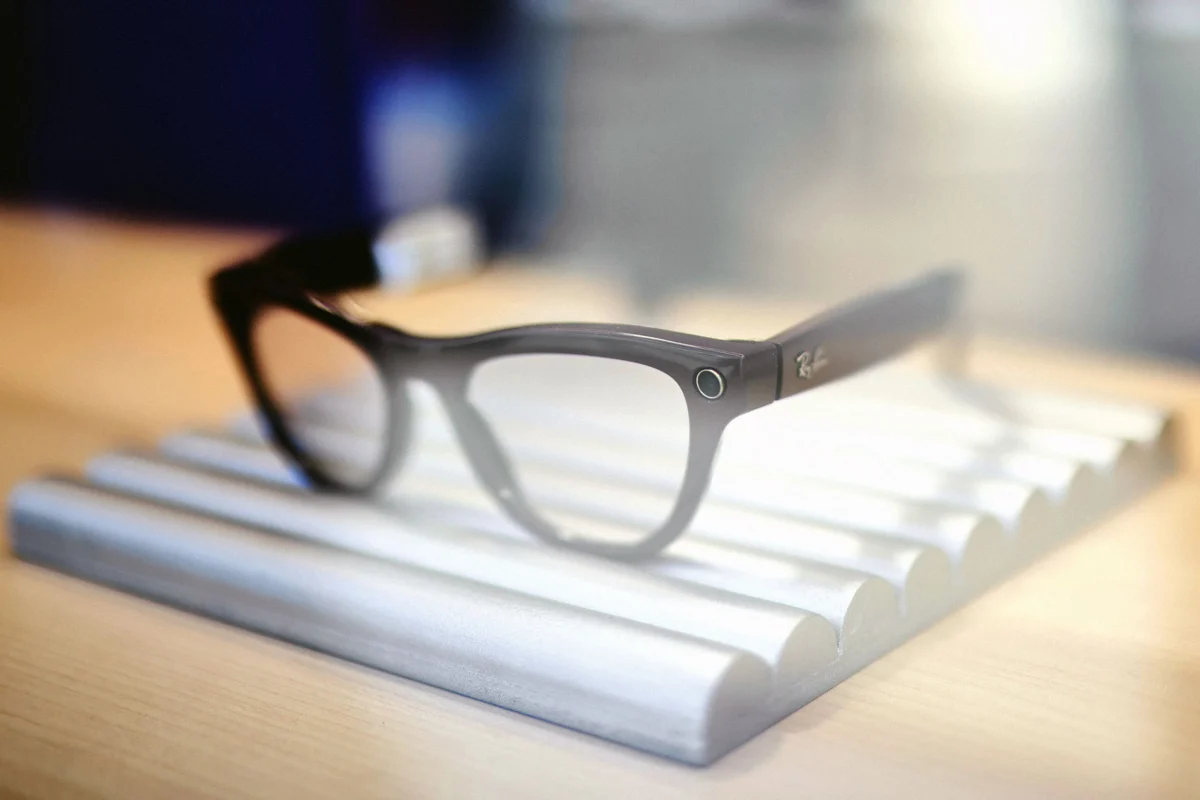
Meta, in partnership with eyewear giant EssilorLuxottica, has taken a different approach. By integrating technology into the classic Ray-Ban Wayfarer and Headliner frames, Meta has created a device that is virtually indistinguishable from standard sunglasses. This inconspicuous design is the primary driver of its success. In 2025 alone, Meta sold approximately 8 million pairs of these glasses, which range in price from $299 to $499. Unlike their predecessors, these glasses have successfully integrated into daily life, allowing users to capture high-definition video and photos with a simple tap or voice command.
The Rise of the Content Creator and the "Pervert Glasses" Moniker
The widespread adoption of Meta Ray-Bans has been fueled by social media "content creators" who use the devices to capture "authentic" public interactions. However, the nature of this content has drawn significant criticism. On platforms like TikTok and Instagram, footage has emerged of users pulling juvenile pranks on retail workers or engaging in unsolicited flirtations.
Prominent influencers, such as Sayed Kaghazi (@itspolokid) and Cameron John (@rizzzcam), who collectively boast over 3 million followers, frequently post videos of themselves approaching women on beaches or in nightclubs. These videos, filmed from a first-person perspective, often show women appearing uncomfortable or unaware they are being recorded for a global audience. The aggressive nature of these "pickup artist" tactics has led critics to label the device with a contemptuous nickname: "pervert glasses."
In Vancouver, British Columbia, local communities have begun organizing against such behavior. Residents recently used Reddit to track an individual known as "Sherif" (@vibrophone), who identifies as a "rizz" coach. His content often involves approaching women in the city’s nightlife district and performing physical stunts, such as "curling" them like barbells. Witnesses and subjects of his videos have expressed concern that these interactions are predatory, especially when the recording is not disclosed until after the fact, if at all.
Technical Safeguards and the "Stealth Mode" Black Market
Meta has attempted to address privacy concerns by equipping the glasses with a small LED light in the upper corner of the frame that illuminates when the device is recording. According to Meta spokesperson Tracy Clayton, this light makes it "unequivocally clear that content is being captured." Meta’s terms of service also state that users are responsible for complying with local laws and using the device in a respectful manner.
However, these safeguards are easily bypassed. A burgeoning "black market" for modifications has emerged online. On TikTok and Instagram, individuals like Andres Rodriguez (@asodcutz) offer "stealth mode" services for a fee of approximately $120. These services involve physically removing or disabling the LED indicator, allowing for completely covert recording. Furthermore, simple DIY hacks involving black tape or nail polish to cover the light are widely shared on YouTube and Reddit.
This circumvention of safety features highlights a fundamental flaw in the industry’s self-regulation: when the primary appeal of a device is its ability to record "candid" moments, users are incentivized to hide the fact that they are recording.
Data Privacy and the Role of Artificial Intelligence
The concerns surrounding Meta Ray-Bans extend beyond the physical act of recording. The integration of Meta AI introduces a new layer of data privacy risks. An investigation by Swedish newspapers in early 2024 revealed that footage sent to Meta’s servers for AI processing was sometimes reviewed by overseas contract workers. This footage included highly sensitive and private moments, such as nudity and sexual activity, which users may not have realized were being uploaded.
This revelation has triggered a consumer protection lawsuit, as plaintiffs argue that Meta did not sufficiently inform users about the extent of human review involved in their AI training. Additionally, the Meta app associated with the glasses can collect video data to further train its large language models, raising questions about the long-term storage and use of biometric data.
The future of the device may include even more invasive features. Reports suggest that Meta is exploring the integration of facial recognition technology. This would allow a user to look at a stranger and instantly retrieve their name, workplace, and social media profiles. In February 2026, Democratic Senators Ron Wyden, Ed Markey, and Jeff Merkley addressed an open letter to Meta CEO Mark Zuckerberg, warning that such technology could lead to "serious risks of stalking, harassment, and targeted intimidation."
Legislative Responses and Global Precedents
As the technology outpaces existing laws, some governments are moving to establish new legal frameworks. Denmark has emerged as a leader in this area, pioneering individual copyright protections over one’s own likeness. This legislation is designed to protect citizens from unwanted AI deepfakes and invasive recordings, providing a potential model for other nations.
In the United States, the debate often centers on the "expectation of privacy" in public spaces. While traditional legal interpretations suggest that individuals have no expectation of privacy when they are in public, the advent of wearable surveillance tech is challenging this notion. Privacy advocates argue that there is a significant difference between being seen by passersby and being recorded by a hidden camera for the purpose of global broadcast or AI training.
Counter-Technology and the Sociological Impact
In response to the perceived "surveillance creep," independent developers are creating their own countermeasures. Yves Jeanrenaud, a sociologist and programmer at the Osnabrück University of Applied Sciences in Germany, developed an open-source Android app called "Nearby Glasses." The app scans for Bluetooth signals unique to Meta Ray-Bans and Snap Spectacles, alerting the user if a recording device is in their immediate vicinity.
The app has seen over 59,000 downloads, signaling a significant public appetite for tools that restore a sense of privacy. However, Jeanrenaud is skeptical that technology alone can solve the problem. He suggests that the "stealth mode" culture is a symptom of a broader societal shift where entertainment and exploitation are inextricably linked.
"The law seems to be not on the side of those who want privacy," Jeanrenaud noted, suggesting that without robust regulation, the "arms race" between surveillance and privacy is one that the public is likely to lose.
Conclusion: A New Social Contract
The success of Meta Ray-Bans marks a transition from the era of the smartphone—where recording requires a deliberate, visible action—to the era of frictionless, passive surveillance. As 8 million more pairs enter the global market annually, the "candid" nature of public life is being replaced by a constant, low-level awareness that any interaction could be captured and monetized.
The implications of this shift are profound. For individuals like Joy Hui Lin, it means a newfound wariness of strangers. For policymakers, it means a race to define "digital consent" in a world where cameras are invisible. For Meta, it represents a lucrative new frontier in data collection. As the boundaries of the private and public continue to blur, society is being forced to negotiate a new social contract—one where the simple act of walking down a street may require a heightened state of digital vigilance.