



The entertainment industry is currently navigating a period of profound structural change, catalyzed by the unprecedented box office performance of low-budget psychological horror films originating from the digital creator sphere. Over the past several weeks, the primary subject of discussion across Hollywood executive suites and production offices has been the search for the next "Backrooms" or "Obsession." These films, directed by YouTube creators and produced on shoestring budgets, have not only outperformed traditional studio tentpoles in terms of return on investment but have also signaled a significant shift in audience demographics. However, as the industry scrambles to secure deals with internet personalities, veteran producer Peter Chernin is issuing a stark warning: the rush to replicate this success through imitation rather than innovation is a strategic blunder that could lead to widespread failure.
Peter Chernin, whose company North Road coproduced and cofinanced "Backrooms" alongside independent powerhouse A24, views the current industry frenzy as a symptom of a deeper malaise in Hollywood. In a recent series of discussions regarding the film’s success, Chernin characterized the sudden pivot toward YouTube creators as a "big mistake," likening it to the industry’s overreliance on sequels and established franchises. According to Chernin, simply jumping on an existing bandwagon ignores the fundamental requirement of the cinematic arts: the need for fresh voices and original intellectual property (IP). He estimates that 80% of the projects currently being greenlit in an attempt to capture the "Backrooms" magic will likely fail because they lack the authenticity and innovative spirit that made the original a phenomenon.
The Financial Seismic Shift of the Backrooms and Obsession
The scale of the success seen by "Backrooms" and "Obsession" is difficult to overstate within the context of modern theatrical economics. "Backrooms," directed by 19-year-old Kane Parsons and based on his viral YouTube series, was produced for a modest budget of $10 million. Within just six days of its domestic release, the film crossed the $100 million mark, shattering records for A24 and becoming the highest-grossing domestic release in the studio’s history. This follows the trajectory of "Obsession," another creator-led horror project that was filmed for a mere $750,000 and similarly cleared the $100 million domestic threshold.
These figures represent a level of profitability that traditional blockbusters, often burdened by production budgets exceeding $200 million and marketing spends of equal size, can rarely achieve. For a film like "Backrooms" to return ten times its production budget in less than a week suggests that the traditional "four-quadrant" marketing strategy may be losing ground to niche, community-driven interest. The efficiency of these productions has forced a reevaluation of studio strategy, leading many to wonder if the era of the bloated franchise is being eclipsed by the era of the viral creator.
A Career Built on Blockbusters and Digital Foresight
Peter Chernin’s skepticism regarding the industry’s current direction is informed by a career that bridges the gap between old-school Hollywood and the emerging creator economy. From 1996 to 2009, Chernin served as the head of News Corp’s Fox Group, where he oversaw the production and distribution of some of the highest-grossing films in cinematic history, including James Cameron’s "Titanic" and "Avatar." His tenure at Fox was defined by a mastery of the traditional studio system and an understanding of how to scale intellectual property globally.
Following his departure from Fox, Chernin founded The Chernin Group in 2010. This private equity firm was among the first to recognize the potential of the creator economy, investing in platforms and companies such as Tumblr and the digital talent network Fullscreen. In 2022, he cofounded North Road, a global content studio designed to operate at the intersection of traditional storytelling and modern distribution platforms. It is this dual perspective—having managed the biggest franchises in history while also backing the platforms where new creators reside—that gives Chernin’s critique its weight. He argues that the success of "Backrooms" was not a result of its platform of origin, but rather the unique, fresh insight that the YouTube background provided to the production team.
Demographic Disruption: The Gen Z Moviegoing Powerhouse
The audience data for "Backrooms" reveals a demographic shift that has long been sought by theater owners and studio heads. According to surveys conducted by Comscore Movies and Screen Engine PostTrak, a staggering 86% of ticket buyers for the film’s opening weekend were under the age of 35. This suggests that the film successfully tapped into Gen Z and younger Millennial audiences who have largely moved away from traditional television and cable in favor of social media and user-generated content.
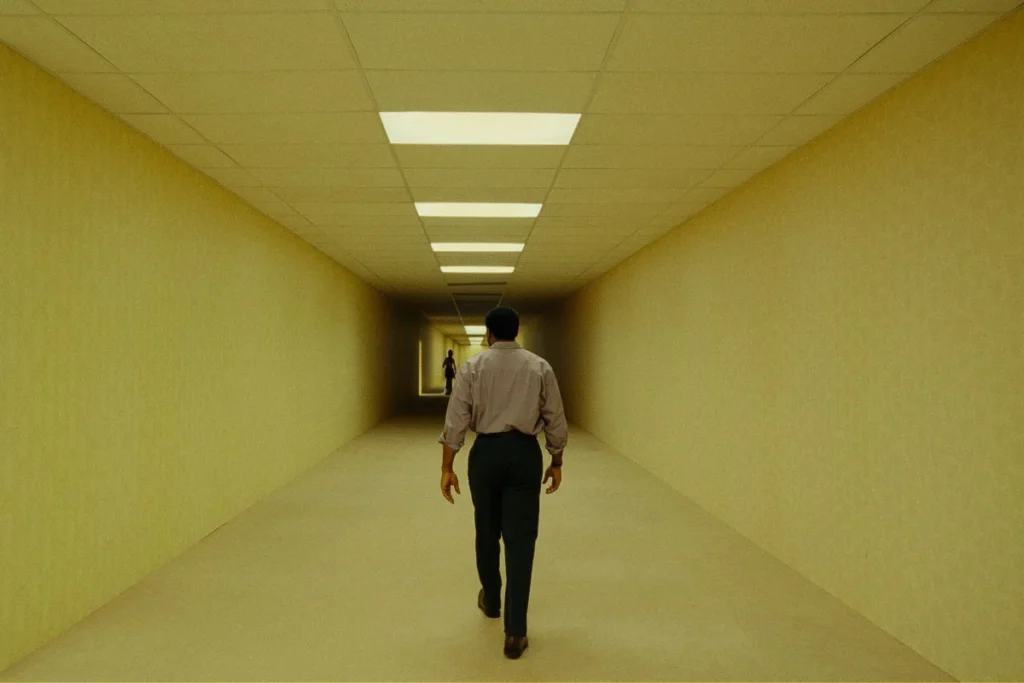
For this younger cohort, Kane Parsons’ YouTube series was not just a video; it was a foundational piece of digital lore. The "Backrooms" concept, which involves a terrifying, infinite maze of empty office spaces (often referred to as "liminal spaces"), originated in internet "creepypasta" forums before being popularized by Parsons’ sophisticated visual effects work. By the time the film reached theaters, it had a built-in, highly engaged audience that felt a sense of ownership over the material. This communal experience—moving from a private screen to a public theater—provided a sense of event-status that many traditional sequels currently lack.
The Crisis of Franchise Fatigue and Brand Management
The industry’s move toward YouTube IP comes at a time when traditional franchises are showing signs of significant wear. For over a decade, Hollywood has relied on a "brand management" approach, treating movies more like manufactured products than creative endeavors. While this strategy led to a golden age of superhero cinema and long-running sequels, data suggests that "franchise fatigue" is becoming a tangible threat to the box office.
High-profile sequels and spin-offs that were once considered "sure bets" have recently underperformed. A notable example cited by media analysts is the disappointing opening of Disney’s latest Star Wars feature, "The Mandalorian and Grogu." Eric Handler, a media and entertainment analyst at Roth, notes that younger audiences are increasingly resistant to the $250 million spectacle if it feels like a continuation of a brand they find stale. They are looking for something different—a sentiment echoed by the success of low-budget, high-concept films. Handler suggests that studios do not need to spend massive sums to capture interest; they need to present concepts that resonate with the current cultural zeitgeist.
Risk Management and the Future of the Mid-Budget Feature
Chernin’s central argument is that the industry has become "cynical" and "reckless" in its avoidance of risk. In his view, the past decade has seen Hollywood executives equate risk with recklessness, leading to a defensive posture where only established IP is greenlit. However, Chernin asserts that risk is the "lifeblood of success" and the source of the "biggest upside in the world."
The success of "Backrooms" demonstrates that the most effective way to mitigate risk is not to avoid it, but to manage it through appropriate budgeting and creative autonomy. By producing a film for $10 million, the financial stakes are lowered, allowing for more experimental storytelling and visual styles that might be rejected in a $200 million production. This "asymmetric risk" model—where the downside is capped but the upside is virtually unlimited—is becoming the new blueprint for independent and mid-major studios.
Implications for the Global Content Market
As Hollywood attempts to digest the lessons of the past month, several implications for the future of the content market are becoming clear:
- The New IP Pipeline: YouTube, TikTok, and other social platforms are now officially recognized as viable breeding grounds for cinematic IP. However, the transition from short-form digital content to a 90-minute narrative requires more than just a large follower count; it requires a cinematic vision that justifies the theatrical experience.
- Authenticity over Polish: Younger audiences prioritize authenticity and "freshness" over high-gloss production values. The "analog horror" aesthetic of "Backrooms"—characterized by low-fidelity visuals and a sense of found-footage realism—resonates more deeply with Gen Z than traditional CGI-heavy spectacles.
- The Death of the Middle: The industry is seeing a hollowing out of the middle-budget film. The market is bifurcating into massive, billion-dollar-hopeful blockbusters and ultra-low-budget, high-margin creator films. The traditional $50 million to $80 million drama or comedy continues to struggle for oxygen in the theatrical space.
- Strategic Innovation: As Peter Chernin suggests, the "gold rush" to sign every popular YouTuber will likely lead to a string of failures. The studios that succeed will be those that identify creators with genuine directorial talent and provide them with the resources of the traditional studio system without stripping away their unique voice.
The phenomenon of "Backrooms" and "Obsession" serves as a wake-up call for an industry that has long been accused of stagnation. While the temptation to follow the latest trend is high, the true lesson of these films may not be about YouTube at all, but about the enduring power of original ideas and the necessity of taking calculated risks. As Peter Chernin concludes, the job of the modern executive is to innovate and find the voices of tomorrow, rather than merely managing the brands of yesterday. The box office results of the past two weeks suggest that the audience is more than ready for that change.