



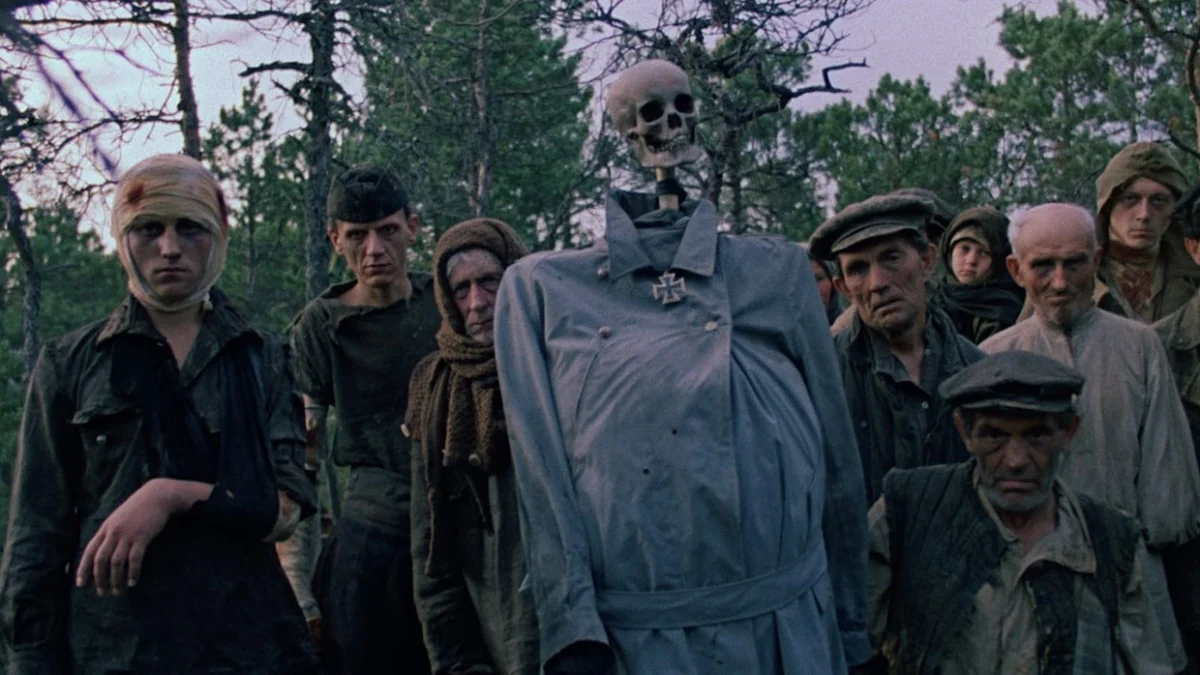
The American Cinematheque has announced a massive global expansion of its signature film series, Bleak Week: Cinema of Despair, marking a significant shift in the landscape of repertory film programming. What began in 2022 as a localized, subversive counter-programming effort in Los Angeles has evolved into an international phenomenon. Starting in June, the series will span 73 cities and nearly 100 theaters worldwide, inviting international programmers to interpret the concept of "bleakness" through their own cultural and cinematic lenses. This fifth iteration of the festival represents the most curatorially focused effort to date, moving beyond a niche interest in "depressing" movies to a sophisticated examination of the human condition through the prism of existential dread, political atrocity, and raw empathy.
The Evolution of Despair: From Local Experiment to Global Movement
The inaugural season of Bleak Week was launched in 2022 at the American Cinematheque’s Los Angeles venues—the Aero, the Egyptian, and the Los Feliz 3. Conceived as a "cheeky stab" at summertime counter-programming, the series was designed to offer an alternative to the traditional high-octane Hollywood blockbusters that typically dominate the June box office. The initial 33-film slate featured a grueling lineup of arthouse staples known for their uncompromising depictions of suffering and nihilism, including Pier Paolo Pasolini’s Salò, or the 120 Days of Sodom (1975), Elem Klimov’s Come and See (1985), and Béla Tarr’s seven-hour epic Sátántangó (1994).
Chris LeMaire, the Director of Programming at the American Cinematheque, has been the primary architect of the series. LeMaire’s background in championing austere and durational cinema—having previously organized retrospectives for Andrei Tarkovsky and Lav Diaz—provided the foundation for Bleak Week’s rigorous aesthetic. The festival’s mission, according to the Cinematheque, is to spotlight "filmmakers who wholly embrace a cinema of despair in pursuit of unpleasant truths and raw empathy." By 2024 and 2025, the series had already begun to attract major international figures, hosting tributes to directors like Kenneth Lonergan, Lynne Ramsay, and Charlie Kaufman, and even coaxing independent pioneer Jon Jost out for a rare retrospective.
Curatorial Philosophy and the "Different Types of Bleak"
As the series matured, LeMaire and Artistic Director Grant Moninger sought to refine the definition of what constitutes a "bleak" film. In the early stages, the programming was largely defined by its baseline dreariness. However, as the festival entered its third and fourth years, the curators began to explore the nuances of the genre. LeMaire famously posed the question: "What if there are different types of bleaks?"
This inquiry led to a more diverse and inclusive lineup that balances high-art staples with genre-bending cult classics. The current iteration places Ingmar Bergman’s war apologia Shame (1968) and Jane Campion’s The Piano (1993) alongside Richard Kelly’s satirical apocalypse Southland Tales (2006) and Mick Jackson’s harrowing nuclear war drama Threads (1984). This approach suggests that despair is not a monolith but a spectrum that can include black comedy, science fiction, and psychological thrillers.
A critical turning point for the festival’s prestige was the participation of legendary Hungarian filmmaker Béla Tarr. Moninger noted that convincing Tarr—who had previously expressed a reluctance to return to the United States—to attend Bleak Week fundamentally changed the stature of the event. Tarr’s presence validated the series as a serious intellectual endeavor rather than a mere exercise in cinematic masochism.
Global Expansion and Collaborative Programming
The decision to expand Bleak Week to 73 cities was born from a desire to foster a global community around the shared experience of difficult cinema. Unlike traditional film festivals that impose a rigid, centralized lineup, the American Cinematheque has adopted a collaborative model. Participating theaters are given access to a "giant spreadsheet" of past programs and upcoming restorations from major distributors like Janus Films and the American Genre Film Archive (AGFA), but they are encouraged to tailor the programming to their local audiences.
In Milwaukee, for instance, Kerstin Larson, the programming director at the Oriental Theater, has adapted the series to focus on the bleakness of labor. Her lineup includes a restoration of Chris Smith’s American Job (1996), a film with deep local resonance, paired with Béla Tarr’s The Turin Horse (2011). Larson’s decision to screen The Turin Horse on Father’s Day highlights the festival’s dark sense of irony and its willingness to challenge traditional holiday programming.
Other major hubs involved in the 2026 expansion include New York City, Chicago, Dallas, and London. This widespread adoption suggests a growing appetite for cinema that reflects the "warts and all" reality of the world, countering the prevailing industry trends toward escapism.

The "Hopecore" Counter-Trend and the Necessity of Realism
The rise of Bleak Week occurs alongside a competing cultural phenomenon known as "Hopecore." Recently highlighted in The Hollywood Reporter, Hopecore refers to a trend in storytelling that prioritizes uncynical narratives, collaboration, and the indomitable human spirit. Films like the upcoming sci-fi blockbuster Project Hail Mary are seen as the vanguard of this movement, representing a shift away from the "downbeat, grayscale filmmaking" popularized by directors like Christopher Nolan.
However, the leadership at Bleak Week argues that their programming is not the antithesis of hope, but rather a different form of it. Moninger contends that there is a profound humanism in facing the darkest aspects of existence together in a darkened theater. "These are films made by humans, programmed by humans, for humans, about the human condition," Moninger stated. "There’s nothing more hopeful than that."
The festival’s organizers suggest that the "Hopecore" trend may be more of a media-driven narrative than a fundamental shift in audience desire. They argue that sorrow and grief are constants in human history and that cinema provides a unique communal space to process these emotions. By choosing to screen these films in June—the height of the bright, sunny summer season—the festival emphasizes the contrast between the superficial cheer of the season and the internal complexities of the human experience.
Technical Milestones and Distributor Partnerships
The success of Bleak Week has been bolstered by strong partnerships with film distributors who view the festival as an ideal platform for launching high-profile restorations. This year’s edition features several world premieres, including a new restoration of the Coen Brothers’ neo-noir The Man Who Wasn’t There (2001) and Daniel Petrie’s rarely seen 1974 drama Buster and Billie.
The involvement of Janus Films and AGFA has been instrumental in securing the rights to these difficult-to-see titles. LeMaire noted that distributors are now willing to hold major restorations specifically for Bleak Week, recognizing the festival’s ability to generate significant ticket sales and critical buzz. For example, a retrospective of Ari Aster’s work sold out in minutes, demonstrating that there is a commercially viable audience for challenging, "bleak" content.
The addition of international stars like Isabelle Huppert has further elevated the festival’s profile. Huppert, known for her fearless performances in films like The Piano Teacher and Elle, serves as a bridge between high-brow European cinema and the festival’s broader audience. Her involvement has made it easier for the Cinematheque to secure "yes" responses from other high-profile guests and has encouraged audiences to take chances on rarer, more obscure titles in the lineup.
The Non-Fiction Omission and Ethical Considerations
Despite its broad scope, Bleak Week has notably avoided the inclusion of documentary filmmaking. This omission is a deliberate choice made by the organizers to distinguish between the artistic exploration of despair and the direct depiction of real-world suffering. Moninger explained that the festival does not wish to "show the suffering" in a literal, non-fictional sense, as it might feel exploitative under a series banner that carries a certain degree of "glib" branding.
Instead, the festival focuses on narrative cinema as a vehicle for extrapolation and fantasy. By using fiction to explore "unpleasant truths," the festival maintains a layer of artistic mediation that allows audiences to engage with heavy themes without the ethical complications inherent in viewing real-world atrocities for entertainment. However, some critics suggest that this limitation may eventually be challenged as the festival continues to evolve and as other programmers find thoughtful ways to integrate unflinching documentaries into the "Cinema of Despair" framework.
Conclusion: The Communal Power of Shared Sorrow
As Bleak Week: Cinema of Despair embarks on its most ambitious season to date, its growth serves as a testament to the enduring power of repertory cinema. In an era where streaming services often prioritize individual consumption and algorithmic comfort, the festival’s success highlights a deep-seated desire for communal experiences that do not shy away from the complexities of life.
By uniting 73 cities under a banner of "bleakness," the American Cinematheque has created a global dialogue about the role of art in processing grief, political failure, and existential anxiety. The festival’s ultimate legacy may not be the "despair" it showcases, but the "raw empathy" it fosters among audiences who choose to sit together in the dark and confront the most difficult aspects of being human. As Moninger concluded, the act of experiencing sorrow together is inherently hopeful, offering a form of connection that transcends the boundaries of the screen.