

On a September night in 2025, the skyline above the Vatican became the canvas for a display that merged ancient prophecy with cutting-edge robotics. Witnessed by tens of thousands, a luminous depiction of Baby Jesus appeared in the clouds, eventually transfiguring into the pixelated visage of the late Pope Francis. This event, titled "Grace for the World," marked the first concert ever held on the grounds of St. Peter’s Square and signaled a definitive shift in the medium of public spectacle. The performance, which featured Italian tenor Andrea Bocelli and American artist Teddy Swims, utilized a swarm of drones to recreate Michelangelo’s "Pietà" and the iconic outstretched fingers of the Sistine Chapel’s "Creation of Adam."

This high-altitude choreography was produced by Nova Sky Stories, a company spearheaded by Kimbal Musk. The event represented more than a religious celebration; it was a demonstration of how drone technology has transitioned from a niche curiosity to a primary medium for mass communication and artistic expression. As the industry matures, it is navigating a complex landscape of technological innovation, international competition, and the establishment of global safety standards.

The Technological Evolution of Aerial Displays
The drone light show, as a formalized industry, traces its roots back to 2015 when Intel set the first Guinness World Record for the "Most Unmanned Aerial Vehicles Airborne Simultaneously" with 100 drones. This milestone was followed by high-profile integrations, such as the 2017 Super Bowl halftime show featuring Lady Gaga. By 2025, the transition from traditional pyrotechnics to drone-based displays accelerated significantly. Major American cities, including Napa and Salt Lake City, and the Rose Bowl, have replaced Fourth of July fireworks with drone shows, citing environmental concerns and the precision of the new technology.

The hardware driving these displays has evolved from basic quadcopters to specialized "cyber-physical" units. Modern light-show drones, such as those manufactured by the South Korean firm UVify, are equipped with high-intensity LEDs that function as individual voxels (three-dimensional pixels) in the sky. To achieve the necessary precision for complex animations, operators utilize Real-Time Kinematic (RTK) positioning technology. While standard GPS is accurate to within two to five meters, RTK base stations broadcast correction signals that allow drones to maintain their position within centimeters.

From Black Rock Desert to the Holy See
The current trajectory of Nova Sky Stories and its involvement with the Vatican originated at the 2021 Burning Man "Free Burn" event. Following the official cancellation of the festival due to the pandemic, an unofficial gathering in the Black Rock Desert faced a federal ban on open flames. In lieu of the traditional burning of the "Man" effigy, Kimbal Musk and Dutch artist Ralph Nauta deployed a swarm of drones to create a fireless spectacle. The emotional response from the crowd—many of whom were moved to tears by the digital reconstruction of the effigy—convinced Musk of the medium’s "transformative properties."

In 2022, Nova Sky Stories was founded, eventually securing a $50 million investment round that included Hollywood mogul Jeffrey Katzenberg. The company’s ability to bridge the gap between Silicon Valley technology and cultural institutions was evidenced by the WhatsApp coordination between Vatican officials and artistic directors like Pharrell Williams. According to Musk, the Vatican show was met with approval from the highest levels of the Church, with reports indicating that the display was viewed as a modern continuation of the artistic legacy left by Michelangelo.

Operational Logistics and Regulatory Frameworks
Despite the visual seamlessness of the performances, the logistics of a drone show are labor-intensive. A typical 1,000-drone display requires hours of setup, involving a crew of technicians to manage lithium-ion battery installation, flight-path calibration, and the establishment of safety geofences. In the United States, commercial drone operators must hold a "Part 107" license from the Federal Aviation Administration (FAA).

The industry is currently divided among several major players with varying business models:

- Sky Elements: Based in Texas, this company focuses on large-scale marketing and record-breaking events. In 2024, they successfully petitioned the FAA to allow "pyrodrones"—drones equipped with fireworks—to operate in American airspace.
- Verge Aero: A Philadelphia-based operator that also develops proprietary software and hardware for global sale.
- Pixis Drones: A marketing-centric agency that utilizes drones as an advertising medium for film premieres and corporate launches.
The cost of these performances remains a significant barrier for smaller venues, with current industry rates ranging from $150 to $200 per drone per show. However, as automation increases, these costs are expected to stabilize.

Market Competition and Global Leadership
The drone light show industry is currently defined by a fierce rivalry between American and Chinese firms. China has consistently held the lead in terms of sheer scale. In recent years, Chinese companies like Damoda have set records involving over 30,000 drones. Beyond numbers, Chinese innovation has focused on automation; rather than manual grid layouts, their systems often utilize "hexagonal hives" that allow drones to launch and return to automated charging cases.

In the United States, the industry has faced challenges regarding safety and fraud. In late 2024, a drone accident in Orlando resulted in a lawsuit after a malfunctioning unit allegedly struck a child. This incident prompted Nils Thorjussen of Verge Aero and other industry leaders to collaborate with ASTM International to establish rigorous safety standards for aerial displays. Furthermore, the industry has dealt with internal scandals, including the 32-month prison sentence handed to David Oneal of Wildly Creative Marketing for defrauding SeaWorld by failing to deliver a contracted drone performance.

Artificial Intelligence and the Future of Choreography
The next frontier for the industry is the integration of Artificial Intelligence in show design and execution. Traditionally, choreographing a 1,000-drone show takes weeks of manual animation. However, companies like Sky Elements have begun testing AI agents—such as the "Mavrick" system—capable of researching software, designing choreography, and performing pre-flight checks in under 24 hours.

AI-driven systems can manage complex variables like wind resistance and drone proximity more efficiently than human pilots. In recent tests, AI agents successfully coordinated spiral formations and "Pulse Ascents" without human intervention beyond the final authorization. This shift toward automation is expected to lower the entry barrier for drone shows, potentially making them a staple of local community events rather than just high-budget metropolitan spectacles.
%2520-%2520Jennifer%2520Edit.jpg)
Case Study: The "Jesus Jesus Jesus" Event in Manvel, Texas
The scale and potential of the medium were perhaps most visible during the "Jesus Jesus Jesus" (JJJ) event in Manvel, Texas, over the Easter weekend of 2026. Manvel, one of the fastest-growing cities in the United States, hosted a nine-day display that culminated in the launch of 10,000 drones by the firm Aerial Illuminations.

The event, funded by an anonymous donor, was designed to narrate the story of Easter through massive aerial iconography. The display officially broke five Guinness World Records, including:

- Largest aerial logo
- Largest aerial LED screen
- Largest aerial QR code
- Largest word formed of drones
- Most drones launched in one week (66,123)
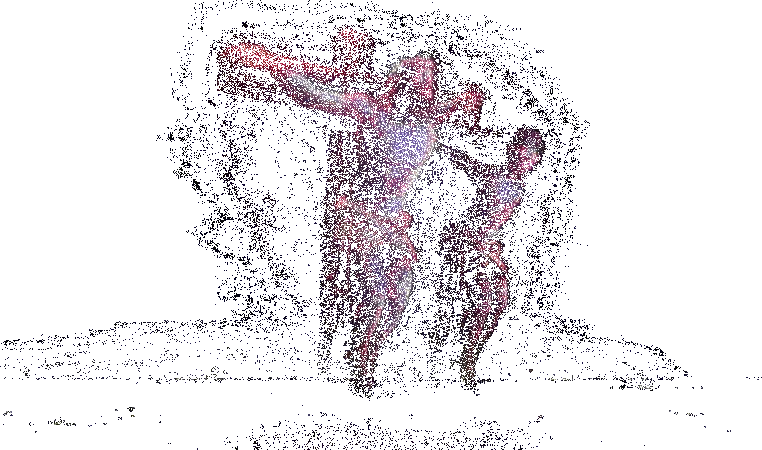
Pastor Jason, a lead organizer of the event, justified the immense scale of the display as a modern tool for evangelism. The performance included nine layers of drones forming a "celestial mille-feuille" that eventually rendered a seven-story-tall figure of the crucified Christ. The event demonstrated the medium’s ability to create a "total surrender" of attention, as thousands of spectators lowered their phones to witness the scale of the animation.

Broader Impact and Implications
As the United States approaches its semiquincentennial (250th birthday) in 2026, the drone show is poised to become the defining celebratory medium of the era. The shift from fireworks to drones reflects broader societal changes, including a preference for reusable technology over single-use explosives and the desire for more complex, narrative-driven storytelling.

The implications of this technology extend beyond entertainment. The precision required for these shows is a testament to the advancements in swarm robotics, a field with significant applications in search and rescue, agriculture, and defense. However, in the public sphere, the "sky story" remains a unifying force. As drone shows become more frequent, they represent a rare moment of collective focus in a fragmented digital age. Whether used for religious iconography at the Vatican or national celebrations in the United States, the drone spectacle has turned the sky into a shared screen, compelling populations to look upward in unison.