With deep brown eyes, a wide grin, and a chiseled physique, Jae Young Joon represents the modern archetype of the male influencer. His Instagram profile, which boasts more than 320,000 followers, serves as a digital diary of a life well-lived: applying sheet masks in a minimalist bathroom, enjoying soju and karaoke with friends, and posing against the backdrop of the Ferris wheel at the Coachella Valley Music and Arts Festival. His creative output extends to music, with his recent LP, Pressure Release, featuring BDSM-inspired aesthetics that showcase a rippling, athletic frame. However, a closer inspection of his profile reveals a startling disclaimer in the biography: "Human mind. AI generated." Jae Young Joon does not exist in the physical world; his friends, his music career, and his international travels are all products of sophisticated generative algorithms.
Jae is the creation of Luc Thierry, a Canadian content creator in his early thirties who has spent the past several months cultivating this digital persona. Despite the explicit disclosure of Jae’s artificial nature, Thierry observes that a significant portion of the audience chooses to interact with the character as if he were a living person. This phenomenon highlights a shifting landscape in social media where the boundaries between reality and digital fabrication are becoming increasingly porous.
The Genesis of a Virtual Icon
Luc Thierry’s journey into the world of synthetic media began in the summer of 2024. Having previously found success as a YouTuber creating K-pop fan content, Thierry reported feeling a sense of professional burnout. The transition to AI-generated content was born out of a desire to continue creative expression without the personal exposure required of traditional influencers.
The character of Jae Young Joon was designed to bridge two distinct digital cultures: the polished, "boyfriend material" aesthetic of K-pop idols and the high-engagement "thirst-trap" culture prevalent in the gay male community. Initially, Jae’s account saw modest growth, maintaining a following of approximately 700 users. The trajectory of the account shifted dramatically in February 2024 when a Reel featuring the AI model dancing shirtless to a Portuguese pop song went viral, garnering nearly 20 million views. This sudden influx of attention validated the market potential for synthetic male models and prompted Thierry to dedicate his full resources to the project.
The Red Carpet Incident and Digital Guerrilla Marketing
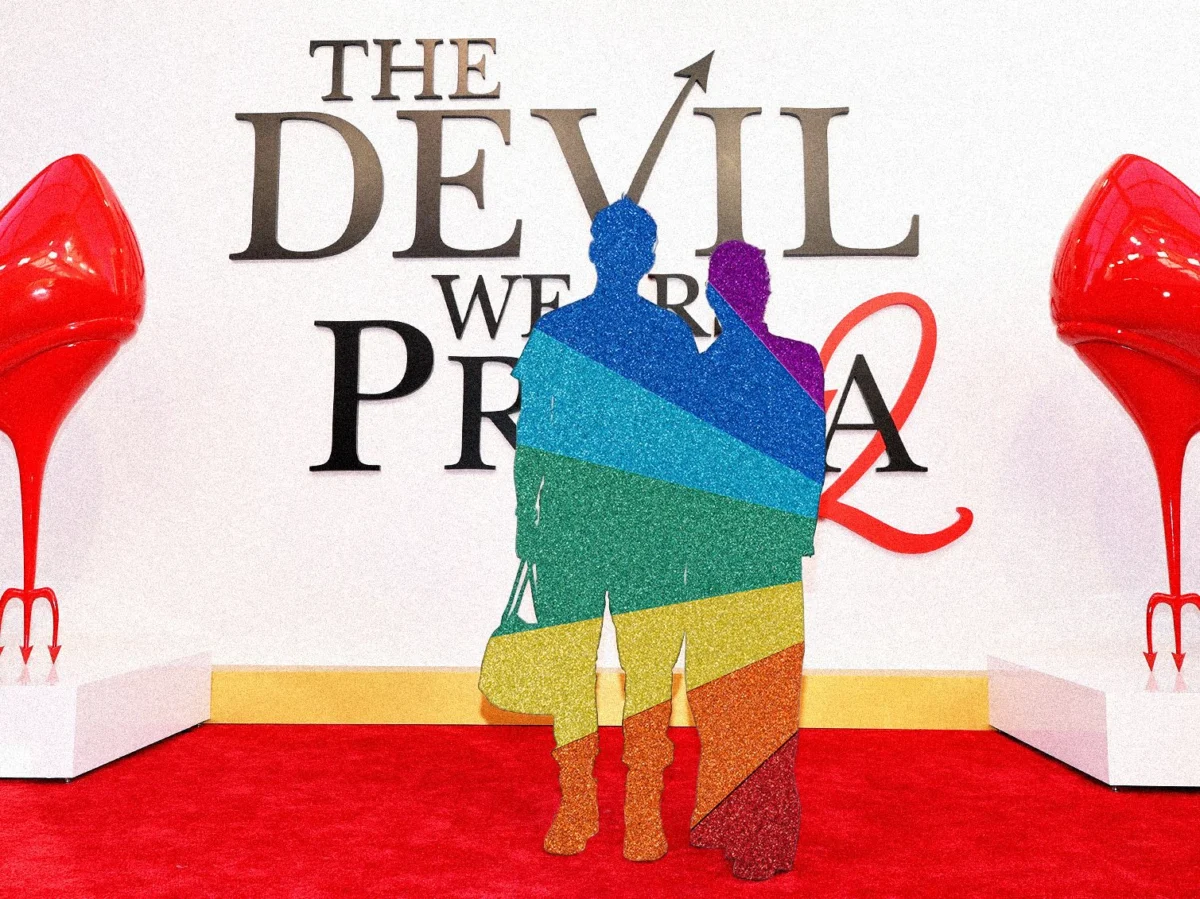
The growing influence of AI personas was thrust into the mainstream spotlight earlier this week following a viral event involving two other AI characters, Santos Walker and Caleb Ellis. The "models" appeared in a series of highly realistic images seemingly taken on the red carpet at the premiere of The Devil Wears Prada 2. The images were so convincing that they sparked immediate speculation regarding whether 20th Century Studios had commissioned the posts as a novel form of "sponcon" (sponsored content).
Subsequent investigations confirmed that the images were not an official marketing campaign. Instead, the creator of the Santos Walker account had utilized generative AI to simulate a red carpet appearance—a digital equivalent of "crashing" a high-profile event. The creator even developed a narrative for the post, suggesting a wealthy producer had flown the duo to Hollywood on a private jet. While 20th Century Studios did not provide an official comment, the incident triggered a broader discourse on the ethics of digital deception and the potential for AI to disrupt traditional film promotion and celebrity branding.
The Infrastructure of Synthetic Communities
Contrary to the image of the solitary "prompt engineer," the creators behind these AI personas operate within a highly organized and collaborative ecosystem. Thierry is a member of several private group chats composed of creators who manage both straight and gay AI male models. These creators frequently collaborate on cross-promotional content, such as a popular post featuring Jae and Santos Walker posing together.
One prominent group was established by the creator of Romeo DeSouza, a Dutch-Brazilian AI model with a following of over 56,000. These digital-first communities provide creators with a "safe space" to discuss technical challenges, share growth strategies, and navigate the social backlash associated with their work. In an unusual twist of digital life, members of these groups often refer to one another by their AI avatars’ names, further blurring the lines between the creators and their creations.
Psychological Impacts and the Ethics of Body Image
The rise of AI influencers has reignited concerns regarding the promotion of unrealistic beauty standards. The characters managed by Thierry and his peers often possess hyper-masculine, flawless physiques that are difficult, if not impossible, for most humans to achieve. Critics argue that these images exacerbate body dysmorphia, particularly within the gay community, where aesthetic pressure is already high.
Thierry, however, offers a counter-perspective. He argues that traditional human influencers have been presenting "polished," highly edited versions of reality for years. In his view, an AI character that is openly labeled as such is less deceptive than a human influencer who uses filters and surgery while claiming their appearance is natural.
"If you’re a real person that’s presenting an unrealistic version of your life, in some ways that’s a little more irresponsible to me than being upfront about me being an AI character," Thierry stated. He likens the experience of following an AI influencer to watching a television show or playing a video game—an immersive fantasy that the audience willingly participates in.
Economic Implications and the Future of the Agency Model
While the current revenue generated by these accounts remains relatively modest—Thierry reports earnings of a few thousand dollars from platforms like Spotify and Fanvue—the long-term economic potential is significant. The global influencer marketing industry was valued at approximately $21.1 billion in 2023, and brands are increasingly looking for ways to mitigate the risks associated with human talent.
AI influencers offer several advantages for brands:
- Total Control: Virtual models do not age, cannot be involved in real-world scandals, and can be programmed to follow brand guidelines perfectly.
- Cost Efficiency: There are no travel costs, catering requirements, or multi-day shoot schedules.
- Scalability: An AI influencer can "be" in multiple locations at once and speak dozens of languages fluently.
The success of Lil Miquela, an AI influencer with over 2 million followers who has secured deals with Prada and Samsung, serves as a blueprint for the industry. Recognizing this shift, Thierry is launching "Born2BeAI," a modeling agency specifically for synthetic talent, alongside "Virtuomo," a community platform dedicated to AI male models.
Regulatory Challenges and Platform Policies
As synthetic media proliferates, regulatory bodies and social media platforms are struggling to keep pace. The Federal Trade Commission (FTC) in the United States and similar agencies globally have begun updating guidelines to ensure that AI-generated content is clearly disclosed to consumers. Platforms like Meta (Instagram’s parent company) have introduced "Made with AI" labels to provide transparency, though the efficacy of these labels is often undermined by the sheer volume of content and the "scroll-heavy" nature of social media consumption.
The "dead internet theory"—the idea that the majority of internet traffic and content will eventually be generated by and for bots—is moving from a fringe conspiracy to a tangible concern for digital sociologists. If AI influencers like Jae Young Joon become the norm, the value of "authenticity" in the digital space may undergo a radical revaluation.
Conclusion: A Paradigm Shift in Digital Interaction
The story of Jae Young Joon and his creator Luc Thierry is more than a curiosity of the social media age; it is a harbinger of a fundamental shift in how humans interact with technology and each other. The willingness of hundreds of thousands of people to form parasocial bonds with a collection of pixels suggests that the human need for connection and entertainment is increasingly decoupled from the necessity of a biological counterpart.
As Thierry continues to develop his AI modeling agency, the focus will likely remain on the delicate balance between maintaining the "fourth wall" of his digital narratives and fulfilling the ethical obligation of transparency. Whether the future of social media belongs to the biological or the botanical, the era of the synthetic influencer has undeniably arrived, bringing with it a complex array of opportunities and challenges for the digital age.