Christopher Nolan, a filmmaker who has consistently pushed the boundaries of cinematic storytelling, continues to solidify his position as one of the most influential and prolific directors of our time. With his latest project, "The Odyssey," a highly anticipated adaptation of Homer’s epic poem, Nolan embarks on another ambitious undertaking, demonstrating his unparalleled ability to captivate audiences and critics alike. This latest venture offers a timely moment to re-examine his extensive filmography, a body of work that has consistently defied expectations and redefined genre conventions.

Nolan’s directorial journey, now spanning thirteen feature films, has been marked by a remarkable evolution. His early career saw him masterfully navigate complex narratives, most notably with his groundbreaking "The Dark Knight" trilogy. However, what sets Nolan apart is his remarkable capacity to transcend even such monumental successes. Unlike many directors whose signature works become career-defining anchors, Nolan’s superhero franchise, while critically acclaimed and commercially successful, now feels like a significant but distinct chapter in a much broader, more varied, and consistently impactful career. His films have consistently journeyed from the intricate landscapes of the human psyche to the vastness of space, each project met with a potent blend of anticipation and surprise.
The director’s willingness to tackle seemingly unwieldy subjects with a unique vision has become his hallmark. Projects like "Dunkirk," a straightforward World War II survival narrative, initially met with skepticism regarding its potential for cinematic drama, ultimately proved to be a masterclass in tension and immersive filmmaking. Similarly, the announcement of "Oppenheimer," a biographical drama about the father of the atomic bomb, might have seemed an unusual choice for a director known for mind-bending thrillers, yet it culminated in a triumphant sweep at the Academy Awards, securing him both Best Director and Best Picture. This consistent ability to transform challenging concepts into critically and commercially successful films has led to the common observation that Christopher Nolan has, in essence, become a genre unto himself. His work is invariably imbued with recurring thematic preoccupations – the nature of time, the burden of guilt, and the intricate dynamics of control – all rendered through his distinctive visual and auditory style, characterized by impressionistic editing, resonant scores, and a dynamic, mobile camera.

"The Odyssey," Nolan’s latest cinematic endeavor, presents a compelling reimagining of Homer’s ancient Greek epic. While details surrounding the film remain under wraps, its announcement alone signals Nolan’s continued commitment to large-scale, thought-provoking cinema. This undertaking provides an ideal juncture to revisit and re-evaluate his existing filmography, assessing the trajectory and impact of his directorial output.
A Chronological Ascent: Tracing Nolan’s Cinematic Evolution
Christopher Nolan’s directorial career began with a low-budget, black-and-white neo-noir that immediately showcased his burgeoning talent for intricate plotting and atmospheric tension.

13. Insomnia (2002)
Nolan’s studio debut, "Insomnia," stands as a testament to his early mastery of mood and character. A remake of the 1997 Swedish thriller, the film plunges into the psychological torment of a detective, played by Al Pacino, investigating a murder in a town plagued by perpetual daylight. "Insomnia" bears the nascent hallmarks of Nolan’s signature style: impressionistic editing that mirrors the protagonist’s fractured mental state, a steely, guilt-ridden protagonist, and even a subtle nod to Michael Mann’s "Heat" in a pivotal coffee scene. While perhaps less overtly experimental than his later works, it demonstrated Nolan’s adeptness at blending his idiosyncratic vision with a more conventional Hollywood production. The film’s enduring appeal lies in its gripping narrative and its exploration of moral ambiguity, themes that would continue to resonate throughout his career. It proved Nolan’s capability to handle star power and a significant budget while retaining his distinct artistic voice.
12. Following (1998)
The genesis of Nolan’s distinctive directorial voice can be traced back to his debut feature, "Following." This independent crime thriller, shot on a shoestring budget, immediately established his penchant for non-linear storytelling and thematic depth. The film’s narrative, assembled like a fragmented noir puzzle, follows a young writer who, while trailing strangers for inspiration, becomes entangled in a world of crime. "Following" foreshadows Nolan’s recurring fascination with unreliable narrators, the cyclical nature of actions and consequences, and the construction of narrative through recurring motifs and fragmented perspectives. Its low-fi aesthetic belies a sophisticated approach to storytelling that would become a hallmark of his subsequent, more elaborate productions. The film’s raw energy and thematic clarity offer a fascinating glimpse into the foundational elements of Nolan’s cinematic DNA.

11. The Prestige (2006)
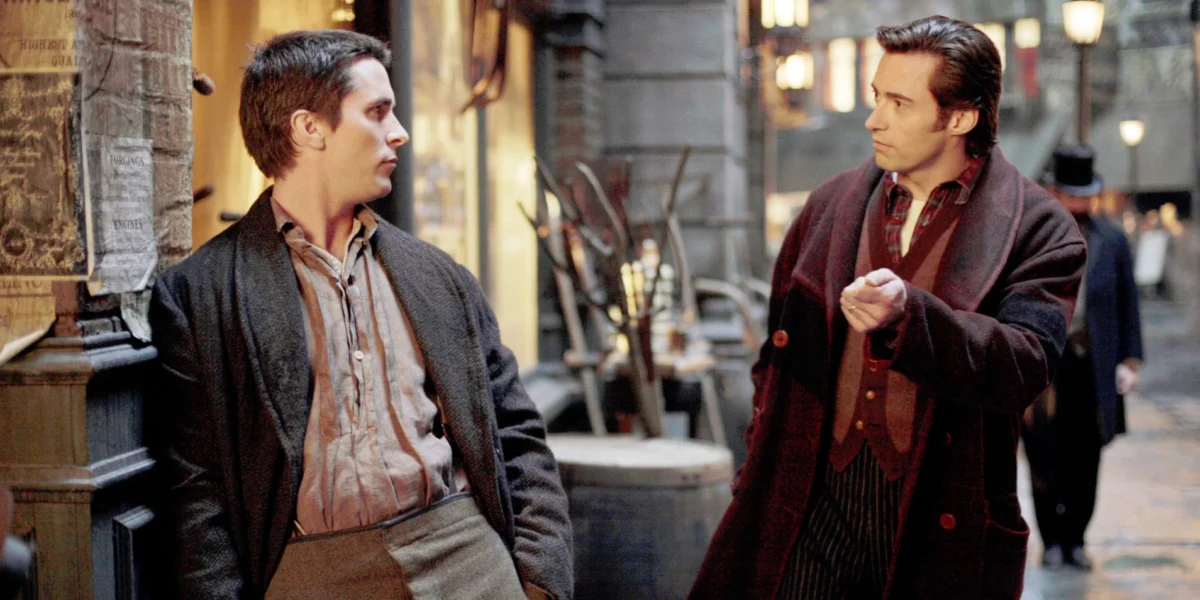
"The Prestige," a complex tale of two rival magicians in Victorian London, is a film that often sparks debate among Nolan’s aficionados. While its intricate plot and the tantalizing mystery at its core are undeniable strengths, the film’s reliance on a significant plot twist has, for some, overshadowed its subtler achievements. The narrative, inspired by Christopher Priest’s novel, masterfully interweaves the lives of Robert Angier (Hugh Jackman) and Alfred Borden (Christian Bale) as their professional rivalry escalates into a dangerous obsession. The film’s exploration of sacrifice, illusion, and the cost of ambition is compelling, and Nolan’s commentary on the nature of magic, presented in Angier’s final monologue, serves as a powerful, if somewhat overt, thesis on his own artistic philosophy. Despite its occasional narrative contrivances, "The Prestige" remains a testament to Nolan’s ability to craft intellectually stimulating and visually arresting cinema.
10. Batman Begins (2005)
Christopher Nolan’s revitalization of the Batman franchise with "Batman Begins" was a pivotal moment in superhero filmmaking. The film’s first act, depicting Bruce Wayne’s disillusionment and his rigorous training abroad, is a masterclass in character development, seamlessly blending global scope with profound emotional grounding. Upon his return to a decaying Gotham, Nolan transforms the narrative into a compelling origin story, portraying Batman not merely as a vigilante but as a symbol of hope and a psychological weapon against fear. The film’s success lay in its gritty realism, its exploration of the psychological underpinnings of heroism, and its departure from the more fantastical interpretations of the character that had preceded it. "Batman Begins" set a new standard for superhero films, demonstrating that these narratives could be both entertaining and thematically resonant.

9. Memento (2000)
Christopher Nolan’s breakout film, "Memento," remains a landmark achievement in psychological thrillers. Based on a short story by his brother, Jonathan Nolan, the film’s innovative narrative structure, told in reverse chronological order, mirrors the protagonist’s anterograde amnesia. Guy Pearce delivers a powerful performance as Leonard Shelby, a man desperately seeking his wife’s killer while unable to form new memories. "Memento" transcends its structural gimmick to become a profound exploration of memory, identity, and the subjective nature of truth. The film’s disorienting, yet meticulously crafted, presentation forces the audience to experience Leonard’s fragmented reality, making it an unforgettable and intellectually engaging cinematic experience. Its critical and commercial success paved the way for Nolan’s subsequent ambitious projects.
8. The Dark Knight Rises (2012)
The concluding chapter of Nolan’s "The Dark Knight" trilogy, "The Dark Knight Rises," often receives a more divided reception, yet it stands as a bold and maximalist statement from the director. The film presents a society on the brink of collapse, with the anarchist villain Bane weaponizing societal unrest to destabilize Gotham. Drawing influences from Dickensian narratives and epic filmmaking traditions, Nolan crafts a climax that is both grand in scale and thematically complex. Tom Hardy’s portrayal of Bane, a figure of both menace and twisted conviction, provides a formidable antagonist. "The Dark Knight Rises" grapples with themes of societal decay, revolution, and the erosion of order, presenting a vision that, while perhaps more operatic than its predecessors, remains a powerful exploration of contemporary anxieties. Its often-misunderstood nature speaks to Nolan’s willingness to challenge audience expectations.

7. The Odyssey (2026)
Christopher Nolan’s adaptation of Homer’s "The Odyssey" represents a bold foray into epic fantasy and a significant artistic statement following the critical and commercial success of "Oppenheimer." The film, which reportedly stars Matt Damon as Odysseus, is poised to be a grand-scale production featuring extensive practical effects and elaborate set pieces, harkening back to a tradition of Hollywood epics. Nolan’s approach is expected to delve into the psychological and consequential aspects of Odysseus’s arduous journey, drawing thematic parallels to his earlier works, particularly "Oppenheimer." Early reports suggest that the film will explore themes of consequence, the nature of heroism, and the enduring human drive for home and identity. The cyclops sequence, in particular, has been lauded as one of Nolan’s most terrifyingly constructed scenes, showcasing his ability to imbue ancient myth with visceral, modern impact. While some moments in the adaptation may navigate the "stormy seas" of translating an ancient text to the screen, the film’s ambitious scope and Nolan’s distinctive vision promise a profound cinematic experience.
6. Tenet (2020)
Released amidst the unprecedented challenges of the COVID-19 pandemic, "Tenet" was a testament to Nolan’s commitment to the theatrical experience. This intricate espionage thriller, centered on the concept of temporal inversion, demands multiple viewings to fully unravel its complex plot. The film’s innovative action sequences, where characters move forwards and backward through time simultaneously, are a visual marvel, pushing the boundaries of what is cinematically possible. The "bromance" or perhaps evolving relationship between Neil (Robert Pattinson) and The Protagonist (John David Washington) provides an emotional anchor amidst the high-octane chaos. "Tenet" is a film that rewards intellectual engagement, offering a dense, exhilarating, and undeniably "dude rock" cinematic experience, as described by some critics, that is uniquely Nolan.

5. Interstellar (2014)
Initially met with a mixed critical reception, "Interstellar" has undergone a significant reappraisal, solidifying its place as one of Christopher Nolan’s most cherished films. What was once considered a "good but flawed" space epic is now widely regarded as a masterpiece, particularly for its profound emotional depth. Nolan, often perceived as a director of the cerebral, here delivers a sweeping yet intimate family melodrama set against the backdrop of interstellar travel. The film’s exploration of humanity’s drive to explore the impossible, juxtaposed with the primal instinct for survival, is deeply moving. The scientific concepts, while ambitious, serve the overarching emotional narrative, particularly the poignant father-daughter relationship. "Interstellar" is a testament to Nolan’s ability to evoke powerful emotions, and its resonance continues to grow with each viewing.
4. The Dark Knight (2008)
"The Dark Knight" stands as a monumental achievement in the action blockbuster genre, transcending its superhero origins to become a profound meditation on post-9/11 America. While often lauded for its gritty realism, Nolan’s Batman operates within a world that embraces heightened cinematic logic, akin to the stylized reality of James Bond films. The film masterfully explores themes of terrorism, surveillance, and the ethical compromises faced by heroes in a complex world. The anarchic force of Heath Ledger’s Oscar-winning portrayal of the Joker remains a captivating and terrifying presence, pushing both the characters and the audience to their moral limits. "The Dark Knight" is not only a thrilling spectacle but also a vital piece of pop art that continues to resonate with contemporary societal anxieties.

3. Oppenheimer (2023)
Christopher Nolan’s "Oppenheimer" is a powerful testament to his command over popular culture and his ability to translate complex historical and scientific narratives into gripping blockbusters. The film’s fragmented timeline, its exploration of memory, and its unflinching look at guilt and consequence transform the story of the atomic bomb into a riveting cinematic experience. Despite its somber subject matter, "Oppenheimer" is undeniably entertaining, propelled by sharp dialogue and a satisfying narrative structure that eschews traditional action sequences for intense, character-driven confrontations. The film’s cathartic resonance extends beyond the creation of the bomb, prompting reflection on contemporary fears surrounding technological advancement, from AI to climate change, highlighting humanity’s inherent drive to create as a potential catalyst for its own destruction.
2. Inception (2010)
"Inception" is widely credited with ushering in the era of the "art house blockbuster," a film that successfully blended intellectual complexity with mainstream appeal. This dream heist narrative, set across multiple layers of the subconscious, remains an ingenious and thrilling caper. However, the film’s true power lies in its emotional core, drawing parallels to Alfred Hitchcock’s "Vertigo" through its exploration of a psychologically troubled protagonist grappling with self-delusion and irreconcilable yearning. Leonardo DiCaprio’s portrayal of Dominic Cobb is central to this, his unreliability as a narrator casting doubt on the film’s realities and leaving audiences pondering the true nature of Cobb’s experiences. "Inception" is a masterclass in visual storytelling and narrative ingenuity, a film that continues to provoke discussion and wonder.

1. Dunkirk (2017)
"Dunkirk" represents Christopher Nolan at his purest, a film that distills his directorial prowess into an exercise of escalating suspense and immersive storytelling. With minimal dialogue, Nolan crafts a near-silent film that places the audience directly into the harrowing experiences of soldiers on land, at sea, and in the air during the Dunkirk evacuation. The film’s brilliance lies in its tripartite structure, interweaving three distinct timelines – the "Mole" (land), the "Sea," and the "Air" – to create a symphony of tension and urgency. "Dunkirk" masterfully blends the mythic heroism seen in "The Dark Knight," the dreamlike disorientation of "Inception," and the temporal complexities of "Interstellar." Each image is meticulously composed, revealing the cause-and-effect of individual actions within the crucible of war, ultimately forging a powerful collective experience that is both epic in scale and profoundly intimate.
Christopher Nolan’s filmography stands as a testament to his unique vision and his unwavering commitment to pushing the boundaries of cinematic art. From his early independent features to his current status as a global auteur, his work consistently challenges, entertains, and provokes. As "The Odyssey" prepares to embark on its cinematic voyage, audiences eagerly anticipate another masterfully crafted experience from a director who has undeniably redefined what is possible in filmmaking.