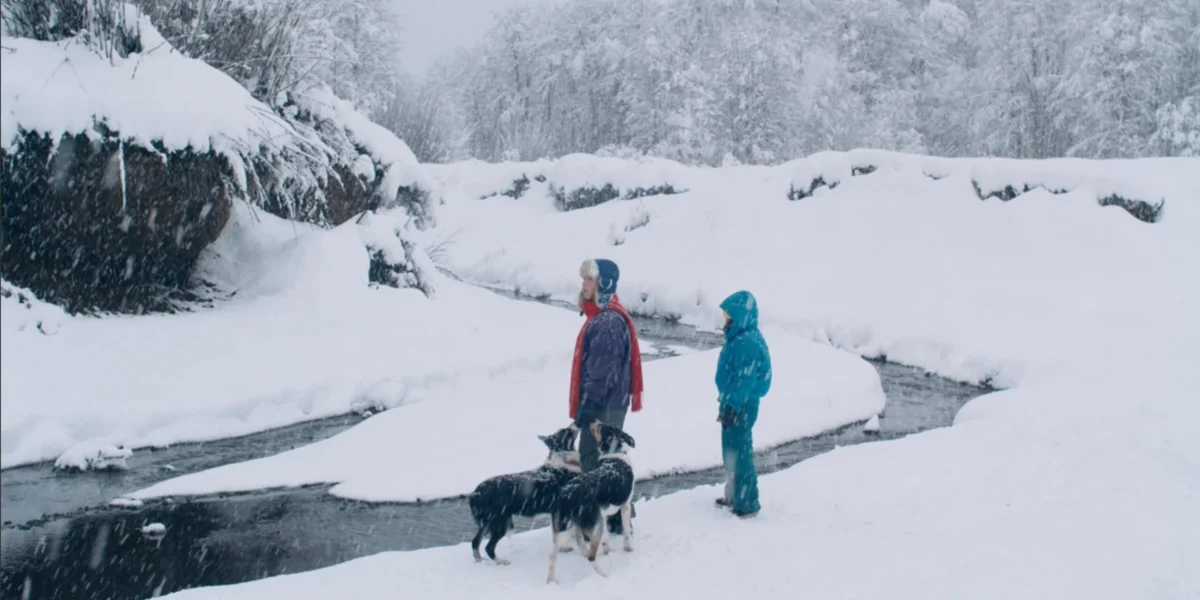
Chile, 1992. A remote hotel near an Andean ski resort becomes the focal point of a chilling disappearance, as a young girl’s summer holiday transforms into a descent into a world of hidden truths and unspoken pasts. "The Meltdown" (original "El Deshielo"), the sophomore directorial effort from Chilean writer-director Manuela Martelli, premiered in the prestigious Un Certain Regard section at the Cannes Film Festival, offering a stark, atmospheric crime drama that leverages the limited, yet potent, perspective of a child to unravel a complex narrative. The film, running 108 minutes, features a compelling cast including Maya O’Rourke as the inquisitive nine-year-old Inés, Maia Rae Domagala as the vanished German skier Hanna, and Saskia Rosendahl as Hanna’s desperate mother, Lina.
Set against the breathtaking yet unforgiving backdrop of the Chilean Andes in the early 1990s, a period following a prolonged period of authoritarian rule, "The Meltdown" masterfully intertwines a personal mystery with the lingering shadows of a nation’s recent history. The story centers on Inés, who is spending an extended period at her grandparents’ remote hotel, a family-run establishment catering to the burgeoning ski tourism industry. Her parents are notably absent, having traveled to Seville, Spain, to present an iceberg as part of Chile’s delegation at the 1992 Universal Exposition. This symbolic gesture, representing a nation striving for a new beginning and international engagement after years of isolation, provides a poignant contrast to the unfolding events at the isolated mountain resort.
The Genesis of a Mystery: A Child’s Unfiltered Gaze
The film’s narrative strength lies in its commitment to portraying events through the eyes of its young protagonist, Inés. This directorial choice mirrors the effectiveness seen in critically acclaimed films such as "Pan’s Labyrinth" and "The Boy in the Striped Pajamas," where a child’s limited comprehension paradoxically amplifies the stakes and emotional resonance of adult dramas. As Inés navigates her days, a blend of schoolwork, assisting her grandmother with guest inquiries, and exploring the snow-laden surroundings with the lodge dogs, she embodies a sense of youthful independence. Her world, however, is irrevocably altered with the arrival of a German ski team, comprised primarily of teenage boys, who have come to train at the resort.
It is within this transient community that Inés forms a significant, albeit brief, friendship with Hanna, a fifteen-year-old German skier and the sole female member of the team. Their connection blossoms rapidly over a few days, offering Inés a rare peer and a glimpse into a world beyond her immediate family circle. This burgeoning friendship takes a sharp turn when Hanna disappears without a trace following an apparent "date night" with Inés’s own cousin. The disappearance, occurring amidst the swirling snow and dense pine forests of the Andes, triggers a desperate search that gradually peels back layers of deception and hidden agendas within the seemingly tranquil resort.
A Nation’s Echoes in a Remote Landscape
The backdrop of post-dictatorship Chile in the early 1990s is not merely incidental to the plot; it is intrinsically woven into the fabric of the narrative. The period was marked by a complex transition towards democracy, with ongoing efforts to reconcile with the past and establish new national identities. The presence of the German ski team, a contingent from a nation with its own significant historical reckoning, further adds layers of subtle commentary. Chile’s participation in the Seville Expo with an iceberg, while a symbol of forward momentum, also evokes themes of fragility, preservation, and the potential for rapid change or dissolution.
The film implicitly suggests that the isolated environment of the Andes, much like the nation itself, harbors buried secrets and unresolved tensions. The search for Hanna exposes not only the immediate circumstances of her disappearance but also the underlying currents of power dynamics, unspoken truths, and potentially, the lingering impact of past societal traumas. The narrative hints at a broader societal unease, where the veneer of normalcy can easily conceal darker realities.
Chronology of the Disappearance and Investigation
The unfolding of "The Meltdown" can be understood through a series of key chronological points:
- Early 1990s: Chile is in a period of democratic transition following years of military dictatorship. The country is actively seeking to re-establish its international presence and project an image of progress and openness.
- 1992: Inés is residing at her grandparents’ remote hotel in the Chilean Andes. Her parents are attending the Universal Exposition in Seville, Spain, showcasing Chile’s evolving image.
- Arrival of the German Ski Team: A group of young German skiers, including Hanna, arrives at the resort for training.
- Formation of Friendship: Inés, largely isolated, forms a quick bond with Hanna, a fifteen-year-old member of the team.
- The Incident: Hanna disappears after an apparent encounter with Inés’s cousin. The exact nature of this encounter and the timeline leading up to her vanishing are central to the unfolding mystery.
- Initiation of Search: The resort staff, including Inés’s grandparents and eventually local authorities, begin a search for the missing skier.
- Arrival of Hanna’s Mother: Lina, Hanna’s mother, arrives at the resort, demanding answers and initiating her own quest to find her daughter. She forms an unexpected alliance with Inés, who acts as a translator and an observant, albeit limited, investigator.
- Exposure of Hidden Truths: As the search progresses, Inés, through her innocent yet persistent observations, begins to piece together fragmented information, questioning the adults and their seemingly inconsistent narratives. The investigation reveals potential negligence, evasiveness, and perhaps deliberate obfuscation from various individuals connected to the resort and the ski team.
- Climax and Resolution (Implied): The film’s resolution, while not explicitly detailing every plot point, focuses on the revelation of underlying truths and the lasting impact of the events on Inés and the community. The "meltdown" refers not only to the melting snow but also to the thawing of secrets and the emotional unearthing of difficult realities.
The Performance Ensemble: Anchoring the Narrative
The success of "The Meltdown" hinges significantly on its performances, particularly that of its young lead. Maya O’Rourke delivers an "exemplary" and "impressive" performance as Inés, shouldering the majority of the film with a maturity that belies her age. Her ability to navigate multiple languages and convey a nuanced understanding of the unfolding events, even when she lacks full comprehension, is a testament to her talent. Her portrayal of Inés as a child who "feels as though they should be several feet taller, or at least years older" captures the essence of a young mind grappling with adult complexities.
Saskia Rosendahl is equally captivating as Lina, Hanna’s mother. Her arrival injects a much-needed dose of maternal desperation and frustration into the stark mountain setting. The dynamic between O’Rourke and Rosendahl, despite the age difference, forms the "pulsing heart" of the film in its latter half. Their shared pursuit of truth, driven by different motivations, creates a powerful emotional core.
Supporting performances from Maia Rae Domagala as the enigmatic Hanna, and others such as Jakub Gierszal and Paulina Urrutia (whose roles are not explicitly detailed in the provided text but are listed in the cast), contribute to the intricate web of characters and their potential involvement or knowledge. Mauricio Pesutic’s presence in the cast also suggests a grounding presence within the local community or the hotel’s management.
Technical Prowess: Crafting an Immersive Atmosphere
Beyond the performances, "The Meltdown" is elevated by its exceptional technical craftsmanship, which transforms the Andean setting into a character in itself. Cinematographer Benjamin Echazarreta captures the stark beauty of the landscape with a masterful blend of breathtaking vistas and chilling eeriness. His atmospheric camerawork is crucial in hinting at the "disturbing secrets beneath the sparkling snow" and the "whispers of atrocities untold in the frigid breeze." The visual language of the film effectively mirrors the themes of concealment and underlying danger.
The film’s score, composed by Maria Portugal, known for her work on "Chile ’76," is a critical element in establishing the unsettling tone. Constructed from "shrieking strings and shiver-inducing brass," it adds a layer of "ominous whimsy" to the film’s "darkly congested atmosphere." This auditory landscape is further enriched by Javier Umpierrez’s detailed and immersive sound design. Umpierrez’s work elevates the film by transforming the Chilean winter into a palpable presence, with sounds that "sing and whisper," contributing to the film’s pervasive sense of unease.
Analysis of Implications: A Mirror to Societal Disconnects
While "The Meltdown" is characterized as a "slow burn" and perhaps a thriller that "never quite finds its footing" in terms of explosive tension or payoff, its lasting impact lies in its thematic resonance and its meticulous execution. The film offers a compelling crime thriller, but its true strength lies in its ability to use a singular event to explore broader societal issues.
The film’s exploration of patriarchal structures is implicitly critiqued through the child’s perspective, as Inés begins to question the actions and motivations of the men around her, including her cousin and potentially other figures of authority. The "power plays at hand and untruths being told" suggest a landscape where established hierarchies and traditional gender roles are being subtly challenged, or at least revealed as flawed.
Furthermore, the film’s subtle nods to "looming memories of colonialism and the haunting sense of unrest and unspoken atrocities from not too long ago" place the disappearance within a larger historical and cultural context. The isolated setting can be interpreted as a microcosm of a nation grappling with its past, where the surface tranquility masks deeper societal wounds. The "melting" of the iceberg, a symbol of Chile’s progress, can also be seen as a metaphor for the potential disintegration of carefully constructed facades when faced with the relentless pressure of truth and reckoning.
The vulnerability and incomplete perception shared by the audience with Inés are precisely what make the film "all the more disturbing." This narrative device serves as a potent commentary on the contemporary experience, where navigating an ever-changing and politically divided world often leaves individuals with a similar sense of uncertainty and a struggle to discern truth amidst manipulation. The film, therefore, transcends its genre to become a poignant reflection on the challenges of understanding and confronting complex realities, both personal and societal.
"The Meltdown" ultimately stands as a testament to the power of atmosphere, performance, and a unique perspective. While its deliberate pacing might not appeal to all, its astonishingly unique location, the strength of its lead performance, and its immersive technical craftsmanship combine to create a film that is both memorable and thought-provoking. It is a film that lingers, much like the cold mountain air, leaving the audience to contemplate the truths that lie beneath the surface, often glimpsed only through the innocent yet perceptive eyes of a child.