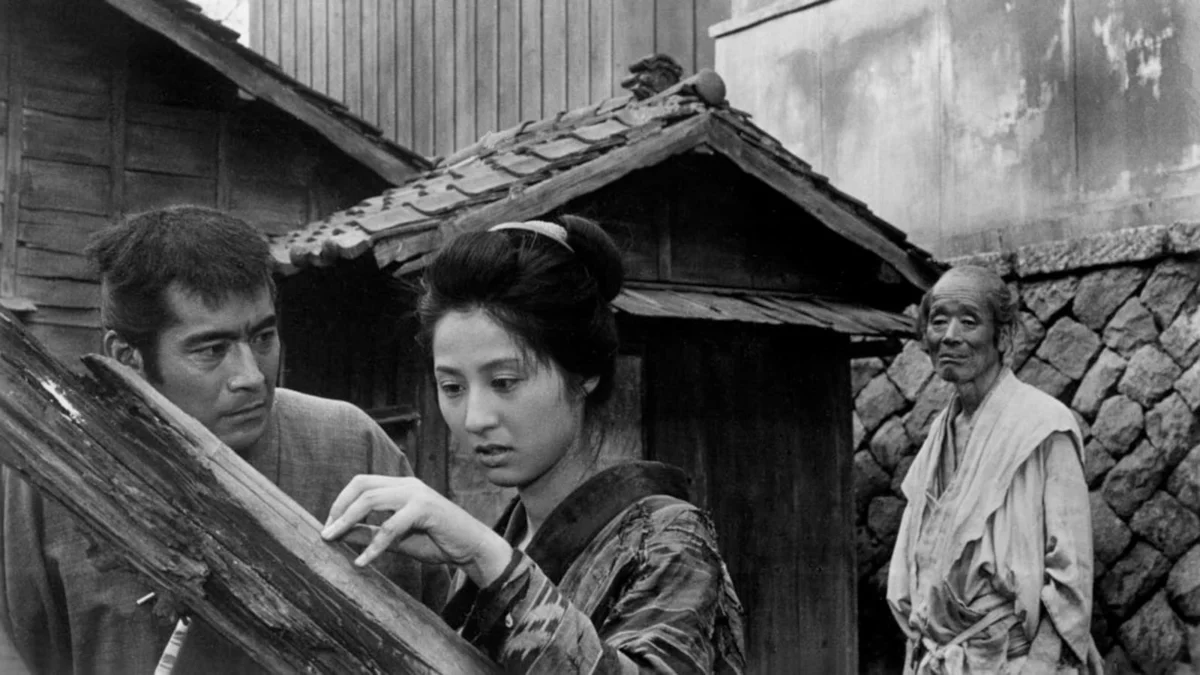
Akira Kurosawa’s 1957 cinematic adaptation of Maxim Gorky’s seminal 1902 play, The Lower Depths, stands as a poignant exploration of human resilience and societal stratification, offering a less overtly pessimistic outlook than the director’s earlier adaptation of Dostoevsky’s The Idiot (1951). This Japanese rendition, relocated to the tumultuous Edo period, has garnered significant critical acclaim, securing an award for Best Art Direction at the Mainichi Film Concours and earning a distinguished place at number 36 on Kinema Junpo magazine’s 2009 list of the greatest Japanese films of all time. The film’s enduring relevance lies in its unflinching portrayal of life at the margins, a theme that resonates across historical periods and cultural divides, underscored by a rich tapestry of characters grappling with hardship through wit and solidarity.
Genesis and Adaptation: From Russian Stage to Japanese Screen
Maxim Gorky’s original play, Na dne (The Lower Depths), premiered in Moscow in 1902 and immediately sparked debate. Initially met with criticism for its perceived bleakness and lack of a clear moral compass, the work eventually solidified its status as a cornerstone of Russian social realism. Gorky’s intention was to depict the lives of the destitute and dispossessed, forcing audiences to confront uncomfortable truths about poverty and societal neglect. The play’s raw authenticity and its focus on the existential struggles of its characters laid the groundwork for a powerful theatrical experience that would captivate audiences for generations.
Kurosawa, a filmmaker renowned for his ability to translate complex literary and dramatic works into visually compelling narratives, embarked on adapting The Lower Depths in the mid-1950s. Collaborating with screenwriter Hideo Oguni, Kurosawa undertook a significant transposition of the narrative. Rather than adhering to the play’s original Russian setting, the film is transplanted to Japan during the Edo period (1603-1868). This strategic shift from the industrializing Russia of Gorky’s time to the feudalistic, yet nascently modernizing, Japan of the Edo era provided Kurosawa with a unique socio-historical canvas. The Edo period, emerging from the prolonged chaos and warfare of the preceding Sengoku period, offered a backdrop ripe for exploring themes of social order, hierarchy, and the struggle for survival in a society undergoing significant, albeit often subtle, transformations. This period saw the consolidation of shogunate power, a flourishing of urban culture, and the strict maintenance of a class system, all of which could be mirrored in the cramped confines of a tenement dwelling.
A Microcosm of Society: Characters and Their Struggles
The film’s narrative unfolds within the confines of a dilapidated tenement, a setting masterfully rendered to evoke a palpable sense of confinement and despair. The landlord, portrayed by Ganjiro Nakamura, and his wife, played by the iconic Isuzu Yamada, operate a lodging house that serves as a refuge and a prison for a diverse array of individuals on the fringes of society. Each tenant embodies a different facet of human struggle and resilience, contributing to the film’s rich character ensemble.
Among the denizens is a charismatic thief, brought to life by Toshiro Mifune, whose entangled relationships and inner turmoil add a layer of dramatic tension. His character’s affections are divided between the landlord’s wife, creating a complex web of desire and manipulation, and her sister, played by Kyoko Kagawa, suggesting a yearning for a more genuine connection amidst the squalor. Koji Mitsui portrays a compulsive gambler, whose life is a testament to the destructive nature of addiction and the desperate hope for a lucky break. Minoru Chiaki embodies a disgraced samurai, clinging to the remnants of his former dignity in a world that has no place for his martial prowess. Completing this tableau of societal castoffs is Kamatari Fujiwara as a former actor, whose theatrical past offers a poignant contrast to his present circumstances, perhaps finding solace or absurdity in dramatic pronouncements.
The arrival of Kahei, a pilgrim portrayed by Bokuzen Hidari, acts as a catalyst, disrupting the established social dynamics of the tenement. His presence, imbued with a certain spiritual or philosophical perspective, forces the other inhabitants to confront their own realities and their relationships with each other. Kahei’s interactions with the residents serve to highlight the underlying currents of hope, despair, and the search for meaning that permeate their existence.
Cinematographic Choices: Capturing Confinement and Character
Ichiro Yamazaki’s cinematography plays a crucial role in establishing the film’s atmosphere and thematic concerns. The visual style is deliberately restrained, characterized by well-planned, static shots that draw the audience’s attention inward, focusing intently on the character interactions and the unfolding drama. This theatrical approach, while eschewing elaborate visual flourishes, effectively amplifies the sense of claustrophobia inherent in the tenement setting. The cramped living quarters, often shot with minimal depth of field, create a visceral feeling of confinement, mirroring the limited opportunities and restricted lives of the characters. This deliberate visual choice is particularly resonant in conveying the psychological impact of living in conditions of extreme poverty and uncertainty, a feeling that might have been amplified for audiences in post-war Japan, grappling with economic instability and the lingering effects of conflict.
Performance: A Symphony of Human Spirit
The ensemble cast delivers performances that are both powerful and nuanced, collectively showcasing the indomitable spirit of humanity in the face of adversity. The actors imbue their characters with a remarkable vitality, demonstrating that even in the grimmest of circumstances, wit, humor, and a capacity for connection can flourish. The frequent dialogues, arguments, and moments of mutual support among the residents paint a complex portrait of their interpersonal relationships. Despite the static setting, the narrative gains momentum through the sheer diversity of personalities and their interwoven destinies.
Particular praise is due to Toshiro Mifune, Isuzu Yamada, and Koji Mitsui, whose performances were recognized with awards, underscoring their exceptional contributions. Mifune’s portrayal of the thief is a masterclass in controlled intensity, conveying a character torn between his baser instincts and a desire for something more. Yamada brings a complex blend of weariness and hidden strength to her role as the landlord’s wife, while Mitsui captures the tragicomic essence of the gambler with a performance that is both pitiable and strangely compelling. These performances, alongside those of the entire cast, serve to elevate the material, transforming a potentially grim narrative into a testament to the enduring human capacity for survival and even joy.
Thematic Resonance: Past Echoes and Present Realities
While set in the Edo period, The Lower Depths offers a potent reflection of the socio-economic realities faced by many in 1950s Japan. The nation was in a period of profound recovery and transformation following the devastation of the Great Depression, the Pacific War, and the subsequent Allied occupation. The period was marked by significant societal upheaval, economic hardship, and a redefinition of national identity.
The film’s thematic parallels between the Edo-Sengoku transition and Japan’s post-war trajectory are striking. Just as the Edo period emerged from the fragmentation and conflict of the Sengoku, Japan’s post-war era saw a radical restructuring of its political and economic landscape. The nation transitioned from a militaristic, authoritarian regime to a democratic system, with fundamental changes implemented in its economic policies and educational framework. This period of intense reform and reconstruction ultimately propelled Japan to become a global economic powerhouse. Kurosawa’s choice of setting, therefore, was not merely an aesthetic decision but a strategic one, allowing him to explore timeless themes of societal change and individual adaptation through a historical lens that held profound relevance for his contemporary audience.
A Legacy of Resilience and Laughter
The Lower Depths is a film that defies easy categorization. It is simultaneously sad and gloomy, yet unexpectedly humorous. Kurosawa masterfully balances the harsh realities of existence with moments of profound personal resilience. The film underscores the director’s keen ability to dissect societal structures and human nature with unflinching honesty. After its 124-minute runtime, audiences are left with a lingering thought: in the face of an often cruel reality, laughter can serve as a vital coping mechanism, a way to make existence more bearable. This comedic element, bordering on nihilism and absurdism, is not about denying hardship but about finding a way to navigate it, to acknowledge its presence while refusing to be utterly consumed by it. The characters’ acceptance of their plight, and their ability to find humor within it, represents a powerful testament to the enduring strength of the human spirit, a quality that transcends time and circumstance.
The film’s enduring appeal lies in its universal themes of poverty, desperation, and the indomitable will to survive. Kurosawa’s interpretation of Gorky’s work, while rooted in a specific historical context, speaks to the universal human experience of grappling with societal inequities and finding meaning in the face of overwhelming challenges. The Lower Depths remains a compelling cinematic achievement, a testament to Kurosawa’s directorial prowess and his profound understanding of the human condition.