

A significant disruption within the online ecosystem of the Heated Rivalry fandom has ignited a broader conversation regarding the volatility of modern celebrity-fan interactions and the evolving role of public relations in the digital age. The incident, which took place in Paris during Fashion Week, involved Simone Cromer—a prominent figure in fan circles formerly known for operating the Timothée Chalamet fan account "Club Chalamet"—and a fellow devotee of actor Connor Storrie. The physical and verbal altercation outside the Hotel Meurice has highlighted the increasingly blurred lines between dedicated support and obsessive behavior, forcing industry professionals to re-evaluate how they manage the parasocial relationships that fuel contemporary stardom.
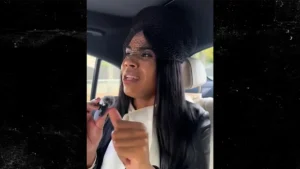
The confrontation began when Cromer, now operating under the X (formerly Twitter) handle "Fan Account Storrie Glorrie," was positioned outside the luxury hotel. Clad in full-body sun-protective clothing and a face mask, Cromer was waiting for a glimpse of Storrie, a lead actor in the stage adaptation of the popular Heated Rivalry series. According to threads posted by Cromer, she was allegedly targeted by another fan, identified as @mikadontyoudare, who reportedly subjected her to verbal abuse, calling her a "bitch" and a "stalker," before the situation escalated into a physical scuffle.
The counter-narrative emerged shortly thereafter. The second fan involved took to social media to claim they had intervened to prevent Cromer from "assaulting" the actor by rushing toward him. The user stated that security personnel and other fans present could corroborate the account of Cromer’s aggressive movement toward Storrie. This public back-and-forth, characterized by mutual accusations of stalking and harassment, quickly went viral, drawing both intense scrutiny from within the fandom and mockery from the general public. One viral post summarized the absurdity perceived by many onlookers: "Club Chalamet gets assaulted in SPF protective clothing by fellow stalker of actor who has been famous for seven months; I can never willfully leave this platform."
A Chronology of the Incident and the Rise of Connor Storrie
To understand the weight of this altercation, one must look at the rapid trajectory of Connor Storrie’s visibility. While fan devotion is a historical staple of the entertainment industry, the speed at which Storrie has acquired a dedicated and protective following is notable.
- The Source Material: The Heated Rivalry fandom originates from Rachel Reid’s popular "Game Changers" book series, which focuses on queer romance within professional hockey. The intensity of the readership translated directly into the live-action adaptation, placing the actors under a microscope before the production even premiered.
- The Seven-Month Surge: Within less than a year of his casting and subsequent public appearances, Storrie transitioned from a working actor to a focal point of intense digital scrutiny.
- The Paris Fashion Week Convergence: As Storrie attended high-profile events in Paris, the "super-fans" who track his movements through social media geolocation and flight data converged on the Hotel Meurice.
- The Altercation: On the day in question, the tension between different factions of the fandom—specifically those who support Cromer’s style of "on-the-ground" reporting and those who view her as an interloper—reached a breaking point.
- The Digital Fallout: The immediate aftermath saw a surge in "call-out" posts, the sharing of video snippets from the hotel exterior, and a debate over the ethics of "waiting" for celebrities at their private residences or hotels.
The Public Relations Paradox: Harnessing vs. Policing Fandom
For celebrity publicists and management teams, the rise of the "mega-fan" account presents a complex tactical challenge. Traditionally, publicists controlled the narrative through a select group of journalists and media outlets. Today, a single fan account can command a larger, more engaged audience than a traditional trade publication.
Olivia Shalhoup, founder and CEO of the PR firm Amethyst Collab, notes that fan pages often eclipse traditional press in terms of raw numbers and engagement metrics. "Fans are essentially doing a large-scale marketing operation for you a lot of the time," Shalhoup explained to WIRED. In many cases, publicists actively court these accounts, providing them with exclusive clips, early access to trailers, or invitations to curated events. This strategy treats the fan not as a consumer, but as an unpaid extension of the marketing department.
However, the Hotel Meurice incident illustrates the "double-edged sword" of this intimacy. When fans feel they are part of the "team," their sense of ownership over the celebrity increases. This leads to the development of intense parasocial relationships—one-sided emotional bonds where the fan feels they "know" the celebrity personally. When two fans with competing parasocial narratives meet, as seen in Paris, the result can be physical conflict.
Data and the Economics of the Parasocial Relationship
The financial implications of these fandoms are substantial. According to data from the "Creator Economy" reports, user-generated content (UGC) regarding celebrities drives significantly higher conversion rates for ticket sales and merchandise than studio-produced advertisements.
- Engagement Rates: Fan accounts often see engagement rates of 10% to 15%, compared to the 1% to 3% typically seen on official brand or celebrity accounts.
- Content Volume: During Paris Fashion Week, the hashtag related to Connor Storrie generated thousands of posts per hour, a volume of "earned media" that would cost millions of dollars to replicate through traditional advertising.
- The Cost of Security: Conversely, the rise of "tracker" culture—where fans use social media to pinpoint a star’s location in real-time—has led to a 30% to 50% increase in security costs for emerging talents during public tours, according to industry estimates.
Dawn Kamerling, owner of the PR agency The Press House, emphasizes that while fans are vital to a star’s success, boundaries are becoming harder to enforce. "You never want to see that happen in a fandom," Kamerling says. "You don’t want to alienate your fans… but at the same time, the fans are rabid. So you need to set a boundary."
The Psychological and Legal Implications of Modern Stan Culture
The incident involving Simone Cromer also raises questions about the psychological health of digital communities. Cromer’s transition from one celebrity (Chalamet) to another (Storrie) suggests a pattern of behavior that critics label as "professional stanning." This involves traveling internationally, wearing disguises to avoid detection by security or other fans, and spending hours outside private locations.
From a legal standpoint, the line between "waiting for a glimpse" and "stalking" is often thin and varies by jurisdiction. In France, harassment laws are stringent, yet the public nature of a hotel entrance makes enforcement difficult unless a physical assault occurs. In this instance, the lack of a formal police report or statement from Storrie’s management team suggests a desire to let the incident fade from the headlines, even as the fans involved continue to litigate the event on X.
The "SPF protective clothing" worn by Cromer has become a symbol of this disconnect. While Cromer defends the attire as a health necessity for long hours in the sun, other fans and the general public view it as a tactical "uniform" for someone who spends their life on the periphery of celebrity spaces. It highlights the lengths to which individuals will go to maintain a physical proximity to their idols.
Broader Impact on the Entertainment Industry
As the Heated Rivalry fandom continues to grapple with its internal divisions, the broader entertainment industry is watching closely. The "Meurice Rumble" is not an isolated event but a symptom of a systemic shift.
Publicists are now being forced to act as de facto community managers. They must monitor Discord servers, Reddit threads, and X communities to gauge the "temperature" of the fan base. If a fandom becomes too toxic or violent, it can damage the celebrity’s "brand safety," making them less attractive to major fashion houses or film studios. For an actor like Connor Storrie, who is in the nascent stages of his career, being associated with "stalker fights" is a PR liability that requires careful navigation.
The ultimate question remains: Who controls the narrative? In the past, it was the studio and the publicist. Today, the narrative is often snatched away by the fans themselves, who curate, edit, and broadcast their own versions of a celebrity’s life. When those fans turn on each other, the celebrity becomes a secondary character in their own story.
Conclusion: The Future of Fan-Celebrity Boundaries
The altercation in Paris serves as a cautionary tale for the digital age. While the internet has democratized fame and allowed fans to build vibrant communities, it has also stripped away the protective layers that once separated the public from the private.
For Connor Storrie and his peers, the path forward involves a delicate balancing act. They must embrace the passion of their supporters to ensure commercial viability while simultaneously distancing themselves from the more extreme manifestations of that devotion. For the publicists, the task is even more daunting: they must harness the power of the "stan" without letting the "stan" dictate the terms of the engagement. As long as the platform of X and similar social media sites continue to reward high-conflict, high-engagement content, the "heated rivalry" between fans is unlikely to cool down anytime soon.