

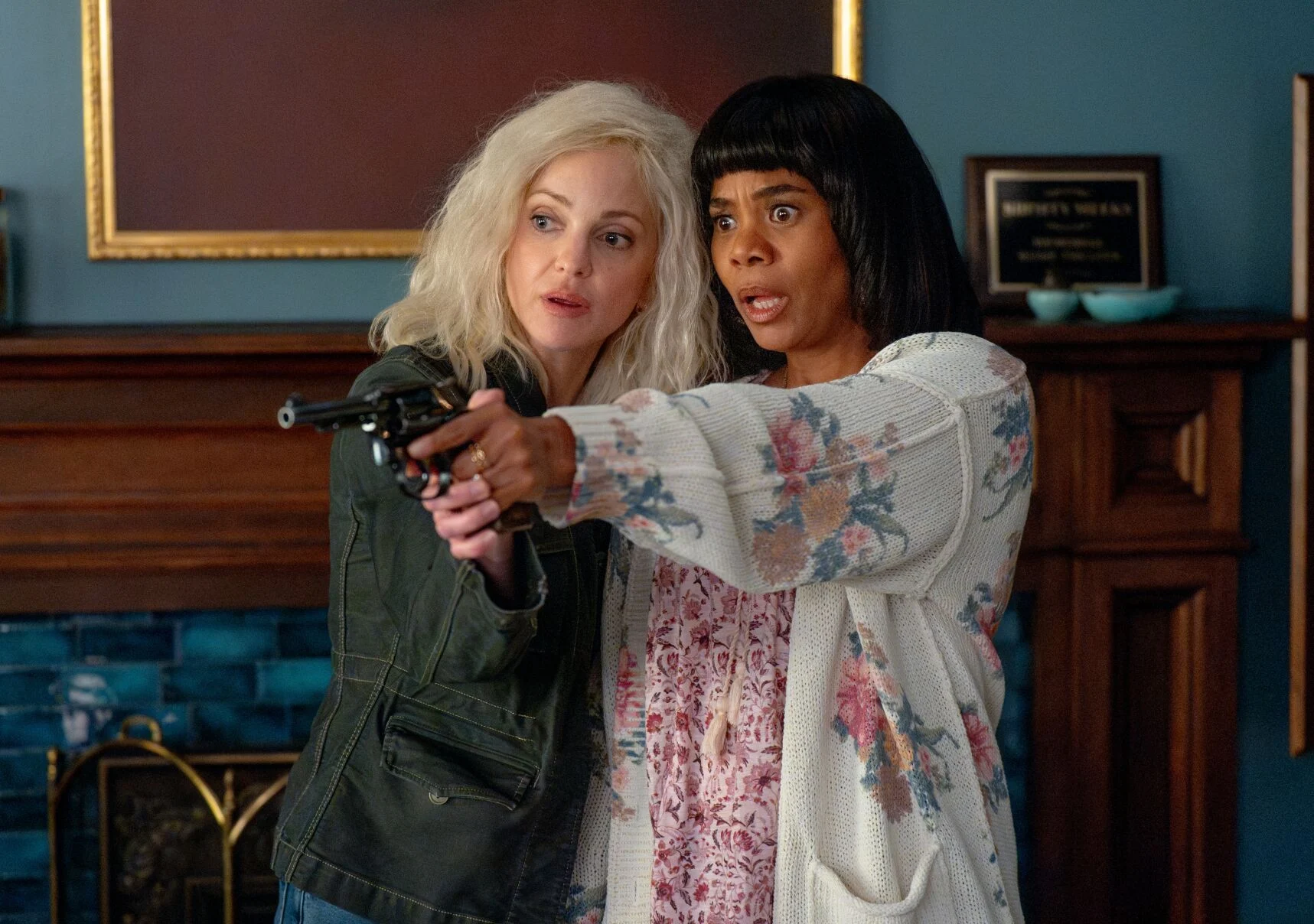
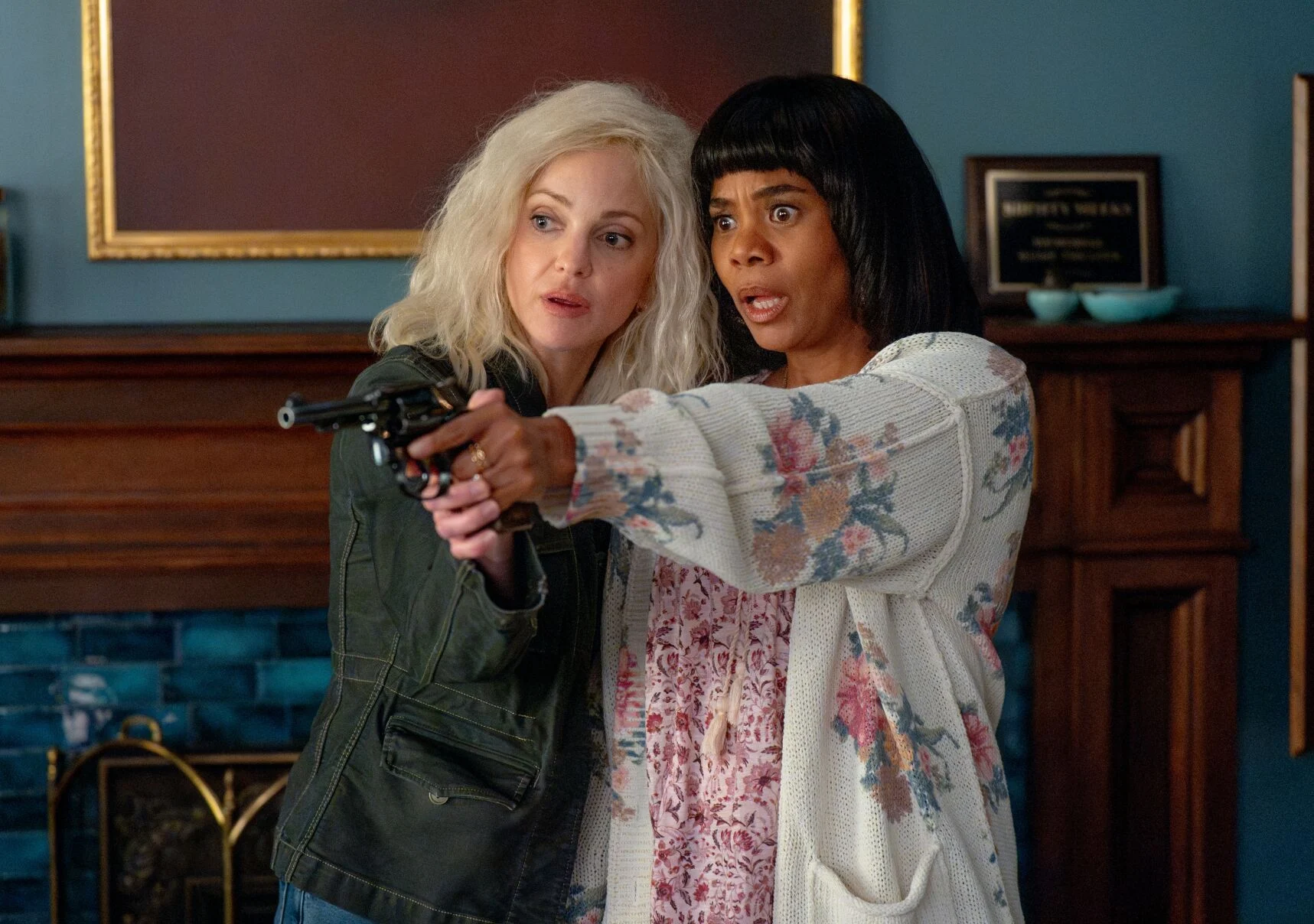
The latest installment of the celebrated horror-comedy franchise arrives on the global stage under a distinct simply Scary Movie, deliberately omitting the numeral six. This stylistic omission serves as a deliberate act of creative reclamation and industrial protest. The Wayans family—pioneers of the modern satirical format—publicly disowned the three sequels produced in their absence, namely Scary Movie 3 (2003), Scary Movie 4 (2006), and Scary Movie 5 (2013). This rift originated from a compensation dispute with the Weinstein-led Dimension Films in 2001, a contentious chapter of industry politics that ultimately inspired the thematic backbone of the 2006 legacy sequel. Blending high-concept industry critique with the franchise’s trademark irreverence, the new film targets contemporary horror conventions while serving as a meta-commentary on executive overreach, corporate exploitation, and the enduring power of Black creative independence in Hollywood.
Roots of Satire and the Blueprint of Parody
To understand the cultural architecture of the Scary Movie series, one must examine the lineage of cinematic spoofing. Collaborators Robert Townsend and Keenen Ivory Wayans trace their comedic sensibilities to foundational icons such as Sid Caesar, Mel Brooks, and Paul Mooney, alongside the legendary sketch-comedy stylings of Richard Pryor. However, the formal mechanics of the rapid-fire, reference-dense spoof trace directly to the Zucker, Abrahams, and Zucker (ZAZ) creative team.
In 1980, ZAZ redefined comedy with Airplane!, elevating structural absurdity into an art form. Jim Abrahams famously noted that their hyper-topical, joke-a-minute paradigm functioned as counterprogramming against the heavy political strife of the 1970s, including the Vietnam War and Watergate. While ZAZ largely bypassed contemporary sociopolitical commentary in favor of universal slapstick, the Wayans family and Robert Townsend infused this methodology with pointed racial satire derived from The Richard Pryor Show (1977). They weaponized cinematic pastiche to critique genres historically marketed to Black audiences—such as blaxploitation and urban dramas—while challenging the systemic limitations imposed by the traditional studio power structure.
Chronology of a Movement: From Hollywood Shuffle to In Living Color
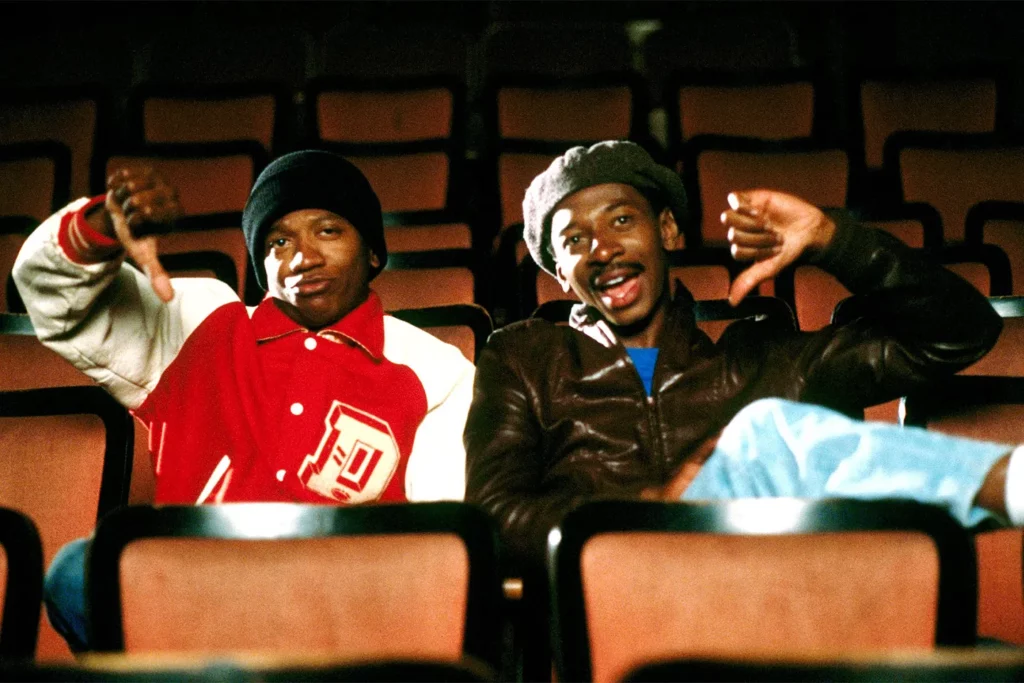
The modern Black satirical movement gained definitive momentum in 1987 with the release of Hollywood Shuffle. Conceived initially as a series of disconnected sketches—such as the Siskel and Ebert-style critique "Sneakin’ in the Movies"—Townsend and Keenen Ivory Wayans wove these vignettes into a cohesive narrative examining the systemic hurdles faced by Black actors pursuing authentic representation. Produced independently on a modest budget, Hollywood Shuffle proved that commercial viability and sharp cultural commentary could coexist outside mainstream studio mandates.
The critical and financial success of Hollywood Shuffle provided Keenen Ivory Wayans with the leverage necessary to spearhead subsequent multimedia milestones. In 1988, he released I’m Gonna Git You Sucka, followed by the groundbreaking sketch comedy series In Living Color (1990–1994). Airing on the Fox network, In Living Color functioned as an intellectual incubator for the entire Wayans family, offering aggressive, intelligent critiques of mainstream culture, media consumption, and institutionalized racism. By targeting sacred cows of pop culture—ranging from music icons to corporate media outlets—the show established a blueprint for subversive sketch comedy that permanently altered the television landscape.
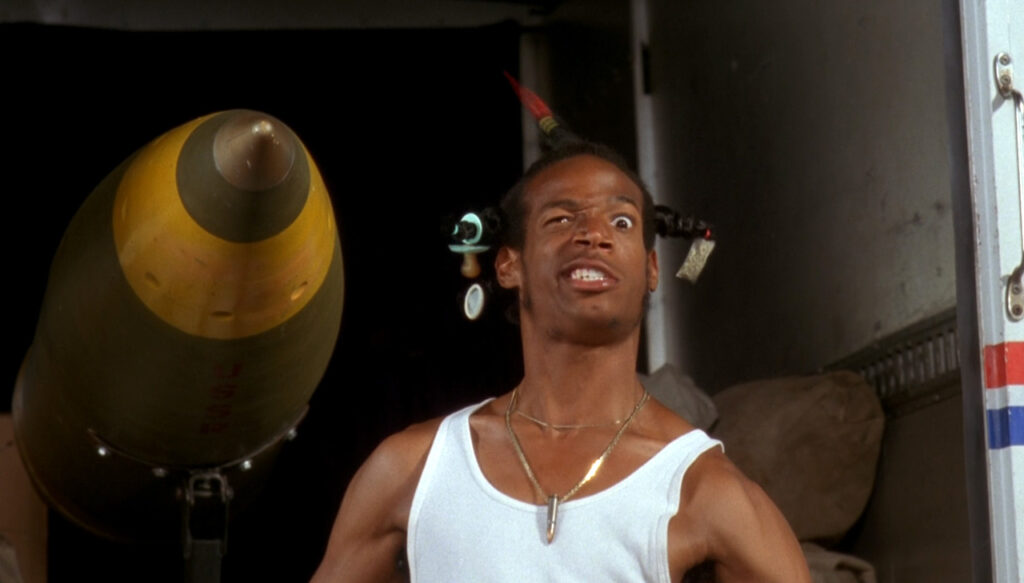
This satirical framework transitioned back to the cinematic arena in 1996 with Don’t Be a Menace to South Central While Drinking Your Juice in the Hood. The film directly interrogated the proliferation of inner-city coming-of-age melodramas that emerged in the wake of critical successes like Boyz n the Hood (1991), Juice (1992), and Menace II Society (1993). Rather than accepting studio exploitation of urban trauma and tragedy, the Wayans utilized hyperbole—such as Marlon Wayans’ character Loc Dog—to dismantle tired cinematic tropes, illustrating that critiques of representation could originate from within the culture itself.
The Rise, Fall, and Return of Scary Movie
The culmination of this comedic evolution arrived in 2000 with the release of Scary Movie. Directed by Keenen Ivory Wayans and co-written by Shawn and Marlon Wayans alongside Phil Beauman and Buddy Johnson, the film synthesized teen slasher revivals with anarchic, high-low comedic pastiche. Despite containing polarizing elements, the film positioned three Black lead actors—Regina Hall, Shawn Wayans, and Marlon Wayans—at the center of a mainstream horror spoof, subverting traditional casting expectations.
Financially, the project was an unprecedented triumph. Produced on a budget of approximately $19 million for Dimension Films, Scary Movie grossed roughly $278 million worldwide, instantly cementing its status as a commercial powerhouse. A rushed sequel followed in 2001, reflecting the studio’s desire to capitalize immediately on the intellectual property, though time constraints placed visible strain on the production.
Following ongoing creative and financial disputes, the Wayans family departed the franchise. Dimension Films subsequently enlisted original Zucker, Abrahams, and Zucker director David Zucker to helm Scary Movie 3 and Scary Movie 4, replacing the Wayans brothers with actors such as Simon Rex and Charlie Sheen. Reflecting on this corporate shift in a recent interview with GQ, Marlon Wayans likened the experience of watching subsequent sequels proceed without family oversight to "watching your child become a crackhead"—a sentiment underscoring the precarious relationship between independent creators and corporate copyright holders in Hollywood.
Global Box Office Performance and Financial Metrics
The commercial strength of the property remains robust. The 2026 legacy installment demonstrated immediate viability by grossing $172 million globally within its first two weeks of theatrical release, guaranteeing the continued expansion of the intellectual property. Historical financial data underscores the franchise’s trajectory:
- Hollywood Shuffle (1987): Produced independently on a shoestring budget of approximately $100,000, grossing over $4 million domestically.
- Scary Movie (2000): Produced on an estimated $19 million budget, generating $278 million worldwide.
- Scary Movie (2026 Release): Achieved $172 million globally within its first 14 days of exhibition.
Industry Implications and the Legacy of Creative Control
The trajectory of the Wayans family mirrors a broader narrative of artistic autonomy within the entertainment industry. Recalling an encounter with legendary actor Sidney Poitier, Robert Townsend once asked how the screen icon maintained his dignity during an era when Hollywood systematically marginalized Black talent. Poitier’s response—"I said no. I made sacrifices to do it, but I had the power to say no"—served as a guiding principle for generations of independent creators.
Recent industry milestones suggest that Hollywood is gradually adapting to demands for authentic representation and creator-driven narratives. Ryan Coogler’s 2025 feature Sinners—a genre film exploring artistic freedom and the exploitation of Black art—grossed $370 million globally and secured a historic number of Academy Award nominations. Whether these paradigm shifts stem directly from decades of foundational critique by pioneers like the Wayans family and Robert Townsend or broader market evolutions remains a subject of ongoing industry analysis. However, with the triumphant return of the original ensemble and robust box office returns, the overarching narrative confirms that intellectual property reclamation and commercial success can successfully converge on modern terms.