The landscape of Palestinian heritage is undergoing a seismic shift as physical landmarks face unprecedented threats. For decades, Palestinian culture has been characterized by displacement, looting, and systemic destruction, but the escalation of hostilities since October 2023 has catalyzed a new, technologically driven form of resistance. In the occupied West Bank, a dedicated team at the Palestinian Museum is racing against time to construct a digital fortress: an archive of memory designed to be immune to seizure, bombing, or erasure.
Amer Shomali, a prominent visual artist and the general director of the Palestinian Museum in Birzeit, describes the current situation as a critical juncture for national identity. Within the first week of the conflict in Gaza, Israeli military operations resulted in the destruction of two art galleries, seven museums, and two primary archives, alongside damage to hundreds of archaeological sites. Shomali emphasizes that the effort to erase Palestinian culture and memory is a tangible, ongoing process rather than a theoretical concern. With approximately 80 percent of the nation’s historical collections either destroyed, looted, or under external control, the shift toward digital preservation has become a matter of cultural survival.
The Physical and Legislative Context of Cultural Loss
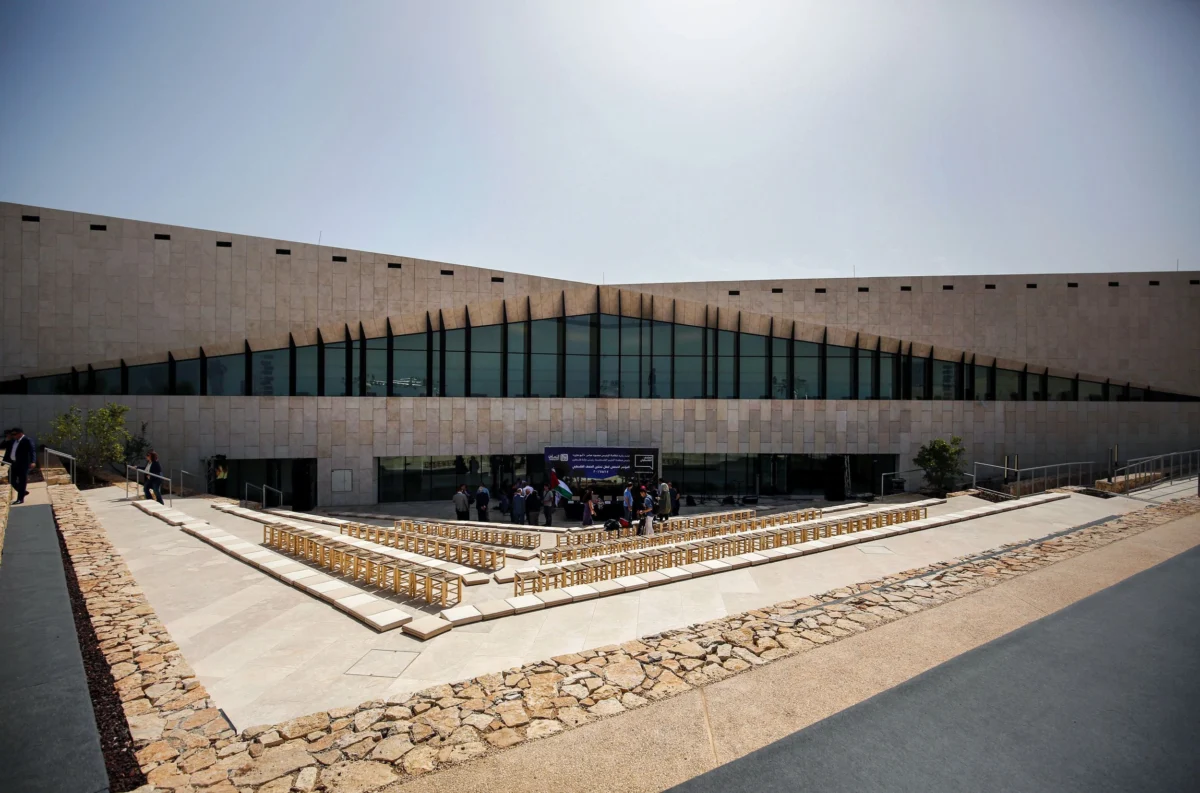
The Palestinian Museum stands as a defiant architectural landmark in Birzeit, surrounded by native flora and cascading stone terraces. Designed by the New York-based firm Heneghan Peng—the architects behind Egypt’s Grand Egyptian Museum—the facility serves as a physical repository for irreplaceable artifacts, including the photography of Khalil Raad and the murals of Vera Tamari. However, the museum’s physical accessibility is frequently hampered by its location between military checkpoints, which limits the ability of many Palestinians to visit the site in person.
The threat to Palestinian heritage extends beyond the immediate destruction in Gaza. In the West Bank, a 2025 report by the Applied Research Institute-Jerusalem (ARIJ) indicates that at least 2,400 archaeological sites have been taken over or are controlled by Israeli authorities. This physical encroachment is mirrored by legislative efforts. In mid-2024, reports surfaced that Israeli lawmakers were advancing legislation to place ancient sites within the occupied territories under the jurisdiction of the Israeli Ministry of Heritage. Legal experts and human rights organizations, including Israeli rights groups, have characterized this move as a form of de facto annexation, potentially granting the state total control over the interpretation and physical management of Palestinian heritage sites.
UNESCO has played a pivotal role in documenting the scale of this loss. As of March 24, 2026, the international body had verified damage to 164 cultural sites in Gaza since the start of the conflict on October 7, 2023. These sites include historical buildings, religious landmarks, museums, and archaeological excavations. Beyond the official statistics, the loss of personal histories, family heirlooms, and community records amid mass displacement remains largely unquantifiable.
The Architecture of an Unlootable Archive
The concept of the "unlootable archive" was born out of a historical pattern of loss. Shomali notes that the battle over Palestinian documentation has been continuous since 1948. He points to a recurring cycle where Palestinians document their history only to have those records seized or destroyed, leading to a "less vivid memory" with each subsequent loss. To break this cycle, the Palestinian Museum turned to digital decentralization in 2018.

The Palestine Museum Digital Archive began as a grassroots effort. Staff members engaged in door-to-door outreach across the West Bank, visiting families to request permission to scan private collections of photographs, letters, diaries, and identification papers. This initiative has since evolved into one of the most significant digital preservation projects in the Middle East.
Today, the open-source archive contains over 500,000 digitized items. These records provide a "bottom-up" history of Palestine, focusing on the lived experiences of individuals rather than the curated narratives of a state institution. The archive is managed by a core team of three full-time specialists focused on digitization, metadata, and linguistic research, supported by a global network of volunteers and funded through diaspora donations and partnerships with institutions like the University of California and the Gerda Henkel Foundation.
Technological Resilience and Cyber Security
A key component of the archive’s "unlootable" nature is its distributed storage system. Recognizing that a single server or building is a point of failure, the museum maintains multiple backups stored in various locations worldwide. This ensures that even if the physical museum in Birzeit were compromised or its primary servers destroyed, the data would persist.
The archive also faces digital threats. Shomali reports that the museum’s website is subjected to frequent cyberattacks, often occurring on a monthly basis. These attacks frequently result in temporary downtime, but the museum’s protocol of reinitiating the site from global backups allows the information to remain accessible. "We can’t protect it from being hacked," Shomali admits, "but we can protect it from disappearing."
Innovation is also being applied to the processing of historical records. The museum is currently developing an AI-driven bot capable of reading and transcribing Ottoman Arabic. This tool is essential for processing the vast quantities of historical administrative and personal records from the Ottoman period, which are often difficult for modern speakers to decipher but contain vital information regarding land ownership and social history.
Global Reach and the Exhibition in a Box
The mission of the Palestinian Museum extends beyond preservation to global accessibility. For Palestinians in the diaspora or those living under travel restrictions, the digital archive is their primary connection to their heritage. One of the museum’s most successful initiatives is the "Exhibition in a Box."
This "Ikea-style" concept allows users anywhere in the world to download high-resolution exhibition materials, print them, and stage professional-grade displays on Palestinian history regardless of their budget. This model has democratized the curation of Palestinian history, with over 260 exhibitions held in diverse locations ranging from San Francisco to Tokyo.

In Spain, curator Pablo Llorca utilized the archive to create the exhibition To Tell My Story, which debuted in Madrid in late 2025. The show has since traveled to 15 different locations across Spain, attracting the attention of the Spanish Ministry of Culture. Similarly, in San Francisco, artist Leyya Mona Tawil curated My Name is Palestine, an exhibition focused on Palestinian musical heritage sourced from the digital archive. Tawil describes the archive not as a collection of dead objects, but as a "living archive" that represents a society currently under threat.
The Human Element of Digitization
At the heart of the project is the physical handling of fragile history. Mohammad Rabae, who oversees the digitization process, highlights the delicate nature of the artifacts. He describes working with 19th-century Bibles printed in Jerusalem and newspapers from the 1930s with pages so brittle they threaten to crumble upon touch.
For Rabae and his team, the work is as much about ethics as it is about technology. Every document must be handled with a respect for the privacy and dignity of the individuals represented. The process involves meticulous cleaning, unfolding, and high-resolution scanning, followed by the creation of detailed metadata to ensure the items are searchable and contextually understood by future generations.
Analysis of Implications and Future Outlook
The digitization of Palestinian heritage represents a broader trend in global conflict zones where "cultural urbicide"—the deliberate destruction of a group’s built environment and cultural history—is a recognized tactic of warfare. By moving heritage into the digital and decentralized realm, the Palestinian Museum is setting a precedent for how vulnerable communities can safeguard their identity in the 21st century.
The implications of this project are manifold:
- Legal and Claims-Based History: Digital records of land deeds and identification papers provide a permanent record that could be used in future legal contexts regarding property rights and residency.
- Cultural Continuity: By making history accessible to the youth and the diaspora, the archive ensures that the Palestinian narrative is not lost to the passage of time or the destruction of physical landmarks.
- Democratization of History: The "bottom-up" nature of the archive challenges traditional historiography, allowing the voices of ordinary citizens to shape the national story.
As the conflict continues, the Palestinian Museum’s digital archive serves as a reminder of the resilience of memory. Shomali often invokes the words of the late national poet Mahmoud Darwish: "We who are able to remember are able to liberate ourselves." In this context, the act of scanning a photograph or backing up a server is not merely a technical task—it is an act of national preservation. The "unlootable archive" ensures that even if the physical landscape is irrevocably altered, the evidence of Palestinian life, culture, and history remains accessible to the world.