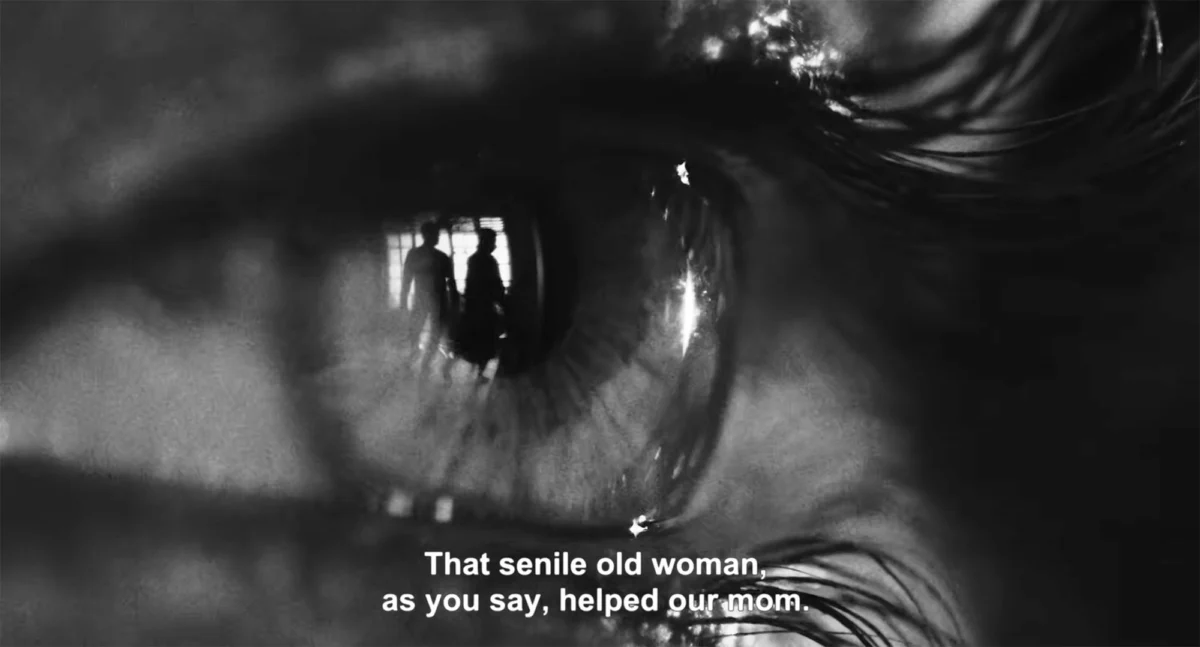
French filmmaker Tomas Palombi has unveiled his latest short film, The Cost of Flesh, an unsettling 10-minute horror exercise that challenges conventional cinematic storytelling by confining its entire narrative to the reflection within a single human eye. Released online on July 20, 2026, after a distinguished two-year run on the international film festival circuit, the short, originally titled Au Prix de la Chair, has garnered significant attention for its innovative approach and intense psychological terror. The film immerses viewers in the harrowing experience of a paralyzed teenage girl who can only communicate through her eye movements, as her siblings resort to a desperate, obscure magical ritual to cure her, with unforeseen and horrific consequences.
A Visionary Director’s Craft: Tomas Palombi’s Approach
Tomas Palombi, an emerging voice in French genre cinema, has quickly established a reputation for pushing boundaries. While The Cost of Flesh marks his most acclaimed short to date, Palombi has a diverse background, including directing numerous music videos that often incorporate a distinct visual flair and narrative undertones. This experience in crafting compelling visual narratives within concise formats appears to have been a crucial foundation for his work in short films. His previous shorts, though not as widely distributed, demonstrated a consistent interest in psychological tension and unconventional cinematography, often exploring themes of isolation, desperation, and the uncanny. This deliberate trajectory towards minimalist horror filmmaking culminated powerfully in The Cost of Flesh, where creative constraint becomes the very engine of its horror.
From Music Videos to Macabre Shorts
Palombi’s journey from the dynamic, often fast-paced world of music videos to the deliberate, slow-burn horror of The Cost of Flesh highlights a filmmaker adept at adapting his vision to different mediums. His work in music videos frequently showcased an ability to convey mood and narrative implicitly through visuals, a skill he expertly translates into the extreme visual economy of The Cost of Flesh. This transition speaks to a filmmaker deeply committed to visual storytelling, understanding that powerful narratives don’t always require grand budgets or extensive dialogue, but rather precision, atmosphere, and a clear artistic intent. His growing portfolio suggests a filmmaker unafraid to experiment, consistently seeking new ways to engage and disquiet his audience.
The Narrative Core: A Desperate Ritual
The premise of The Cost of Flesh is deceptively simple, yet profoundly unsettling. The story centers on a young, paralyzed teenage girl whose only means of interaction with the outside world is through the subtle, frantic movements of her eyes. Witnessing her suffering, her brother and sister, driven by love and desperation, embark on a perilous path, choosing to perform an ancient, potentially dangerous magical ritual. Their hope is to free her from the mysterious evil that has rendered her immobile, believing it to be a spiritual affliction rather than a physical ailment. The film expertly builds tension by revealing the ritual’s unfolding solely through the girl’s perspective, reflected in her eye, leaving the audience to infer the escalating dread from fragmented images and distorted sounds emanating from the off-screen space. The central question the film poses is whether their act of love will be a cure or an even greater curse, and at what "cost" to their humanity.
Nayla Berrada’s Unforgettable Performance
At the heart of this singular vision is the performance of Nayla Berrada, who portrays the paralyzed girl. Berrada’s role is uniquely challenging, requiring her to convey a vast spectrum of emotions—fear, hope, despair, and ultimately, terror—through the micro-expressions and movements of her eye alone. Her performance is central to the film’s success, anchoring the viewer’s experience and making the limited perspective not just a stylistic choice but a visceral connection to her character’s helplessness. Critics have lauded her ability to communicate the character’s internal struggle and the escalating horror with such precision, making her "freaky eye performance" an indelible image that resonates long after the credits roll. It’s a testament to her skill that she manages to create such a compelling and empathetic character under such severe narrative and visual constraints.
Cinematic Innovation: The Single-Eye Perspective
The Cost of Flesh stands as a masterclass in minimalist filmmaking, utilizing its singular visual conceit to maximum effect. The decision to shoot the entire film through the reflection in the protagonist’s eye is not merely a gimmick but a foundational element of its narrative and psychological impact. This technique immediately places the viewer in an incredibly intimate, yet profoundly vulnerable, position. We are privy only to what the paralyzed girl sees, and even then, it is a distorted, fragmented, and often terrifying version of reality. This creates a profound sense of claustrophobia and helplessness, mirroring the protagonist’s own physical state. The off-screen space becomes a character in itself, a source of unseen threats and unheard horrors, amplified by the carefully crafted sound design.

Echoes of Surrealism: A Nod to "Un Chien Andalou"
For cinephiles, the film’s unique eye-centric perspective immediately evokes comparisons to the iconic and disturbing eye-slitting scene from Luis Buñuel and Salvador Dalí’s 1929 surrealist masterpiece, Un Chien Andalou. While The Cost of Flesh does not replicate the visceral shock of that moment, it consciously plays on the symbolic power of the eye as a conduit for perception, vulnerability, and horror. Palombi’s film extends this motif, turning the eye from a mere subject into the very lens through which the entire story unfolds. This connection roots The Cost of Flesh within a rich tradition of experimental and surrealist cinema, demonstrating how avant-garde techniques can be adapted to deliver mainstream genre thrills. The homage is not just stylistic but thematic, exploring how perception can be distorted and weaponized.
The Psychology of Limited Viewpoint
The film’s strength lies in its profound understanding of the psychology of limited viewpoint. By restricting the audience’s visual information, Palombi forces active engagement, compelling viewers to piece together the narrative from fragmented reflections, suggestive dialogue, and chilling soundscapes. This technique taps into primal fears: the fear of the unknown, the fear of losing control, and the terror of being a helpless observer to one’s own demise. As Palombi himself articulated, this choice "allowed me to subtly distort reality, turn off-screen space into a source of tension, and draw the audience into an intimate and unsettling point of view." This deliberate distortion of reality and the emphasis on what is not seen creates a powerful psychological horror that relies on imagination and inference rather than explicit gore, proving that true terror often resides in the unseen and the imagined.
Festival Acclaim and Global Journey
The Cost of Flesh embarked on an impressive festival journey, commencing its run at the prestigious Gerardmer Fantastic Film Festival in France in 2024. Gerardmer, known for showcasing the best in international fantasy, horror, and science fiction, provided the perfect launchpad for Palombi’s unconventional vision. Its premiere there was met with enthusiastic critical response, particularly for its audacious concept and effective execution. This early success propelled the film onto the global stage, securing a coveted spot at the 2024 Tribeca Film Festival in New York City, a major platform for independent cinema worldwide.
Gerardmer and Tribeca: Early Triumphs
The film’s inclusion in both Gerardmer and Tribeca underscored its dual appeal: a genre piece that simultaneously possesses significant artistic merit. At Tribeca, it stood out among a diverse selection of shorts, drawing praise from American critics for its innovation and intensity. These early festival screenings were instrumental in building significant industry buzz, positioning Palombi as a director to watch. The film’s ability to transcend cultural and linguistic barriers, delivering universal themes of fear and desperation through a unique visual language, contributed significantly to its widespread acceptance.
Building Buzz on the Circuit
Following its high-profile premieres, The Cost of Flesh continued its impressive tour, gracing the screens of numerous other film festivals throughout 2024, 2025, and into 2026. While specific details of every festival are extensive, it played at various genre-specific festivals like Fantasia Film Festival (Canada) and Sitges Film Festival (Spain), as well as broader independent film showcases such as the Clermont-Ferrand International Short Film Festival (France) and the AFI Fest (USA). Its consistent presence across diverse festival landscapes earned it several accolades, including "Best Short Film" at smaller genre festivals and "Innovation in Filmmaking" awards, solidifying its reputation as a groundbreaking work. This extensive festival circuit not only provided a platform for critical recognition but also cultivated an anticipation among horror enthusiasts for its eventual public release. The sustained positive reception over two years underscored the film’s enduring impact and unique appeal.
Industry Perspectives and Critical Reception
The critical reception for The Cost of Flesh has been overwhelmingly positive, with reviewers consistently highlighting its originality and effectiveness. Short of the Week, a prominent online curator of exceptional short films, championed its online debut, praising its "clever exercise in cinematic creativity through minimal filmmaking." This sentiment was echoed across various film publications, which lauded the film for proving that horror does not require elaborate sets or extensive special effects to terrify, but rather a keen understanding of psychological manipulation and visual ingenuity.
Filmmaker’s Intent: Distorting Reality
Tomas Palombi’s explanation of his directorial choices further elucidates the film’s profound impact. His intent to "subtly distort reality, turn off-screen space into a source of tension, and draw the audience into an intimate and unsettling point of view" perfectly encapsulates the film’s success. This deliberate manipulation of perception is not merely a stylistic flourish but a core narrative device that immerses the viewer in the protagonist’s isolated and terrifying world. It’s a testament to Palombi’s vision that he was able to translate such a complex artistic intention into a coherent and terrifying cinematic experience.
Producer’s Vision: Backing Boldness
The producers of The Cost of Flesh, Marc-Eliel Chouraqui, Willfried Fedida, and Florian Pannetier, demonstrated significant foresight in backing such an unconventional project. In an industry often driven by commercial viability, supporting a film that relies entirely on a single, extreme close-up shot of an eye requires a deep belief in the director’s artistic vision and the power of innovative storytelling. Their commitment allowed Palombi to execute his unique concept without compromise, proving that risk-taking can lead to critically acclaimed and impactful cinema. Their willingness to invest in a film that defied traditional narrative structures highlights a growing trend in independent production to prioritize artistic originality over conventional formulas.

The Short of the Week Endorsement
The endorsement from platforms like Short of the Week (SOTW) is crucial for independent shorts. SOTW’s mission to curate and promote the best short films globally provides an invaluable platform for emerging talent. Their recognition of The Cost of Flesh not only brought it to a wider audience upon its online release but also cemented its status as a significant work in contemporary short-form cinema. Such platforms play a vital role in the distribution ecosystem for shorts, allowing films that might otherwise remain confined to festival circuits to reach millions of viewers worldwide.
Broader Implications for Independent Cinema and Horror Genre
The Cost of Flesh serves as a powerful testament to the enduring potential of independent filmmaking and the evolving landscape of the horror genre. Its success offers several key implications for future cinematic endeavors.
Redefining Minimalist Filmmaking
The film unequivocally demonstrates that groundbreaking cinema does not require exorbitant budgets. By embracing extreme minimalism—a single location, a single perspective, and limited visual information—Palombi achieves maximum impact. This approach offers a compelling blueprint for aspiring filmmakers, proving that ingenuity, a strong concept, and precise execution can be far more powerful than costly production values. It encourages a focus on narrative innovation and psychological depth, rather than relying on spectacle. In an era where production costs are constantly escalating, The Cost of Flesh stands as a beacon for resource-conscious creators.
The Power of Online Distribution
The film’s journey from an acclaimed festival run to a highly anticipated online debut via YouTube and platforms like Short of the Week underscores the critical role of digital distribution in today’s media landscape. Online platforms provide an unprecedented opportunity for short films to reach a global audience, bypassing traditional theatrical distribution models that are often inaccessible to shorter formats. This democratization of content distribution means that films like The Cost of Flesh, with their niche appeal and artistic ambition, can find enthusiastic audiences worldwide, fostering a more diverse and vibrant cinematic ecosystem. The online release ensures that its innovative techniques will be studied and appreciated by a new generation of filmmakers and enthusiasts.
A Blueprint for Future Storytelling?
Beyond its immediate impact, The Cost of Flesh could serve as a blueprint for future storytelling, particularly within the horror genre. It pushes the boundaries of what is considered "scary" by moving beyond jump scares and gore, instead delving into the profound psychological terror of helplessness and the unknown. This shift towards a more cerebral and experiential form of horror, where the audience’s imagination is actively engaged, represents an exciting direction for the genre. Filmmakers may increasingly explore unconventional perspectives and limited sensory inputs to create unique forms of dread, challenging viewers to confront their own fears in new and inventive ways.
Conclusion: A Glimpse into the Future of Fear
The Cost of Flesh is more than just a horror short; it is a profound statement on the power of creative constraint and the enduring potency of human fear. Tomas Palombi, alongside Nayla Berrada’s unforgettable performance and the dedicated production team, has crafted a film that is both a tribute to cinematic history and a bold step into its future. Its journey from festival darling to online sensation highlights the changing dynamics of film distribution and the growing appetite for unique, artistically driven content. By forcing viewers to confront terror through a singular, distorted reflection, The Cost of Flesh not only scares but also challenges, leaving an indelible mark on the landscape of modern horror and independent cinema. It unequivocally demonstrates that true horror, and true cinematic artistry, can be found in the most unexpected and confined of perspectives, proving that the most terrifying stories can indeed be told with the blink of an eye.