

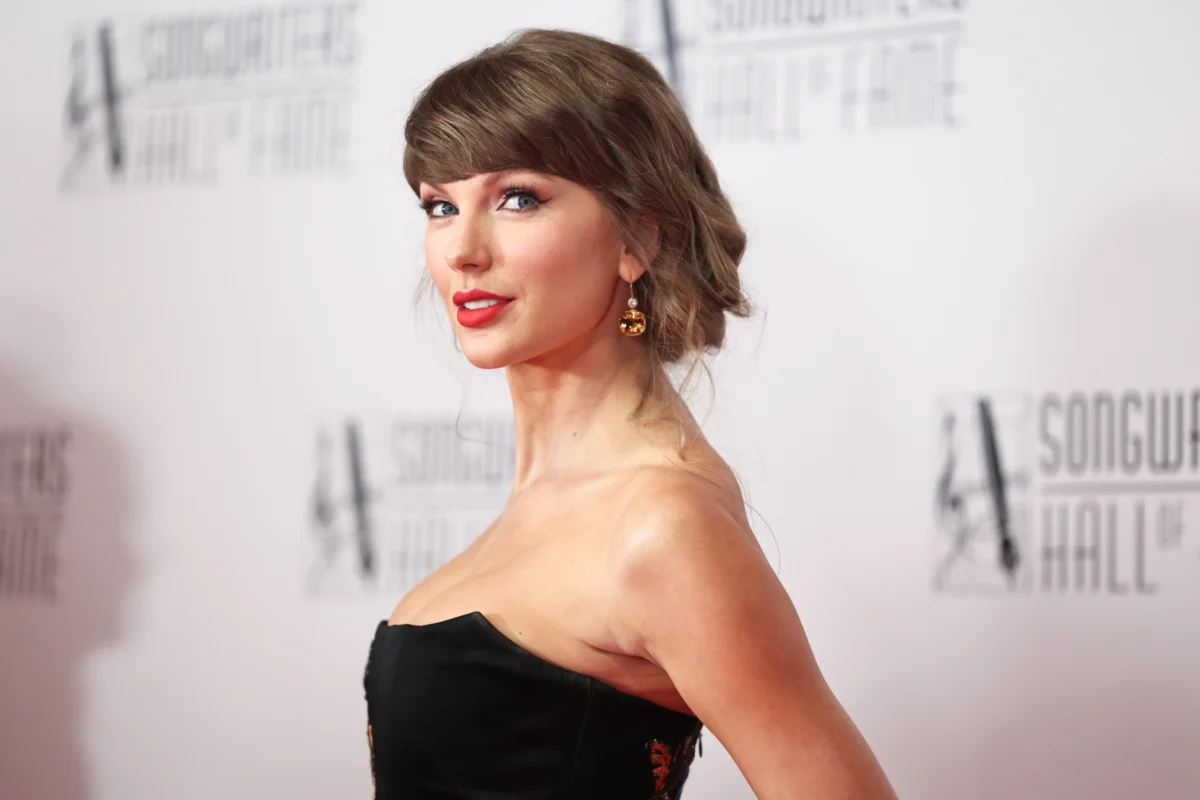
Pop superstar Taylor Swift is set to add yet another historic accolade to her unprecedented career. CBS and MTV jointly announced that the 36-year-old singer-songwriter will be honored with the inaugural Artist Director Honors at the upcoming 2026 MTV Video Music Awards (VMAs). The announcement underscores Swift’s profound evolution from a dominant recording artist to an accomplished visual auteur who has fundamentally shifted how the music industry approaches directorial storytelling.
The ceremony is scheduled to air live from the Peacock Theater in Los Angeles on Sunday, September 27, 2026. As Swift prepares to take the stage, she does so amid a commanding presence across this year’s nomination categories, boasting 11 nods that trail only Madonna’s leading tally of 13. The evening will be hosted by hip-hop icon Snoop Dogg and broadcast across CBS, MTV, and streaming platform Paramount+, setting the stage for what industry analysts project to be one of the most-watched award broadcasts of the year.
The Genesis and Criteria of the Artist Director Honors
The introduction of the Artist Director Honors marks a significant structural addition to the VMAs. According to official statements released by network executives, the award has been established to recognize groundbreaking music artists whose work behind the camera has fundamentally expanded the possibilities of the music video format.
The accolade specifically celebrates a sustained, influential body of work from creators who have consistently pushed artistic and technical boundaries while developing a clear, recognizable directorial voice. In an industry where music videos have historically served primarily as promotional tools for radio singles, figures like Swift have repurposed the medium into cinematic explorations, narrative-driven short films, and high-concept visual art pieces.
Network representatives noted that the inaugural honor was custom-built to recognize artists who transition seamlessly between the recording studio and the director’s chair, proving that visual literacy is just as vital to contemporary pop culture as vocal performance and songwriting.
A Timeline of Taylor Swift’s Directorial Evolution
Swift’s journey behind the camera is characterized by a steady progression from pop experimentation to ambitious narrative filmmaking. Her official solo directorial debut took place in 2020 with the release of the music video for "The Man," a single from her seventh studio album, Lover. The satirical visual, which explored gender double standards through heavy prosthetic makeup and pointed storytelling, earned her the Best Direction trophy at the 2020 VMAs.
Rather than treating directing as a one-off experiment, Swift leaned further into the craft. In 2021, she elevated her visual storytelling with the release of All Too Well: The Short Film. Written and directed by Swift, the cinematic adaptation of her beloved fan-favorite track premiered to critical acclaim and went on to sweep the 2022 VMAs, winning Video of the Year, Best Longform Video, and Best Direction. The triumph marked a watershed moment for the VMAs, representing the first time a self-directed short film won the night’s highest honor.
Over the subsequent years, Swift’s filmography expanded rapidly. Her directing credits accumulated across multiple musical eras, encompassing projects such as:
- "Cardigan" and "Willow" (Folklore and Evermore eras)
- "Bejeweled" and "Lavender Haze" (Midnights era)
- "Karma" featuring Ice Spice
- "I Can See You (Taylor’s Version) (From The Vault)"
- "Fortnight" featuring Post Malone
- "Opalite"
- "The Fate of Ophelia"
Through this extensive body of work, Swift has established a distinct visual palette characterized by recurring motifs, literary references, meticulous world-building, and collaborative partnerships with prominent cinematographers and production designers.

Dominating the 2026 VMAs Nomination Slate
The announcement of the Artist Director Honors arrives as Swift maintains a formidable grip on the 2026 VMAs nomination list. Her 11 nominations reflect both her enduring commercial dominance and her critical reception as a multidisciplinary artist.
Her recent visual project, "The Fate of Ophelia," serves as a primary anchor for her nominations, earning nods in high-profile categories including Video of the Year, Best Pop, Best Art Direction, Best Cinematography, Best Editing, Best Choreography, and Best Visual Effects. Additionally, she secured a Best Direction nomination for "Opalite," alongside high-profile individual recognition for Artist of the Year, Best Album for The Life of a Showgirl, and Song of Summer for "I Knew It, I Knew You."
Swift shares this year’s nomination spotlight with a powerhouse roster of contemporary artists, including Ariana Grande, Sabrina Carpenter, Bruno Mars, PinkPantheress, and Zara Larsson. Meanwhile, legendary rock band Nirvana is slated to receive the evening’s prestigious Video Vanguard Award, bridging generations of alternative and pop music royalty on the Los Angeles stage.
Broader Implications for Music and Visual Storytelling
The decision by MTV and CBS to establish the Artist Director Honors with Swift as its very first recipient speaks volumes about the shifting economics and aesthetics of the modern music business. In the streaming era, where visual companions are consumed on platforms like YouTube and TikTok within seconds of a song’s release, the role of the director has taken on renewed cultural currency.
Industry analysts suggest that by honoring artists who step behind the lens, award shows are validating a new paradigm of authorship. No longer is the pop star merely a passive muse executing the vision of an external director; today’s leading acts increasingly function as auteurs who control their own narrative, intellectual property, and visual iconography from inception to final edit.
Furthermore, Swift’s ongoing advocacy and success in directing have created tangible pathways for other musicians to claim creative control over their visual outputs. By proving that self-directed projects can win critical validation—such as her historic sweep with All Too Well—she has helped dismantle long-standing industry skepticism regarding celebrity-led filmmaking.
Event Logistics and Global Broadcast Details
The 2026 MTV Video Music Awards will be broadcast live from the Peacock Theater in downtown Los Angeles. The ceremony is scheduled for Sunday, September 27, 2026, running from 7:30 to 9:30 p.m. ET (4:30 to 6:30 p.m. PT).
U.S. audiences can tune into the live event via CBS, with a simultaneous broadcast on MTV and live streaming availability on Paramount+. For international fans, the show will be rolled out globally across Paramount+ and MTV platforms starting the following day, ensuring that the milestone moment—and Swift’s acceptance of the inaugural Artist Director Honors—reaches a worldwide audience.