

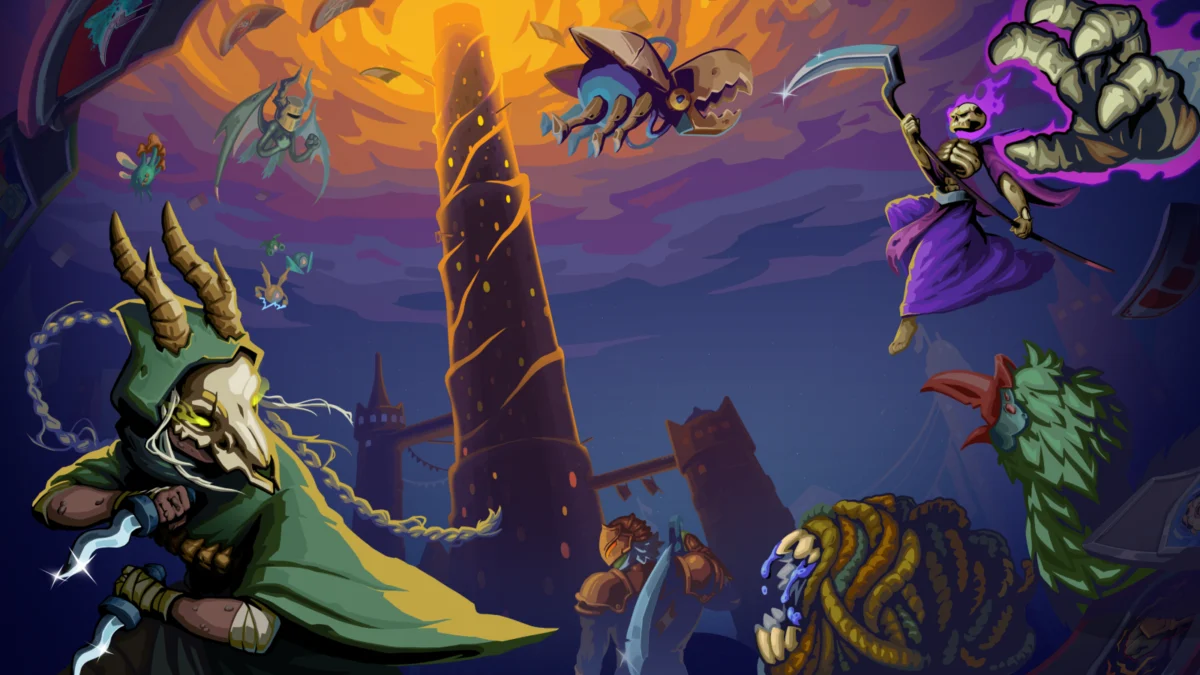
Following the highly successful early access launch of Slay the Spire 2, developer Mega Crit has released a comprehensive update detailing the current state of development and the strategic roadmap leading to version 1.0. One month into the game’s public lifecycle, the studio has emphasized a commitment to quality and "whimsy" over rapid expansion or rigid scheduling, a move that signals a departure from common industry practices involving aggressive scaling and strict release windows. The studio’s inaugural "Neowsletter" serves as both a progress report and a philosophical manifesto for the sequel to the genre-defining roguelike deck-builder.
Strategic Vision: Quality Over Development Speed
A central theme of Mega Crit’s recent communication is the rejection of what co-founder Casey Yano describes as "Sloppy Spire 2." In an industry often characterized by "crunch" culture and the pressure to deliver content rapidly to maintain live-service engagement, Mega Crit has opted for a deliberate, healthy pace. Yano clarified that the studio will not be significantly increasing its headcount to expedite the development process, asserting that exacting deadlines often lead to uninspired and unpolished work.
The studio currently operates as a lean, specialized team where members maintain high levels of autonomy and cross-functional awareness. This structure, according to the developers, allows for "spontaneous experimentation." Features such as the dialogues with the Ancients and the inclusion of the "Room Full of Cheese" are cited as direct results of this flexible environment—elements that might have been discarded or never conceived under a more rigid, corporate development structure. This approach prioritizes the "most impactful" changes as identified by the team and the community, rather than adhering to a pre-determined, inflexible calendar.
Performance Data and Player Analytics
To mark the first month of early access, Mega Crit provided a detailed look at player behavior through a series of "early stats." These figures provide insight into the community’s decision-making processes and the overall scale of the game’s engagement. Since its launch in March, Slay the Spire 2 has seen an estimated 145 million runs completed by the player base. This averages to approximately 3.3 million runs per day, a figure that underscores the title’s massive reach and the high replayability inherent in its design.
Specific player choices within the game’s narrative events were also highlighted:
.png?width=1200&height=630&fit=crop&enable=upscale)
- The Lantern Key: 56% of players chose to return the key, suggesting a slight leaning toward cautious or narrative-driven playstyles.
- The Room of Cheese: 63% of the community opted to "gorge" in this specific event, showing a clear preference for the immediate benefits or the thematic humor of the situation.
- The Egg Event: In a statistic that the developers playfully noted, 49% of players chose to "eat the egg," a divisive choice among the user base.
These metrics are more than just trivia; they inform the balancing team’s understanding of risk-reward ratios and player psychology. By observing which events are favored and which are avoided, Mega Crit can fine-tune the game’s difficulty curves and ensure that every encounter remains a meaningful part of the gameplay loop.
The Roadmap to Version 1.0
The development roadmap for Slay the Spire 2 is categorized into four primary pillars: Features and Systems, Ongoing Tasks, Content, and Long-term Goals. While specific dates were intentionally omitted to maintain the studio’s healthy work-life balance, the objectives provide a clear trajectory for the game’s evolution.
Features and Systems
The primary focus in this category involves stabilizing the core experience. This includes fixing major technical issues, refining the feedback systems (such as UI notifications and combat clarity), and polishing the visual presentation. The team is also dedicated to reworking and balancing existing content to ensure that every card, relic, and item remains a viable and interesting choice for players, preventing the emergence of a "stale" meta-game.
Ongoing Tasks
Mega Crit is continuously monitoring player feedback and bug reports. This involves iterative updates to the game’s writing, art assets, and user interface. The goal is to move the game from its current early access state toward a level of polish that matches the original title’s definitive version.
Content and Future Developments
While the developers remained tight-lipped regarding specific spoilers, they confirmed that new content is being developed to expand the Spire’s depths. This includes new character archetypes, enemies, and events. In a Q&A session, Yano addressed common player requests, noting that an "endless mode" or competitive matchmaking are not currently priorities. The developer explained that such features introduce significant technical and balancing "headaches" that could distract a small team from the core single-player experience.
Financial and Market Context
The commercial performance of Slay the Spire 2 has been nothing short of extraordinary for an independent title. According to market data, the game was the highest-selling title on Steam for the month of March, outperforming high-profile releases such as Crimson Desert and Resident Evil Requiem. Early revenue estimates place the game’s earnings at approximately $108 million (£81.7 million) within its first few weeks.

Furthermore, industry analysts have noted that Slay the Spire 2’s initial financial momentum surpassed that of other highly anticipated indie sequels, including Hades 2 and the long-awaited Hollow Knight: Silksong, when comparing launch-window revenue and wishlist conversion rates. This success is particularly notable given that the original Slay the Spire (2019) essentially created the modern "roguelike deck-builder" subgenre, and the sequel has successfully captured both the original audience and a new generation of players.
Technical Evolution and Engine Transition
The development of Slay the Spire 2 is also significant from a technical standpoint. In late 2023, following the controversial changes to Unity’s pricing model, Mega Crit was one of the most prominent studios to announce a transition in technology. While the original game was built using a custom framework, the sequel utilizes the Godot engine. This shift was a bold move mid-development, but the current state of the early access build suggests that the transition has been successful, providing the team with modern tools to implement more complex visual effects and smoother UI interactions.
The most recent patch notes (covering versions v0.100.0 through v0.103.1) reflect this technical agility. The updates included a suite of balance adjustments, art updates, and UI improvements aimed at streamlining the player experience. These rapid-fire updates during the first month of early access demonstrate Mega Crit’s ability to iterate quickly within their chosen engine while maintaining the "healthy pace" they advocate for.
Analysis: Implications for the Indie Industry
Mega Crit’s approach with Slay the Spire 2 provides a potential blueprint for other successful indie studios facing the "sophomore slump" or the pressures of a major sequel. By being transparent about their refusal to scale up rapidly, they are protecting the creative spark that made the first game a success. The industry has seen numerous examples of indie studios that, upon achieving massive success, expanded too quickly, lost their cultural identity, and ultimately produced sequels that felt corporate and disconnected from their roots.
The decision to avoid "Sloppy Spire 2" is a proactive defense against the quality degradation often seen in the transition from a cult hit to a mainstream franchise. Furthermore, by utilizing early access as a genuine collaborative period rather than a mere marketing window, Mega Crit is leveraging its most valuable asset: a highly engaged and analytical player base.
As the team moves forward on the road to 1.0, the focus remains on the "whimsy" and the tight, addictive gameplay that defines the series. With 145 million runs already logged, the community’s appetite for the Spire’s challenges shows no signs of waning. The roadmap ahead suggests that while the climb to the top of the Spire is arduous for the players, the path to the final release is being navigated by Mega Crit with calculated, steady steps.