


San Antonio, Texas – Mayor Gina Ortiz Jones has publicly called for the cancellation of Kanye West’s upcoming Fourth of July concert at the Alamodome, citing the artist’s history of hate speech and antisemitic remarks. The announcement of the concert, scheduled for the nation’s 250th birthday, has ignited a debate within the city about the appropriateness of hosting an artist with such a contentious public record.
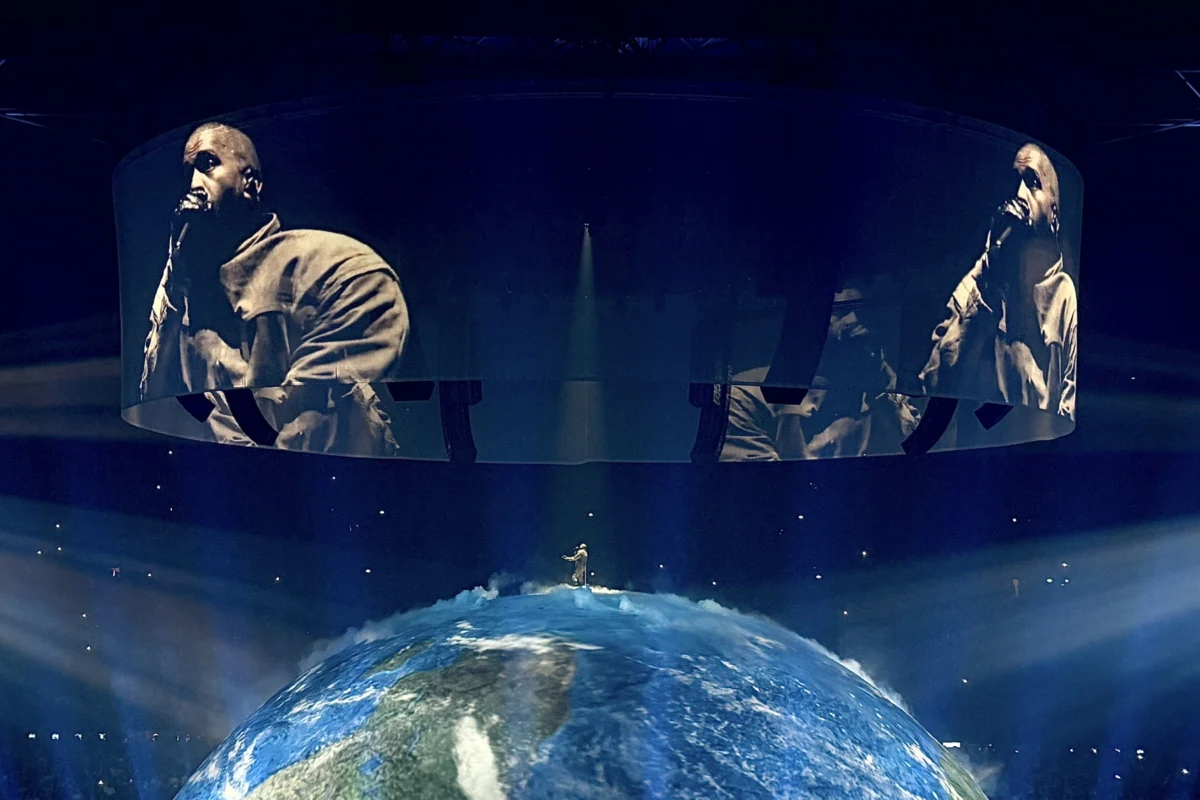
The concert, part of what appears to be a series of international and domestic performances by the artist formerly known as Kanye West, or "Ye," is slated to take place at the Alamodome, a venue capable of holding over 70,000 spectators, particularly with its in-the-round concert configuration. Ticket prices for the event range from $127.50 for standard upper-level seating to $1,461.25 for an exclusive "YE – Front Row Experience," offering a prime seat on the lower level closest to the stage. The artist’s elaborate, globe-shaped stage design is expected to be a prominent feature of the San Antonio show.
Mayor Ortiz Jones, a U.S. Air Force veteran and a Democrat, voiced her opposition to the booking on social media platform X on Saturday night. Her statement emphasized the city’s identity as "Military City USA" and the significance of hosting such an event in a city-funded facility, especially on a national holiday.
"I support canceling the @kanyewest concert," Mayor Ortiz Jones stated on X. "Military City USA should not host someone with a record of hate speech and antisemitic comments in a city-funded facility like our Alamodome – not ever, and certainly not on July 4th, our Nation’s 250th birthday." She further articulated her position by stating, "Standing up to antisemitism is exactly what it takes to achieve a more perfect Union."
This call for cancellation comes amidst a broader pattern of scrutiny and opposition faced by Ye’s recent tour dates. The San Antonio stop is positioned between performances in Tampa, Florida, on June 26 and 28, and an international engagement in Tirana, Albania, on July 11. Following these, Ye is scheduled to perform in Madrid, Spain, on July 30, and Algarve, Portugal, on August 7, before returning to the United States for two homecoming shows in Chicago, Illinois, on September 3 and 4. This tour marks a significant return to large-scale performances for the artist, who has not embarked on a full-fledged tour in the current decade.
A Pattern of Cancellations and Controversies
Ye’s current touring schedule has been marked by both successful performances and significant cancellations. While he has held successful shows this year in locations such as Mexico City, Los Angeles, Turkey, the Netherlands, and Georgia, other planned concerts have been withdrawn in England, Poland, and France. These cancellations are often attributed to the artist’s controversial statements and actions.
The opposition in San Antonio echoes similar sentiments expressed by political figures in other cities. Republican U.S. Senator Rick Scott of Florida recently urged for the cancellation of Ye’s performances in Tampa. In a statement released on June 4, Senator Scott outlined his concerns, stating, "Kanye West’s consistent antisemitic attacks are an affront to the values of the people of the Hillsborough community. He has openly praised Nazis, called himself one, and slandered Jews across the world. Kanye West also funded a Super Bowl ad in 2025 that directed viewers to purchase merchandise featuring swastikas." He further condemned the artist’s remarks as "vile and a slap in the face to our state’s Jewish community," expressing concern that taxpayer-funded venues would host an artist known for promoting such rhetoric, particularly in a state with a substantial Jewish population.
Background and Timeline of Ye’s Recent Activities
The controversy surrounding Ye’s concert in San Antonio is rooted in a series of public incidents and statements that have drawn widespread criticism. Over the past few years, Ye has made numerous public remarks that have been widely condemned as antisemitic, hateful, and conspiratorial. These include comments made in interviews, on social media platforms, and during public appearances.

In October 2022, Ye made a series of antisemitic remarks on Twitter, which led to his accounts being suspended by the platform. He also made comments praising Adolf Hitler and expressing admiration for Nazism, which resulted in further condemnation and the termination of several high-profile business partnerships, including those with Adidas and Balenciaga.
The artist has also been involved in producing content that has been deemed offensive. For instance, a Super Bowl advertisement in 2025, which Senator Scott referenced, reportedly promoted merchandise featuring swastika symbols, further fueling accusations of antisemitism and neo-Nazi sympathies.
Despite these controversies, Ye has continued to engage with his fanbase through live performances and music releases. On Friday, prior to the San Antonio mayor’s statement, Ye released a deluxe edition of his latest album, Bully. This extended version features updated mixes of the original tracks along with two new songs: "OK" (featuring Don Toliver) and "Mission Control." This release highlights the ongoing artistic output of the controversial figure, even as his public image remains deeply tarnished for many.
The Alamodome and City-Funded Venues
The Alamodome, a prominent landmark in downtown San Antonio, is a multi-purpose stadium owned by the City of San Antonio and operated by the Convention & Sports Facilities Department. Its capacity and flexibility make it a sought-after venue for concerts, sporting events, and other large gatherings. The decision to host or cancel an event at such a facility often involves considerations beyond purely economic factors, including community impact and alignment with city values.
The debate over hosting Ye’s concert raises important questions about the responsibility of municipal governments in selecting artists for city-owned venues. Critics argue that by hosting an artist with a documented history of hate speech, the city implicitly endorses or tolerates such rhetoric. Supporters of free expression might argue for the separation of artistic performance from the artist’s personal views, or emphasize the economic benefits of hosting large-scale events. However, the scale and nature of Ye’s controversial statements, particularly those targeting specific religious and ethnic groups, have pushed many to advocate for a more stringent vetting process.
Broader Implications and Analysis
The call for the cancellation of Ye’s San Antonio concert is part of a larger societal conversation about accountability for public figures, the role of art in society, and the enduring fight against hate speech and discrimination. The timing of the proposed concert on July 4th, a day celebrating American independence and ideals, further amplifies the concerns raised by Mayor Ortiz Jones. Hosting an artist accused of promoting ideologies antithetical to these values on such a significant national holiday presents a perceived contradiction for many.
The economic implications of hosting or canceling such an event are also a factor. Concerts of this magnitude can generate substantial revenue for the city through ticket sales, hospitality, and tourism. However, the potential for negative publicity, community backlash, and reputational damage could outweigh these benefits.
The situation in San Antonio reflects a growing trend where artists with controversial pasts face increased scrutiny from the public, elected officials, and corporate sponsors. The power of social media to amplify both support and opposition has made public opinion a significant force in shaping the landscape of the entertainment industry. As the date of the concert approaches, the pressure on city officials to make a decision will likely intensify, underscoring the complex interplay between artistic freedom, public responsibility, and the values that a community chooses to uphold. The outcome in San Antonio will undoubtedly be watched closely as a potential precedent for how other cities navigate similar dilemmas in the future.