

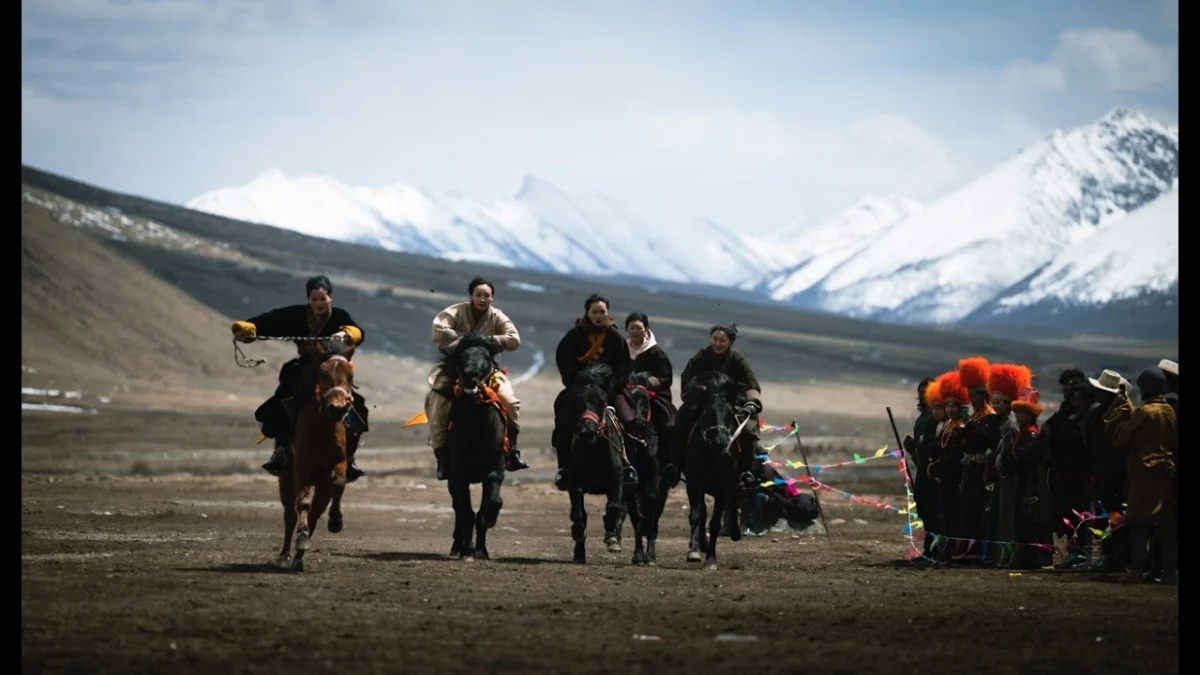
World premiering at the Bishkek International Film Festival, "Released" is a poignant Tibetan drama that masterfully weaves a true story from director Khabu’s hometown into a compelling narrative of tradition, freedom, loss, and survival. Khabu, who also penned the screenplay, was deeply moved when he first learned of the incident in his native region, particularly by the experiences of the young woman who served as the inspiration for the film’s central character. This initial spark ignited a creative process that involved extensive interviews with the real-life individual, shaping the script and ultimately leading to her inclusion in the film as one of the six young women gracing the screen. Shot in the visually striking locale of Litang, a significant cultural and historical hub within the Kham region of Tibet, "Released" leverages its breathtaking landscape to underscore the profound and intrinsic connection between horses, the enduring local identity, and the very essence of life on the vast Tibetan plateau.
Challenging Tradition on the Tibetan Plains
At the heart of "Released" lies a deeply entrenched tradition within a small Tibetan village: the historical exclusion of women from major horse races, particularly those held concurrently with male competitions. Against this backdrop of centuries-old customs, the film introduces Sonam Lhamo, a young woman imbued with an unyielding determination. Her decision to defy this patriarchal norm and participate in the fiercely competitive horse race is far more than a personal ambition; it represents a direct confrontation with the established order and a challenge to customs that have shaped the community for generations. As Sonam Lhamo embarks on her quest to race, she must navigate a complex web of societal resistance, confronting not only the ingrained doubts of her community but also the palpable pressure and the weighty expectations that dictate a woman’s prescribed role. This struggle for inclusion highlights the broader societal tensions between progressive aspirations and conservative adherence to tradition.
A Love Story Intertwined with Conflict
Complementing Sonam Lhamo’s journey is the story of Tsering, a young man whose modern inclinations clash with his father’s traditional values. Tsering finds solace and expression in riding his motorcycle, a choice that increasingly frustrates his father, Dundrop, the respected leader of the community. This generational divide is further exacerbated by Tsering’s deep affection for Sonam Lhamo. He visits her daily, his love for her a constant in his life. However, Dundrop staunchly opposes any notion of marriage between them, viewing Sonam Lhamo as a woman who fails to uphold the values he holds dear. As Tsering and Sonam Lhamo strive to carve out a space for their relationship and their individual aspirations within a rigid social structure, an unforeseen tragedy strikes, altering the course of their lives and the fabric of the village.
A Commitment to Authenticity and Visual Storytelling
Director Khabu’s commitment to authenticity is evident throughout "Released," with the production largely relying on the participation of villagers and herders for its cast. This deliberate choice imbues the film with an unvarnished realism, offering audiences an intimate glimpse into a specific way of life where horses are not merely animals but integral to the cultural and practical fabric of existence. The horse races, depicted with visceral energy, and the stark, often distant shots of snowy landscapes, coalesce to create a visually arresting and evocative cinematic experience. Sequences involving a deceased body and a dramatic accident further contribute to this raw portrayal, driving the narrative forward with a compelling intensity for much of the film’s duration. Chen Hong’s exceptional cinematography plays a pivotal role in this harmonious fusion of elements, emerging as one of the film’s most celebrated achievements. His lens captures the rugged beauty of the Tibetan plateau and the emotional nuances of the characters with remarkable skill.
Narrative Strengths and Evolving Pacing
The dramatic arc of "Released," particularly in its initial stages, proves remarkably effective. The poignant portrayal of two young lovers facing formidable obstacles, the intricate connection between their relationship and the elders’ resistance to female participation in races, and the influential role of Dundrop create a captivating and entertaining core. However, as the narrative progresses, a discernible shift in quality occurs. Elements of forced sentimentality begin to emerge, and the latter portion of the film could have benefited from greater conciseness. Cui Jian’s editing, while largely maintaining a pace that mirrors the rhythm of life in the region, presents some challenges in this regard. Nevertheless, the expertly executed horse racing sequences, despite their evident technical complexity, stand out as a testament to the technical team’s prowess. The almost constant musical score, while atmospheric, could have been employed more judiciously to enhance the impact of key scenes.
Standout Performances and Thematic Resonance
Yangchuk Tso delivers a truly remarkable performance as Sonam Lhamo, commanding the screen with both her acting talent and undeniable charisma. Her portrayal is a significant highlight, though the overall acting quality across the ensemble is consistently high, further grounding the film in emotional authenticity.
Broader Implications and Cultural Context
The narrative of "Released" touches upon a rich tapestry of cultural practices and societal norms prevalent in the Kham region, an area historically known for its nomadic herding traditions and strong equestrian culture. Horse racing in this region is not merely a sport but a deeply ingrained cultural event, often tied to festivals and community gatherings. The exclusion of women from these prominent races, as depicted in the film, reflects patriarchal structures that have, in many traditional societies, limited women’s public roles and participation in culturally significant activities.
The film’s premiere at the Bishkek International Film Festival, an event that celebrates diverse cinematic voices from Central Asia and beyond, provides a crucial platform for Tibetan cinema to reach a wider international audience. Such festivals are instrumental in fostering cross-cultural understanding and appreciation for stories that might otherwise remain on the periphery of global attention.
Supporting Data and Contextual Background
While specific statistical data regarding the historical participation of women in Tibetan horse racing is not readily available in public records, anecdotal evidence and cultural observations suggest that while women have historically been involved in horse-related activities such as herding and transportation, their presence in competitive racing has been significantly limited, particularly in formal, large-scale events. This dynamic is often rooted in traditional gender roles that assign distinct spheres of activity to men and women.
The Kham region itself holds significant cultural importance. Historically, it was one of the three main provinces of Tibet, known for its distinct dialect, customs, and independent spirit. Litang, the filming location, is a significant county-level city within the Garzê Tibetan Autonomous Prefecture in Sichuan, China, and has a long history as a center for trade and religious pilgrimage. Its landscape, characterized by high-altitude grasslands and rugged terrain, is intrinsically linked to the nomadic lifestyle and the importance of horses for survival and cultural expression.
Potential Reactions and Inferred Statements
While direct statements from individuals involved in traditional horse racing communities or community leaders have not been published in relation to the film, one can infer potential reactions. Elders and staunch traditionalists might view Sonam Lhamo’s actions with apprehension, seeing them as a disruption to established order and a challenge to time-honored beliefs about gender roles. Conversely, younger generations or those more open to social change might find her courage inspiring, seeing her as a symbol of progress and a voice for greater inclusivity. The film’s exploration of these tensions could spark dialogue within communities about the evolving role of women and the balance between preserving tradition and embracing modernity.
Analysis of Implications
"Released" has significant implications beyond its immediate narrative. By bringing a story of female empowerment and a challenge to patriarchal norms to the screen, the film contributes to a growing global conversation about gender equality. It highlights how deeply ingrained traditions can be, but also underscores the power of individual courage to initiate change. The film’s success in an international film festival context suggests a broader audience interest in authentic stories from diverse cultures, particularly those that explore universal themes of struggle, resilience, and the pursuit of freedom. The cinematic portrayal of Tibetan life, with its unique cultural markers, also serves to educate and inform international viewers, fostering a deeper appreciation for Tibetan heritage and the challenges faced by its people. The film’s emphasis on the connection between identity and landscape, particularly the role of horses, offers a valuable perspective on how environment and culture are inextricably linked.
In conclusion, "Released" is a beautifully shot film that tackles a significant societal issue through a compelling narrative that resonates with its dramatic core. While minor imperfections in pacing and narrative development prevent it from achieving universal acclaim, it undeniably stands as a competent and impactful work, offering a vital glimpse into the complexities of tradition, aspiration, and the enduring spirit of the Tibetan people.