
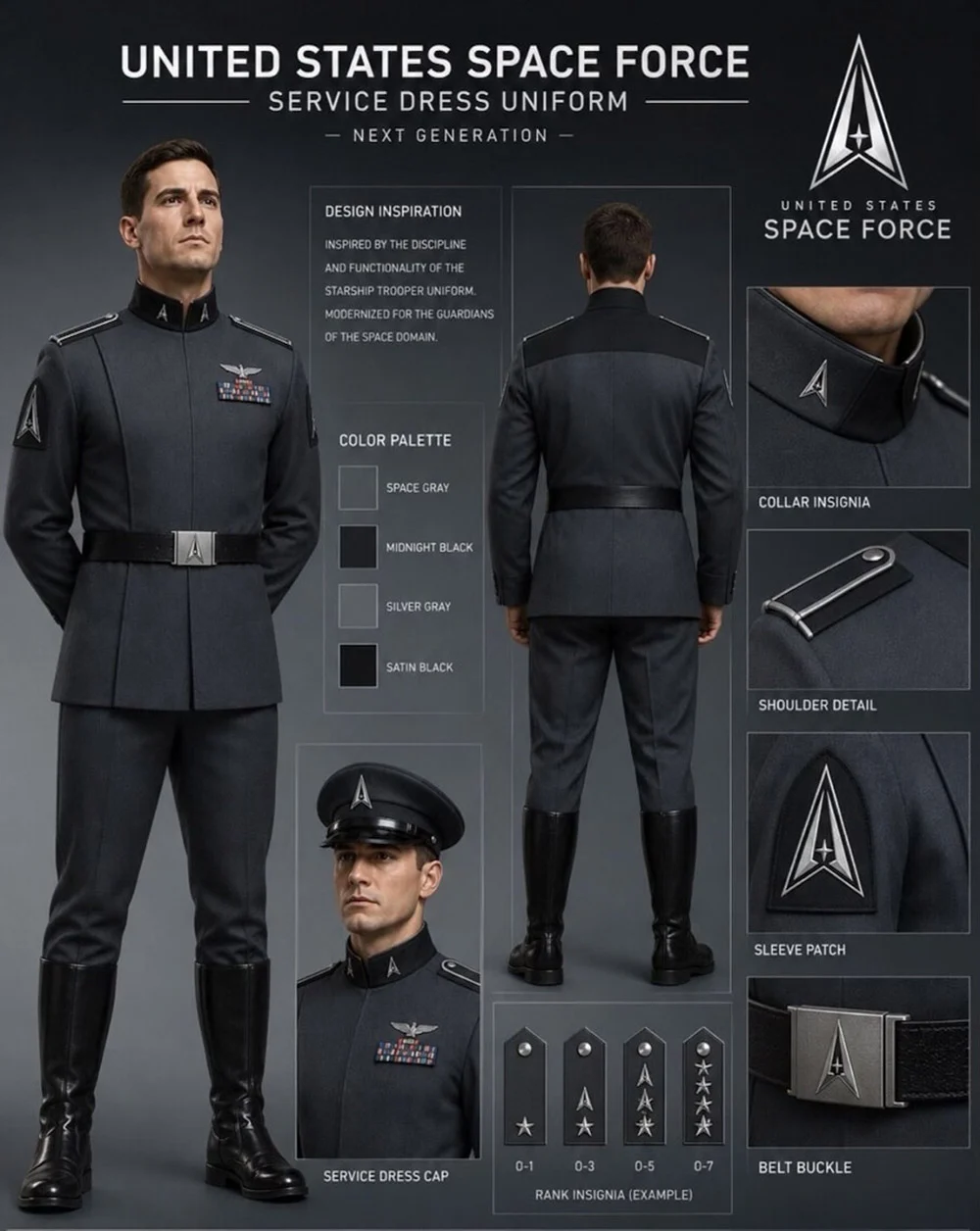
On September 6, former President Donald Trump unveiled a design mockup for the next-generation service dress uniform of the United States Space Force. Shared via his platform, Truth Social, the visual proposal featured a stark, monochromatic black-and-gray ensemble. Accompanying the graphic, Trump explicitly stated that the design was "inspired by the discipline and functionality of the Starship Trooper uniform." This endorsement immediately drew national attention, not only for the unconventional aesthetic departure from standard military service dress but also for the cultural and historical weight associated with the film cited as the primary inspiration.
The Origin and Evolution of Starship Troopers
Paul Verhoeven’s 1997 film, Starship Troopers, occupies a complex position in modern cinema. Upon its initial theatrical release, the project faced significant critical backlash and underperformed at the domestic box office. Many contemporary reviewers interpreted the film as a straightforward, jingoistic sci-fi action movie, seemingly failing to grasp the director’s satirical intent. The narrative follows a group of young recruits, played by Casper Van Dien, Denise Richards, and Neil Patrick Harris, who are mobilized into an intergalactic war against an insectoid alien species.
In the decades following its debut, the film has undergone a radical critical reappraisal. Publications such as The Atlantic and The Ringer have characterized the film as a sophisticated critique of hyper-militarism, blind nationalism, and fascist propaganda. The core of Verhoeven’s satire lies in the juxtaposition of heroic, clean-cut youth against a backdrop of aesthetic choices that intentionally mirror the visual language of 20th-century totalitarian regimes.
Costume Design and Cinematic Intent
The iconic uniforms featured in the film were the brainchild of Academy Award-nominated costume designer Ellen Mirojnick. Her filmography, which spans seminal works such as Wall Street, Basic Instinct, and more recently, Christopher Nolan’s Oppenheimer, is noted for its ability to convey character and socio-political context through textile and silhouette.
In the case of Starship Troopers, Mirojnick was tasked with creating a visual identity that felt simultaneously futuristic and deeply grounded in the iconography of mid-century authoritarianism. Verhoeven has long maintained that this aesthetic choice was deliberate. He drew heavily from the work of Leni Riefenstahl, the filmmaker whose 1935 documentary Triumph of the Will serves as the definitive visual record of the Nazi party’s rise to power. By adopting this visual vocabulary, Verhoeven intended to subvert the "hero" archetype, forcing the audience to question the morality of his protagonists, who serve a system that is fundamentally fascist.

The Director’s Perspective on the Trump Proposal
When presented with the news that the former President had cited his film as an inspiration for official military hardware, Paul Verhoeven reacted with a mix of irony and apprehension. "It’s an honor, isn’t it?" the director said, though his laughter underscored the dissonance of the situation.
Verhoeven’s primary concern lies in the potential for the film’s message to be completely inverted when taken out of its satirical context. "When the Trump administration talks about Starship Troopers, they should be aware that it’s based on the style of Leni Riefenstahl," Verhoeven noted. "I don’t know if this president is aware that the movie says these characters are fascists without knowing that they’re fascists. That’s the point."
For the director, the difficulty of the film has always been its reception. He noted that even during the production, many cast and crew members did not fully grasp that the uniforms and the surrounding imagery were intended to be a cautionary, biting critique. "I knew what I was doing, but I don’t know if many of the actors and actresses realized," he added. "I thought people would understand and laugh about it. But that was not the case."
Chronology of the Space Force Uniform
The United States Space Force (USSF), established in December 2019 as the first new branch of the U.S. Armed Forces in over 70 years, has been in a period of extended transition regarding its official uniform identity. Since its inception, the branch has utilized modified versions of existing Air Force uniforms, reflecting the logistical challenges of standing up a new service branch.
- December 2019: The Space Force is officially established as a separate branch under the Department of the Air Force.
- 2020–2022: Initial rollout of utility uniforms and temporary service dress concepts.
- 2023: Public feedback sessions regarding the "Service Dress" aesthetic, aiming to differentiate the USSF from the Army, Navy, and Air Force.
- September 2024: President Trump releases his personal mockup via social media, citing cinematic inspiration.
The lack of an established "service dress" identity has created a vacuum that has, at times, been filled by outside proposals, social media discourse, and political commentary. The proposal of a black-and-gray uniform represents a significant departure from the traditional blue, green, or tan color palettes used by the other branches.
Political and Social Implications
The intersection of popular culture and military aesthetics has long been a point of contention in American politics. The use of sci-fi imagery to influence actual military design raises questions regarding the perception of the U.S. military on the global stage. Critics of the proposal argue that aligning military aesthetics with fictional fascist regimes could inadvertently project the wrong image to international allies and adversaries alike.

Furthermore, the discourse surrounding the uniform highlights a broader divide in the American political landscape regarding the role of satire and irony. As Verhoeven noted, his residency in the United States for the past 40 years has left him still grappling with the nuances of American political culture. The tendency to reclaim symbols—even those intended as warnings—and repurpose them as aspirational motifs is a phenomenon that social scientists and political analysts continue to monitor.
Historical Precedent for Military Uniform Design
Historically, the design of military uniforms has served to project power, efficiency, and national identity. During the 20th century, the shift from ornate, Napoleonic-style dress to functional, minimalist uniforms marked a transition toward industrialized warfare. However, the use of stark, dark monochromatic palettes has historically been associated with security forces and regimes that prioritize uniformity over individual identity.
The USSF, by design, focuses on the high-tech, space-based frontier, which naturally leads designers to look toward "futuristic" aesthetics. However, the specific reference to Starship Troopers introduces a layer of historical baggage that the Department of Defense typically avoids. In professional military circles, uniform design is governed by committees focused on tradition, utility, and morale. Whether the Trump proposal will be formally integrated into the ongoing design process remains to be seen; however, the public association with a satirical film about fascism has ensured that the discussion around the uniform will remain charged for the foreseeable future.
Conclusion
The public discourse triggered by the proposed Space Force uniform design serves as a case study in how cultural artifacts can be interpreted through divergent lenses. To the former President, the uniform represents a sleek, disciplined aesthetic that conveys authority and strength. To the director of the film from which that aesthetic was borrowed, it is a dangerous misreading of a cautionary tale.
As the Space Force continues to refine its identity, the challenge of creating a uniform that is both functional and culturally resonant persists. Whether the final product will lean into the cinematic flair suggested by proponents or adhere to the conservative traditions of the American military remains a subject of ongoing development within the Pentagon. Regardless of the final outcome, the controversy has once again highlighted the enduring power of Starship Troopers as a piece of media that continues to challenge audiences and public figures alike, nearly three decades after its initial release.