

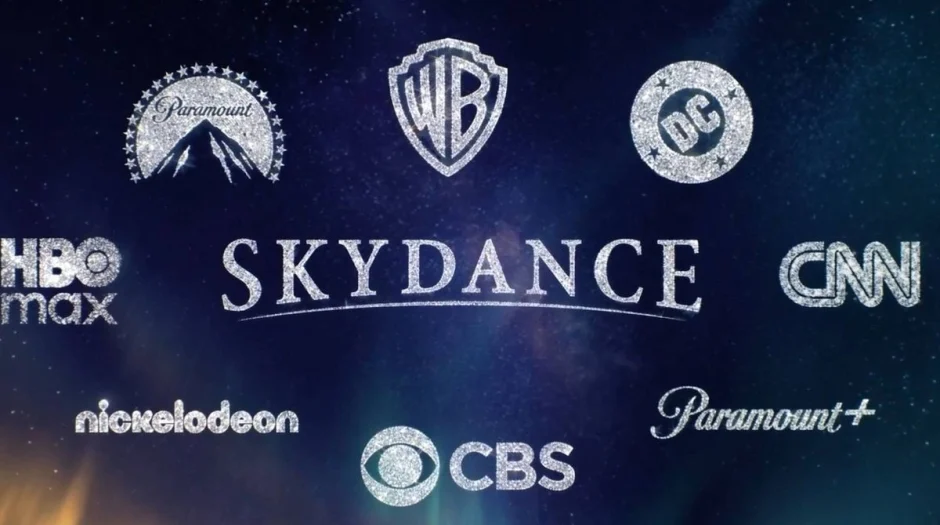
The landscape of global entertainment is on the brink of an unprecedented transformation as the mega-merger between Paramount and Warner Bros. Discovery prepares to officially close. David Ellison, CEO of the newly minted corporate entity, announced today via social media that the combined media conglomerate will operate under the banner of Skydance. Valued at an astounding $110 billion in enterprise value—with an equity value of $81 billion based on a $31-per-share cash acquisition agreed upon earlier this year—the historic transaction is slated to finalize next Tuesday, October 6.
This monumental corporate union brings together more than a century of Hollywood heritage, uniting two of the world’s most storied film studios and an expansive portfolio of television networks, streaming services, and premier animation houses. The completion of the deal follows months of intense bidding wars, complex regulatory hurdles, and high-stakes legal battles that threatened to derail what is undoubtedly the largest entertainment industry consolidation of the decade.
A New Era Under the Skydance Banner
The decision to name the combined parent company Skydance was revealed by Ellison in a public statement on X, formerly known as Twitter. According to Ellison, the overarching corporate identity was specifically chosen to preserve the individual legacies of Paramount and Warner Bros. rather than overshadow them with a newly manufactured or potentially divisive moniker.
"What once was the peak, is now just the beginning," Ellison wrote in his address to the industry and public. "Paramount and Warner Bros. shaped over a century of culture. By combining them, we aren’t rewriting history — we’re equipping these iconic studios with a more powerful engine. Together, we are Skydance: a creative-first home for bold, quality storytelling."
Ellison further elaborated that leadership consciously avoided titles that favored one studio over the other—discarding informal industry placeholders like "WarnaMount" and "ParaBros." Furthermore, the rebranding drops "Discovery" from the primary corporate title, phasing out a moniker that had been publicly traded since Discovery Communications went public in 2008. Under the new corporate structure, powerhouse legacy brands like Paramount Pictures, Warner Bros. Pictures, Nickelodeon, Cartoon Network, and Adult Swim will retain their individual identities in the spotlight while benefiting from the financial and operational backing of the broader Skydance ecosystem.
The Animation Powerhouse Landscape
One of the most profound impacts of this $110 billion consolidation will be felt within the animation sector. The merger successfully consolidates a massive array of animation operations under a single corporate umbrella, altering the competitive dynamics of the family entertainment and adult animation markets.

From the Paramount side, the combined company inherits Paramount Animation, children’s television giant Nickelodeon, and Skydance Animation. Meanwhile, Warner Bros. Discovery contributes Warner Bros. Pictures Animation, the historic Warner Bros. Animation library, Cartoon Network, and Adult Swim.
This pooling of creative assets places an immense amount of intellectual property and production muscle into a single enterprise. Skydance Animation—led by industry veteran John Lasseter—recently severed its feature film distribution deal with Netflix last month. However, high-profile projects currently in production under that prior arrangement, including Brad Bird’s Ray Gunn and Rich Moore’s untitled Jack and the Beanstalk feature, will still premiere on Netflix as originally scheduled. Moving forward, the animation division will serve as a cornerstone for the theatrical and streaming strategies of the newly formed Skydance conglomerate.
Chronology of a Mega-Deal: From Hostile Bids to Antitrust Settlements
The path to next Tuesday’s closing date has been fraught with corporate maneuvering, fierce rivalries, and significant regulatory scrutiny.
The timeline of the acquisition traces back to late last year, when Netflix initially stunned Wall Street by striking an $82.7 billion acquisition agreement with Warner Bros. Discovery. Sensing an opportunity to reshape the entertainment oligopoly, Paramount aggressively countered Netflix’s proposal with a hostile takeover bid. This maneuver ignited a high-stakes bidding war that ultimately forced Netflix out of the running.
By February, Paramount and Warner Bros. Discovery formally reached an agreement for a $31-per-share cash transaction, resulting in an equity value of $81 billion and a total enterprise valuation of $110 billion.
Following the shareholder agreements, the transaction immediately faced roadblocks from antitrust regulators and industry guilds. The Writers Guild of America (WGA), alongside attorneys general from 12 states, filed aggressive antitrust lawsuits seeking to block the merger. The plaintiffs argued that combining two of Hollywood’s "Big Five" studios would create an illegal monopoly, stifle creative competition, and lead to devastating industry-wide layoffs.
The legal logjam began to clear when the WGA successfully negotiated a private settlement with the corporate parties. Shortly thereafter, a breakthrough was reached with the coalition of state attorneys general. On Wednesday, U.S. District Judge Araceli Martínez-Olguín officially approved the settlement, clearing the final legal hurdle and paving the way for the October 6 closing.

Strict Regulatory Safeguards and Consent Decree Conditions
To secure judicial approval and overcome the robust antitrust opposition, Paramount and Warner Bros. Discovery agreed to a rigorous five-year consent decree negotiated with the state attorneys general. These legally binding conditions are designed to protect industry labor, maintain theatrical output, and preserve market competition.
Key pillars of the settlement include:
- Theatrical Output Quotas: The combined company is legally mandated to release a minimum of 30 films theatrically in each of the first two years following the merger, increasing to at least 32 theatrical releases annually in years three through five.
- Theatrical Windows: Wide releases must adhere to a guaranteed 45-day theatrical window before heading to home entertainment or streaming platforms, safeguarding the traditional box office ecosystem.
- Production Spending: Skydance must commit at least an additional $300 million per year specifically toward domestic U.S. film production, reinforcing investment in local infrastructure and jobs.
- Asset Protection: The decree strictly bars the combined company from selling the historic Paramount and Warner Bros. studio lots for a period of five years, protecting vital physical production hubs from real estate liquidations.
- Operational Independence: Several business units must continue operating independently. Notably, the entity must manage carriage deals for its basic cable television channels separately to prevent monopolistic bundling practices.
Industry analysts note that these strict guidelines were crucial not only for satisfying antitrust concerns but also for ensuring that neither legacy studio was quietly dissolved or hollowed out beneath the new corporate superstructure.
Market Implications and the Future of Hollywood
The birth of Skydance as an $110 billion media behemoth marks a definitive turning point in the streaming era. For years, traditional Hollywood studios have struggled to balance the capital-intensive demands of building direct-to-consumer streaming services with the traditional profitability of theatrical releases and linear television networks.
By consolidating Paramount and Warner Bros. Discovery, Ellison and his executive team are betting that scale is the ultimate survival mechanism in modern media. The combined company will possess an unrivaled library of cinematic classics, franchise intellectual property ranging from Mission: Impossible and Top Gun to DC Comics, Harry Potter, Lord of the Rings, and SpongeBob SquarePants, and a massive distribution footprint spanning both linear television and digital platforms.
However, financial experts caution that integrating two massive, legacy-laden media empires carries substantial execution risks. Managing corporate debt, rationalizing redundant administrative and technological overhead, and aligning disparate corporate cultures will be immediate priorities for Ellison and his leadership team once the ink dries on Tuesday.
As October 6 approaches, the global entertainment industry watches closely. What began as a turbulent bidding war and a contentious legal battle has culminated in the creation of Skydance—a newly empowered titan charged with carrying the rich legacies of Paramount and Warner Bros. into a volatile, fast-evolving digital future.