


The stark, windswept Faroe Islands in 1862 serve as the dramatic backdrop for "No Rest for the Wicked," a new film that delves into a forbidden love affair between a fisherman and a whaler, a romance that tragically ignites mystical forces to challenge an entire village. Starring Egor Venned as the fisherman Baldur and Pilou Asbæk as the Danish whaler Helge, with Sofia Nolsøe portraying Baldur’s devout mother, the film is a co-creation by director and writer Kasper Kalle and co-writer Rasmus Birch. Clocking in at 103 minutes, "No Rest for the Wicked" premiered at the Fantasia International Film Festival, offering a potent blend of atmospheric dread and tender, unspoken affection.
A Deep Dive into the Faroe Islands of 1862: Isolation and Unspoken Desires
The film’s narrative is rooted in the palpable isolation of the Faroe Islands during the latter half of the 19th century. In 1862, these remote islands were characterized by their deeply entrenched religious conservatism and a strong sense of community that, while fostering resilience, also imposed rigid social norms. For individuals harboring desires that deviated from the accepted patriarchal and heteronormative structures, life could be a suffocating experience. The harsh maritime environment, with its treacherous seas and unforgiving weather, mirrored the emotional landscape for many, where unspoken feelings could be as perilous as the churning waters. This was a time before widespread scientific understanding of human sexuality, when any deviation from perceived natural order was often attributed to sin or supernatural influence.
The source material for "No Rest for the Wicked" is Karl Heinrich Ulrichs’ 1884 short story, "Manor." Ulrichs, a German writer and an early advocate for gay rights, is recognized for his pioneering literary explorations of same-sex love, offering some of the earliest unflinching depictions in Western literature. His work, though not widely known today, stands as a testament to the existence of such narratives long before they became more openly discussed. Director Kasper Kalle has drawn a direct parallel between his own upbringing in a small town, where he experienced a profound sense of isolation as a gay individual, and the setting of the film. This personal resonance is evident in the film’s use of horror as a vehicle for expressing emotions that societal and religious shame rendered inexpressible for the characters.
The Unforeseen Encounter: A Storm and a Fateful Rescue
The story unfolds with Baldur (Egor Venned), a young fisherman marked by a scar on his cheek and living a quiet life with his mother in a secluded, devout community. His existence is irrevocably altered during a fishing expedition when a dense fog rolls in, disorienting him at sea. The film masterfully employs sound design to amplify Baldur’s vulnerability, creating an immersive and unsettling auditory experience as his boat narrowly avoids crashing against the unforgiving cliffs. It is amidst this disorienting fog that Baldur hears cries for help.
The source of the distress is Helge (Pilou Asbæk), a Danish whaler who has lost an oar to the powerful currents. In the ensuing chaos of the rescue, Baldur is rendered unconscious, his boat lost to the sea. Helge, despite the language barrier that complicates their interaction, pulls Baldur to safety. This accidental encounter, born out of a moment of peril, marks the beginning of an unlikely connection between the two men, drawing them into each other’s orbits with an almost fated inevitability. The initial communication challenges, with Baldur and Helge struggling to understand each other’s dialects, serve to underscore the depth of their connection, which blossoms beyond mere words.
A Slow Burn of Affection: Unspoken Language of the Heart
What follows is a meticulously crafted, slow-building relationship that initially masquerades as reluctant hospitality. Baldur’s mother (Sofia Nolsøe), a woman deeply rooted in her faith and community, extends a warm welcome to Helge, knitting him mittens and offering him shelter. Meanwhile, Baldur, though outwardly maintaining a facade of irritation, betrays his burgeoning feelings with a subtle smile that betrays his true emotions. The film captures the quiet intensity of this period, highlighting Baldur’s deep-seated need for male companionship, a void left by the death of his fisherman father. Helge’s presence stirs something within Baldur that he lacks the language to articulate, a sentiment amplified by the stifling religiosity of their environment.
The film excels in its depiction of these nascent feelings through subtle gestures and stolen glances. Moments in church, where Baldur and Helge exchange giddy, boyish looks across the pews, speak volumes about their shared, unspoken understanding. These are the glances of two individuals who recognize a mutual attraction, an acknowledgment that neither feels empowered to voice first. This deliberate pacing allows the audience to witness the organic growth of their bond, making their eventual connection all the more poignant.
The Eloquence of Nature: Communication Beyond Words
"No Rest for the Wicked" demonstrates its narrative prowess by allowing its central characters to communicate through non-verbal means, effectively circumventing the limitations of their linguistic differences. A particularly resonant scene involves Baldur asking Helge to describe trees. Having grown up on the treeless Faroe Islands, Baldur is unfamiliar with them. Helge’s description becomes a profound, albeit indirect, conversation about their own burgeoning relationship. He describes the rough and smooth textures of bark, comparing them metaphorically to the complexities of a man’s face. This beautifully written passage utilizes the language of nature to draw parallels between the men themselves, offering the clearest insight into their developing feelings without resorting to overt declarations. This nuanced approach to dialogue underscores the film’s thematic exploration of desire that cannot be openly expressed.
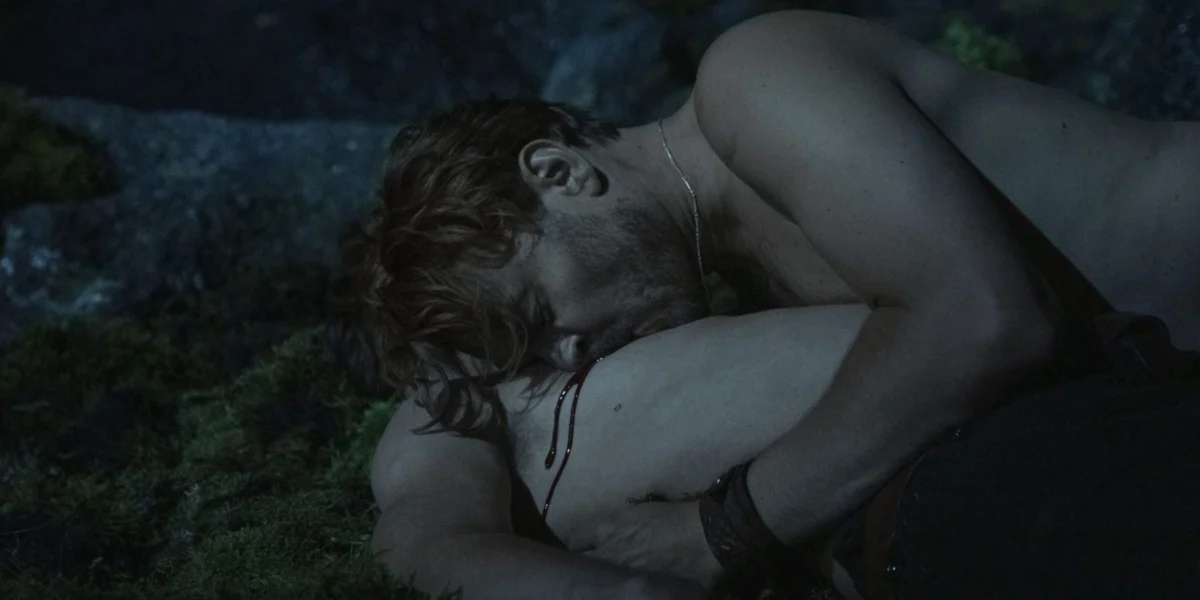
The film’s visual language complements this narrative restraint. Intimate moments, such as the men shedding their shirts by the water or engaging in a wrestling match in the frigid ocean that subtly shifts into something more tender once submerged, are captured with a delicate touch. The underwater sequence, in particular, allows for a prolonged, uninhibited gaze between the two men, a moment of genuine vulnerability and connection. Baldur’s recurring nightmare, featuring Helge’s hand in his mouth, serves as a potent visual metaphor for the internalized religious shame and guilt that simmer beneath the surface of their lives, a manifestation of subconscious anxieties that cannot be consciously suppressed.
External Pressures: Societal Constraints and Human Obligations
A significant strength of "No Rest for the Wicked" lies in its refusal to create artificial conflict between Baldur and Helge. The challenges they face are not born from jealousy or betrayal, but from the inherent realities of their lives and the societal structures that govern them. Helge, as a whaler, is inherently transient, bound to depart with the next ship. His genuine happiness at the prospect of Baldur joining him on his journeys highlights the depth of his feelings and his desire for a shared future. Conversely, Baldur’s mother articulates her profound fear of destitution and abandonment, accusing Helge of filling her son’s head with notions of a world beyond their isolated existence. This creates a realistic, human conflict, a tug-of-war between personal desire and societal obligation, between burgeoning love and the felt responsibility to one’s existing life.
The film masterfully crafts a unique tenderness in its central romance, built not on grand declarations but on the quiet accumulation of silences and small, meaningful gestures. However, a potential area for critique arises in the film’s pacing. The development of Baldur and Helge’s bond, while exquisitely drawn, occurs relatively quickly before the narrative pivots dramatically into its horror elements. An additional ten minutes dedicated to allowing the audience to fully inhabit their dynamic might have amplified the devastating impact of the subsequent tragedy. The swiftness with which their relationship is established and then disrupted leaves the ensuing devastation feeling somewhat less potent than it could have been.
The Fog of Grief and the Manifestation of Unspeakable Desire
The film’s shift into horror is initiated by a powerful storm, its immersive and terrifying sound design alone serving to heighten the sense of dread. What follows transforms the narrative into a spiritual ghost story. The same fog that initially brought Helge into Baldur’s life returns, but this time, it brings Helge back in a form that is unsettlingly altered. This serves as a potent, literal dramatization of grief and haunting. The film posits that those who leave the deepest imprints on our lives never truly depart.
Horror, in this context, emerges as the ideal language for a story grappling with desires that could not be openly expressed in 1862. In a community that possessed no framework for understanding such feelings beyond sin, unspoken desires did not simply vanish; they sought alternative forms of manifestation. The film’s exploration of sin, evil, and ostracization draws upon a long history of coded language within horror and other genres to represent queerness. However, given the film’s origin in a story by one of history’s earliest openly gay writers, this vocabulary is not a superficial choice but a deliberate reflection of the historical context and the inherent challenges faced by its characters. The film operates within the linguistic and societal constraints of its era, not out of narrative laziness, but out of a deep understanding of the historical milieu.
Nature’s Indomitable Force: Desire as an Unstoppable Tide
Ultimately, "No Rest for the Wicked" astutely understands that the forces of nature and desire are intrinsically linked, often wearing different names but stemming from the same fundamental power. The Faroe Islands themselves embody this concept. Their rugged cliffs and unpredictable currents cannot be reasoned with or contained, much like the untamed nature of the love that blossoms between Baldur and Helge. The film consistently emphasizes that their connection is forged from the same elemental stuff as the wild landscape.
Sexuality, in the film’s portrayal, is depicted as being as untamable as the sea itself, capable of overwhelming those who attempt to stand against its powerful currents. This imbues the film’s horror elements with a sense of earned inevitability rather than gratuitous punishment. The film’s concluding moments resonate with a profound conviction: the true source of dread lies not in the love shared between Baldur and Helge, but in the collective misunderstanding and condemnation from those who mistake an unstoppable, natural force for something inherently evil. The film serves as a powerful testament to the enduring power of love and the devastating consequences of societal repression.