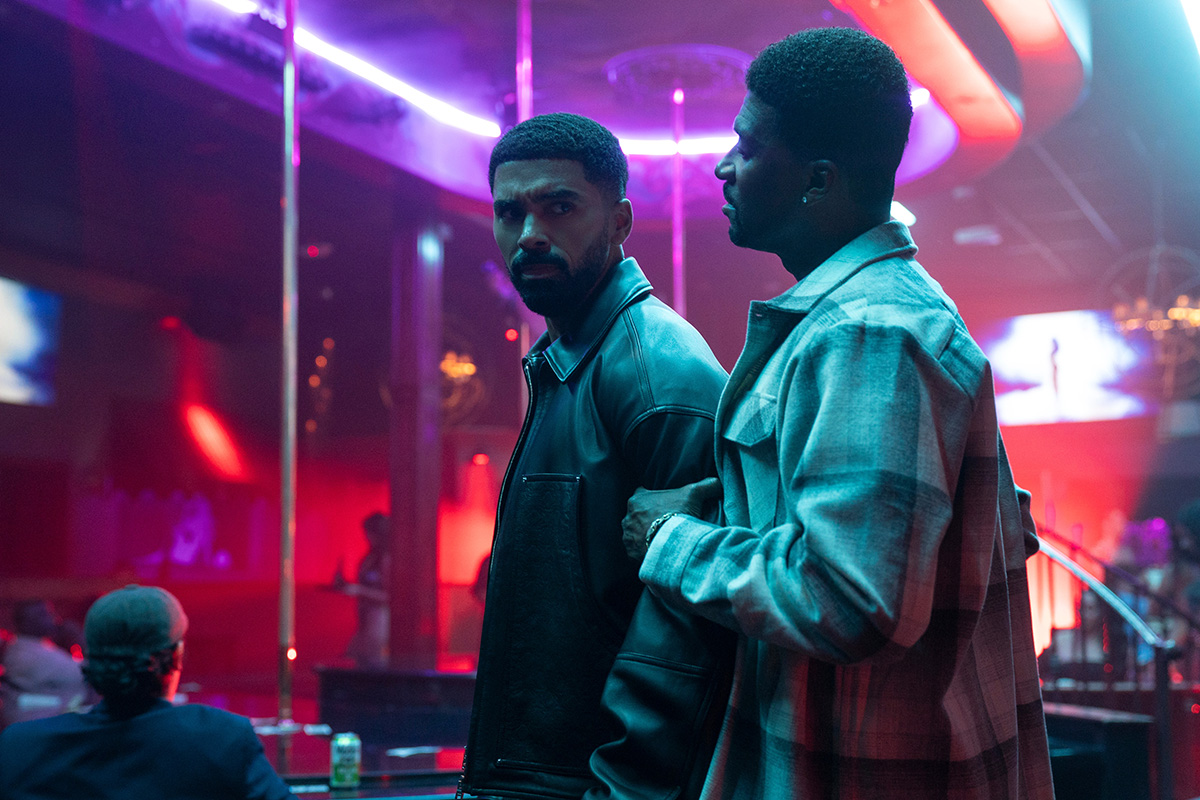
The highly anticipated Netflix crime drama, Nemesis, marks a significant return to the thriller genre for acclaimed creators Courtney A. Kemp and Tani Marole. The series, which recently launched to critical and audience buzz, plunges viewers into a sun-drenched yet shadowy Los Angeles, where two formidable adversaries on opposite sides of the law are destined to collide. At its core, Nemesis pits Detective Isaiah Stiles, portrayed by the compelling Matthew Law, against the enigmatic and supremely skilled expert thief, Coltrane Wilder, brought to life by Y’lan Noel. This classic cat-and-mouse dynamic, a cornerstone of the thriller genre, is infused with fresh perspectives and a deep appreciation for the staples of heist films, as evidenced by the series’ pilot, which culminates in a masterfully executed heist within the city’s Diamond District, drenched in atmosphere and style.
In a recent exclusive interview with What’s on Netflix, Kemp, the visionary behind the immensely popular Power franchise, and Marole delved into their collaborative process, revealing their shared ambition to craft a thriller that resonates with both genre aficionados and new viewers. Their discussion highlighted the intentional choices that shaped Nemesis, from its distinct Los Angeles identity to its nuanced character development and ambitious thematic explorations.
The Genesis of Nemesis: A Shared Vision
The creation of Nemesis was born from a mutual desire between Kemp and Marole to produce the kind of gripping, high-stakes thriller they themselves yearned to watch. This shared passion for the genre, particularly heist narratives, laid the groundwork for the series’ development. Kemp, known for her intricate plotlines and character-driven storytelling, found a kindred spirit in Marole, whose sensibilities align with delivering both familiar genre pleasures and unexpected twists.
"We were talking about what experiences we wanted to have as fans, what we wanted to watch, and things that we really love," Courtney Kemp explained, highlighting the organic origin of their collaboration. She further elaborated on her personal thematic interests, stating, "I always love family stuff and things that are thematically about generational trauma — but fun generational trauma, the best kind, the kind with guns." This particular insight hints at the deeper layers beneath the action-packed surface of Nemesis, suggesting a narrative that explores the inherited burdens and legacies that shape its characters’ choices, all wrapped in an entertaining, explosive package.
Tani Marole echoed this sentiment, describing the creative process as an evolution from core themes and characters to a fully realized world. "I think it was the theme, character, world, essentially. We had an idea of what this should be from there. These are the components that need to go into that thing. And then from there, you get a natural evolution and then the world starts entwining. All of a sudden you’re manifesting and creating a whole other world right there." This iterative approach allowed them to build a complex universe where the central conflict between law enforcement and the criminal underworld is deeply personal and intricately woven into the fabric of Los Angeles itself.
Los Angeles as a Character: Beyond the Hollywood Sign
One of the most crucial decisions for Kemp and Marole was to firmly establish Los Angeles as an integral character within Nemesis. This commitment went beyond mere aesthetics; it was a deliberate choice rooted in both personal connection and a desire to showcase the city in a way rarely seen on screen.

Tani Marole underscored the paramount importance of this decision. "It was of the utmost importance. Not only was it important to bring production back into LA — I mean, we were on the wave before the wave. People were talking about it. We were all about LA productions as soon as we came up with the idea." This statement highlights a broader industry trend and a conscious effort to support local economies and film crews. Marole emphasized the personal stakes for the production team: "Beyond that, our crew members have families here. Our kids are here, our houses are here, so we wanted to stay here."
Filming outside of Los Angeles was, therefore, "really not an option." This unwavering commitment necessitated significant effort in budget allocation and logistical planning. Marole credited Kemp, line producer Phil, and Netflix executives for their dedication in "slicing and dicing the budget to make it work so that we could really bring Nemesis to LA." The direct impact of this decision is tangible: the production proudly employed "a 200-plus-person crew," a testament to the economic benefits of local filming.
Courtney Kemp added a poignant note regarding the timing of their production. "It was just after the fires that we started to shoot, too. Los Angeles was really at a low, so it was important. We really hope we have more seasons of this show so we can bring our amazing crew back." This detail adds another layer of significance to their decision, framing it as an act of community support during a challenging period for the city.
Revitalizing Local Production: An Economic Lifeline
The creators’ insistence on filming Nemesis entirely in Los Angeles speaks to a larger narrative within the entertainment industry concerning the economic impact of film and television production. For years, California, and specifically Los Angeles, faced the challenge of "runaway production," where projects moved to other states or countries offering more attractive tax incentives. The return of major productions like Nemesis is a welcome boost for the local economy.
According to data from FilmLA, the official film office for the City and County of Los Angeles, the film and television industry remains a cornerstone of the regional economy, supporting hundreds of thousands of jobs and generating billions in economic activity annually. While specific figures for the year Nemesis was produced are proprietary, the employment of "200-plus" crew members for a single series represents a substantial contribution to the livelihoods of local artists, technicians, and support staff. This includes everything from camera operators and lighting technicians to costume designers, caterers, and transportation teams. The ripple effect extends to local businesses, including hotels, restaurants, and equipment rental companies, all benefiting from the influx of production dollars.
The creators’ decision to showcase lesser-seen neighborhoods also provides a unique form of cultural tourism and pride. By deliberately moving beyond the iconic, often-filmed landmarks of Beverly Hills or the Hollywood Sign, Nemesis offers viewers an authentic, multifaceted portrait of Los Angeles. Tani Marole highlighted this ambition: "For us, it was really about showcasing Los Angeles in a way that you don’t see. So it’s not Beverly Hills, it’s not the Hollywood sign, it’s not just an American cafe. You get Leimert Park, you get South Central, you can get Hancock Park, you can get Bel Air, you can get all the little nooks and crannies." This approach not only enriches the visual tapestry of the show but also challenges conventional representations of the city, celebrating its diverse communities and landscapes.
Crafting the Cat-and-Mouse: Subverting Genre Tropes
The core dynamic of Nemesis — the relentless pursuit between a determined detective and a brilliant thief — is a classic narrative trope that Kemp and Marole enthusiastically embrace, while simultaneously seeking to subvert audience expectations. They understand the appeal of the "cop and robber" archetype but are committed to infusing it with fresh energy and unpredictable turns.

"It’s really essentially about, all right, let’s be honest, what are the key tropes? And then how do you pay off while subverting?" Tani Marole explained. She noted that traditional heist films often culminate in a single, fatal confrontation between the adversaries. Nemesis aims to transcend this formula. "For us, we consciously took that and were like, all right, we know we have to give that to you. When we give that to you, it is completely up to us. How we give it to you, is completely up to us." This creative philosophy allows them to play with established conventions, delivering the thrilling payoffs audiences expect while simultaneously introducing narrative surprises that keep them engaged.
The goal, according to Marole, is for viewers to "leave with a smile on your face versus going, ‘Ah, it’s a knockoff.’" This commitment to originality within a familiar framework is a hallmark of successful genre storytelling, promising a series that respects its influences while forging its own distinct path.
Literary Roots: Courtney A. Kemp’s Enduring Inspiration
Courtney A. Kemp’s distinguished background as an English major with a Master’s in English Literature profoundly shapes her approach to storytelling. Her work, including Nemesis, is often deeply informed by classical literature, providing a rich subtext that elevates the narratives beyond mere plot mechanics.
Displaying her literary inspirations, Kemp pointed to authors like James Baldwin and Zora Neale Hurston. She also cited Emmanuel Carrère’s "L’Adversaire" as a significant influence, particularly its exploration of a conman’s life and the blurred lines between perpetrator and observer. "I love the idea of being able to see the criminal from both sides," Kemp stated, directly connecting this literary theme to the dual perspectives offered by Detective Stiles and Coltrane Wilder in Nemesis. This approach allows for a more empathetic and complex portrayal of characters, even those engaged in illicit activities, inviting viewers to question their own perceptions of morality and justice.
Kemp further drew parallels to her previous work, revealing the literary foundations of the Power universe. "And of course, Power is ‘The Great Gatsby.’ I’m always writing about literature. The last season of Power is ‘Richard III.’" These unexpected literary connections demonstrate Kemp’s sophisticated storytelling method, where contemporary crime dramas become modern interpretations of timeless narratives. She noted that these influences often go unnoticed by some viewers, perhaps due to the specific cultural context of her characters, but insisted, "People just don’t notice because the characters are Black, but I’m always taking from literature all the time because that’s how I grew up. I’m an English nerd. I have a master’s in English literature, the most useless possible degree, but whatever. I like reading. Reading is cool. It’s fun."
This dedication to literary depth enriches the viewer experience, offering layers of meaning for those who seek them, while still delivering a compelling surface narrative for those simply seeking entertainment. Her playful admonition to viewers — "People should read again — but not while watching Nemesis. They should put down the phone and put down the book and just focus on the screen" — underscores her desire for Nemesis to be an immersive, "single-screen experience," a sentiment echoed by Tani Marole and undoubtedly supported by Netflix’s strategy to capture undivided audience attention.
The Narrative Canvas: New York vs. Los Angeles
Having successfully depicted New York City as a vibrant character in Power, Courtney Kemp shared insights into the distinct challenges and opportunities presented by setting a crime drama in Los Angeles. While New York held a special place for her, having lived there, Los Angeles has become home over two decades.
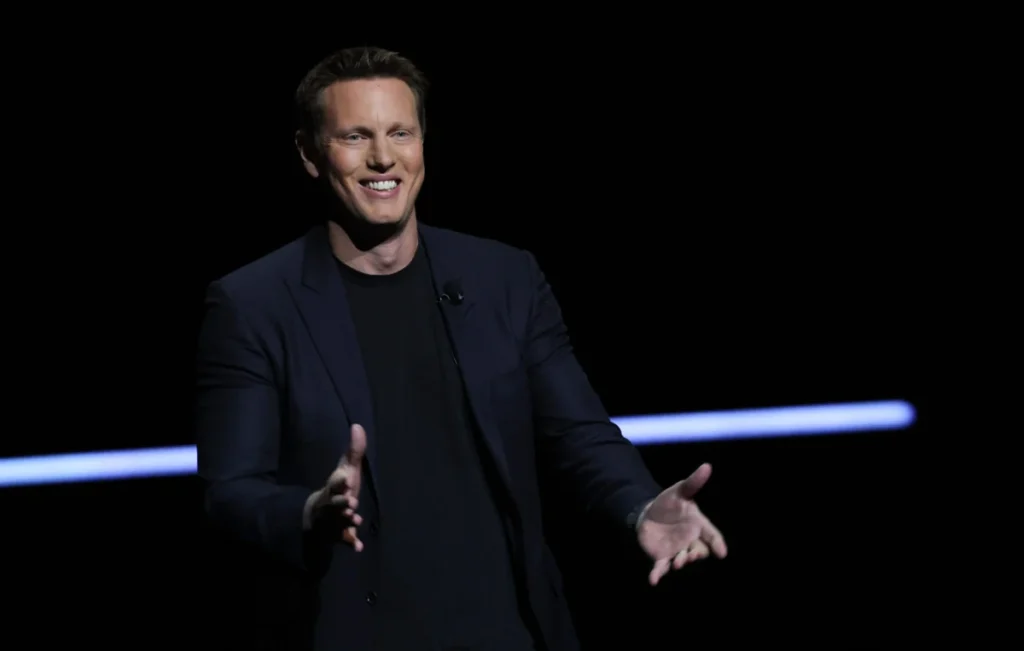
"I’ve lived in LA now for 20 years. My kid is from here. I gave birth to an Angeleno. So actually, it’s grown to be a city that I love also in its own way," Kemp remarked. The fundamental difference, she noted, lies in the urban fabric of each city. "I would say this is a car city. I mean, you’ve heard this before. It’s a car city, so people are much more isolated than they are in New York. In New York, everybody’s on top of each other all the time."
This geographical and cultural distinction has profound implications for storytelling. The "expansiveness and a separation between people" in LA allows for different narrative possibilities, perhaps fostering a sense of individual ambition or isolation that contrasts with the constant proximity in New York. Kemp humorously recalled the creative liberties taken with geography in Power: "On Power, we were lying all the time. We were like, ‘Oh yeah, I’m in Queens and an hour later I’m in the Bronx.’ Yeah, right. Okay. I don’t know how you drove that distance without being stuck for hours." In Nemesis, the creators relished the opportunity to be "a little bit more accurate with time and distance," grounding the narrative in a more realistic portrayal of LA’s vastness and traffic-dependent lifestyle. This attention to detail ensures that Los Angeles doesn’t just serve as a backdrop but actively influences the characters’ movements, interactions, and ultimately, their fates.
Netflix’s Strategy: Investing in Visionary Storytellers
The greenlighting and prominent release of Nemesis on Netflix underscore the streaming giant’s ongoing strategy to invest in established, visionary showrunners like Courtney A. Kemp. Her track record with the Power universe demonstrates an ability to create compelling, long-running franchises that resonate with diverse audiences. This partnership allows Netflix to leverage Kemp’s proven talent while offering her the creative freedom to explore new narratives and settings.
Netflix has consistently prioritized genre programming, with crime dramas and thrillers being perennial favorites among its global subscriber base. By backing Nemesis, the platform not only aims to capture a significant share of this audience but also to diversify its portfolio of original content. The emphasis on a "single-screen experience" articulated by Kemp and Marole aligns perfectly with Netflix’s ambition to create immersive viewing events that encourage dedicated engagement. This strategy is crucial in an increasingly crowded streaming market, where unique, high-quality content is key to subscriber acquisition and retention. The involvement of Tani Marole alongside Kemp also highlights Netflix’s commitment to fostering new creative partnerships and supporting emerging voices within the industry.
Anticipation and Future Prospects
As Nemesis makes its debut, the anticipation among fans of high-stakes crime dramas and followers of Courtney A. Kemp’s work is palpable. The series promises a thrilling ride, combining the pulse-pounding action of a heist film with the intricate character development and thematic depth that define Kemp’s signature style. The deliberate choice to showcase the rich, diverse tapestry of Los Angeles, coupled with the creators’ innovative approach to genre tropes, positions Nemesis as a potential standout in the crowded streaming landscape.
The success of Nemesis could have significant implications for both its creators and the broader film industry in Los Angeles. A strong performance would not only validate Kemp and Marole’s creative vision but also strengthen the case for continued investment in local productions, ensuring sustained employment and economic benefits for the region. As the creators themselves expressed, their hope for "more seasons of this show" is driven by a desire to continue their artistic journey and to keep their dedicated crew working. Ultimately, Nemesis stands as a testament to the power of collaborative storytelling, a compelling narrative born from a shared passion, and a vibrant new addition to Netflix’s growing library of original thrillers.