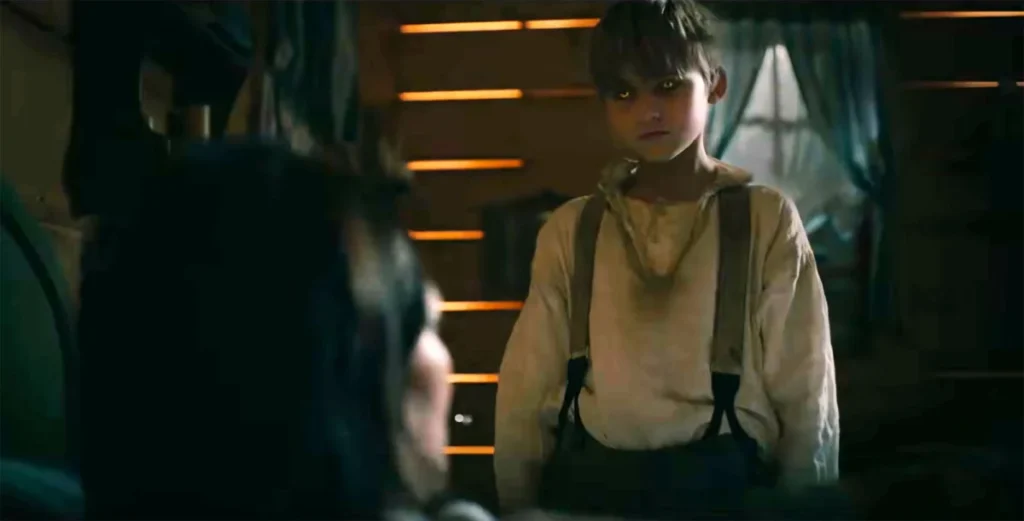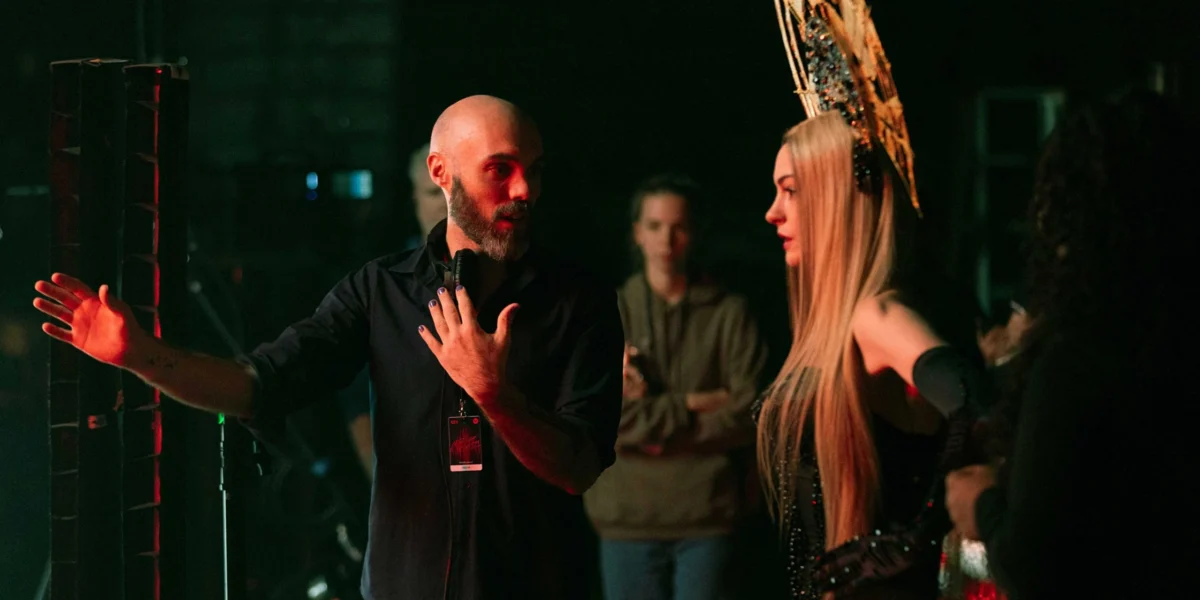
David Lowery’s latest cinematic offering, Mother Mary, a psychological drama-thriller that delves into the complex dynamics of fame, friendship, and the haunting presence of the past, is currently making its limited theatrical debut from A24, with a wider nationwide release slated for April 24th. The film, penned and directed by Lowery, features a star-studded ensemble cast led by Anne Hathaway as the titular pop icon, Mother Mary, and Michaela Coel as her estranged former costume designer and best friend. The narrative unfolds on the eve of Mother Mary’s highly anticipated comeback performance, a moment fraught with the resurfacing of long-buried resentments and the emergence of a more nebulous, potentially sinister influence. The supporting cast includes notable talents such as Hunter Schafer, FKA Twigs, Atheena Frizzell, Kaia Gerber, Jessica Brown Findlay, Isaura Barbé-Brown, Sian Clifford, and Alba Baptista. In an exclusive conversation with Next Best Picture, Lowery shared insights into the genesis of Mother Mary, his creative process, and the profound personal resonance of this original story.
The Genesis of an Original Vision: Navigating IP and Artistic Identity
The impetus for Mother Mary, as revealed by Lowery during his promotional tour, stemmed from a period of introspection regarding his engagement with established intellectual property (IP). Having recently completed projects like The Green Knight and anticipating his work on Disney’s Peter Pan and Wendy, Lowery found himself reflecting on his artistic trajectory. "Maybe because I’d been spending too much time dealing with IP, I think I was definitely thinking about that," Lowery stated. "I was on the verge of making my second film for Disney… But the idea of recognizing that I was spending so much time working with IP and not developing the muscles of telling stories that were intrinsically my own—I just felt for a moment there, just for one moment, I lost track of who I was. And in that moment of doubt, the idea for this movie was born."
This period of doubt, characterized by a concern over losing his distinct artistic voice amidst large-scale IP-driven productions, became the fertile ground from which Mother Mary grew. Lowery articulated this struggle, explaining, "To lay bare the origin story of the film, it was me trying to figure out how to define myself within a world in which I was making movies using preexisting IP. I wasn’t planning to use the word IP in this interview, but it’s very true. I was trying to figure out how to make personal movies in a world where a lot of the opportunities to make things at the scale I wanted required me to engage with properties that could be described that way." The screenplay for Mother Mary thus emerged as a direct consequence of this internal negotiation, a testament to Lowery’s commitment to cultivating and safeguarding his unique storytelling sensibilities.
A Female-Centric Narrative: Intentionality and Artistic Evolution
A striking characteristic of Mother Mary is its deliberate exclusion of male characters from speaking roles, a narrative choice that has sparked considerable discussion. Lowery clarified that this was not a result of a pre-conceived agenda but rather an organic development during the writing process. "Well, Sam and Mother Mary were always female characters, and there was no agenda behind that. It was just that way. Those chromosomes felt right for this story," he explained. He further elaborated on the film’s character landscape, noting that the cast was intentionally lean. "There aren’t that many characters in the movie. There are very few, and at one point, there were more. There was a doctor character, and whatever it says about my perceptions of gender, the doctor was going to be a man. That was originally there, but all of those characters fell away."
The reduction of the cast to its essential female figures was, for Lowery, a process of the film finding its most authentic form. "Again, there was no agenda behind it. The movie ultimately reduced itself to what it needed to be. And the characters that are in this movie were women," he stated. This decision allowed for a profound exploration of themes through a distinctly feminine lens, a creative avenue Lowery embraced with enthusiasm. "And I love that. I loved spending time with these actors and seeing how they illuminated something I wrote. I’ve certainly written this movie from a very personal place, but the experiences that I have and that they have are very different. They move through the world in a different way than I do, just surely because I’m a dude and they’re women, and they were able to illuminate and enrich this text in a way that I never could have. That was an incredible experience for me—an incredible gift they gave me: they were going to take my words, transmute them through their own experiences, and make it personal to them."
The Ambiguity of Connection: Friendship, Collaboration, and Artistic Legacy
The relationship between Mother Mary and her former friend, Sam, has been interpreted in various ways by early viewers, with some suggesting romantic undertones and others focusing on a deep platonic bond. Lowery expressed his appreciation for this interpretive freedom, emphasizing that clarity of definition was not the primary objective. "No, I love any movie that invites interrogation and different perspectives. That’s really exciting to me. But also, the important thing to acknowledge is that had it been important to define their relationship, we would have," he commented.
The focus, for Lowery, Anne Hathaway, and Michaela Coel, was on the trajectory of their shared history and their current dynamic. "That doesn’t mean it’s not valuable to discuss it, to wonder what their relationship was, or to try to define it for ourselves as audience members. But for myself, for Anne, and for Michaela, we all understood that the important thing was where they’re headed. And where they’ve come from could be left unsaid." While discussions were held to establish a shared understanding, the script itself prioritized the evolution of their connection.
Lowery posited that the core of their relationship is a profound creative collaboration, which he views as intrinsically intimate and powerful. "The relationship we were focused on is ultimately a creative collaboration. And a creative relationship is as intimate as any marriage. It’s as passionate as any great love story, and it is as fraught and as tense as any antagonistic relationship could possibly be." He further likened this creative partnership to a romantic one, capable of producing a "third party"—the artwork itself. "All of those are true of creative relationships, and much like in a romantic relationship, they can yield a third party. There is a child born of their relationship, and that is the artwork that they’re creating together. And the movie ultimately needed to be about that." This perspective elevates their bond beyond conventional definitions, highlighting the shared creation as the ultimate expression of their intertwined lives.
Echoes of the Unseen: Mother Mary as a "Different Kind of Ghost Story"
Given Lowery’s critically acclaimed film A Ghost Story, the marketing for Mother Mary has playfully alluded to it as a "different kind of ghost story." When questioned about any conscious revisiting of spectral themes or direct input from A24 on this perceived pattern, Lowery responded with characteristic wit. "No. If anything, it was like, ‘Can you put more ghosts in the movie?’ and have them show up sooner."
Lowery has a well-documented affinity for the genre, seeing it as a fertile ground for both literal and metaphorical exploration. "I really appreciate it when artists revisit specific wells over and over again because you can tell that they’re working through something," he stated. "And for me, on a very surface level, I love ghost stories. I love haunted houses. I love the horror genre, and I suspect this will not be my last movie that uses ghosts. Both as a literal presence in the movie, but also as a metaphor for whatever the movie is actually about. Because they’re an incredible and evergreen metaphor to draw from, while also being incredibly cinematic." This suggests that the spectral elements in Mother Mary, much like in A Ghost Story, serve a dual purpose: to create an atmospheric and unsettling cinematic experience while also providing a potent symbolic language for the film’s deeper thematic concerns, such as unresolved trauma, lingering regrets, or the indelible imprint of past relationships.
The Road Ahead: An Unpredictable Creative Journey
When asked about his future projects, Lowery described himself as a perpetually active filmmaker, always engaged in the writing process. "It’s true, I’m always working. I’m a very impatient filmmaker, so I am always writing scripts. I always think I know what I’m making next, and then something like Mother Mary will come along and surprise me," he confessed. While he expressed a hope for fewer surprises in the future, he also welcomed the unexpected turns that often define a creative career.
Reflecting on the production of Mother Mary, he noted the considerable time invested in its realization and expressed a desire for a more streamlined process for subsequent endeavors. "The one thing I can say is that this movie took an incredibly long period of time to make, and I really hope that the next one will happen in a much more expeditious fashion—and then the one after that as well. So hopefully we have an opportunity to talk again in the very near future." This sentiment underscores the demanding nature of filmmaking, particularly for original stories that require meticulous development and execution.
A Curated Viewing Experience: Balancing Work and Pleasure
In closing, Lowery shared his immediate viewing plans, a humorous juxtaposition of his current work and anticipated future releases. "Well, I feel very lucky. My movie Mother Mary exists between The Christophers and The Devil Wears Prada 2," he quipped. His intention is to experience these films in a double feature, a testament to his broad appreciation for cinema, from the introspective to the potentially more commercial. This eclectic selection highlights a filmmaker who, while deeply immersed in his own creative output, maintains a keen interest in the wider cinematic landscape.
Mother Mary is now available in select theaters, with its national rollout commencing on April 24th, distributed by A24. The film has already generated significant buzz for its artistic ambition, compelling performances, and its exploration of complex psychological themes. The accompanying interview with David Lowery, available through the Next Best Picture Podcast and its network, Evergreen Podcasts, offers a deeper dive into the director’s insights and the personal underpinnings of this compelling new work. The podcast can be accessed and subscribed to on all major podcast platforms, with reviews and additional content available on the Next Best Picture website. Support for the podcast can be provided through Patreon, offering exclusive ad-free content.