


The Dystopian Backdrop: A Society Divided
The film presents a vision of Costa Rica fundamentally altered by systemic inequality, environmental degradation, and persistent, state-sanctioned fear. The world of Love Is the Monster is bifurcated between the “outskirts”—a neglected, impoverished landscape defined by toxic air and economic desperation—and the “Perimeter,” a highly guarded, affluent enclave.
Within the Perimeter, the socio-economic elite provide their children with filtered air, protective masks, and the constant surveillance of armed nannies. This spatial segregation mirrors real-world anxieties regarding public health crises and the widening wealth gap. The atmosphere is one of claustrophobia and paranoia; loudspeakers incessantly broadcast messages that frame children as the future while simultaneously warning citizens of suspicious persons and potential threats. The film utilizes these elements to critique the erosion of community, suggesting that in a society governed by survivalism, the most vulnerable—the children—become the most heavily guarded commodities.
Plot Chronology and Narrative Arc
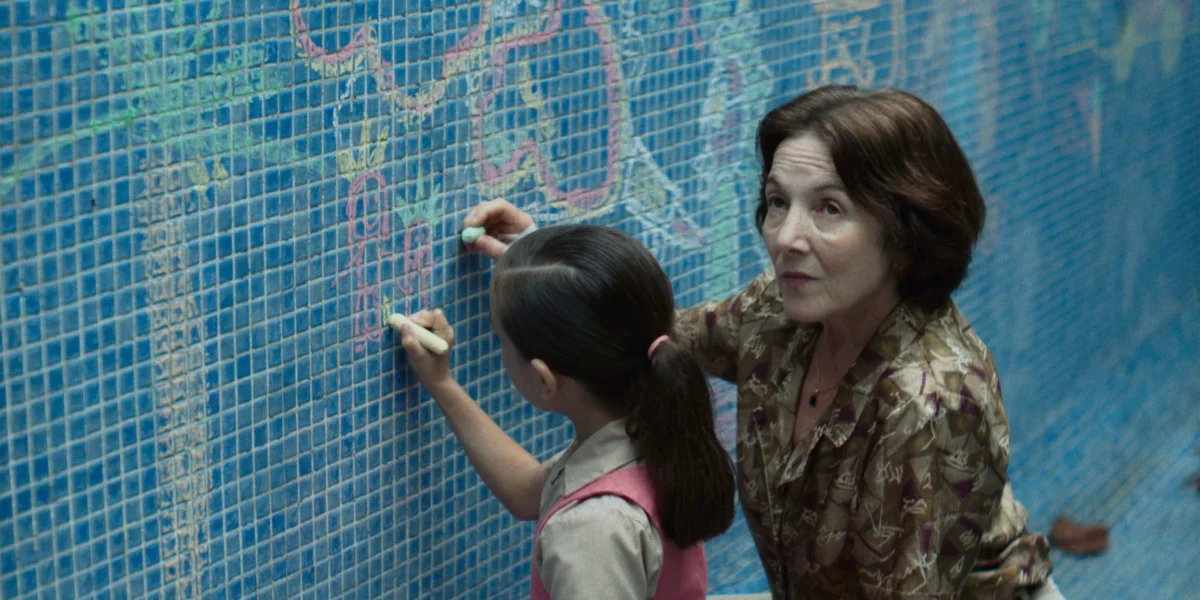
The story centers on Abuela (Paulina García), a woman in her seventies struggling with a terminal diagnosis. Her primary motivation is the preservation of her relationship with her granddaughter (Gloriana Vargas). The emotional tension is immediate: the grandmother resides in the precarious outskirts, while her daughter (Natalia Regidor) lives behind the walls of the Perimeter.
The narrative unfolds through a series of escalating incidents that highlight the protagonist’s declining judgment:
- Initial Separation: The audience is introduced to the rigid systemic barriers preventing Abuela from accessing her granddaughter, including the requirement for vehicle sterilization and specialized clearance.
- The Bridge of Connection: A moment of levity occurs when Abuela, barred from physical proximity, follows the granddaughter’s vehicle, and the two share a dance to a favorite song from separate cars—a poignant symbol of human connection in an alienated world.
- Escalation of Desperation: As Abuela’s health wanes, her attempts to bypass the Perimeter’s protocols become increasingly erratic. Notable instances include locking a nanny in a bathroom to facilitate a private outing and accidentally trapping her granddaughter in a vehicle.
- The Thriller Turn: As the emotional stakes rise, the film transitions from a character study into a high-stakes thriller, where the grandmother’s fading health and the daughter’s mounting fear converge, leading to a series of confrontations that force the characters to cross moral and legal boundaries.
Supporting Context: The Director’s Vision
Neto Villalobos Brenes has publicly noted that the genesis of the project was deeply personal, stemming from the loss of his own mother. The film serves as an exploration of the question: "How far would you go to protect the person you love most?" By centering the narrative on an aging woman who is simultaneously a source of love and a catalyst for chaos, the film avoids the trope of the benevolent elder.
Instead, it presents a nuanced look at generational trauma. The strained relationship between Abuela and her daughter is left intentionally opaque; the audience is never fully informed of the specific events that necessitated the daughter’s extreme caution or why the grandmother was previously an absentee parent. This ambiguity, while a narrative choice, serves to underscore the irreparable nature of certain familial rifts.
Analytical Perspectives: The Mechanics of the Film
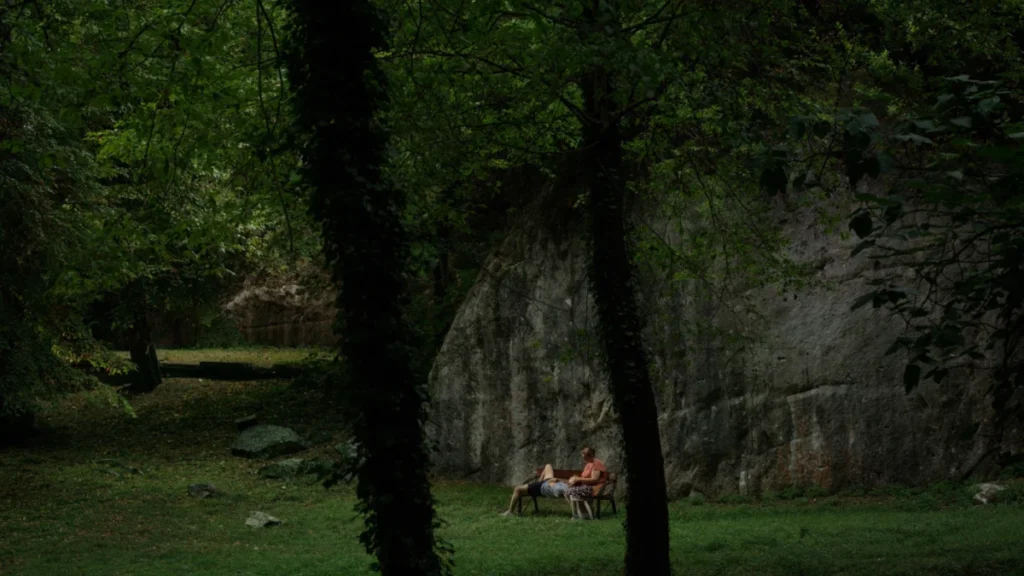
From a technical standpoint, Love Is the Monster is a triumph of visual storytelling. The cinematography utilizes a deliberate color palette and varied framing—from the expansive, lush aerial shots of the Costa Rican forest to the sterile, claustrophobic interiors of the Perimeter—to reinforce the film’s thematic concerns.
However, the film’s reliance on thematic ambiguity has sparked debate among critics. While the world-building is effective in its small, granular details—such as the missing-child posters and the prevalence of machetes among unpaid workers—the film’s reluctance to define the specific threats of its world leaves some narrative threads dangling. The absence of men in the societal hierarchy, the precise nature of the "spreading cough" that necessitates the Perimeter, and the specifics of the family’s historical conflict remain unresolved. For some, this leaves the emotional stakes feeling slightly less grounded; for others, it mirrors the uncertainty of the characters’ own lives.
Socio-Economic Implications
The film effectively illustrates how corporate greed and systemic instability create a feedback loop of violence. The workers who confront the daughter at her plant, spray-painting her car and demanding payment, are not portrayed as villains but as casualties of a system that has collapsed. This contextualizes the Perimeter not merely as a sanctuary, but as an indictment of the society that surrounds it. The film suggests that when basic economic needs are not met, the societal contract dissolves, leading to a state of perpetual suspicion.
Critical Reception and Performance
The film is carried almost entirely by Paulina García’s performance. Her portrayal of a woman grappling with the dual realities of her own mortality and the stifling confinement of her granddaughter is multifaceted. She manages to evoke empathy even when her character’s actions are objectively harmful, a testament to the script’s exploration of the "monster" within the title—the idea that love, when uncoupled from reason or safety, can become a destructive force.
The supporting cast, including Natalia Regidor, provides a necessary counterweight to the protagonist. Regidor’s portrayal of the daughter is particularly notable for its portrayal of parental fear; she is not a villain, but a mother attempting to safeguard her child from a world she clearly perceives as fundamentally broken.
Conclusion: A Lasting Impact
Despite its narrative gaps, Love Is the Monster stands as a significant contribution to contemporary dystopian cinema. By prioritizing emotional interiority over exposition, Villalobos Brenes creates an experience that is more akin to a haunting memory than a traditional thriller.
The film’s ultimate strength lies in its refusal to offer easy resolutions. In the final act, as the thriller elements reach their peak, the viewer is left to consider the blurred lines between protection and obsession. The film effectively demonstrates that while family can be a source of strength, it is also a source of deep, abiding wounds. In its focus on the singular, desperate love of a grandmother, Love Is the Monster asks audiences to consider the price of security and the often-irreparable cost of love in a world that has turned against its own future. The result is a work of haunting visual beauty and emotional resonance that lingers long after the final credits roll.