


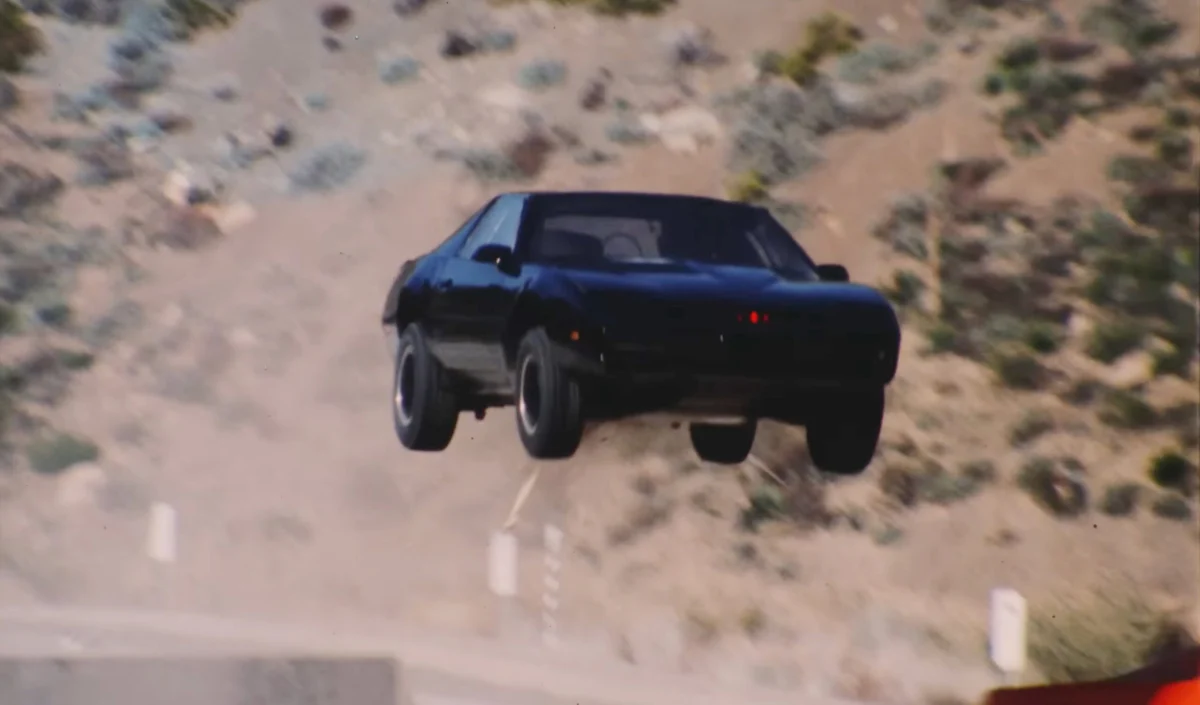
Knight Rider: Declassified, a monumental 5-part, 5-hour documentary event, is poised to offer the most exhaustive exploration yet of the beloved 1980s television series, Knight Rider. Debuting to fervent anticipation, this production promises unprecedented access through new, never-before-seen interviews with the original cast, creators, and crew. From the conceptual genesis of the iconic artificially intelligent supercar K.I.T.T. to the intricate realities of its on-screen realization and the enduring legacy that followed, the documentary is designed to be the definitive historical record for fans and television historians alike. A distinguishing feature of Knight Rider: Declassified is its ambitious technical execution, with segments shot in stunning 8K resolution and mastered for IMAX, including a meticulously recreated opening sequence at the historic El Mirage Dry Lakebed, signaling a premium viewing experience. The documentary will be exclusively available as a limited edition Blu-ray release through WheelHouseTV, ensuring its status as a highly coveted collector’s item, never to be reissued.
The Genesis of a Phenomenon: Knight Rider’s 1980s Ascent
Knight Rider, which originally aired on NBC from September 26, 1982, to August 8, 1986, quickly transcended its role as a mere television show to become a cultural touchstone of the decade. Conceived by Glen A. Larson, a prolific television producer renowned for creating hits like Magnum, P.I. and Battlestar Galactica, the series tapped into a burgeoning fascination with technology and artificial intelligence. Larson’s vision was simple yet revolutionary: a lone crime-fighter, Michael Knight, portrayed by the charismatic David Hasselhoff, battling injustice with the assistance of K.I.T.T. (Knight Industries Two Thousand), a virtually indestructible, self-aware Pontiac Firebird Trans Am. The premise was inherently compelling, blending elements of action, adventure, and science fiction with a strong moral compass.
K.I.T.T., voiced by the distinguished William Daniels (uncredited for the first two seasons), was not just a vehicle; it was a character in its own right—a sophisticated companion capable of independent thought, witty banter, and an array of futuristic capabilities. These included "Turbo Boost" for rapid acceleration and jumps, "Ski Mode" for driving on two wheels, a molecular bonded shell that rendered it impervious to conventional weapons, and its iconic front-mounted red scanner bar. This dynamic partnership between man and machine resonated deeply with audiences, particularly children and young adults, who were captivated by the fantasy of a talking car that could solve crimes and outsmart villains.
The show premiered during a golden era for action-adventure television, competing for viewership with other iconic series such as The A-Team, Magnum, P.I., and Miami Vice. Knight Rider carved out its niche by pushing the boundaries of what was technologically believable on screen, even if the practical effects were often achieved through clever camera work, miniature models, and elaborate stunt sequences. The show’s success was not just in its innovative concept but also in its execution, delivering high-octane chases, dramatic storylines, and a hero who embodied justice. The series consistently performed well in the ratings for NBC, often ranking among the top 30 programs during its run, cementing its place in the popular consciousness of the 1980s and contributing significantly to the network’s prime-time lineup.

K.I.T.T.: An Icon of Automotive Innovation and AI Aspirations
Central to Knight Rider‘s enduring appeal is K.I.T.T. – a vehicle that became as famous, if not more so, than its human counterpart. The choice of a black 1982 Pontiac Firebird Trans Am as K.I.T.T.’s base was inspired, transforming a commercially available sports car into a symbol of futuristic technology. The car’s distinct features, particularly its front-mounted red scanner bar, became instantly recognizable and inspired a generation of automotive enthusiasts and designers. The smooth, authoritative tones provided by William Daniels humanized the machine, making it a genuine character rather than a mere prop. The voice synthesizer, a groundbreaking feature for its time, allowed for seamless communication between Michael and K.I.T.T., blurring the lines between human and artificial intelligence in a way that captivated viewers.
The documentary Knight Rider: Declassified delves into the meticulous process of K.I.T.T.’s creation, promising insights from the designers, engineers, and special effects artists who brought the concept to life. Behind the seemingly effortless stunts and advanced capabilities lay a tremendous amount of practical innovation and problem-solving. Early television production, especially for a show heavily reliant on vehicular action, presented unique challenges. The documentary’s teaser quote, "We were wrecking cars left & right," hints at the rigorous and often destructive nature of filming the series’ dynamic action sequences, offering a raw glimpse into the practical realities of a high-stakes production. These segments are expected to reveal the ingenuity required to maintain the illusion of an indestructible, intelligent car within the budgetary and technical constraints of 1980s television, illustrating how innovative practical effects compensated for the nascent state of CGI.
A Deep Dive into Production: Behind the Scenes of a Classic
The comprehensive nature of Knight Rider: Declassified is underscored by its commitment to gathering "new, never-before-seen interviews." This extensive roster likely includes David Hasselhoff, whose career became indelibly linked with Michael Knight and who achieved international superstardom partly due to the show; Edward Mulhare, who played the benevolent and enigmatic mentor Devon Miles; and other key cast members like Rebecca Holden (April Curtis, Season 2), Patricia McPherson (Bonnie Barstow, Seasons 1, 3-4), and Peter Parros (RC3, Season 4). Beyond the on-screen talent, the documentary promises to engage with the creative and technical backbone of the series: writers, directors, stunt coordinators, prop masters, and special effects teams. Their collective narratives are crucial to understanding the complete story of Knight Rider, offering perspectives from every facet of the production.
The documentary aims to uncover "untold realities behind the scenes," suggesting an exploration of everything from script development and character arcs to the daily challenges of filming on location and in the studio. This could encompass anecdotes about working with the temperamental K.I.T.T. cars – multiple vehicles were used for different types of shots, and many suffered significant damage during stunts – as well as the rigorous stunt work performed by the crew, the collaborative processes that shaped each episode, and the creative solutions employed to achieve the show’s ambitious visual effects on a demanding television budget. Such revelations offer valuable historical context, illustrating the demanding environment of 1980s network television production and the dedication required to produce a weekly action series that consistently pushed technical boundaries. The interviews are expected to shed light on the camaraderie and challenges faced by a crew operating at the forefront of televised action-adventure.
The Documentary’s Ambitious Production: 8K and IMAX Mastering
A standout feature highlighted for Knight Rider: Declassified is its technical ambition. The producers, Richard Grant Bennett and Rocco DeVilliers, have revealed that segments were shot in 8K using state-of-the-art Sony Venice II cameras and subsequently mastered for IMAX. This level of cinematic fidelity for a television documentary is exceptional, typically reserved for major feature films or nature documentaries. The decision to employ such high-resolution capture and mastering speaks volumes about the producers’ commitment to delivering a premium viewing experience and honoring the legacy of Knight Rider with the highest possible production values. The 8K resolution ensures an incredible level of detail and clarity, allowing viewers to appreciate the nuances of the original production design and the meticulous recreation efforts.

A particular highlight of this technical endeavor is the recreation of the iconic opening sequence of Knight Rider at El Mirage Dry Lakebed. This location, a historic site for speed records and filming in California’s Mojave Desert, served as the dramatic backdrop for K.I.T.T.’s emergence in the original series. Recreating this sequence "shot for shot in 8K" not only pays homage to the original but also allows for a comparative visual study, showcasing the advancements in filmmaking technology while celebrating the enduring aesthetic of the original. This meticulous attention to detail underscores the documentary’s aim to be a definitive and visually stunning tribute, providing fans with a fresh perspective on a classic moment in television history, enhanced by modern cinematic techniques.
Producers’ Vision and Dedication: A Three-Year Odyssey
The documentary, a passion project spanning three years in production, is shepherded by Richard Grant Bennett and Rocco DeVilliers. Their dedication to Knight Rider: Declassified is evident in the scale and detail of the project. Bennett and DeVilliers’ commitment to producing "the most comprehensive look ever produced at one of television’s most enduring legends" suggests a deep respect for the source material and a keen understanding of the fan base’s desires. The ongoing nature of the project, with "final interviews already scheduled and entering production this summer," indicates a continuous effort to ensure no stone is left unturned in documenting the series’ history. This iterative approach to filmmaking reflects a genuine desire to create an unparalleled archival work, not just a fleeting retrospective, but a truly definitive historical document.
Their decision to invest in high-end production techniques like 8K filming and IMAX mastering positions Knight Rider: Declassified not merely as a documentary but as a significant historical preservation effort, ensuring that the visual and narrative elements of Knight Rider‘s creation are captured with the utmost clarity for future generations. This commitment extends to detailing aspects like the challenges of special effects in the 1980s, the evolution of scriptwriting for episodic television, and the personal experiences of those who brought the show to life. The producers’ evident passion for the subject matter promises a documentary that is both informative and deeply respectful of the show’s impact.
The Legacy Beyond the Screen: Cultural Impact and Revival Attempts
Knight Rider‘s influence extends far beyond its initial four-season run. The series cemented David Hasselhoff’s status as a global star, particularly in Europe, where his music career also flourished in the late 1980s and 1990s. More significantly, K.I.T.T. became a benchmark for fictional intelligent vehicles, influencing countless subsequent portrayals of AI companions in popular culture, from subsequent films to video games. The show’s themes of technology, justice, and the fight against corruption continue to resonate, contributing to its perennial appeal among various demographics. The show’s distinctive theme music, composed by Stu Phillips and Glen A. Larson, also became instantly recognizable, further embedding itself in the cultural consciousness.
The enduring popularity of Knight Rider has led to multiple attempts to revive the franchise over the decades. These include the television movie Knight Rider 2000 (1991), which saw Hasselhoff return; the spin-off series Team Knight Rider (1997-1998), which featured a team of five intelligent vehicles; and a short-lived 2008 NBC series that introduced a new K.I.T.T. (a Ford Mustang Shelby GT500) and a new Knight. While these reboots demonstrated the continued interest in the Knight Rider concept, none managed to capture the unique magic and cultural impact of the original series, further solidifying the 1982-1986 run as the definitive iteration. This struggle to replicate success underscores the profound and specific blend of talent, technology, and timing that made the original Knight Rider a singular phenomenon. The Declassified documentary aims to dissect these elements, offering insight into why the original resonated so deeply and why its successors often fell short of capturing the same essence.

Exclusive Distribution: A Collector’s Item for the Dedicated Fan
A critical aspect of Knight Rider: Declassified‘s release strategy is its exclusive distribution model. The documentary will be available solely as a limited edition Blu-ray through WheelHouseTV’s official website, with a stern warning: "never sold anywhere else, never reissued. When it’s gone, it’s gone forever." This approach transforms the documentary from a mere viewing experience into a collector’s event. While the rationale for such exclusivity is often rooted in complex licensing agreements and rights management – a common challenge for projects involving beloved intellectual properties that span decades – it simultaneously cultivates a sense of urgency and prestige among the dedicated fan base. This limited availability positions the Blu-ray as a rare and essential piece of memorabilia.
For the ardent Knight Rider enthusiast, this limited release model positions the Blu-ray as an essential piece of memorabilia, a definitive archival record that will become increasingly valuable over time. It caters directly to the strong nostalgic market, where fans are willing to invest in high-quality, exclusive content that celebrates their cherished childhood memories. This strategy, while potentially limiting broader access, ensures that the documentary finds its way into the hands of those who will most appreciate its meticulous detail and comprehensive scope, strengthening the bond between the creators and the loyal community. It also signals a direct-to-fan approach, bypassing traditional retail channels to offer a premium, bespoke product.
Anticipation and Broader Implications for Pop Culture Documentaries
The announcement and subsequent trailer for Knight Rider: Declassified have generated considerable buzz within the fan community and among television historians. The iconic opening narration, "Knight Rider. A shadowy flight into the dangerous world of a man who does not exist. Michael Knight: a young loner on a crusade to champion the cause of the innocent, the helpless, the powerless, in a world of criminals who operate above the