

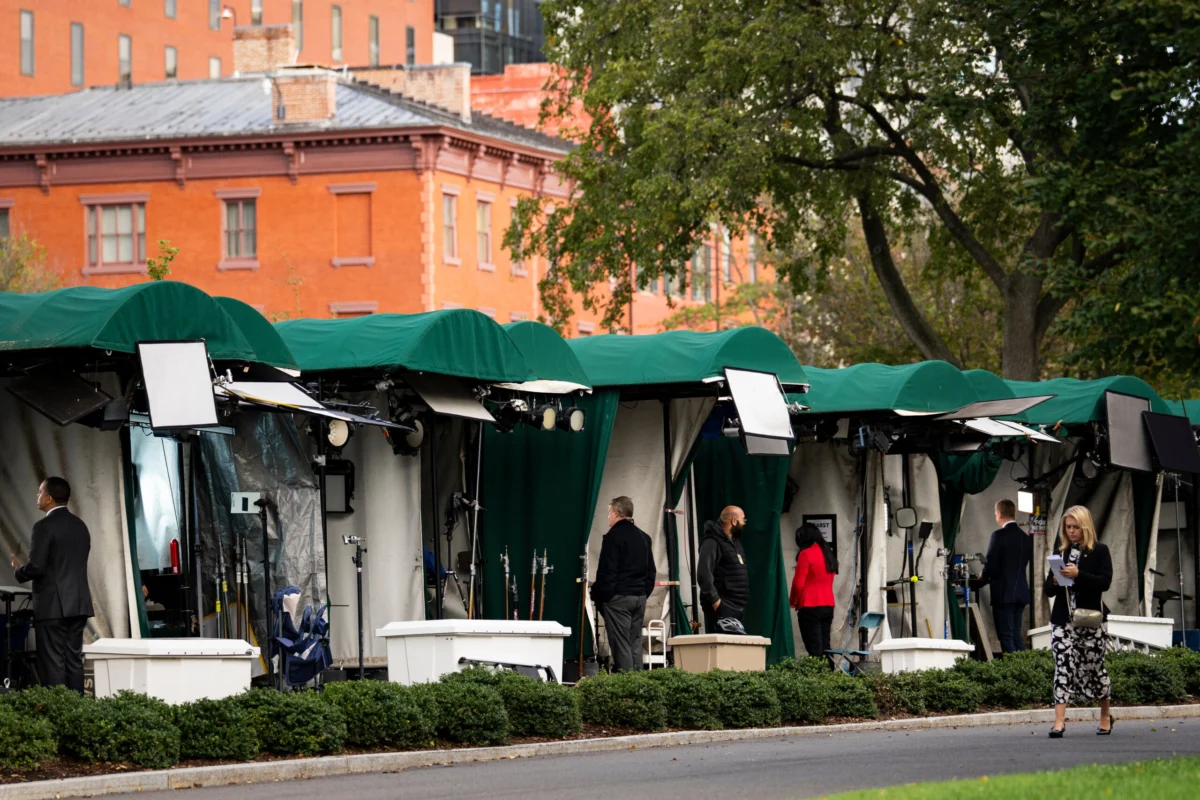
A federal judge late Tuesday night issued a significant ruling that indefinitely extends an injunction preventing the White House from enforcing a ban on three major media organizations. U.S. District Court Judge Timothy Kelly, a jurist originally nominated to the bench by President Donald Trump, determined that the administration’s attempt to revoke the "hard passes" of journalists from MS NOW, CNN, and Politico likely violated both due process requirements and First Amendment protections. This decision marks a pivotal moment in the ongoing legal battle over the boundaries of executive power and the constitutional role of the press in covering the presidency.
The preliminary injunction replaces a previous temporary restraining order that had been in place since September. While the ruling does not represent a final verdict on the merits of the underlying civil lawsuit, it effectively maintains the status quo, ensuring that reporters from the affected outlets retain their access to the White House complex while litigation continues.
A Chronology of the Dispute
The conflict originated in mid-September when the Trump administration abruptly moved to revoke the credentials of specific journalists. The timeline of these events underscores the rapid escalation of the standoff:
- September 18, 2026: President Trump publicly announced the ban, citing frustrations with what he characterized as "fiction and lies" in the coverage produced by the three outlets. In a post on Truth Social, the President stated he had grown "sick" of "cumulative stories" and argued that these organizations should not have access to the seat of executive power.
- September 19, 2026: The ban took effect. Secret Service agents reportedly confiscated the permanent credentials of approximately 78 journalists, barring them from entering the White House grounds.
- September 21, 2026: MS NOW, CNN, and Politico filed a civil complaint in the U.S. District Court for the District of Columbia. The lawsuit alleged that the summary revocation of access constituted a direct assault on the First Amendment and a failure to provide the constitutionally required due process.
- September 23, 2026: Judge Kelly issued a temporary restraining order, forcing the administration to restore access for a period of 14 days while the court considered the merits of the plaintiffs’ arguments.
- October 12, 2026: As legal arguments continued, Judge Kelly issued his memorandum opinion and order for a preliminary injunction, signaling that the plaintiffs had demonstrated a high likelihood of success on the merits.
Legal Reasoning and Judicial Findings
In his written opinion, Judge Kelly addressed the government’s evolving defense. While the Department of Justice (DOJ) attempted to justify the ban on grounds of national security and the need to maintain order, the judge remained unconvinced. Kelly noted that the record lacked any evidence that the decision was based on security concerns at the time it was made. Instead, he characterized the government’s invocation of national security as a "post-hoc justification" offered only after the lawsuit was initiated.
Crucially, the judge pointed to the President’s own public statements as evidence that the revocation was motivated by a desire to retaliate against unfavorable reporting. "President Trump’s own comments suggest that he intended the revocation of Plaintiffs’ hard passes to alter their reporting on him," Kelly wrote.
The ruling draws upon binding precedent from the U.S. Court of Appeals for the District of Columbia Circuit, which has previously established that journalists possess a due process interest in their White House credentials. This requires that the government provide notice and an opportunity to be heard before such access is revoked. By failing to offer a formal process for the journalists to challenge the revocation, the White House likely violated these constitutional safeguards.
First Amendment and Viewpoint Discrimination
Perhaps most significantly, Judge Kelly found that the plaintiffs were likely to succeed on their First Amendment claims, specifically regarding retaliation and viewpoint discrimination. The court’s willingness to entertain these claims suggests a judicial skepticism regarding the executive branch’s authority to use access as a lever to influence editorial content.
Theodore Boutrous Jr., the lead attorney for the media outlets, praised the decision. "When the President issued his ‘ban on the free press,’ he blatantly and explicitly violated due process and the First Amendment," Boutrous said in a statement. He emphasized that the President’s own admissions—that he sought to punish reporting he disliked—served as the core of the plaintiffs’ case. "The Court was right to enjoin the White House from enforcing this unconstitutional ban on the free press for the foreseeable future," he added.
The Broader Context of Press Access
The "hard pass" system is a long-standing tradition in American journalism, facilitating the flow of information between the executive branch and the public. These credentials allow reporters to move freely through the White House press briefing room and attend daily briefings. When these passes are revoked, it significantly impedes the ability of a news organization to provide real-time, on-the-ground reporting.
Historical data suggests that such revocations are extremely rare and typically reserved for severe breaches of security or conduct, rather than editorial disagreements. The sheer scale of this incident—affecting nearly 80 journalists—represented a departure from historical norms regarding press-White House relations.
While the court’s ruling restores access, it does not grant the media unlimited freedom. Judge Kelly took pains to clarify that his decision should not be interpreted as an endorsement of the media’s accuracy or a limitation on the government’s legitimate authority. "No one should interpret the Court’s decision to suggest that President Trump’s concerns about accuracy and fairness in the media’s reporting are unfounded," Kelly wrote, noting that the government retains the power to protect classified information.
Implications for Future Litigation
The case is now moving toward a full trial, where both sides will present further evidence. The DOJ has not yet signaled its next move, though the President indicated last month that he would appeal any adverse ruling.
Legal analysts suggest that this case could reach the Supreme Court, potentially setting a landmark precedent for the digital age. As the media landscape shifts and political polarization increases, the judiciary is increasingly being asked to define where the President’s "bully pulpit" ends and the right of the public to receive information via a free press begins.
For the White House, the immediate challenge is operational: the administration must now accommodate the presence of journalists it has explicitly labeled as opponents. For the media, the ruling provides a temporary but vital shield, reinforcing the principle that the executive branch cannot use its administrative powers to punish, censor, or retaliate against those tasked with holding it accountable.
Looking Ahead
As the legal proceedings continue, the tension between the administration and the press remains high. The White House has maintained a policy of aggressive engagement with the media, and this court battle has only served to sharpen those lines.
The administrative burden of maintaining these credentials is small, but the constitutional weight of the judge’s decision is substantial. By refusing to allow the administration to bypass due process, the court has signaled that even in a highly charged political environment, the foundational requirements of the Constitution—including the right to notice and the freedom of the press—remain applicable to the highest levels of government.
With the preliminary injunction in place, the three affected outlets will continue their coverage of the White House. However, the legal questions surrounding the case—specifically the extent to which a president can regulate the press based on ideological disagreements—remain unresolved and will likely dominate legal and political discourse for months to come. The case serves as a stark reminder of the delicate balance of power in Washington, where the administration of the presidency and the function of the fourth estate are inextricably linked.