

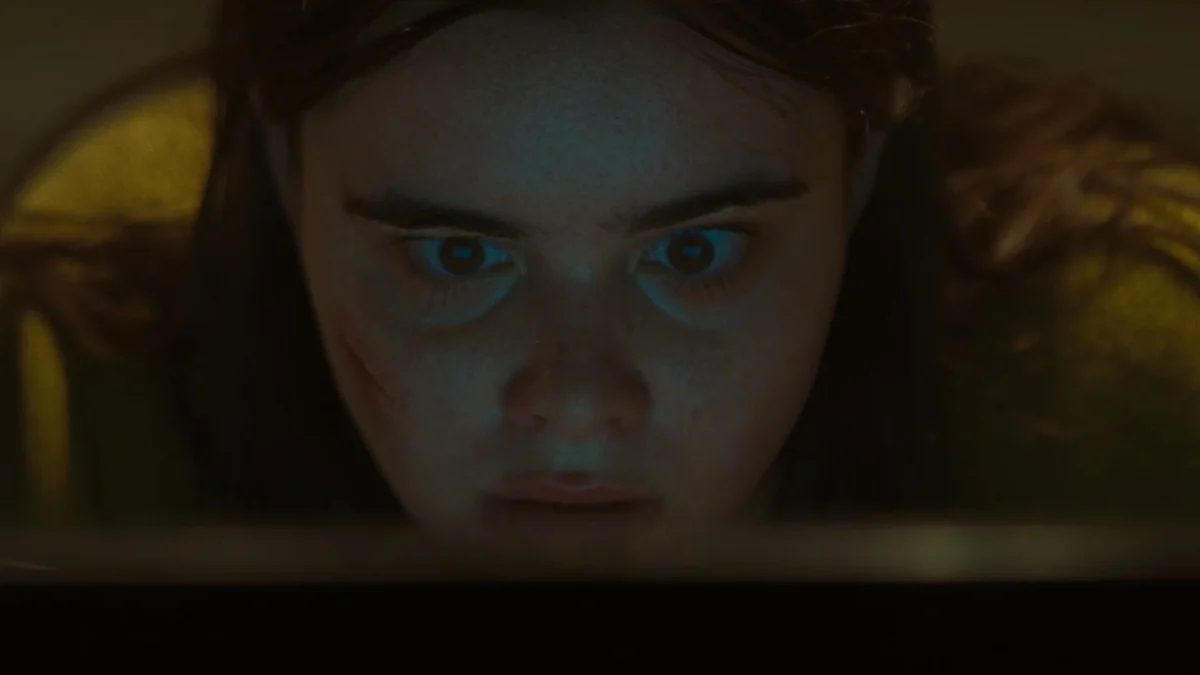
The 2026 release of Faces of Death marks a significant cinematic attempt to reconcile the "mondo" horror legacy of the late 1970s with the contemporary landscape of viral social media and algorithmic content consumption. Directed by Daniel Goldhaber and written by Isa Mazzei—the creative duo behind the acclaimed techno-thriller Cam and the eco-thriller How to Blow Up a Pipeline—this reimagining shifts the focus from the shock-value pathology of the original to a sophisticated critique of the "Attention Economy." By centering the narrative on the traumatic reality of digital content moderation, the film explores how the proliferation of real-world violence on platforms like TikTok and X (formerly Twitter) has fundamentally altered the human capacity for empathy and moral awareness.
Historical Context: From Cursed VHS to Algorithmic Feeds
To understand the 2026 iteration, one must examine the cultural footprint of the 1978 original. Directed by John Alan Schwartz (under the pseudonym Conan LeCilaire), the first Faces of Death was presented as a documentary narrated by pathologist Dr. Francis B. Gröss. It purported to show a collection of "snuff" footage, including executions, accidents, and animal slaughter. While it was later revealed that much of the footage was staged using practical effects, the film achieved a legendary status as a "forbidden" object. During the 1980s and 1990s, the film was frequently banned in multiple countries and became a staple of underground VHS trading.
The original film emerged in a post-Vietnam War era where the American public was grappling with the first televised images of combat and massacres. This historical moment birthed a morbid curiosity that filmmakers like Schwartz exploited. Legendary makeup artist Tom Savini, known for his work on Dawn of the Dead, famously attributed his interest in hyper-realistic gore to his time as a combat photographer, noting that the reality of death was far more visceral and disorganized than anything previously seen on screen.
In the decades since, the scarcity of such imagery has vanished. The 2026 film addresses a world where "extreme" content is no longer found in the backrooms of video stores but is pushed to users via automated recommendation engines. The transition from the "cursed object" of the 1978 VHS to the "brain rot" of 2026 digital feeds forms the thematic backbone of Goldhaber and Mazzei’s work.
Narrative Overview and the Modern Slasher
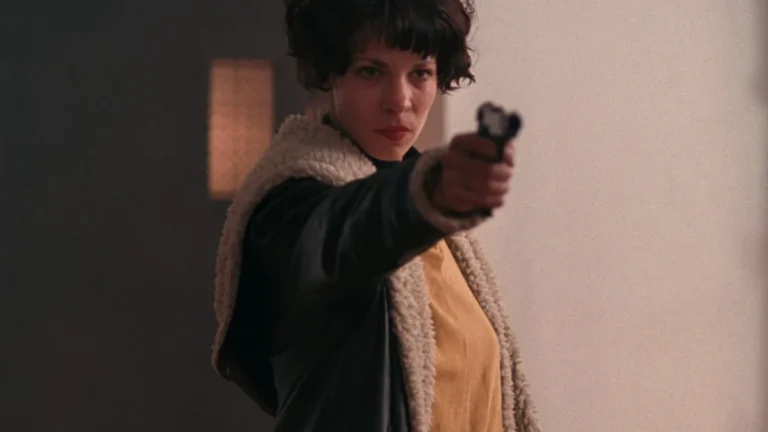
The 2026 film follows Margot, portrayed by Barbie Ferreira, a content moderator for a fictional high-growth social media application called Kino. Her daily routine involves reviewing thousands of flagged videos, ranging from harmless copyright violations to prohibited sexual content and extreme violence. The plot takes a dark turn when Margot begins encountering a series of submissions that appear to be meticulous recreations of the original 1978 Faces of Death scenes.
As Margot investigates the source of these videos, she identifies a killer named Arthur, played by Dacre Montgomery. Unlike the villains of traditional slasher films who are motivated by revenge or supernatural forces, Arthur is presented as a "child of the internet." His goal is not merely to kill, but to capture and distribute death in a way that bypasses algorithmic filters and captures the fleeting attention of a global audience. The film creates a cat-and-mouse dynamic where the hero and the villain are both tethered to the same digital ecosystem—one trying to sanitize it, the other trying to saturate it with gore.
Chronology of the Faces of Death Franchise
The evolution of the franchise reflects broader shifts in media consumption and censorship:
- 1978: The original Faces of Death is released in theaters, later becoming a home video phenomenon.
- 1981–1999: A series of sequels and "best of" compilations are released, increasingly relying on genuine newsreel footage mixed with staged segments.
- 2000s: The rise of the "shock site" era (e.g., Rotten.com, LiveLeak) renders the Faces of Death series largely obsolete as real-time, unedited violence becomes accessible online.
- 2021: Legendary Entertainment acquires the rights to the franchise, announcing a "reimagining" aimed at a modern audience.
- 2024–2025: Production takes place with a focus on practical effects and screen-life integration.
- 2026: The reboot is released, shifting the genre from mockumentary to a narrative psychological horror.
The Psychological Reality of Content Moderation
A pivotal element of the 2026 film is its depiction of the mental health toll on content moderators. Supporting data from real-world labor studies highlights the severity of this profession. According to reports from firms like Cognizant and Meta, moderators often review between 400 and 500 pieces of content per shift, frequently encountering graphic violence, child exploitation, and hate speech.

Studies have shown that a significant percentage of these workers develop symptoms of Post-Traumatic Stress Disorder (PTSD). Mazzei’s script emphasizes that Margot’s "desensitization" is not a lack of feeling, but a defensive mechanism that eventually fails. In the film, a stark contrast is drawn between the censorship of "human" elements—such as sexual health education or sex work—and the profitability of "engagement-heavy" violence. One scene highlights Margot flagging a video on how to use a condom while being pressured by her superiors to let "borderline" violent content remain active to drive traffic. This reflects a factual critique of current social media policies where harm reduction is often suppressed while sensationalist violence is algorithmically amplified.
The "Colorado Connection" and Suburban Alienation
Director Daniel Goldhaber and writer Isa Mazzei have noted that their approach to the film was heavily influenced by their upbringing in Colorado, a state with a tragic history of mass violence, including the Columbine and Aurora shootings. Goldhaber has publicly reflected on the "cursed" nature of suburban spaces, where explosive violence can erupt within mundane environments.
During the development of the film, Goldhaber recounted a chilling personal anecdote involving a local grocery store, King Soopers, where he had filmed his senior thesis—a movie about a teenager who kills his parents. Years later, that same store was the site of a mass shooting that killed eleven people. The shooting was livestreamed by a citizen journalist, creating a surreal loop where Goldhaber’s childhood memories and cinematic fictions merged with a horrific reality. This sense of "inevitable" suburban violence is infused into the 2026 Faces of Death, making the setting feel like an "Anytown, USA" that is perpetually on the brink of digital and physical collapse.
Technical Execution: Authenticity in the Digital Void
To ground the film in reality, the production team went to great lengths to simulate a believable digital world. Rather than using generic "movie interfaces," Mazzei and Goldhaber created a fully realized version of the "Kino" app. This included:
- User-Generated Content (UGC): The team solicited real content creators to produce "filler" videos, ranging from dance trends to "fail" videos, to populate Margot’s feed.
- Social Media Simulation: Mazzei wrote thousands of lines of dialogue for fictional Reddit threads and comment sections, ensuring that each username had a distinct "personality" and linguistic style.
- Practical Gore: In a nod to the 1978 original, the film utilizes high-end practical effects for the death scenes. This creates a jarring contrast with the low-resolution, vertical-video format in which they are often viewed within the movie.
The filmmakers argue that this level of detail is necessary because modern audiences "absorb information on the internet subconsciously." By replicating the language and rhythm of the web, the film attempts to pull the viewer into the same "haze of mindless security" that characterizes modern browsing habits.
Broader Impact and Ethical Implications
Faces of Death 2026 serves as more than a horror film; it is a salient commentary on the ethics of the "Attention Economy." The character of Arthur represents the logical extreme of the "creator economy," where the metric of success is visibility at any cost. By recreating the 1978 videos, Arthur is "iterating on an idea," much like a YouTuber or TikToker follows a successful trend.
The film raises uncomfortable questions about the viewer’s role in this cycle. If platforms profit from the engagement generated by violent content, and users provide that engagement by clicking, the film suggests that the "faces of death" are no longer just the victims on screen, but the millions of faces illuminated by blue light in the dark, unable to look away.
As the film concludes, it leaves the audience with a haunting realization: the "genie is out of the bottle." In an era of decontextualized, fragmented clips of violence, the 2026 reimagining suggests that the only way to remain human is to reclaim the ability to be affected by what we see. The film’s critical reception has praised its ability to modernize a controversial legacy while providing a factual, if terrifying, look at the digital infrastructure that shapes 21st-century morality.