
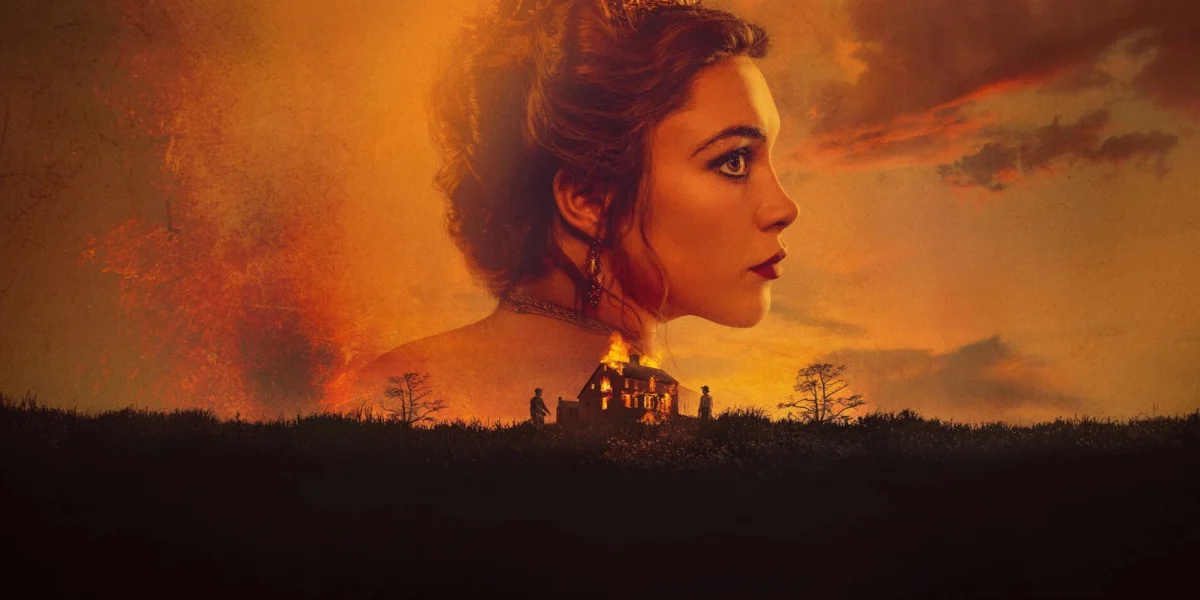
The literary landscape of the early 20th century remains anchored by John Steinbeck’s 1952 magnum opus, East of Eden, a sweeping, multi-generational epic that serves as a modern retelling of the biblical Cain and Abel narrative. For decades, the intellectual property has remained a cornerstone of American literature, exploring themes of hereditary trauma, the duality of human nature, and the exercise of free will. In a significant expansion of this legacy, showrunners Zoe Kazan and Jeb Stuart have debuted a new limited series on Netflix, marking a departure from previous attempts to distill the novel’s vast scope into a compressed visual format. By prioritizing a non-linear narrative structure and expanding upon the internal lives of the Trask and Hamilton families, the production aims to offer a more comprehensive interpretation of the source material than the 1955 film adaptation directed by Elia Kazan.
A Historical Retrospective: From Steinbeck to the Screen
The journey of East of Eden from the printed page to the screen has been fraught with challenges. When Elia Kazan released his 1955 film, it gained historical significance largely due to the breakout performance of James Dean. However, the film was criticized by literary purists for focusing almost exclusively on the final third of the novel, essentially discarding the historical foundation of the Trask family’s arrival in the Salinas Valley.
The new series, led by Zoe Kazan—the granddaughter of the original director—represents a conscious attempt to rectify these perceived narrative omissions. By utilizing a serialized television format, the production team gains the temporal advantage of an episodic structure, allowing for a methodical exploration of the characters’ development over five decades. This approach provides the necessary breathing room to flesh out the complex motivations of Cathy Ames, the antagonistic force whose arrival catalyzes the central conflict between the brothers Charles and Adam Trask.
Production and Narrative Composition
Directed by Garth Davis for the series’ inaugural four episodes, with additional direction from Laure de Clermont-Tonnerre, the production maintains a deliberate visual language that avoids the homogenized aesthetic often associated with high-budget streaming projects. The series utilizes a sophisticated production design and period-accurate costuming to ground the audience in the turn-of-the-century setting.
The narrative architecture is built around the fundamental conflict between the brothers, portrayed by Mike Faist as the volatile, brooding Charles and Christopher Abbott as the introspective, soft-natured Adam. The inclusion of Florence Pugh as Cathy Ames serves as the narrative’s gravitational center. Through a combination of non-linear storytelling and a focus on psychological realism, the showrunners move away from the traditional, villainous tropes often applied to the character, instead examining the socioeconomic and gender-based pressures that define her survival.
The casting ensemble further includes notable performances from Tracy Letts as the patriarch Cyrus Trask, and Ciarán Hinds as Samuel Hamilton. Perhaps most significant is the inclusion of Hoon Lee as Lee, the Chinese-American servant to the Trask family. In the original 1955 film, the character of Lee was famously omitted, a choice that modern critics and historians now view as a significant erasure of the novel’s thematic heart. By restoring Lee to a central role, the current series functions not only as an adaptation but as a corrective measure for the character’s legacy.

Comparative Analysis and Critical Reception
The shift toward episodic storytelling allows the series to address the philosophical inquiries embedded in Steinbeck’s text—most notably the Hebrew concept of "timshel," or "thou mayest," which suggests that individuals possess the agency to overcome their hereditary flaws. While the show succeeds in its thematic depth, it does necessitate a narrowing of the source material. By focusing heavily on the Trask family dynamics, the series inevitably reduces the presence of the Hamilton family, a choice that creates a more streamlined, albeit less expansive, experience than the original 1,600-page manuscript.
Industry analysts have noted that the series arrives at a time when audiences are increasingly receptive to long-form, complex adaptations of classic literature. The production’s ability to weave together the disparate timelines of the characters’ lives provides a level of cohesion that was previously elusive in feature-film attempts. According to early viewership metrics and critical sentiment, the performances—particularly those of Pugh, Abbott, and Lee—are viewed as the primary drivers of the series’ resonance with contemporary viewers.
Technical Execution and Industry Implications
The technical execution of the series is characterized by a high degree of precision in its cinematography and period reconstruction. The decision to prioritize character-driven drama over grand, sweeping vistas demonstrates a strategic move toward intimate storytelling. From an industry perspective, the success of this production could signal a shift in how studios approach the adaptation of "unadaptable" literary works. By favoring the slow-burn pacing of the limited series format over the compressed time constraints of a two-hour film, the project demonstrates a viable path for translating complex, multi-generational narratives for modern audiences.
The production team has faced significant logistical hurdles, including the challenge of modernizing the dialogue without stripping it of its 1950s literary tone. Kazan and Stuart have reportedly opted for a script that adheres closely to the spirit of Steinbeck’s prose while allowing for modern psychological nuances. This balance is critical in ensuring that the series remains accessible to a modern demographic while satisfying the expectations of literary enthusiasts.
The Path to Recognition: Awards and Legacy
Given the high production values and the caliber of the performances, industry experts anticipate that the series will be a significant contender during the upcoming awards cycle. Specifically, the performances of Florence Pugh and Hoon Lee are being positioned as frontrunners for individual accolades in the Limited Series categories. The show’s overall structural integrity, writing, and direction are also expected to receive nominations for Outstanding Limited Series and related craft awards.
The impact of this adaptation will likely be measured by its ability to reignite public interest in Steinbeck’s original work. Historically, high-profile adaptations have served as gateways to the original literature, and the streaming distribution model provides a unique platform for this discourse to reach a global audience. As the series continues to air, its legacy will be defined by whether it successfully reconciles the weight of its predecessor’s cinematic history with the contemporary demand for nuanced, character-centric narratives.
Conclusion
The latest adaptation of East of Eden marks a sophisticated milestone in the history of televised literature. By integrating a non-linear narrative, restoring essential characters, and prioritizing the psychological complexity of its cast, the production team has established a new benchmark for how classic American novels can be translated for the modern era. While the necessity of narrative pruning remains a point of contention for strict devotees of the original text, the series ultimately succeeds in presenting a cohesive and emotionally resonant interpretation of one of the 20th century’s most significant fictional works. As the industry continues to look toward the past for future content, this series stands as a testament to the enduring relevance of Steinbeck’s exploration of human frailty and the capacity for redemption.