DreamWorks Animation is celebrating a significant achievement as several of its key artists and engineers have been honored with the Academy of Motion Picture Arts and Sciences’ Scientific and Technical Award for their groundbreaking work on the studio’s stylized animation toolset. The recipients, Baptiste Van Opstal, Jeff Budsberg, Michael Losure, Jon Lanz, and Eszter Offertaler, were recognized for their pivotal contributions that have enabled DreamWorks to push the boundaries of visual storytelling across a slate of critically acclaimed films. This accolade underscores the studio’s enduring commitment to innovation and its ability to translate artistic vision into compelling on-screen experiences.
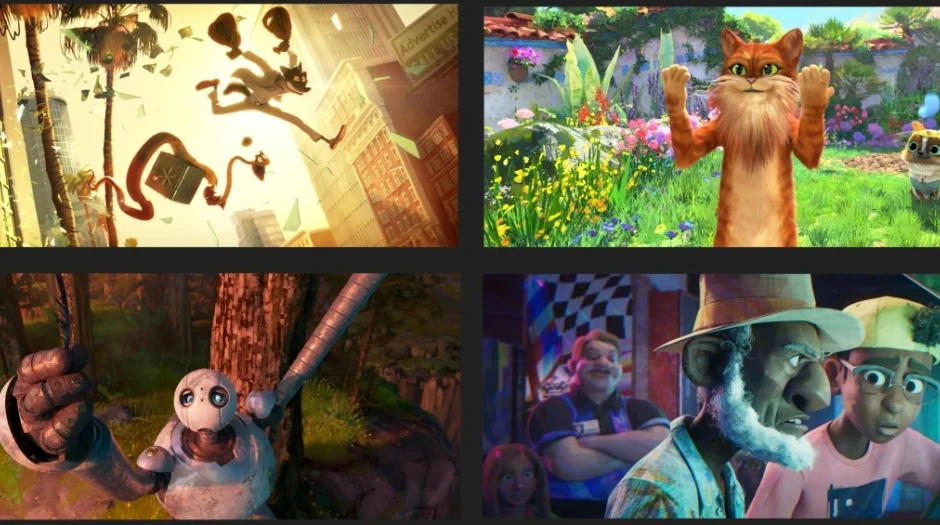
The Scientific and Technical Awards, a tradition dating back to 1931, acknowledge individuals and organizations whose discoveries and inventions have made a lasting and significant impact on the art and science of filmmaking. This year’s recognition for the DreamWorks team highlights a sophisticated suite of tools designed to facilitate highly stylized animation, a departure from the hyper-realism that has often dominated visual effects. Their work has been instrumental in shaping the distinctive visual identities of films such as "The Wild Robot," "Puss in Boots: The Last Wish," and "The Bad Guys," among others.

Jeff Budsberg, who has now received his second Sci-Tech award, was previously honored in 2014 alongside Jonathan Gibbs and Scott Peterson for the development of DreamWorks’ stylized foliage authoring toolset. This earlier innovation was first showcased in "Shrek" in 2001, where the film’s vegetation represented the most extensive deployment of digital flora in cinema at that time, setting a precedent for the studio’s pioneering approach to environmental detail.
A Legacy of Innovation: From "Antz" to "The Wild Robot"
DreamWorks Animation has long been recognized for its willingness to embrace new technologies and unconventional approaches to storytelling. From its early features like "Antz" and "The Prince of Egypt," the studio has consistently sought to imbue its narratives with unique visual styles. This dedication to artistic exploration has culminated in recent successes like the multiple Oscar-nominated and Annie Award-winning "The Wild Robot" (2025) and the equally lauded "Puss in Boots: The Last Wish" (2023). These films, celebrated for their groundbreaking visuals, are the direct result of years of toolset experimentation and development, with significant advancements being forged on productions such as "The Bad Guys" and "Ruby Gillman, Teenage Kraken."
The award-winning team recently shared their insights with Animation World Network (AWN) about their journey, reflecting on DreamWorks’ early innovative spirit, the technological leaps made in recent years, and their aspirations for the future of animation.

Navigating Creative Constraints: The Honor of Recognition
The realm of feature film animation is often a delicate balancing act between artistic ambition and practical limitations, including established studio styles, audience preferences, stringent scheduling, and budgetary constraints. The recognition from the Academy for "human-driven, time-intensive innovation" is particularly meaningful in this context.
Jeff Budsberg expressed his pleasure and acknowledged the inherent challenges: "It’s been such a pleasure (and definitely a challenge) to help DreamWorks Animation push the boundaries of stylized aesthetics in recent years. The studio certainly fosters a culture of innovation. There are many examples of our non-photorealistic solutions that require out-of-the-box problem-solving – in analyzing a stroke in a painting one asks whether it’s light, geometry, or texture. It’s a huge honor and it’s wonderful that the Academy recognizes we’re doing great and influential work at DreamWorks."
Jon Lanz echoed this sentiment, emphasizing the studio’s courage to take risks: "All of those things are definitely realities of our industry, and I’m proud that the filmmakers at DreamWorks have been willing to take major risks to break new ground. It’s very rewarding to be recognized for that innovation, and I hope it encourages us – and others in the industry – to continue pushing the boundaries of what is possible."

Michael Losure highlighted the personal reward of seeing these stylized approaches resonate: "Fantastic. It’s been an amazing experience getting to work on the various art styles of our films the last few years, and it’s been very rewarding seeing how well they’ve been received."
Baptiste Van Opstal spoke to the persistent drive for creative expression despite limitations: "It feels great. We work with many limits, but we still try to push ideas. It means a lot to be recognized for that."
Eszter Offertaler underscored the collaborative aspect of their achievement: "It’s a huge honor, of course, to have been recognized for this award. I’m incredibly proud not only of our team and the tech we’ve developed, but also of how our incredible artists have enthusiastically adapted to the new workflows and surpassed themselves creatively."

The Absence of a House Style: A Catalyst for Innovation
A defining characteristic of DreamWorks Animation is its deliberate avoidance of a singular "house style," instead prioritizing the narrative dictates of each story to shape its visual language. This approach has demonstrably fostered an environment conducive to innovation and the generation of fresh ideas.
Jeff Budsberg elaborated on this iterative process: "Similar to traditional art, finding the style of an animated film is an iterative process of discovery and experimentation. A successful style is not a recipe, but intentional and supports the storytelling. Our modular process embeds stylization into every department, allowing filmmakers to see results early and achieve unique aesthetics. ‘The Bad Guys’ is an homage to graphic novels and illustration; ‘Puss in Boots: The Last Wish’ embraces ornate fantasy with bold and pronounced texture; ‘The Wild Robot’ has a deconstructed painterly aesthetic; and ‘Wednesdays with Gramps’ is a short film with digital geometric futurism."
Jon Lanz observed that many DreamWorks films draw inspiration from illustrated children’s books and fairy tales, where visual style is intrinsically linked to world-building: "So many of our films are inspired by illustrated children’s books or fairy tales, and their unique visual styles are often integral to the storytelling and world-building. A generic ‘house style’ just wouldn’t work for the wide variety of stories that we tell. There is almost a mandate to innovate and find new techniques to achieve the unique looks that each film requires. I think this is one of the reasons filmmakers choose DreamWorks to make their films."

Michael Losure pointed to the blend of traditional art and 2D animation sensibilities influencing recent projects: "Yes, I think so. The looks of films like ‘The Bad Guys,’ ‘The Wild Robot,’ and ‘Puss in Boots: The Last Wish’ are all heavily grounded in traditional art and 2D animation, but each film has its own balance of 2D/3D sensibilities and they’re each pulling from different aspects of traditional art. Because of that, each film has had its own unique challenges, and we’ve needed to keep pushing for more and more stylistic flexibility with our tools."
Baptiste Van Opstal offered a nuanced perspective on DreamWorks’ stylistic identity: "I do think that we do have a style in that we try to make films that feel crafted, thoughtful, and premium. For each film, we don’t try to change everything just to be different. We do it because we want each film to stand out. The look changes because each story is different. So, for every film, we try to find the visual style that fits the spirit of that story."
Eszter Offertaler underscored the generative nature of this approach: "I do think that the diverse show styles at DreamWorks have fostered innovation, both in tech and art. Of course, every show still builds on their predecessors, taking the best techniques and tools developed and making it their own. We try to develop tools in a way that can be generic enough for future use. But the show styles tend to be very ambitious from the start with a large variety in the art direction. It definitely helps when the shows are individually able to invest in a long pre-development period where we have the time to experiment and hit the specific creative goals. We were building the new compositing toolset for ‘The Wild Robot’ more than a year before actual shot work began, but the time invested definitely paid off and future shows only benefited."

A Look Back: Pioneering Technologies in Early Productions
Reflecting on their careers at DreamWorks, the team recalled several technological innovations that excited them in the studio’s formative years, many of which laid the groundwork for current advancements.
Jeff Budsberg highlighted the artistic drivers behind many of these breakthroughs: "So many of our innovations are driven by artistic goals. Nick Foster was recognized with a SciTech in 1998 for fluid simulation on ‘Antz,’ which had never really been done in film before. In 2002, Dick Walsh was given one for the development of our Facial Animation System. In 2010, Eric Tabellion and Arnauld Lamorette received a SciTech for DWA’s global illumination system, the first GI used in an animated film (‘Shrek 2’). Ken Museth and I received a SciTech in 2014 for our sparse volume format OpenVDB, to meet the demands for large-scale, high-resolution volumes and liquids."
Jon Lanz discussed the studio’s early forays into physically based rendering: "In my early days at the studio, much of our focus was on pushing toward physically based rendering. The move to path tracing was a huge leap forward in terms of the quality, consistency, and complexity of the images we could create, but it also came with new constraints. So, we needed solutions that would allow us to work around those constraints, to bend the rules without breaking the path-tracing model. A recurring question has been whether to try to achieve these non-photorealistic looks through compositing solutions or directly in-render. We’ve done both – often a combination of the two. The compositing solutions have been powerful and flexible, while the in-render solutions provide earlier feedback and interactivity. Each has its pros and cons. What seemed like small innovations at the time built on each other with each production, and over time they have really added up to allow us to achieve a much wider range of looks than we could in the early days."

Michael Losure fondly recalled the impact of VDB development: "I remember in the early days of VDB development at DreamWorks, I was an FX artist working on water meshing for ‘The Croods’ and was very excited about how powerful the new VDB tools were for pushing the look of our water."
Baptiste Van Opstal focused on the empowerment of artists: "At the beginning, I was excited by tools that gave more control to artists. Better lighting, shading, and rendering. It helped us get closer to the look we wanted."
Eszter Offertaler, who joined DreamWorks for "Puss in Boots: The Last Wish," was particularly drawn to the exploration of non-photorealistic styles: "I joined the DreamWorks crew for ‘Puss in Boots: The Last Wish.’ What really excited me at the time was the exploration in the non-photorealistic, graphic show style. On the compositing side was the adoption and extension of the painterly filter first used on ‘The Bad Guys,’ which ended up kickstarting a suite of other simplification tools to hit the graphic style. There was also a lot of development on the fur to hit the stylization on the show, split between surfacing developments and accent furs and further processing in compositing."

Recent Innovations: Pushing Stylistic Boundaries
The period leading up to this Academy Award has seen a surge of innovation at DreamWorks, with recent projects serving as powerful showcases for new techniques.
Jeff Budsberg detailed the narrative integration of style in "The Wild Robot": "In ‘The Wild Robot,’ Roz is beaten up, has parts replaced, and accumulates moss and dirt, indicating the personal journey where she becomes wilder throughout the film. Further, we also see a stylistic juxtaposition with Roz and the painterly world – she is a precisely-machined robot (perhaps stereotypical CG) and doesn’t belong on the island, stylistically. However, the look of Roz changes throughout the film as she herself becomes more painterly. We do this incrementally (and perhaps imperceptibly to the audience), so when we encounter robots at the end of the film, she now fits into the world, but they do not. Leveraging style to reinforce storytelling is a powerful and exciting tool for an artist."
Jon Lanz elaborated on the rule-bending techniques employed for "Puss in Boots: The Last Wish": "In ‘Puss in Boots: The Last Wish,’ we used several new techniques to achieve that style, including adding custom controls for shadow rays to help soften the look of fur and hair, as well as new methods to control the behavior of lights. We also employed new shading techniques where attributes could be explicitly authored and passed to the renderer to enforce the stylized look. This was the first show where we really ‘broke’ the rules regarding how lights could interact with geometry, like allowing light sources to affect surfaces that were technically facing away from the light. It was a bit scary at first (and admittedly still is at times), but it unlocked powerful new techniques for achieving our stylized looks. And the work we did on improving our compositing tools and workflows on ‘The Wild Robot’ to support the heavy use of semi-transparent geometry that the film’s look required involved outputting a lot of extra data from the renderer and then using that data in compositing to achieve a much more accurate and flexible result than we could have achieved with our previous techniques."

Michael Losure introduced the "Doodle toolset," a revolutionary suite designed for stylistic flexibility: "The Doodle toolset is a suite of tools designed to let an artist really pick and choose between a variety of 2D and 3D techniques all in the same context. The focus is on achieving a 2D-animation-inspired silhouette and timing control while maintaining 3D sophistication in scale, detail, and rendering. A big focus of the tool set is integrating 3D drawing, 2D painting and procedural geometry manipulation techniques into the same workflow so an artist can nimbly switch between techniques as needed, selectively applying hand-drawing techniques for artistic control while ultimately producing 3D lit and rendered geometry. Development on this toolset began as far back as ‘Boss Baby: Family Business,’ but much of the development was driven by the artistic needs of ‘The Bad Guys,’ ‘Puss in Boots: The Last Wish,’ and ‘The Wild Robot.’ Outside of just the tools, one of the most exciting things about recent films is that we’re finally at a place where we can really make the final image look like the concept art. And I love that now we have to actually have conversations about which aspects of the art are literal goals to hit. For example, if something in a lighting key is painted with loose brush strokes, are we just referencing it for the light and color, or do we also want to match the painting style? I really enjoy having those conversations and thinking through how to translate the art into our FX."
Baptiste Van Opstal emphasized the development of a flexible and adaptable pipeline: "We built a lot of tools, so it’s hard to point to just one. But with those tools we were always focused on creating a strong and flexible pipeline, something that could adapt to different styles and keep evolving. We also worked on keeping looks flexible throughout the whole production. Every department can have influence, while still keeping visual continuity. We can see and shape the looks very early and then let them grow in a more organic way. On ‘The Wild Robot,’ we pushed a more painterly, impressionistic approach, focusing detail only where it matters. Everything is intentional, but should feel accidental, which is hard to achieve in CG. I’m not really driven by technology itself. It starts with the image and what we want it to feel like. If we don’t have the right tools, we build them. So, when I think about innovation, I’m mostly inspired by artistic work. This year, ‘Little Amélie’ really stood out to me. It’s an amazing film and a real lesson in storyboarding. It pushes the visuals very far, while staying accessible."
Eszter Offertaler highlighted the introduction of "Presence" to the renderer and the "Sprite" tool: "The introduction of Presence to the renderer was a pretty big step for stylization. It’s relatively easier to filter and stylize the look of assets on the interior of boundaries, but it’s harder to break up silhouettes and play with the contours of objects. ‘Ruby Gillman, Teenage Kraken’ introduced Presence into our surfacing for the underwater gelatinous bodies of the krakens. Assets could have partial transparency that didn’t have to be captured in the surface geometry but could be applied with surfacing textures. The use was somewhat limited in scope as it was a dense new rendering need that complicated compositing greatly with the tools available at the time. But it blazed the path for the layered transparency used to give ‘The Wild Robot’ its rich textured wilderness. Pretty much every blade of grass and every leaf ended up using Presence for those lovely soft silhouettes. By then we developed the crypto-deep data format and corresponding compositing toolset to support the extra layered transparency. The new Sprite tool to scatter brushstrokes on geometry in huge volumes during lighting also had a huge impact. It had to handle very large numbers of assets (some of ‘The Wild Robot’ scenes had upwards of 600,000 individual brushstrokes), be fast to render, and be easy to manipulate for the artists. These let us add textural details to the environment on a large scale and ended up driving a lot of the simplifying and stylistic filters to hit the final painterly look."

The Future of Animation: Beyond Realism and Toward Expressive Artistry
The evolution of animation technology has transformed what is visually possible, moving from the technical challenges of rendering fur and water to the sophisticated artistry of painterly and abstract styles. Looking ahead, the DreamWorks team expressed a desire to see animation continue to expand its expressive capabilities.
Jeff Budsberg articulated a longing for a return to the intentionality of traditional art: "For decades, computer graphics technology has pursued exceptional realism. However, as someone trained in traditional painting and who grew up on hand-drawn animation, I feel we’ve lost something along the way. There’s something endearing about the imperfections of the artist’s hand, the deliberate artistic deconstruction that immerses the viewer as they fill in details in their mind. There’s a reason we are drawn to galleries. Viewing art is seeing the world through a deliberate, transformative lens. Animation technology has improved to the point where filmmakers can find the best style to support the storytelling. I hope this inspires future filmmakers and I cannot wait to see the diversity of projects yet to come."
Jon Lanz acknowledged ongoing challenges while looking towards greater interactivity: "I don’t think we’re completely out of the woods when it comes to the challenges of fur, hair, water, fire, smoke, etc. – especially for stylized looks. However, we’ve made a lot of progress, and as our tools and techniques continue to evolve, we are able to achieve a wider range of looks with these elements than we could have in the past. Many of our current techniques rely heavily on compositing solutions, which can be limiting in terms of interactivity and feedback. I would love to see us continue pushing toward more in-render solutions for these elements, which would allow for greater interactivity and faster iteration for artists. This is something that we have been making progress on, but there is still a lot of room for growth and improvement in this area."

Michael Losure championed the continued exploration of new visual territories: "I think there is still so much left to explore in the realm of bringing new visual styles to feature films. I hope we keep pushing forward and trying new things, and I hope we keep pulling inspiration from different places in art history and finding new ways to add life and motion to concepts from traditional art."
Baptiste Van Opstal suggested that 3D animation is entering a new phase, moving beyond technical benchmarks towards unique artistic identities: "For me, 3D animation has reached a kind of maturity and is entering a new phase. For a long time, films were closely tied to technical breakthroughs. ‘Toy Story’ with plastic toys, ‘Finding Nemo’ with water, ‘Monsters, Inc.’ with fur. At some point, we got to a place where we could do almost anything. But many films started to look similar. So instead of pushing only for realism, we started looking for a unique identity for each film. That’s what I’d like to see more of. More bold styles, more personal approaches, less ‘safe’ visuals, and also simpler tools, so artists can focus more on ideas instead of fighting the technology."
Eszter Offertaler expressed a desire for enhanced real-time feedback and continued embrace of stylized aesthetics: "For future developments I’d love to see the real-time feedback and usability of our stylization tools get better. We made them to be stackable and versatile, but as we started pushing more of the look to the lighting and compositing stages, what used to be a fast process started getting somewhat bogged down. Compositing renders got far more expensive on ‘The Wild Robot’ than on previous shows due to the layered, heavy filters we were using and the large amount of geometry being processed. I’m sure the artists would appreciate regaining real-time feedback, even for some of the heavier comps. I love the trend of using live brushstrokes and broken silhouettes on shows and I hope that it continues."

The Academy’s Scientific and Technical Award serves as a powerful validation of DreamWorks Animation’s commitment to artistic innovation. The work of Van Opstal, Budsberg, Losure, Lanz, and Offertaler, and their teams, exemplifies how technological advancement, when driven by creative vision, can profoundly shape the future of cinematic storytelling, offering audiences an ever-expanding palette of visual experiences.