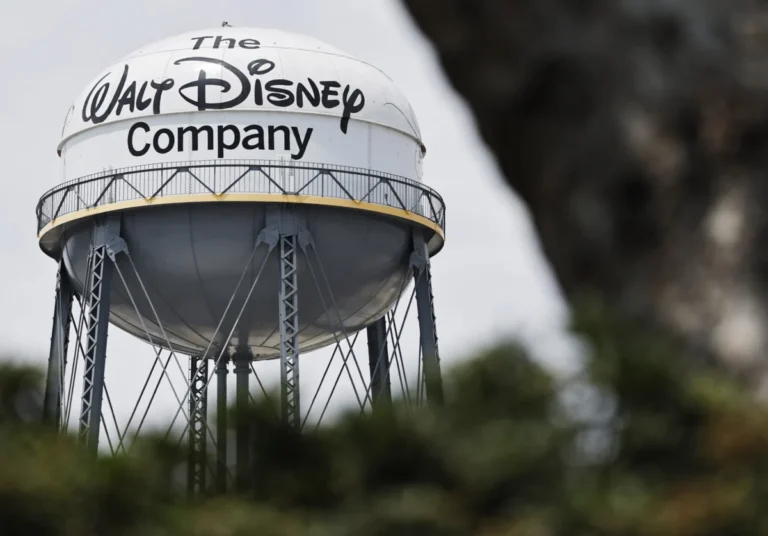



The Walt Disney Company on Wednesday released its fiscal second-quarter earnings report, revealing revenue figures that climbed past Wall Street’s projections. The performance was largely underpinned by the sustained strength of its streaming services and the continued profitability of its global theme park and cruise operations. Following the announcement, Disney shares surged approximately 7% in after-hours and early morning trading, reflecting investor confidence in the company’s strategic pivot under its new leadership.
Overall revenue for the fiscal second quarter, which concluded on March 28, rose to $25.17 billion, marking a 7% increase compared to the $23.51 billion reported in the same period a year ago. While the top-line growth was robust, net income saw a contraction, falling to $2.47 billion, or $1.27 per share, down from $3.4 billion, or $1.81 per share, in the prior-year quarter. However, when adjusting for one-time items—most notably the integration of the NFL Network and other media assets acquired by ESPN—Disney reported adjusted earnings of $1.57 per share.
A New Era of Leadership and Strategic Focus
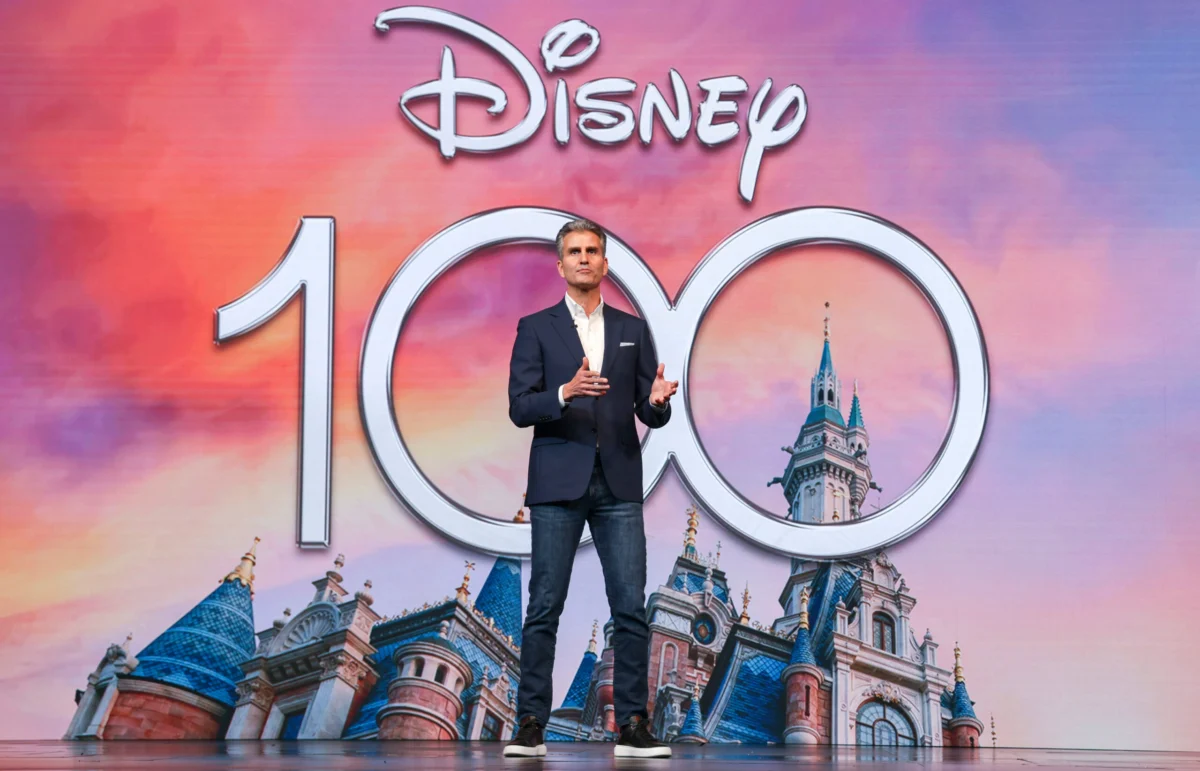
This earnings report represents a significant milestone for the entertainment giant, as it is the first quarterly filing since Josh D’Amaro assumed the role of Chief Executive Officer in March. D’Amaro, who previously headed the company’s Parks, Experiences, and Products division, took the reins from Bob Iger, whose two-decade tenure shaped the modern Disney empire.
The transition comes at a period of internal restructuring. Shortly after D’Amaro took office, the company initiated a round of layoffs aimed at streamlining operations and reducing the overhead costs associated with its legacy media businesses. Furthermore, D’Amaro has had to navigate external pressures, including political scrutiny surrounding Disney-owned ABC and late-night host Jimmy Kimmel.
During the earnings call, D’Amaro emphasized a future-forward strategy centered on "storytelling and technology." He highlighted that the company would lean heavily into its unrivaled portfolio of intellectual property (IP) to drive engagement across both digital and physical platforms.
"It’s a competitive streaming marketplace out there right now," D’Amaro told investors. "Despite that, we saw an increase in engagement in the quarter, and then when we look ahead, our key drivers for engagement growth include content and product enhancements."
Experiences Segment: Resilience Amidst Shifting Demographics
Disney’s Experiences segment, which encompasses its domestic and international theme parks, Disney Cruise Line, and consumer products, remains the company’s primary engine for cash flow. The division reported revenue of nearly $9.5 billion for the quarter, a 7% year-over-year increase.
Despite this growth, the data revealed shifting patterns in consumer behavior. While global guest attendance rose by 2%, domestic parks saw a 1% decline in visitation. Disney executives noted that international tourism at its U.S.-based parks remained "softer," a trend that has persisted for two consecutive quarters.
However, lower attendance figures were offset by a significant increase in per-guest spending. Disney has successfully utilized dynamic pricing, premium "Genie+" services, and enhanced food and beverage offerings to extract more value from each visitor.
The company also addressed the potential impact of macroeconomic volatility. Recent geopolitical tensions in the Middle East, including the late-February strikes between Israel and Iran, have contributed to a surge in global oil prices. Higher fuel costs typically correlate with a decline in domestic travel, yet Disney CFO Hugh Johnston remained optimistic.
"We continue to see a strong consumer. While there may be some concerns around the macros and specifically around the price of fuel, we have not seen any evidence of that," Johnston said in an interview with CNBC. He further noted that forward bookings for the latter half of the fiscal year remain "quite strong."
Entertainment and the Digital Pivot
Disney’s Entertainment segment—comprising its traditional linear television networks, direct-to-consumer (DTC) streaming services, and theatrical film releases—saw revenue jump 10% to $11.72 billion.
A significant portion of this growth was attributed to recent strategic maneuvers, including:
- The Fubo Deal: The closure of the Fubo settlement contributed a 4% boost to entertainment revenue.
- Pricing Power: Subscription and affiliate fees rose 14% to $7.8 billion, driven by price hikes for Disney+ and Hulu.
- Advertising Gains: Advertising revenue increased by 5%, largely due to higher ad impressions on the company’s ad-supported streaming tiers.
Theatrical performance also provided a tailwind. The continued success of "Avatar: Fire and Ash" and the strong reception of "Zootopia 2" helped bolster the segment’s bottom line.
Notably, Disney has continued its trend of providing less granular data for its declining legacy businesses. The company once again declined to provide specific revenue and operating income breakdowns for its linear TV networks, nor did it disclose specific quarterly subscriber counts for its streaming services. This shift reflects a broader industry move toward focusing on total revenue and profitability metrics rather than "vanity metrics" like raw subscriber numbers.
Sports and the Evolution of ESPN
The Sports segment, dominated by ESPN, reported revenue of $4.61 billion, a 2% increase. This growth was primarily fueled by the acquisition of the NFL Network and other media assets, as well as higher subscription fees.
However, the segment faces headwinds in the form of rising programming costs. The cost of broadcasting live sports has skyrocketed as leagues demand higher rights fees. Disney noted that these contract rate increases weighed on the segment’s operating margins.
A major highlight was the performance of ESPN’s direct-to-consumer streaming app, which launched in August. For the first time, Disney indicated that revenue from digital subscribers was beginning to "more than offset" the losses incurred by the "cord-cutting" phenomenon in traditional cable television.
CFO Hugh Johnston also addressed the NFL’s recent move to accelerate media rights negotiations. Reports indicate the NFL is looking to eliminate an opt-out clause for the 2029-30 season in exchange for higher revenue.
"We haven’t engaged yet with the league on early renewal conversations, but we’re not dogmatic about the process," Johnston stated. "We expect to be in business with the league for years to come, and we’ll of course evaluate this deal as we would any deal with discipline and a focus on driving value for Disney shareholders."
Financial Outlook and Shareholder Returns
Disney provided an optimistic roadmap for the coming years, signaling that the company has moved past its "building phase" and into a period of "sustainable growth."
For fiscal 2026, the company is targeting full-year adjusted earnings growth of approximately 12%. Looking further ahead to fiscal 2027, Disney anticipates double-digit growth in adjusted earnings. To reward shareholders, the company announced it is raising its share repurchase target for the current fiscal year to at least $8 billion, up from the previously stated $7 billion.
In the immediate term, Disney expects third-quarter total segment operating income to reach approximately $5.3 billion.
Analysis: Navigating the Macroeconomic Landscape
While the Q2 report was overwhelmingly positive, analysts remain focused on how Disney will navigate a potential cooling of the U.S. economy. The CFO’s comments regarding fuel prices suggest a "wait-and-see" approach. Johnston clarified that while the company has "levers in place" to offset macro pressures—such as adjusting marketing spend or modifying park hours—a significant and sustained rise in gas prices could eventually alter consumer behavior.
The decline in domestic park attendance, though small, suggests that the post-pandemic "revenge travel" surge may be leveling off. To counter this, Disney is expected to lean more heavily on its international parks in Paris, Shanghai, and Hong Kong, as well as its expanding cruise fleet, to maintain the Experiences segment’s momentum.
Furthermore, the transition to D’Amaro represents a shift toward a more operationally focused leadership style. Having spent his career in the "Experiences" side of the business, D’Amaro’s emphasis on IP integration suggests that Disney will increasingly look to turn its streaming hits into physical attractions and vice-versa, creating a closed-loop ecosystem of monetization.
Chronology of Key Recent Events at Disney
- November 2022: Bob Iger returns as CEO, replacing Bob Chapek, to stabilize the company and steer it toward streaming profitability.
- August 2025: ESPN launches its standalone direct-to-consumer streaming app, marking a major shift in the sports broadcasting landscape.
- September 2025: Disney implements significant price hikes across its streaming portfolio (Disney+, Hulu, ESPN+).
- March 2026: Josh D’Amaro is named CEO, succeeding Bob Iger.
- April 2026: Disney initiates a strategic round of layoffs and consolidates its media and distribution divisions.
- May 2026: Disney reports Q2 fiscal results, beating revenue expectations and raising share buyback targets.
As the company moves into the second half of the fiscal year, all eyes will be on the "Experiences" segment’s ability to maintain high guest spending and the Entertainment segment’s path toward consistent streaming profitability. With a new CEO at the helm and a clear focus on high-margin IP, Disney appears to be successfully turning the page on a tumultuous era of restructuring.