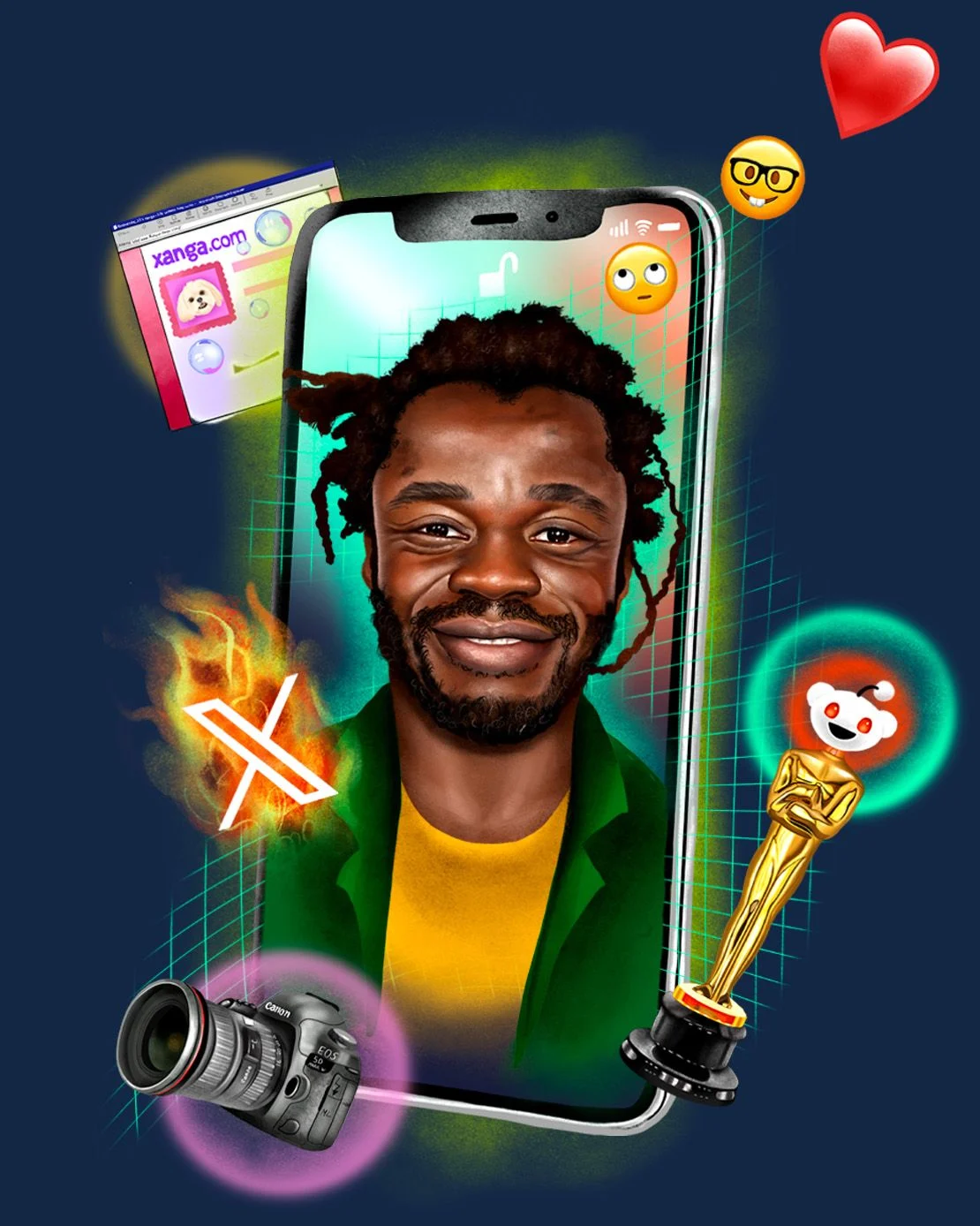
Comedian, writer, and multimedia artist Demi Adejuyigbe has built a multifaceted career spanning live performance, television writing, digital media, and music composition. Known for his viral annual video tributes to Earth, Wind & Fire’s classic track "September," his contributions to late-night television, and his celebrated one-man Edinburgh Fringe shows, Adejuyigbe occupies a unique space in contemporary entertainment. Recently, during a wide-ranging interview detailing his digital habits, technology preferences, and media consumption, Adejuyigbe offered a characteristically satirical take on contemporary society, proposing government-mandated dance classes for all men—a concept he previously championed during an appearance on Kareem Rahma’s digital interview series Subway Takes.
Beyond his comedic commentary on public movement, Adejuyigbe’s daily relationship with technology reflects a broader cultural paradox: a creative professional deeply reliant on digital tools who simultaneously harbors a critical view of the tech industry, social media platforms, and algorithmic news dissemination. This profile examines Adejuyigbe’s digital footprint, hardware preferences, and systemic critiques of modern software ecosystems, providing insight into how a prominent 21st-century creator navigates an increasingly hyper-connected landscape.
Hardware Ecosystem and Daily Workflow
Adejuyigbe’s daily routine is anchored by a standard yet carefully considered suite of personal electronics. He utilizes an iPhone 17e for mobile communication and media capture, pairing it with the default "Radial" alarm tone. Eschewing custom ringtones or personalized wake-up sounds to prevent sensory fatigue or positive association with alarms, Adejuyigbe opts for a functional, highly efficient audio cue designed to ensure prompt waking without psychological conditioning.
For professional and creative work, Adejuyigbe relies on a 14-inch MacBook Pro. His daily average screen time hovers around nine hours, a figure driven largely by professional demands rather than passive consumption.
"I get notifications for it, and I’m always like, ‘That’s none of my business,’" Adejuyigbe remarked regarding his high screen time metrics. "I’m on my phone a lot. I use my phone in my show. I record things."
This heavy device dependency extends to his organizational habits. Adejuyigbe maintains a deliberate, controlled inbox for professional correspondence, keeping an unread count of roughly 72 emails. Rather than allowing messages to accumulate chaotically, he uses the unread status as a systematic task-management tool, marking items as unread until he is mentally prepared to address them. Conversely, his text message inbox remains rigorously cleared, with zero unread items under normal circumstances. He attributes this responsiveness to the reality of his constant device usage, noting that high unread counts occur only when he emerges from extended isolation, such as a cinema screening, to find active group chats.
Music Industry Boycotts and Streaming Migration
One of Adejuyigbe’s most deliberate tech departures involved his high-profile exit from Spotify, a decision rooted in ethical objections to the streaming platform’s corporate governance, executive investments, and previous advertising partnerships.
In recent years, Spotify has faced mounting scrutiny from artists, consumers, and industry analysts regarding low royalty payout rates—commonly known as streaming residuals—which many independent musicians argue fail to sustain creative careers. Beyond compensation models, public backlash has intensified over reported investments by platform leadership into artificial intelligence firms and military defense contractors, alongside past controversies surrounding corporate advertising alignments.
For Adejuyigbe, these cumulative factors served as a tipping point. "It was revealed that the CEO was investing in AI companies and military contractors, and that was the last straw," Adejuyigbe explained. Citing conversations with musician friends who consistently noted the inadequacy of platform residuals, he ultimately chose to terminate his subscription. "It’s not a good one to use if you support musicians. So I was just like, ‘Fuck it, I’m going to switch.’"
While he initially experienced friction adjusting to the user interface of Apple Music, Adejuyigbe ultimately settled on the alternative, viewing it pragmatically as a lesser of two corporate evils within an imperfect digital economy. His migration highlights a growing trend among independent artists and culturally conscious consumers who critically evaluate the downstream ethical implications of digital media consumption.
Social Media, Digital Addiction, and the Paradox of X
While Adejuyigbe’s departure from Spotify demonstrates a willingness to alter consumer habits for ethical reasons, his relationship with social media—specifically the platform X (formerly Twitter)—exemplifies a different digital dilemma: involuntary retention.
Adejuyigbe does not mince words regarding his ongoing use of X, which he describes in terms typically reserved for chemical dependency. Comparing the platform to an un-quittable cigarette addiction, he argues that the website fosters a toxic, combative environment characterized by hostility and polarization.
"I want to burn it to the ground. I think it’s awful. I think everyone on there is really bad, myself included," Adejuyigbe said. He dismissed alternative platforms like Bluesky, clarifying that his grievance is not rooted in a desire for a new digital town square, but rather in a systemic exhaustion with public posting altogether. "It’s like I got addicted to cigarettes when I was young, and now I keep smoking cigarettes and, well, you could try vaping? That’s not the thing. It should be banned."
To mitigate the platform’s corrosive effects, Adejuyigbe has proposed drastic structural interventions, suggesting that limiting all users to exactly three posts per day would force intentionality and curb compulsive outrage farming.
His selective engagement extends to his personal social media philosophy. Operating under the mental framework of viewing public comment sections "like a zoo," Adejuyigbe rarely interacts with strangers online. He limits comments to supportive messages for friends or occasional humorous interjections, actively avoiding unnecessary notifications and digital altercations. Similarly, his approach to direct messaging is sparse, limiting proactive outreach to rare, quarterly intervals when single, and only when established context or shared rapport exists.
News Consumption and Algorithmic Vulnerability
Adejuyigbe’s reliance on X and Reddit for news highlights a systemic vulnerability in contemporary information ecosystems. Despite acknowledging the dangers of insular, algorithmically tailored news feeds, he admits that convenience often overrides journalistic diversity.
"Oh boy, X, which is one of the worst reasons that I think I stay on it," Adejuyigbe noted regarding his headline consumption habits. By relying on aggregated social feeds, he avoids the friction of actively seeking out broad journalistic reporting, a habit he candidly recognizes as detrimental.
This insular curation is mirrored in his recreational media consumption. Adejuyigbe is an active participant in specialized Reddit communities, particularly r/movies and r/oscarrace. He follows the Academy Awards race extensively, observing the early-year debates and festival updates not out of obsessive competitiveness, but as a spectator sport observing cinematic fandoms from a distance. Recent media binges also reflect a penchant for trivia and interactive digital content, such as Instagram’s Reel Talk Show, where pedestrians identify films via audio cues.
Analog Preferences in a Digital Age
Despite his immersion in software workflows, digital DJ software organization, and mobile application ecosystems, Adejuyigbe retains a strong affinity for tactile, analog technology—most notably in his choice of photography equipment.
For visual documentation, Adejuyigbe exclusively uses the Canon EOS-1N, a vintage Japanese film camera renowned for its mechanical reliability and hybrid feature set. Having replaced the exact model three times due to normal wear, aging batteries, and mechanical breakdown, he remains steadfast in his preference for the device rather than transitioning to newer digital bodies.
"I could get a new one or a more updated one, but I like this one so much I will just go and get it again," he stated. This philosophy of deliberate hardware loyalty mirrors his approach to other aspects of his digital life: a preference for established utility, functional design, and resistance to forced technological obsolescence.
Implications and Cultural Context
Demi Adejuyigbe’s digital profile encapsulates the modern creative worker’s uneasy alliance with technology. Caught between the professional necessity of high screen times, algorithmic platforms, and instant communication tools, and the personal desire for offline autonomy, ethical consumerism, and tactile analog experiences, Adejuyigbe navigates the landscape with a blend of self-awareness and satirical detachment.
Whether he is organizing music libraries for live DJ sets, photographing friends backstage at comedy shows, or critiquing the systemic failures of social media architecture, Adejuyigbe’s digital habits provide a revealing look at how contemporary artists maintain their creative equilibrium in an era of digital saturation.