


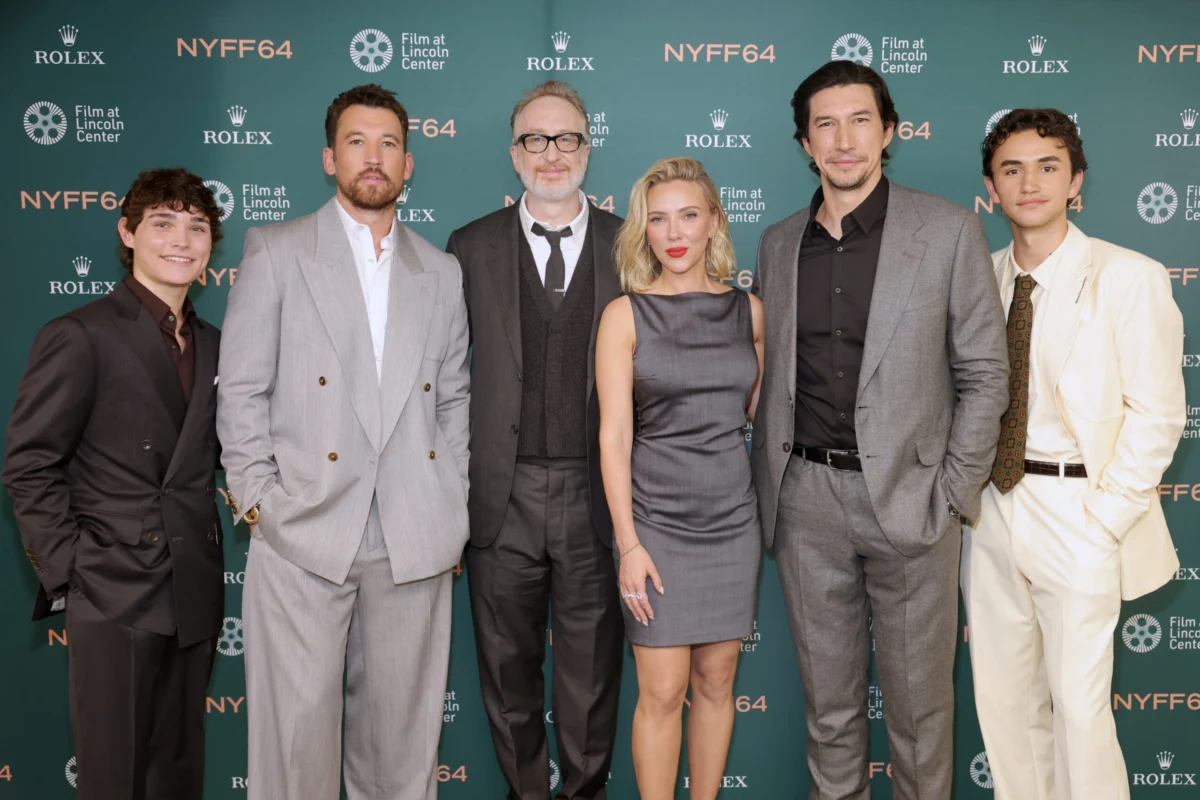
The 2026 New York Film Festival served as the prestigious backdrop for the North American premiere of Paper Tiger, the latest cinematic endeavor from acclaimed director James Gray. Marking a distinct departure from his previous work, the film is a taut, atmospheric crime thriller set against the gritty, neon-soaked backdrop of 1980s Queens. Starring Miles Teller as the patriarch Irwin and Adam Driver as his brother Gary, the film navigates the precarious intersection of familial obligation and the ruthless mechanics of the Russian mob. As the industry turns its attention toward the November release, the film has sparked significant discussion regarding the evolution of Gray’s directorial style and his ongoing exploration of the immigrant experience in New York City.
The Evolution of a Storyteller
Following the release of the semi-autobiographical Armageddon Time, which garnered critical acclaim for its raw, unflinching look at Gray’s own childhood, questions naturally arose regarding the relationship between the two films. During the post-screening Q&A at the New York Film Festival, Gray was quick to clarify that Paper Tiger is not a thematic successor or a formal sequel. While the film draws from the lexicon of his personal history, it is a work of fiction that prioritizes dramatic tension and stylistic suspense over the rigid adherence to autobiography.
Gray noted that his intention was to lean into a "Hitchcockian" sensibility. By moving away from the documentary-style realism of his past works, Gray has crafted a narrative that prioritizes the visceral, pulse-pounding intensity of the genre. This transition reflects a broader trend among auteur directors who, having exhausted the direct exploration of their own histories, begin to repurpose those memories into broader, more abstract cautionary tales.
A Narrative of Economic Desperation and Mob Intrigue
Set in the economic volatility of the 1980s, the plot centers on a moneymaking scheme orchestrated by Gary, whose reckless ambition pulls his family into the orbit of organized crime. For many, the 1980s in New York represented a period of extreme social and financial stratification, a context that Gray utilizes to heighten the stakes for the film’s central family.
The inclusion of Hester, played by Scarlett Johansson, adds a layer of domestic complexity to the thriller. As the family dynamic fractures under the pressure of external criminal threats, the film transforms from a standard crime drama into an intimate portrait of survival. The collaboration between Teller, Driver, and Johansson has been lauded by early critics for its grounded approach to high-stakes melodrama, ensuring that the human element remains at the forefront of the narrative.
Behind the Lens: Directorial Philosophy and Youthful Perspectives
A pivotal aspect of the production was the inclusion of young actor Roman Engel, who portrays the youngest son of the family. Serving as a surrogate for Gray himself, Engel’s performance was shaped by a unique directorial approach. Eschewing traditional "acting" techniques, Gray encouraged Engel to prioritize personal authenticity, urging him to react to the high-pressure environment of the set as if he were experiencing the events in real time.
This technique underscores Gray’s philosophy on the importance of human connection. In a climate where modern cinema often prioritizes spectacle, Gray remains committed to the idea that the "personal connection is everything." By forcing his actors to reside within the emotional truth of the scene, he manages to ground the film’s more extreme criminal elements in a palpable, lived-in reality.
The New York Film Festival: A Cultural Catalyst
The New York Film Festival (NYFF) continues to function as a premier launchpad for auteur-driven cinema. By hosting the North American premiere of Paper Tiger, the festival solidified its reputation as a venue that supports films requiring intellectual engagement from the audience. Historically, the festival has been the starting point for awards-season conversations, and the reception of Paper Tiger suggests that it will be a major player in the upcoming cycle.
The event, which showcased a diverse array of films ranging from experimental art-house projects to high-budget dramas, provided the perfect atmosphere for Gray’s film to be analyzed. The positive reception at the festival is not merely a reflection of the star power involved but also an acknowledgement of Gray’s sustained relevance in an industry that is increasingly skeptical of non-franchise, mid-budget storytelling.
Navigating the Ambiguity of the Open Ending
Perhaps the most discussed element of Paper Tiger is its refusal to provide a tidy resolution. In a cinematic landscape dominated by the "whole story" narrative—where every plot thread is meticulously tied—Gray’s choice to leave the fates of Irwin, Gary, and Hester in flux is a bold, stylistic statement.
Gray argues that this ambiguity mirrors the nature of existence. By allowing the characters to remain in a state of uncertainty, he forces the audience to confront the idea that in life, few individuals ever truly understand the full scope of the circumstances they find themselves in. This "untraditional" structure is intended to allow the life of the film to continue beyond the credits, leaving the audience with a sense of "completion in their openness."
Industry Implications and Distribution
Neon, the distribution company behind the film, has scheduled a staggered release that begins on November 13 in select U.S. theaters, followed by a wider expansion on November 20. This strategy is indicative of the current theatrical market, which relies on strong critical momentum to drive audiences to cinemas during the competitive pre-holiday window.
From a business perspective, the success of Paper Tiger is crucial for the mid-budget, director-driven film market. With major studios focusing primarily on intellectual property and expansive cinematic universes, the survival of films like Paper Tiger relies on the synergy between strong critical acclaim and strategic festival positioning. The film’s ability to draw significant crowds at the NYFF is a positive indicator that there remains a robust appetite for adult-oriented dramas that challenge, rather than satisfy, the audience’s desire for closure.
A Cautionary Tale for the Modern Era
When analyzing the implications of the film’s narrative, it becomes clear that Paper Tiger functions as a modern cautionary tale. The pursuit of wealth, the weight of brotherly love, and the consequences of moral compromise are themes that feel particularly resonant in an era defined by economic instability. Gray’s film does not offer a moralizing sermon; rather, it allows the audience to bear witness to the unraveling of a family unit that, in its attempt to escape its circumstances, inadvertently seals its own fate.
The film stands as a testament to the power of the domestic thriller. By stripping away the tropes of traditional mob movies and focusing instead on the interpersonal stakes, Gray has created a work that feels both classic and contemporary. As the film moves toward its general release, it will undoubtedly remain a focal point for discussions surrounding the state of American cinema, the legacy of the 1980s, and the enduring power of the family drama.
Ultimately, Paper Tiger is not just about the Russian mob or the streets of Queens; it is about the fragility of human connection in the face of inevitable entropy. By opting for an ending that refuses to resolve the central tensions, Gray invites the audience into a dialogue that continues long after they have left the theater. This, according to the director, is the ultimate goal of the medium: to create something that exists beyond the boundaries of the screen and the time allotted for its viewing. As the industry watches, it is clear that James Gray has once again succeeded in creating a cinematic experience that is both intensely personal and universally impactful.