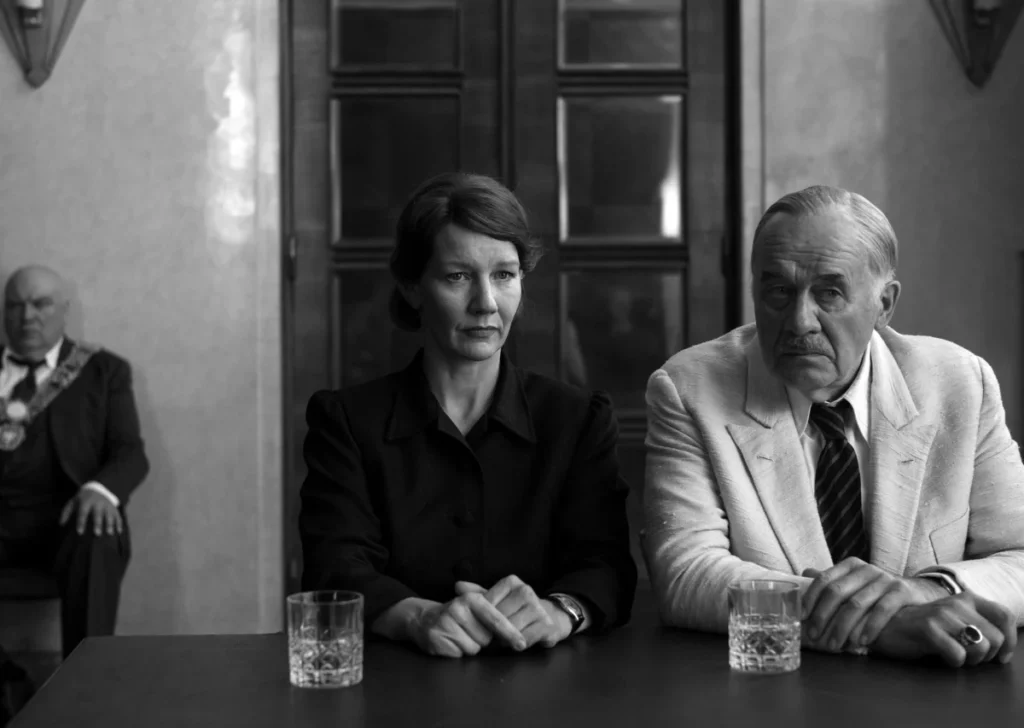



Produced by Gendai Eigasha and distributed by the Art Theatre Guild (ATG), "Confessions Among Actresses" (1971) stands as a singular exploration of the cinematic actress, delving into the profound complexities of identity, performance, and the porous boundaries between private life and public persona. Directed by Kiju Yoshida, a prominent figure of the Japanese New Wave, the film features three of Japan’s most esteemed actresses: Ruriko Asaoka, Mariko Okada, and Ineko Arima. Rather than presenting a conventional narrative, Yoshida crafts a deeply unconventional and introspective examination, posing the seemingly simple yet ultimately labyrinthine question: What is an actress?
The film’s genesis can be traced to the fertile ground of the Art Theatre Guild, a distribution company that, from the mid-1960s to the late 1970s, championed avant-garde, auteur-driven cinema in Japan, often challenging the norms of the established studio system. ATG’s commitment to artistic freedom and its willingness to embrace experimental filmmaking created a vital space for directors like Yoshida to push the boundaries of cinematic expression. "Confessions Among Actresses" emerged from this milieu, a testament to ATG’s daring programming and Gendai Eigasha’s production capabilities. The film’s release in 1971 placed it within a period of significant cultural and artistic flux in Japan, a time when traditional notions of identity and societal roles were being critically re-examined.
Yoshida’s approach to dissecting the concept of the actress is as unconventional as the industry it critiques. The narrative centers on three women—Aki Kaido, Shoko Ichimori, and Makiko Isaku—who are preparing to star in a film also titled "Confessions Among Actresses," with shooting scheduled to commence just two days later. However, what might be expected as a behind-the-scenes drama of artistic creation is instead transmuted into three parallel narratives, each a deep dive into desire, trauma, rivalry, performance, and self-deception. Yoshida masterfully blurs the lines between lived experience, remembered events, dreamt scenarios, and carefully constructed performances, leaving the audience perpetually questioning the authenticity of what they are witnessing.
The film’s thematic core is established from its arresting opening sequence. An actress, purportedly having lost her voice, communicates through sign language. Another woman in the room then articulates the "mute" actress’s unspoken words. This initial scene immediately lays bare the film’s central thesis: identity is fluid and unstable, speech can be a shared or transferred commodity, trauma can be staged for an audience, and the essence of an actress exists in a perpetual state of flux between her authentic self and the projected image. From this foundational concept, Yoshida constructs a multilayered cinematic tapestry, following the three protagonists whose personal lives become inextricably interwoven with the on-screen personas they inhabit.
Aki Kaido: Echoes of Trauma and Shifting Victimhood
Aki Kaido’s narrative arc initially appears to be entangled with rumors of an affair with director Nose. However, the reality proves far more intricate and emotionally charged. The confrontation with Nose’s wife is a silent, loaded exchange, but the true complexity of Aki’s relationship lies with her attendant, Kyoko. What begins as a whisper of a romantic scandal gradually unravels into a resurfacing of deep-seated trauma from their shared high school years. This past is steeped in a teacher’s influence, chloroform, allegations of sexual violence, and a subsequent quest for revenge.
Yoshida, however, eschews any simple pursuit of definitive truth. Instead, he presents a scenario where Aki and Kyoko recall the same traumatic incident with starkly different perspectives. The lingering aftermath is not one of clarity or resolution, but a brutal, ongoing struggle over victimhood, guilt, and a desperate need for possession—of memories, of narrative, and of the other’s emotional landscape. This segment highlights how past traumas can be reinterpreted and weaponized, becoming performances in themselves, designed to elicit sympathy, assign blame, or maintain a precarious sense of control. The film’s exploration of how shared experiences can lead to divergent personal truths is a powerful commentary on the subjectivity of memory and the performance of victimhood.
Shoko Ichimori: The Dream as Therapeutic Stage
Shoko Ichimori’s storyline is perhaps the most explicitly tied to the realms of dreams and psychoanalysis. Her sudden refusal to participate in the film "Confessions Among Actresses" stems from a recurring dream: a plastic ball lodged in her throat, inducing a sensation of suffocating vocal loss. Her subsequent consultation with a psychiatrist leads to sleep therapy, but this therapeutic process itself morphs into a theatrical event.
In a striking example of the film’s self-reflexive nature, Shoko’s dream is meticulously reconstructed using real individuals assigned specific roles. Her estranged husband, her attendant Rie, and other men from her life are cast as characters in this staged manifestation of her subconscious. This segment epitomizes one of Yoshida’s most compelling cinematic ideas: psychoanalysis becomes cinema, and the dream transforms into both a diagnostic tool and a meticulously choreographed performance. The act of therapy itself becomes a performance, blurring the lines between the patient’s inner world and the external gaze of interpretation. This suggests that even in the most private of mental spaces, the impulse to perform and to be observed can take hold.
Makiko Isaku: The Performer’s Inescapable Role
Makiko Isaku’s narrative centers on the recurring and melodramatic motif of double suicide, a theme frequently explored in Japanese literature and film. Returning to her hometown, Makiko grapples with a past incident involving her young stepfather, whose death she survived. Her personal history is punctuated by repeated, failed attempts at romantic self-annihilation. Each time, she remains alive, as if even the ultimate escape—death—is denied to her, perpetually bound by the logic of performance.
The film delivers one of its most pointedly cynical observations when Makiko is confronted with the notion that, as an actress, she cannot truly die. The implication is that even her death would be perceived and interpreted as an act, a final performance. This chilling conclusion underscores the pervasive nature of the actress’s role, suggesting that her entire existence, even in its most profound and tragic moments, is subject to the demands and interpretations of an audience. The idea that genuine cessation is impossible when one’s life is already a continuous performance is a potent, albeit bleak, commentary on the commodification of self.
Contextualizing Female Stardom and Performance
Contextually, "Confessions Among Actresses" is a vital work for its sophisticated use of the public personas of its three lead actresses as raw material for a fragmented, yet incisive, essay on female performance. Ruriko Asaoka, Mariko Okada, and Ineko Arima do not merely portray characters; they actively engage with, distort, and even weaponize their established screen images. Yoshida posits that the actress is a figure of duality: simultaneously glamorous and ensnared, empowered yet consumed, undeniably visible yet fundamentally unknowable.
The film’s persistent engagement with themes of sex, nudity, jealousy, sexual trauma, suicide, and neurosis, while central to its exploration, can at times feel overwhelming. The deliberate excess in these narratives, while intended to be impactful, does not always translate into greater richness. The constant recurrence of wounded femininity and sexualized psychological disturbance, while thematically consistent, can occasionally render the narrative structure overly schematic, appearing somewhat predictable beneath its avant-garde veneer. This thematic density, while a hallmark of Yoshida’s style, can also lead to a sense of narrative fatigue for the viewer.
Structural Ambitions and Artistic Excess
The film’s primary weakness, arguably, lies in the execution of its ambitious structure. While intellectually stimulating, the narrative is not always easily navigable. The sheer volume of characters, interwoven memories, speculative dreams, and confrontational encounters can become, at times, exhausting. Individually, the three central stories possess a certain dramatic weight, but their underlying melodramatic foundations can occasionally verge on the lurid. Yoshida surrounds these core narratives with elements of Freudian dream analysis, surrealist touches, and the meta-cinematic device of cinema-within-cinema. However, there are moments where the stylistic flourishes appear to carry more narrative weight than the substantive material itself. The film remains undeniably intriguing, but its capacity to consistently engage the viewer wavers.
Visual Language: Oppression and Voyeurism
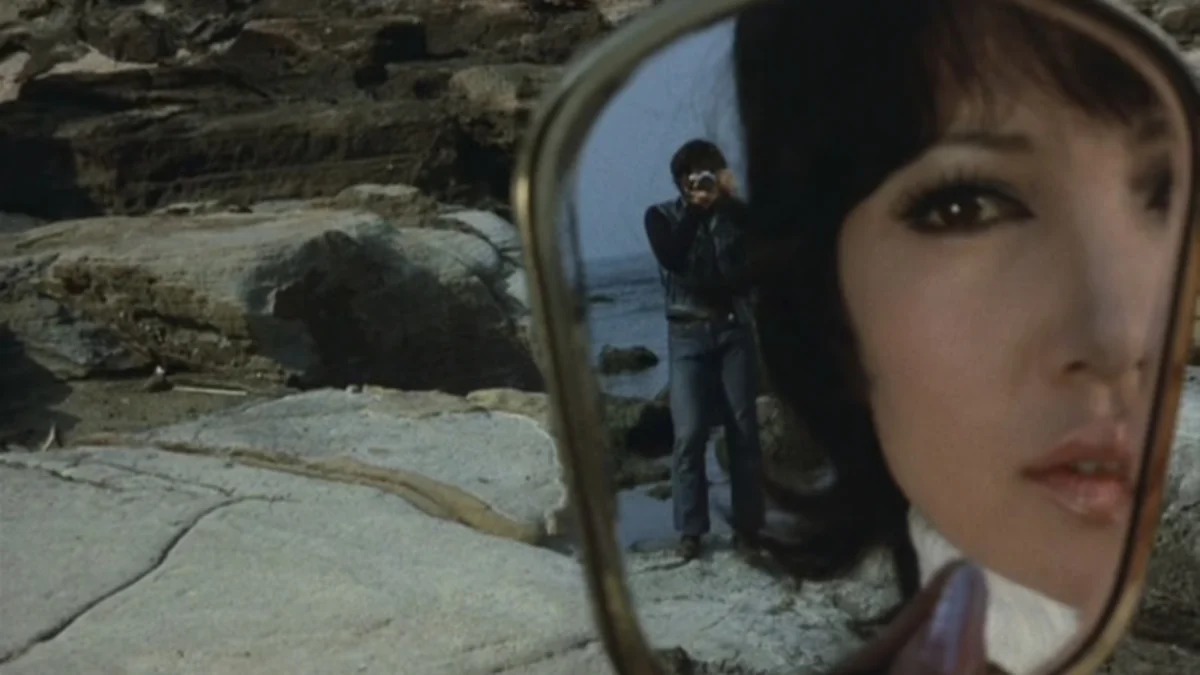
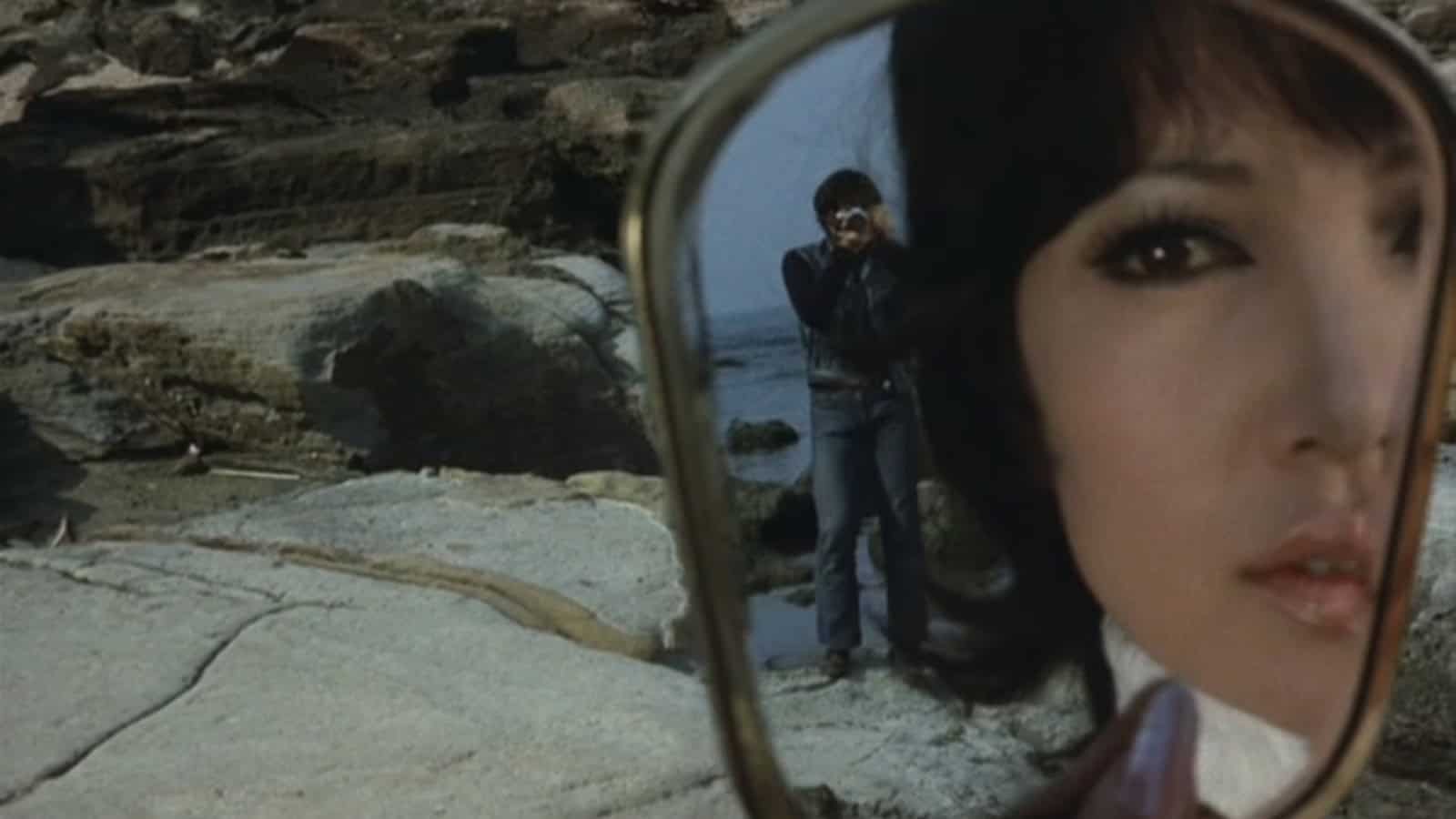
Despite these narrative challenges, the visual execution of "Confessions Among Actresses" remains a significant achievement. The cinematography by Tatsuo Hasegawa masterfully employs irregular compositions. Objects, architectural lines, and walls frequently dominate the frame, often pushing the characters to the periphery or trapping them within confined spaces. This visual strategy frequently positions the women as occupying only a small portion of the image, suggesting that their own lives have been usurped by their surroundings—rooms, the scrutinizing gazes of others, the weight of memory, and the pervasive influence of the cinematic apparatus.
This deliberate framing cultivates a palpable sense of voyeurism and oppression. Private spaces are transformed into psychological prisons, reflecting the internal states of the characters. The constant interplay between reflections, shadows, bodies, and the masks of performance further reinforces the film’s central theme: the seemingly glamorous private life of the star conceals a nightmarish reality beneath its polished surface. The visual language serves as a powerful externalization of the characters’ internal struggles and the suffocating nature of their public lives.
The Power and Limitations of Performance
The performances themselves are integral to the film’s success. Asaoka, Okada, and Arima imbue their characters with the requisite intensity and theatricality, essential for portraying individuals who are not designed for conventional naturalism. Their portrayals are marked by a controlled artifice, a conscious awareness of performance that perfectly aligns with the film’s conceptual framework.
However, the film’s structure, which largely segregates the three actresses into separate narrative threads until their convergence at the conclusion, somewhat diminishes the potential for explosive synergy. The final interview scene, where each actress articulates her personal definition of what it means to be an actress, is both striking and frustrating. Their statements offer glimpses of profound truth, yet they also possess the quality of perfectly crafted pronouncements—articulate, insightful, and potentially, as polished as the lies they might tell. This ambiguity leaves the audience with a lingering sense of unease, a testament to the film’s complex engagement with truth and deception in the performance of self.
Conclusion: A Bold, Unsettling Study of Stardom
"Confessions Among Actresses" is not an easily digestible film, nor is it entirely narratively satisfying in a conventional sense. Its density of characters, its deliberate mannerisms, and its occasional fascination with its own psychoanalytic mechanisms can be challenging. Nevertheless, as a cinematic study of performance, trauma, desire, and the multifaceted nature of female stardom, it stands as a bold and enduring work by Kiju Yoshida.
Its most significant achievement is its refusal to allow the viewer to settle on a single, definitive truth. In Yoshida’s cinematic universe, the actress is more than just a performer; she is an individual whose very existence has been transmuted into performance. This transformation extends to every facet of her being—her suffering, her memories, her loves, her deceptions, and even her proximity to death. The film leaves an indelible mark, forcing a contemplation of the blurred lines between the self and the role, the real and the imagined, and the profound cost of living a life under constant performance.
The film’s legacy is further cemented by its inclusion in critical retrospectives of Japanese cinema and its continued analysis in academic circles, highlighting its enduring relevance in understanding the construction of female identity within the media landscape. The Art Theatre Guild’s support of such daring projects was instrumental in shaping the trajectory of Japanese art cinema, and "Confessions Among Actresses" remains a prime example of their commitment to pushing artistic boundaries. The film’s enduring power lies in its ability to provoke thought and debate, ensuring its place as a significant contribution to the discourse on cinema and the complex reality of being an actress.