
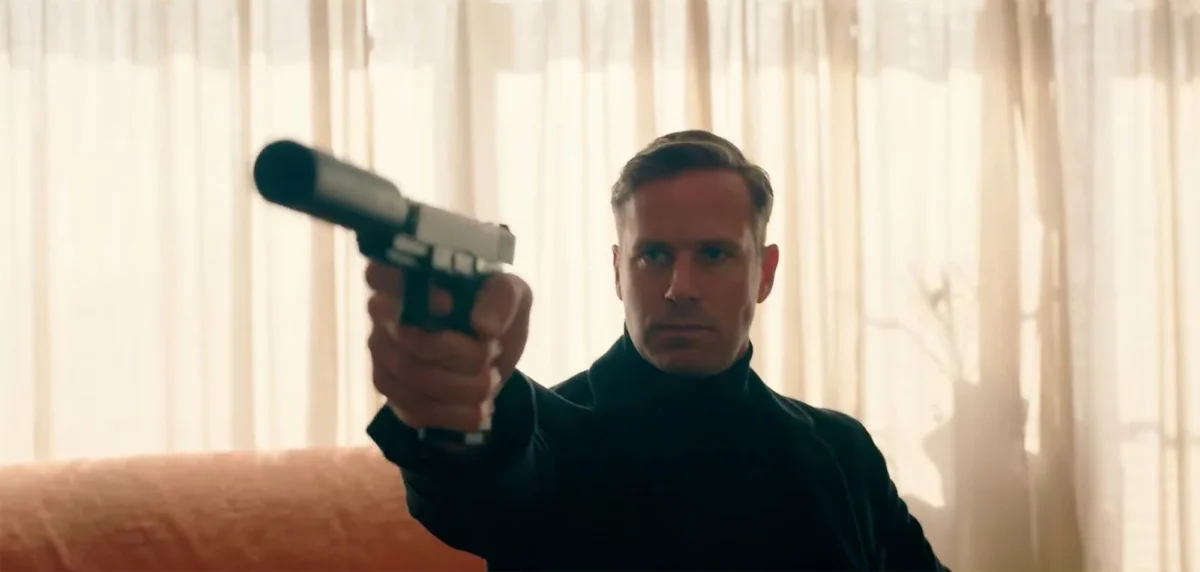
The official trailer for Citizen Vigilante, an action thriller helmed by the German B-movie filmmaker Uwe Boll and starring the controversial actor Armie Hammer, has been released by Quiver, signaling a significant moment for both figures in the entertainment industry. Slated for a direct-to-VOD release on June 19, 2026, the film marks Hammer’s return to a prominent acting role following a period of professional isolation due to serious allegations, while simultaneously bringing Boll back into the directorial spotlight after his previous feature, First Shift, a few years prior. This production immediately positions itself at the nexus of cinematic ambition, public scrutiny, and the evolving landscape of actor rehabilitation in Hollywood.
The Premise: Justice Beyond the Law in Zagreb
Citizen Vigilante centers on Sanders (Armie Hammer), a wealthy American businessman who has relocated to Zagreb. Inheriting a substantial real estate empire from his deceased father, Sanders is depicted as an intelligent, isolated, and emotionally scarred individual. Driven by a profound disillusionment with the conventional legal system, which he perceives as failing to adequately punish violent criminals, rapists, and corrupt judges, Sanders embarks on a clandestine transformation. He assumes the mantle of an underground vigilante, meting out brutal justice to those he believes have evaded proper accountability.
As his violent campaign escalates, Sanders’ actions gain traction both online and through traditional media outlets. He swiftly morphs into a dual figure: a wanted criminal in the eyes of law enforcement and an unlikely public hero to a segment of society disillusioned with institutional justice. This dichotomy forms the core conflict of the narrative. Interpol Chief Henry (Costas Mandylor) emerges as Sanders’ primary antagonist, convinced that the vigilante poses a dangerous threat to societal order. Henry initiates an aggressive international pursuit, aiming to apprehend Sanders before his influence spirals uncontrollably and undermines the rule of law.
Uwe Boll, known for his provocative statements, has heralded Citizen Vigilante as "an action film inspired by real events, based on real cases and a commentary about injustice." This assertion suggests a film that aims to transcend mere genre entertainment, venturing into social commentary on the perceived failures of legal systems and the public’s yearning for accountability. The narrative arc, which sees a wealthy American businessman become both a hunted fugitive and a viral sensation, taps into contemporary themes of internet fame, public perception, and the blurred lines between justice and vengeance in the digital age.
Uwe Boll: A Career Forged in Controversy and Direct-to-VOD
Uwe Boll’s involvement in Citizen Vigilante is a significant factor in its immediate notoriety. The prolific German filmmaker has cultivated a unique and often contentious reputation over decades, primarily known for his low-budget, high-concept genre films, many of which were adaptations of popular video games. His filmography, including titles such as House of the Dead, Alone in the Dark, BloodRayne, and Postal, frequently drew critical scorn but garnered a cult following and considerable media attention, partly due to Boll’s confrontational personality and unconventional marketing tactics.

Boll’s career trajectory saw him move from attempts at theatrical releases to embracing the direct-to-video (DTV) and, subsequently, direct-to-VOD (Video On Demand) markets. This shift allowed him greater creative control and a more direct route to his audience, bypassing the traditional Hollywood studio system that often proved resistant to his distinctive style. After announcing his retirement from filmmaking in 2016, citing the declining profitability of action films, Boll made a surprising return with First Shift in 2023, a gritty police drama. Citizen Vigilante now solidifies his renewed commitment to filmmaking, particularly within the action-thriller genre that has been a staple of his work.
His self-financed model, often utilizing German tax loopholes early in his career, allowed him to produce films with a regularity that few independent filmmakers could match. While often critically panned, Boll’s films rarely went unnoticed. His willingness to tackle controversial subjects, his often blunt social commentary, and his distinctive aesthetic have made him a polarizing figure, yet undeniably a memorable one in the landscape of independent cinema. His statement that Citizen Vigilante is a "commentary about injustice" aligns with a recurring thread in his later works, where he often explores themes of social unrest, corruption, and individual rebellion against systemic failures, as seen in his Rampage series or Assault on Wall Street. The choice of Zagreb as a setting, rather than a more conventional American city, could also reflect Boll’s preference for international backdrops, potentially offering a different perspective on globalized issues of crime and justice.
Armie Hammer’s Return: A High-Stakes Comeback
The casting of Armie Hammer in the lead role of Sanders is arguably the most scrutinizing aspect of Citizen Vigilante. Hammer’s career experienced a dramatic and precipitous decline starting in early 2021, when a series of graphic private messages attributed to him surfaced online, followed by allegations of sexual abuse, cannibalistic fantasies, and manipulative behavior from multiple women. These allegations led to a complete professional ostracization, with Hammer being dropped by his agency, losing several high-profile film and television projects (including Shotgun Wedding and The Offer), and facing intense public scrutiny. He subsequently entered a treatment facility for drug, alcohol, and sex issues, and largely retreated from public life.
Prior to these events, Hammer was considered a rising star in Hollywood, known for his roles in critically acclaimed films such as The Social Network, Call Me By Your Name, The Man from U.N.C.L.E., and Sorry to Bother You. His talent was largely undisputed, making his sudden fall from grace all the more impactful. His appearance in Citizen Vigilante represents his first significant acting role since the controversies erupted, making this film a critical test case for his potential professional rehabilitation.
The entertainment industry has a complex and often inconsistent history with "cancelled" actors attempting comebacks. While some have successfully navigated public forgiveness and returned to prominence, others have found their careers permanently derailed. The success of Hammer’s return hinges not only on his performance but also on the public’s willingness to separate the artist from the alleged personal conduct, or to acknowledge a path to redemption. For Citizen Vigilante, Hammer’s involvement immediately draws an additional layer of media attention, albeit one fraught with ethical considerations for both the filmmakers and the audience. Boll’s decision to cast Hammer could be seen as a calculated risk, leveraging the actor’s notoriety to generate buzz, or simply an opportunity to work with a talented performer who was readily available and perhaps more affordable due to his circumstances. The film’s direct-to-VOD release strategy may also be a deliberate choice to mitigate the intense scrutiny that a theatrical release might entail, offering a softer landing for Hammer’s return.
The Vigilante Genre: An Enduring Societal Fascination
The vigilante film genre has a long and storied history, reflecting society’s ongoing fascination with justice, morality, and the boundaries of the law. From classic Westerns featuring lone gunmen to urban thrillers of the 1970s and modern superhero narratives, the figure of the individual who takes the law into their own hands resonates deeply with audiences. Films like Death Wish (1974), Dirty Harry (1971), and more recently, the John Wick series or Christopher Nolan’s Batman trilogy, explore the complex psychological motivations of vigilantes and the ethical dilemmas their actions present.

Historically, vigilante narratives often emerge during periods of perceived societal breakdown, increased crime, or public distrust in established institutions. They offer a cathartic fantasy where wrongs are righted, and the powerless find an unlikely champion. However, these films also force viewers to confront uncomfortable questions about due process, the potential for abuse of power, and the fine line between justice and vengeance.
Citizen Vigilante positions itself within this rich tradition, but with modern sensibilities. Boll’s claim of the film being "inspired by real events, based on real cases" suggests an attempt to ground the narrative in contemporary concerns about injustice, potentially drawing parallels to real-world instances where legal systems have been perceived as failing victims or allowing powerful individuals to escape accountability. The element of Sanders gaining "fame" and becoming a "viral sensation" directly addresses the role of social media in shaping public opinion and even legitimizing extra-legal actions in the digital age. This contemporary angle distinguishes Citizen Vigilante from earlier iterations of the genre, reflecting how the pursuit of justice, or vengeance, can now be amplified and debated globally in real-time. The film explores how a vigilante’s actions can be simultaneously condemned by law enforcement and celebrated by a public hungry for decisive action, creating a moral gray area that is particularly resonant in today’s interconnected world.
The Direct-to-VOD Landscape: A Strategic Release for Controversial Projects
The decision to release Citizen Vigilante direct-to-VOD is a strategic one, reflecting the evolving dynamics of film distribution and the unique challenges faced by independent and potentially controversial productions. The VOD market has experienced exponential growth over the past decade, accelerated significantly by technological advancements and the global pandemic. It offers filmmakers unparalleled accessibility to audiences, bypassing the often costly and competitive theatrical release circuit.
For a film like Citizen Vigilante, with its controversial director and lead actor, a VOD release provides several key advantages:
- Reduced Scrutiny: It allows the film to enter the market with less fanfare and fewer opportunities for widespread media boycotts or protests that a traditional theatrical release might attract. This can be crucial for a comeback attempt like Armie Hammer’s.
- Lower Marketing Costs: VOD releases typically require significantly less marketing spend compared to a wide theatrical rollout, making it a more financially viable option for independent productions.
- Wider Reach: Digital platforms can reach a global audience simultaneously, democratizing access to the film without the logistical complexities of international theatrical distribution.
- Targeted Audience: Films with niche appeal or specific genre fans can often find their audience more effectively on VOD platforms, where viewers are actively seeking out content.
However, the VOD market also presents challenges. It is a highly saturated environment, making it difficult for films to stand out without significant promotional backing. The perceived prestige of a VOD-only release can also be lower compared to a theatrical run, although this perception is gradually changing as more high-quality films opt for digital distribution. For Uwe Boll, who has increasingly relied on VOD for his recent projects, this model aligns perfectly with his established distribution strategy, ensuring his films reach their intended audience without the traditional gatekeepers of mainstream cinema. For Armie Hammer, it offers a relatively quiet re-entry into the acting world, allowing the film to be judged on its own merits by those curious enough to seek it out, rather than being subject to the immediate, intense public referendum of a major studio release.
Production Details and Supporting Roles
Filmed in Zagreb, Croatia, Citizen Vigilante leverages international locations, a common practice for independent productions seeking diverse backdrops and potentially more favorable production costs. The casting of Costas Mandylor as Interpol Chief Henry provides a recognizable face in a supporting antagonist role. Mandylor, known for his work in the Saw franchise and various action and horror films, brings an established presence to the cat-and-mouse dynamic with Hammer’s character. The remaining cast is reportedly filled by local actors, a strategy that helps manage production budgets and lends authenticity to the film’s international setting.

The film is a collaborative effort between Event Film and Borvel Film, with Quiver distributing the picture. Quiver, an independent film distributor, has a track record of releasing a diverse range of films across various genres, often utilizing the VOD model to reach audiences directly. Their involvement suggests a strategic approach to bringing Citizen Vigilante to market, acknowledging its unique position and potential draw.
Broader Implications and Anticipation
The release of Citizen Vigilante is more than just another film premiere; it is a cultural event fraught with broader implications for the entertainment industry and public discourse. For Uwe Boll, it solidifies his return from a self-imposed hiatus and reaffirms his commitment to making the kinds of provocative, genre-driven films that have defined his career. It will be interesting to observe how this film is received in the context of his "commentary about injustice," and whether it manages to resonate beyond his existing cult following.
For Armie Hammer, the film serves as a pivotal moment in what could be a long and arduous journey towards professional redemption. Its reception will be closely watched by industry insiders and the public alike, as a barometer for how "cancel culture" operates and whether pathways for return exist for individuals implicated in serious allegations. The success or failure of Citizen Vigilante could significantly influence his future career prospects, potentially opening doors or cementing his professional isolation.
Beyond the individual careers, Citizen Vigilante touches upon several societal debates: the ethics of vigilante justice, the power of online media to shape narratives and bestow fame, and the complex relationship between personal conduct and artistic contribution. The film’s direct-to-VOD release strategy allows audiences to make their own individual decisions about engaging with the content, free from the collective pressures often associated with theatrical releases. This empowers viewers to determine whether they are willing to watch a film starring a controversial actor, supporting the content based on its artistic merit, or choosing to boycott it based on moral considerations.
As June 19, 2026, approaches, Citizen Vigilante stands as a unique and compelling case study in contemporary cinema, challenging audiences to consider not only the story on screen but also the intricate web of circumstances, controversies, and aspirations that brought it to fruition. Its impact will undoubtedly extend beyond its runtime, fueling discussions about accountability, artistic freedom, and the ever-shifting landscape of public perception in the digital age.