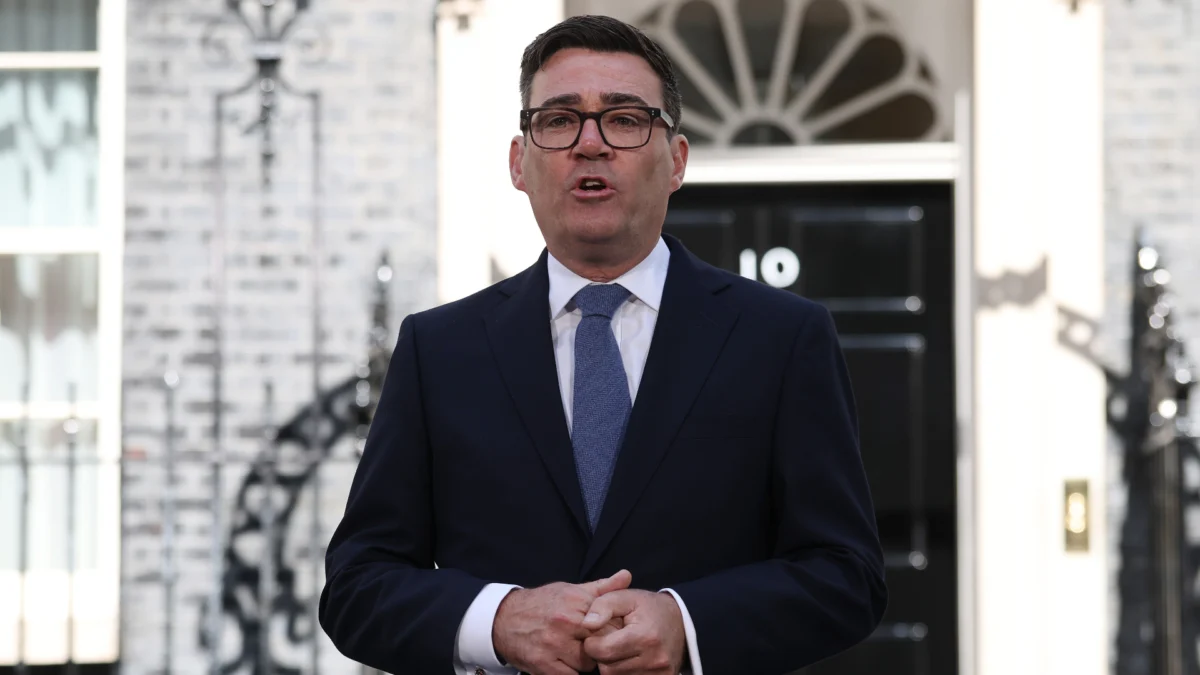
The United Kingdom has once again witnessed a seismic shift in its political landscape as Andy Burnham, the 56-year-old former Mayor of Greater Manchester, officially assumed the premiership, marking him as the seventh individual to hold the nation’s highest office within a tumultuous decade. His appointment, which commenced his duties from Monday following his election as Labour Party leader and a traditional audience with His Majesty the King, who formally invited him to form a government, signals a significant reorientation for the Labour Party and the country at large. The immediate future of key ministerial roles remains uncertain, particularly for Culture Secretary Lisa Nandy, currently tasked with overseeing British film and television policy and securing vital funding for institutions like the British Film Institute (BFI). While a cabinet reshuffle is anticipated, Nandy’s long-standing political alliance and personal friendship with Burnham could see her retained in a prominent position.
The Ascent to Power: A Decade of Political Volatility
Burnham’s ascension comes against a backdrop of unprecedented political instability in the UK. The past ten years have seen a carousel of leadership, starting with David Cameron, followed by Theresa May, Boris Johnson, Liz Truss, Rishi Sunak, and most recently, Keir Starmer. Each change has reflected a nation grappling with the profound aftershocks of Brexit, economic uncertainties, and deep social divisions. This rapid turnover of Prime Ministers underscores a deep-seated public dissatisfaction and a political system struggling to find stable ground.
The Starmer Era: Challenges and Criticisms
The path for Burnham was cleared by the abrupt resignation of his predecessor, Keir Starmer, a move widely anticipated in the weeks leading up to the formal announcement. Starmer, who had led the Labour Party since 2020, faced mounting internal pressure and dwindling public confidence. Polling data consistently indicated a significant personal unpopularity among the electorate, even as the Labour Party generally maintained a lead over the Conservatives. For instance, YouGov approval ratings often showed Starmer with net negative scores, struggling to connect with voters despite the Conservative government’s own difficulties.
Starmer’s tenure was marked by a perceived struggle to articulate a clear, compelling vision for the country. Critics within his own party accused him of attempting to "pander" to centrist Conservative and Reform UK voters, particularly on highly contentious issues. His stance on the Gaza conflict, for example, which initially aligned closely with the government’s position of supporting Israel’s right to self-defence while calling for humanitarian pauses rather than an immediate ceasefire, caused significant unrest within the party’s left wing and among Muslim voters. This led to resignations from his frontbench and a noticeable dip in Labour’s support in some traditionally safe seats. Similarly, his cautious approach to transgender rights, aiming for a "common-sense" position that respected women’s single-sex spaces while upholding trans rights, alienated both progressive and more traditional elements within the party and wider society.
Furthermore, Starmer’s policies on immigration, which often echoed calls for stricter border controls, and his perceived lack of urgency in tackling soaring economic inequality, failed to galvanize the party’s traditional base. Data from the Office for National Statistics frequently highlighted persistent and widening wealth disparities, with the Gini coefficient remaining stubbornly high, indicating a growing gap between the rich and poor. Many Labour ministers felt that Starmer’s cautious, triangulating strategy had rendered him an uninspiring leader, incapable of delivering the transformative change many Britons craved.
The Path to Leadership: Burnham’s Triumph
Burnham’s perceived strength lies in his ability to present a more robust and ideologically distinct challenge to the burgeoning far-right movement, particularly Nigel Farage’s Reform UK. Recent polling has shown Reform UK making significant inroads, with some surveys placing them ahead of the Conservative Party in national voting intention, largely by capitalizing on public anxieties surrounding immigration, national identity, and perceived government failures. Burnham’s supporters believe his populist appeal and strong progressive credentials can not only counter Farage’s narrative but also potentially draw support from Green Party voters concerned with social justice and environmental issues, thus broadening Labour’s electoral coalition. His successful leadership campaign for the Labour Party was predicated on a promise of fundamental change, a departure from Starmer’s more cautious approach, and a renewed focus on regional inequalities and working-class concerns.
From Westminster Aspirant to "King of the North": Burnham’s Journey
Born in a suburb of Liverpool in 1970, Andy Burnham’s political journey began early, joining the Labour Party at the tender age of 15. This early engagement rooted him deeply in the party’s values and its commitment to social justice. After completing his education at Cambridge University, where he studied English, Burnham steadily climbed the U.K.’s political ladder.
Early Political Formations and Unsuccessful Bids
His early career saw him serving in government under two Labour Prime Ministers, Tony Blair and Gordon Brown, gaining valuable experience in the machinery of central government. He held junior ministerial roles, including Parliamentary Under-Secretary of State for Health and Chief Secretary to the Treasury, giving him insights into both social policy and economic management. Later, during Labour’s time in opposition, he took on significant shadow secretary roles for leaders Ed Miliband and Jeremy Corbyn, notably as Shadow Secretary of State for Health and Shadow Home Secretary. These roles allowed him to develop policy positions and hone his parliamentary skills, but also exposed him to the internal ideological battles within the Labour Party.
Despite his extensive experience and rising profile, Burnham harbored ambitions for the top job for many years. He launched multiple, ultimately unsuccessful, campaigns to become Labour Party leader. His bids in 2010, following Gordon Brown’s resignation, and again in 2015, after Ed Miliband stepped down, saw him struggle to unite the party’s disparate factions. These experiences, though initially setbacks, arguably refined his political message and solidified his understanding of the challenges facing Labour and the nation.
The Manchester Mayoralty: Forging a "Man of the People" Image
A pivotal period in Burnham’s career, and one that profoundly shaped his public image, was his tenure as the inaugural Mayor of Greater Manchester from 2017 until 2026. This role allowed him to escape the often-insular world of Westminster politics and directly engage with regional issues and communities. During his time as mayor, he cultivated a reputation as a "man of the people," a leader deeply attuned to the concerns of ordinary citizens in the North of England. He championed local control over public services, advocated for significant investment in regional infrastructure, and initiated projects aimed at tackling homelessness and improving public transport.
His "Our Pass" scheme, offering free bus travel to 16-18-year-olds, became a hallmark of his commitment to youth opportunity and regional connectivity. He also launched initiatives like the ‘A Bed Every Night’ scheme to provide shelter for rough sleepers, which saw significant public and private sector collaboration. These policies, coupled with his visible presence and direct communication style, garnered him an incredibly broad appeal across the North of England, a region often feeling neglected by London-centric politics. His success in this devolved role demonstrated his executive capabilities and his ability to translate policy into tangible local improvements, earning him the moniker "King of the North."
The Hillsborough Legacy: A Defining Cause
Perhaps the most significant and defining aspect of Burnham’s public service, which cemented his image as a fierce advocate for justice and accountability, was his instrumental role in introducing and campaigning for the Hillsborough Law. This landmark legislation is designed to prevent state cover-ups following public disasters and scandals, ensuring that victims’ families have a fair chance at justice. The law draws its name and its moral imperative from the devastating Hillsborough disaster of 1989, where 97 Liverpool football fans tragically lost their lives in a crowd crush at a soccer game.
For decades, the families of the victims endured a relentless and agonizing fight to extract the truth from authorities, battling institutional denial, police cover-ups, and a justice system that initially failed them. Burnham, a lifelong Everton fan but deeply empathetic to the Liverpool community, became a tireless champion for these families. His persistent campaigning, both as an MP and later as Mayor, highlighted the systemic failures that allowed such injustices to persist. The Hillsborough Law, passed with overwhelming cross-party support, seeks to establish a duty of candour for public officials, provide legal aid for victims’ families, and create an independent public advocate to act on their behalf. This achievement is not merely a legislative success but a testament to Burnham’s unwavering commitment to holding power to account, a principle that resonates deeply with a public often cynical about institutional integrity.
A New Direction for Labour: Ideology and Policy Blueprint
Burnham’s political philosophy places him closer to the traditional left-wing of the Labour Party, particularly aligning with some of the social democratic principles espoused by figures like Jeremy Corbyn, rather than the more centrist "New Labour" ideology of Tony Blair or the cautious pragmatism of Keir Starmer. His "anti-Westminster" approach is not simply a rhetorical flourish but a central tenet of his proposed government.
Ideological Stance: Bridging the Labour Divide
While distinct from Blair’s market-friendly approach and Starmer’s emphasis on electability above all else, Burnham also differentiates himself from Corbyn’s more radical socialist agenda. His appeal lies in bridging the gap between Labour’s traditional working-class base and its more progressive urban voters. He advocates for a robust welfare state, stronger trade union rights, and significant public investment, but often frames these policies through the lens of local empowerment and regional fairness, rather than solely through nationalized control. This ideological flexibility allows him to draw from different factions within the party, potentially fostering a greater sense of unity than his predecessors.
Decentralisation and Regional Renewal
One of the central themes of Burnham’s government will be a radical agenda of decentralisation and regional empowerment. He intends to push power, resources, and decision-making authority out of the heavily concentrated political and economic hub of London and into regional political centres across the UK. This vision includes bolstering public transport networks to connect northern cities more effectively, often dubbed "Northern Powerhouse Rail" or similar initiatives, aiming to rebalance economic opportunities across the country. He has consistently championed large-scale infrastructure projects that would link cities like Manchester, Leeds, Liverpool, and Newcastle, seeing this as vital for regional economic growth and social cohesion.
Furthermore, tackling homelessness and investing significantly in social housing are high on his policy agenda. The UK faces a severe housing crisis, with an estimated 271,000 households experiencing homelessness in England alone, and a chronic shortage of affordable homes. Burnham’s proposals are expected to include ambitious targets for building new council and social housing, along with measures to regulate the private rental market and address the root causes of homelessness, drawing on his successful initiatives in Greater Manchester.
Navigating the Treacherous Political Landscape
Burnham inherits a political landscape fraught with challenges, requiring adept leadership to navigate the stormy waters ahead. The UK’s political terrain is currently shaped by the resurgence of the far-right and deeply entrenched social divisions.
The Rise of the Far-Right and Electoral Realignment
The rise of Nigel Farage’s Reform UK party poses a significant threat to Labour’s electoral prospects, particularly in traditional working-class areas that have shifted away from Labour in recent elections. Reform UK’s platform, heavily focused on drastically reducing immigration, advocating for robust national sovereignty, and often employing anti-establishment rhetoric, resonates with a segment of the electorate feeling left behind. Farage has openly declared his intention to target the next general election, which must take place no later than August 2029, as a moment for significant electoral breakthrough.
Complicating matters further is the Conservative Party, under figures like Kemi Badenoch, increasingly adopting a far-right stance on certain policies in an attempt to claw back voters lost to Reform UK. This strategic shift, particularly on issues such as immigration, "woke" culture wars, and economic nationalism, means that Burnham will face a potent challenge from both his right and his centre-right, forcing him to articulate a clear and distinctive alternative. The political centre ground in Britain has shrunk, and Burnham must define Labour’s identity in this polarized environment.
Economic Headwinds and Fiscal Commitments
The economic challenges facing the UK are formidable. Burnham will be tasked with appointing a competent Chancellor of the Exchequer to steer the economy through persistent inflation, sluggish GDP growth, and a significant national debt, currently exceeding £2.6 trillion. His government will need to find an estimated £9 billion ($12 billion) for Britain’s defence budget, a figure necessary to meet NATO commitments and respond to evolving geopolitical threats, particularly in the wake of conflicts like the war in Ukraine. This will necessitate difficult decisions on taxation, public spending, or borrowing, all while attempting to maintain fiscal credibility.
Social Divides: Immigration, Policing, and Geopolitics
Beyond economic policy, Burnham must also navigate the deeply sensitive and often divisive issues of immigration, policing, and the UK’s foreign policy stance, particularly regarding the Gaza conflict. On immigration, he faces the unenviable task of balancing economic needs with public concerns, while confronting the moral and logistical complexities of policies like the Rwanda asylum plan. Policing, an area where he served as Shadow Home Secretary, requires addressing issues of public trust, crime rates, and police accountability, particularly in the context of recent high-profile scandals. His position on Gaza, needing to unite a diverse party and an equally diverse electorate, will require delicate diplomacy and a clear articulation of humanitarian principles alongside national interests.
Cabinet Formation and Immediate Priorities
The immediate weeks of Burnham’s premiership will be dominated by the crucial task of forming his cabinet. The composition of his top team will send a clear signal about the direction and priorities of his government.
The Reshuffle: Balancing Loyalty and Competence
The question of whether Lisa Nandy will remain Culture Secretary, or be moved to a different portfolio, exemplifies the balancing act Burnham faces. While her friendship and political alliance are undeniable, cabinet appointments are often dictated by a need for ideological balance, diverse regional representation, and a perceived ability to deliver on key policies. Other critical appointments will include the Home Secretary, Foreign Secretary, and crucially, the Chancellor of the Exchequer, whose economic stewardship will be under intense scrutiny from day one. Burnham will need to assemble a team that reflects both the ideological breadth of the Labour Party and the depth of expertise required to tackle the nation’s challenges.
The Daunting In-Tray: Defense, NHS, Housing, and Employment
Burnham’s government faces an immediate and daunting "in-tray" of policy challenges. Protecting the National Health Service (NHS), a cherished British institution, is paramount. The NHS is currently grappling with unprecedented waiting lists (exceeding 7.7 million people in England), chronic underfunding, and severe staffing shortages. Burnham’s manifesto commitments will likely involve significant investment and reform plans to address these systemic issues.
Furthermore, Labour has promised to build 1.5 million new homes, a monumental task given the current pace of construction and planning hurdles. This ambition is critical to addressing the housing affordability crisis, particularly for young people and families. Alongside this, his government will be under pressure to get over a million young people into work amid a brutal and competitive job market, requiring investment in skills training, apprenticeships, and job creation schemes. These commitments, combined with the £9 billion defense spending target, present a formidable fiscal challenge, requiring innovative funding solutions and potentially unpopular tax decisions.
Reactions and Implications: A Nation Watches
The political world, both domestically and internationally, will be closely scrutinizing Andy Burnham’s initial moves and policy pronouncements.
Domestic Reception and Party Unity
Domestically, the immediate reaction to Burnham’s premiership has been mixed but largely hopeful within Labour circles. His supporters celebrate his commitment to social justice and his proven track record of regional leadership. However, some centrist elements within the party may view his ideological leanings with caution, fearing a return to the perceived "un-electability" of the Corbyn era. The public, weary of political infighting and constant change, will be looking for stability, clear direction, and tangible improvements to their daily lives. Early polling data on his approval ratings and Labour’s standing will be critical indicators of his initial success.
International Scrutiny and Geopolitical Positioning
Internationally, Burnham’s ascent will be watched closely by global allies and adversaries alike. The UK, still navigating its post-Brexit identity, plays a significant role in international forums such as the G7, NATO, and the UN. His approach to foreign policy, particularly concerning the war in Ukraine, relations with the European Union, and engagement with global powers like the US and China, will define Britain’s standing on the world stage. His emphasis on social justice and regional equality domestically may also influence his approach to international development and human rights.
Conclusion: A New Chapter Begins
Despite the mountainous challenges ahead, Andy Burnham exudes a palpable sense of determination and resolve. He has coveted the leadership of the Labour Party for much of his political career, and now, finally, he stands at the helm of the nation. When formally elected Labour Party leader on Friday, his words to his MPs were unambiguous: "I am ready. What a moment… What backing you’ve given me. I have a plan. I believe in all of you, and I am confident we can do it." These statements reflect not just personal ambition, but a deep-seated belief in his capacity to lead and in the collective strength of his party.
As the seventh Prime Minister in a decade, Burnham inherits a nation yearning for stability, purpose, and genuine leadership. His tenure will be a defining period for the Labour Party and for the United Kingdom, testing his populist appeal, his policy vision, and his ability to unite a fractured nation in the face of profound domestic and international pressures. A new chapter has begun, and the nation watches with bated breath.