

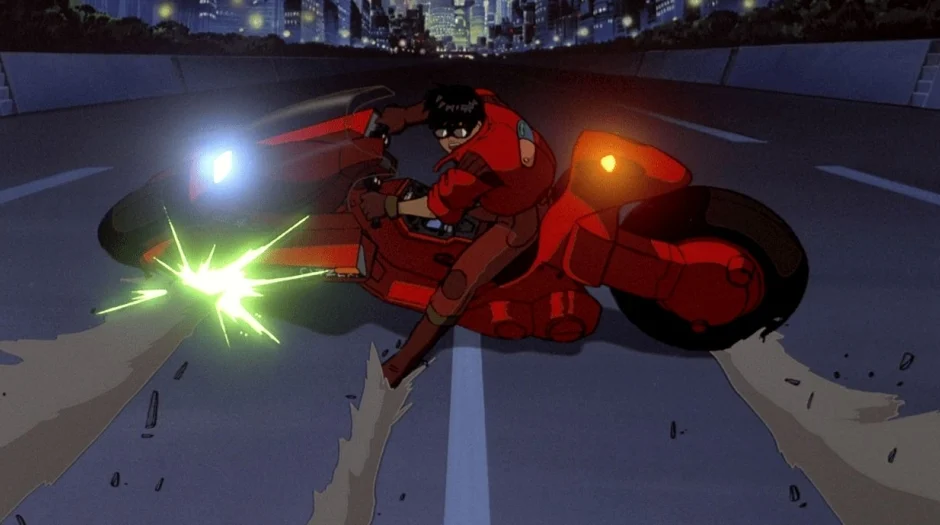
The enduring impact of Katsuhiro Otomo’s 1988 cyberpunk masterpiece, Akira, is once again being felt across the United Kingdom and Ireland with its major cinema reissue, courtesy of the dedicated anime distributors, Anime Limited. This timely revival, featuring screenings in many IMAX venues, brings the film’s visceral spectacle and profound themes to a new generation of cinemagoers, while simultaneously reigniting the passion of its original devotees. The sheer scale of the film’s visual ambition, particularly the iconic, grotesque transformation of Tetsuo Shima into a colossal, burgeoning biological entity within the Olympic stadium, is amplified by these contemporary, large-format presentations, proving that Akira‘s visual power remains undiminished by the passage of time.
For many who discovered Japanese animation through this seminal work, Akira represents a pivotal moment, a gateway into a rich and diverse medium. This cohort, often referred to as the "Akira generation," encountered Japanese animation not as a niche curiosity, but as a sophisticated and compelling art form. While some may have encountered anime prior to Akira‘s widespread release in the early 1990s, it was Otomo’s film that solidified its identity and potential in the minds of a burgeoning international fandom. The author’s own experience, watching Akira in a multiplex cinema around 1992, shortly after its initial UK release, underscores its significance as a cultural touchstone that coincided with the evolution of cinematic exhibition in Britain.
The film’s initial distribution in the UK was spearheaded by individuals who recognized its profound artistic merit and commercial potential. Andy Frain, a key figure in bringing Akira to British audiences, famously likened it to a "well-crafted, thought-out, philosophical movie for grown-ups that happened to be in animation rather than live-action." This perspective highlights a crucial aspect of Akira‘s success: its ability to transcend the perceived limitations of animation as a medium, positioning it as a serious contender in the landscape of adult-oriented cinema. Frain’s strategic vision extended beyond mere film exhibition; he saw Akira as the nucleus of a new brand, a concept he termed "manga movies," aiming to cultivate a British fandom receptive to similar ambitious animated narratives. This forward-thinking approach laid the groundwork for future anime distribution strategies and the growth of dedicated fan communities.
The visceral experience of watching Akira for the first time, particularly for those unfamiliar with its narrative density and stylistic aggression, can be overwhelming. The film is a relentless barrage of breathtaking set-pieces, each designed to elicit a powerful, almost primal, reaction from the viewer. The exhilarating biker gang battles, the awe-inspiring confrontation between the telekinetic Tetsuo and a weaponized satellite, the terrifying emergence of the monstrous psychic manifestation, and the quasi-cosmic birth of a new universe are all orchestrated with a masterfully chaotic energy. Akira is, in many ways, an exercise in sensory overload. Its narrative, while ostensibly focused, often feels too expansive, with a multitude of characters and plot threads that are introduced with great urgency but not always fully developed. The fates of supporting characters like Ryu and Nezu, who are briefly introduced, suffer dramatic deaths, and then disappear from the narrative, exemplify this sense of overwhelming scale and compressed storytelling.

Despite its appearance of being deliberately confusing, Akira‘s complex plotting is a key element of its cinematic power. This perceived complexity is amplified by its animated medium. For audiences in the early 1990s, accustomed to more straightforward animated narratives, the task of following multiple interwoven plotlines within a cartoon film was a novel challenge. Furthermore, Akira is a high-octane action film, driven by a director with a penchant for piling on spectacle, comparable to contemporary directors known for their explosive filmmaking. However, Otomo imbues his work with a unique personality and a dark, often absurdist, sense of humor. The film seamlessly blends moments of extreme violence and psychological horror with bizarre, almost cartoonish imagery, such as a paranormal attack executed by giant soft toys, or boulders raining down on a hapless protagonist, evoking a spirit akin to the anarchic energy of Tex Avery.
The feeling of having only scratched the surface of Akira‘s narrative and thematic depth is a common sentiment among its viewers, even after its apocalyptic conclusion. Much like Blade Runner, another landmark science fiction film, Akira possesses a world-building quality that extends far beyond the confines of the screen. The film’s depiction of Neo-Tokyo, with its sprawling riots and towering, dystopian skylines, suggests a universe that continues to exist and evolve, teeming with unseen stories and unfathomable depths. This sense of boundless scope, where the city itself feels impossibly vast and intricate, contributes to the film’s enduring mystique.
The author’s early exposure to animated films that also grappled with ambitious source material, such as Ralph Bakshi’s The Lord of the Rings and Martin Rosen’s Watership Down, provides a valuable comparative context. These films, like Akira, were adaptations that compressed extensive literary works into a cinematic format. Bakshi’s The Lord of the Rings, in particular, famously ended on an unresolved note, promising a sequel that never materialized. Yet, Akira‘s potent blend of density, brutality, and mystical undertones left a more profound and lasting impression than the fantastical elements of Watership Down or the formidable orc armies of Bakshi’s creation.
It is arguable that Akira was not primarily conceived for a global audience unfamiliar with its cultural underpinnings. The film’s intricate narrative and characterizations may have been more readily accessible to Japanese manga fans who had already engaged with Otomo’s graphic novel. The fact that the manga itself was incomplete at the time of the film’s release in Japan further complicates this dynamic. This aspect of its creation invites comparisons to contemporary global cinematic phenomena, such as an American Marvel fan experiencing the Japanese Spider-Man TV series for the first time, or a young viewer encountering Spider-Man: Across the Spider-Verse without prior knowledge of Marvel Comics.
For the author, the very confusion engendered by Akira was a central component of its appeal. This feeling of navigating an intricate, almost labyrinthine, environment later found a parallel in the author’s experience of Tokyo’s Shinjuku station, a sprawling, multi-level transport hub that evokes a sense of being lost in an immense, subterranean dungeon. This architectural marvel, much like Akira‘s Neo-Tokyo, represents an edifice that feels impossibly larger on the inside, a sentiment echoed in the climactic, disorienting urban chaos depicted in Mamoru Hosoda’s Mirai.

The author’s attempt to engage with Otomo’s original Akira manga proved to be a disappointing experience. While acknowledging the terrific visual artistry, the manga was found to be indulgently rambling, with action sequences that stretched across numerous pages with less narrative propulsion than their cinematic counterparts. Crucially, the manga’s sprawling nature was perceived to obfuscate the film’s more concise and powerful thematic core.
At its heart, Akira delivers a stark warning: the perils of bestowing godlike powers upon an adolescent boy grappling with insecurities and a desperate need for validation. Yet, the film also functions as a poignant exploration of teenage delinquents thrust into circumstances far beyond their comprehension. Through their often violent and destructive actions, these societal outcasts, deemed "inhuman" by the establishment, are revealed to be merely children navigating a chaotic world. Otomo masterfully underscores this point in a poignant flashback near the film’s conclusion, depicting a seemingly mundane encounter between two young boys at a water fountain, a moment that humanizes the very characters who become agents of destruction.
Akira‘s thematic resonance has led to numerous comparisons with other cultural touchstones, ranging from classic films like Rebel Without a Cause to contemporary television series like Stranger Things, particularly in light of the stage prequel Stranger Things: The First Shadow slated for a Netflix release. However, a more direct cinematic sibling can be found in the critically acclaimed British live-action film Attack the Block (2011), which features a teenage John Boyega as a young mugger who finds himself defending his council estate from an alien invasion. Both films explore themes of youth, urban alienation, and unexpected heroism against overwhelming odds.
The success of Andy Frain’s brand-building initiative was significantly bolstered by the audience’s eagerness to seek out more animated content to comprehend the complexities of Akira. The film’s self-contained narrative, which largely eschews explicit references to the outside world beyond Japan, fostered a perception of the nation as a mysterious and exclusive entity. This sense of intrigue, reminiscent of Japan’s historical period of sakoku (isolationist policy), ignited a desire among foreign viewers to understand the cultural and industrial landscape that produced such a groundbreaking work. This curiosity served as a powerful catalyst for exploration into the broader world of Japanese animation.
Early Encounters with Anime: Beyond Akira
Prior to Akira‘s cinematic arrival, the author’s exposure to anime occurred without the explicit identification of its Japanese origin. This included viewing Warriors of the Wind, an Americanized and abridged adaptation of Hayao Miyazaki’s Nausicaä of the Valley of the Wind. Additionally, two Franco-Japanese co-productions from the 1980s, Ulysses 31 and The Mysterious Cities of Gold, also contributed to this early, unacknowledged immersion in Japanese animation.

However, the first anime to leave a distinct impression was Battle of the Planets. Amidst the more conventional children’s programming of the era, such as Scooby-Doo and Jana of the Jungle, Battle of the Planets stood out as something unique and captivating. Debuting in the US in 1978, it was a heavily modified version of the Japanese series Science Ninja Team Gatchaman, which had premiered six years earlier. Produced by Tatsunoko Production, a studio also known for Speed Racer, the original Gatchaman was a children’s show that, like many early anime for young audiences, did not shy away from themes of death and violence. Both the original Japanese version and its Americanized counterpart are currently available on the HIDIVE streaming platform.
The American adaptation of Gatchaman underwent extensive censorship, with nearly all instances of death and violence meticulously excised. This resulted in narrative contrivances that, while sometimes nonsensical in retrospect, were easily overlooked by a young audience captivated by the action. A notable example of this localization process can be seen in comparison videos that juxtapose the original and edited scenes, offering a fascinating glimpse into the techniques of vintage media adaptation. The addition of new animated sequences featuring a droid named 7-Zark-7, a character designed to offer reassuring narration and resemble R2-D2, further illustrates the extent of these alterations. This new character, with a personality akin to C-3PO, was animated by a team at Gallerie International Films, while space travel scenes were handled by the effects studio Fritz Miller Company. Interestingly, the original anime was primarily Earth-bound, whereas the American version frequently saw its heroes venturing to other planets.
The localization of Battle of the Planets followed a precedent set by the American release of Japanese monster movies. The original Godzilla (1954) was released in the United States two years later as Godzilla, King of the Monsters!, featuring a newly filmed introduction by American actor Raymond Burr. Similar to Battle of the Planets, politically charged elements were removed, including scenes that offered commentary on the devastation of war, such as a Japanese commuter’s remark referencing her experiences in Nagasaki.
Other notable examples of Americanized anime that achieved significant popularity include Robotech and Voltron. While these series did not air on British television at the time, Battle of the Planets held a unique position in the UK market. The success of the American localization was a key factor in its appeal, bolstered by a voice cast that included notable talents such as Alan Young, Casey Kasem, and Janet Waldo. The iconic theme music, composed by Hoyt Curtin, known for his work on Hanna-Barbera productions, further cemented the show’s distinct identity for a generation of viewers.
However, the enduring fascination with Battle of the Planets, and its connection to Akira‘s impact, lies in its perceived subversiveness. Despite the sanitized narrative and reassuring pronouncements of 7-Zark-7, the series possessed an undercurrent of alarming intensity that set it apart from its contemporaries. Memorable moments, such as the heroes catching a fleeting glimpse of their nemesis Zoltar’s blond hair before his disappearance, or the convoluted plotline involving Mark’s guardian angel, Colonel Cronus, hinted at a narrative depth that transcended its child-friendly facade. The apparent death of Cronus, followed by his resurrection as Zoltar in disguise, and his subsequent revelation as Mark’s long-lost father, presented a complex emotional arc that resonated deeply, even if the narrative logic was occasionally strained. These dramatic plot developments, particularly the poignant sacrifice of Cronus, left a more significant emotional impact than the hastily inserted happy ending provided by the inserted American scenes. The original anime, in contrast, presented these events with a more genuine sense of loss and dramatic weight, with different character names and a more nuanced exploration of grief and deception.

The Echoes of Censorship and Subtext
The experience of encountering heavily edited anime, and the lingering sense of something more beneath the surface, is a recurring theme in the history of anime localization. An eloquent account by TV writer Shamus Kelley on the Den of Geek website highlights how the Americanized version of Cardcaptor Sakura, titled Cardcaptors, attempted to sanitize the series’ subtle same-sex romantic subplots. Kelley’s observation that "Even with all the edits in the show, I could feel there was something more going on between the characters" encapsulates a sentiment shared by viewers of Cardcaptors in the 2000s, Akira in the 1990s, and Battle of the Planets in the early 1980s – a tantalizing awareness of hidden layers and unspoken narratives within seemingly straightforward children’s programming.
Spirited Away: A New Frontier of Confusion and Wonder
Hayao Miyazaki’s Spirited Away, which premiered in North America in 2002, achieved a significant breakthrough in introducing anime to the Anglophone mainstream, arguably with an impact comparable to that of Akira. Audiences were drawn to Miyazaki’s film for the same reason that captivated them with Otomo’s work: its ability to engender a sense of delightful confusion and a desire to unravel its intricate tapestry.
The film presented a multitude of surprising and perplexing elements, even to a seasoned critic like the author, who, by then, was a freelance journalist tasked with providing insightful analysis. In a review for Sight & Sound magazine, the author highlighted the recurring thematic preoccupations within Miyazaki’s oeuvre, which he termed "Miyazaki-land." These recurring motifs include a fascination with flight, environmentalism, intricate architectural designs, strong female protagonists, weary deities, complex machinery, the empowering nature of labor, and the gluttonous transformation of Chihiro’s parents into pigs. This extensive body of thematic exploration, detailed in the author’s subsequent book on Spirited Away, underscores the depth and richness of Miyazaki’s creative universe.
The pursuit of understanding, the drive to explain, and the desire to inform and entertain are the hallmarks of the dedicated fan and the passionate critic. For an individual who may not possess the physical prowess of a biker or the ability to defend civilization, the act of dissecting and articulating the nuances of a film like Akira offers a unique form of public engagement and intellectual display. As a new generation of young filmgoers embarks on their first viewing of Akira with its current theatrical reissue, the author expresses a sense of envy for the profound journey of discovery that awaits them. The enduring legacy of Akira lies not only in its groundbreaking animation and narrative complexity but also in its power to inspire curiosity, critical engagement, and a lifelong appreciation for the art of animation.