


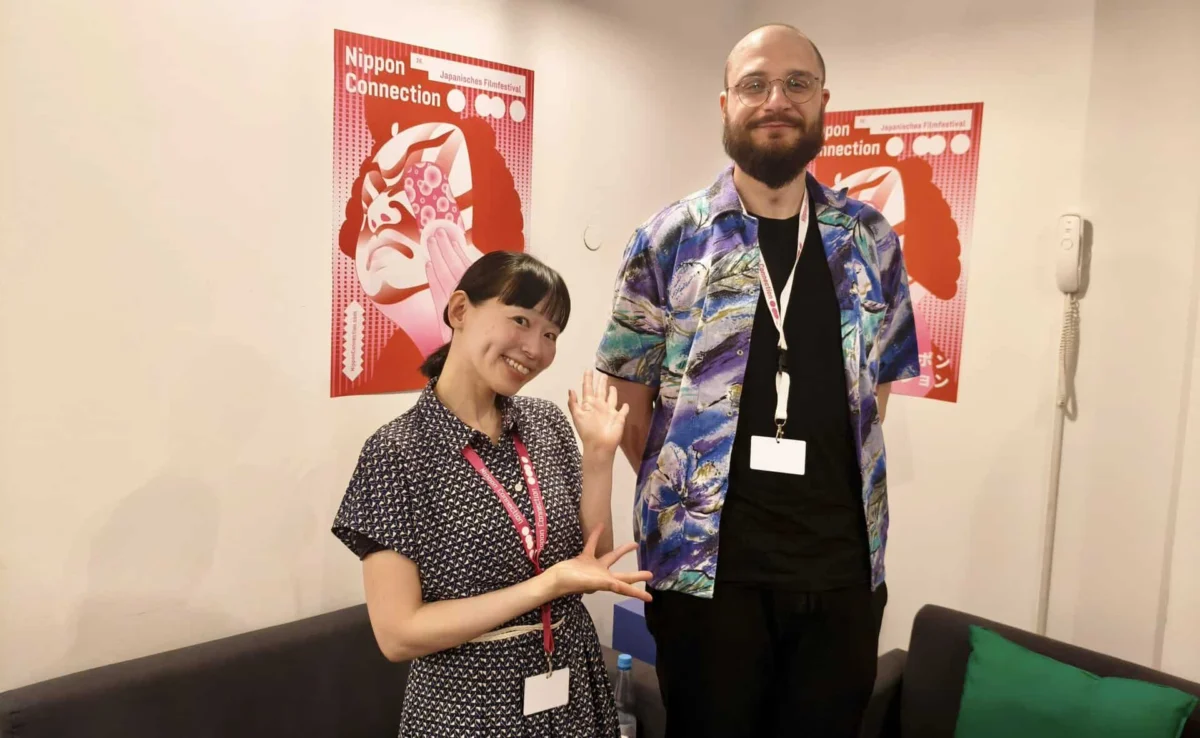
The international premiere of Kenji Yamauchi’s latest cinematic endeavor, "A Unique Country in Asia," at the prestigious Nippon Connection film festival, provided a platform for a candid conversation with its lead actress, Ami Chong. The Japanese actress of Korean descent, recognized for her compelling performances in films such as "Dawning on Us" (2021) and the anticipated "The Scary House" (2025), sat down to discuss her long-standing artistic collaboration with director Yamauchi, her nuanced perspective on the portrayal of nudity in Japanese cinema, and the inseparable relationship between artistic expression and sociopolitical discourse.
A Decade and a Half of Artistic Synergy
Chong’s professional journey has been intrinsically linked with director Kenji Yamauchi for nearly two decades, a testament to a deeply rooted and mutually respectful artistic partnership. "I met him as soon as I started acting, so we have known each other for 19 years," Chong revealed. This extensive history has fostered a strong foundation of trust and a shared artistic vision. "Our relationship is strong and we trust each other," she elaborated, emphasizing the profound comfort and confidence she feels in his directorial approach. Her admiration for his creative output further solidifies this bond: "I also love his work, of course."
This enduring collaboration has seen Chong take on significant roles in Yamauchi’s filmography, with "A Unique Country in Asia" marking their second significant project together. Their shared history suggests a director who understands Chong’s capabilities intimately and an actress who intuitively grasps his narrative intentions. This synergy is often a hallmark of acclaimed filmmaking, allowing for a deeper exploration of complex themes and character nuances.
Navigating Nudity in a Conservative Society
The film "A Unique Country in Asia" has sparked discussion due to its significant use of nudity. Chong addressed the societal attitudes towards such content in Japan, highlighting a prevailing conservatism. "I think Japanese society is still quite conservative when it comes to nudity," she stated. The immediate negative reactions from audiences, even before engaging with the film’s narrative, underscore this point. "Regarding ‘A Unique Country in Asia,’ many people react negatively as soon as they hear it contains nude scenes, even without watching it."
Furthermore, Chong observed a palpable gender disparity in public reception to on-screen nudity. "And yes, there is a clear difference in how audiences react to male and female nudity," she explained. While male actors’ nudity might elicit laughter, female nudity often results in a more subdued, even shocked, silence. "When a male actor appears naked, people often laugh. When I appear in a nude scene, the reaction is usually silent shock." This observation points to a deeply ingrained societal bias that scrutinizes and judges female bodies differently. "Not much has changed over the years," Chong noted, suggesting that this continued disparity might even be a catalyst for Yamauchi’s artistic choices. "and I think it’s actually because of that Yamauchi includes nudity in his works, partly as a form of ironic social commentary." This artistic decision, therefore, can be interpreted as a deliberate challenge to societal norms, using the very elements that provoke discomfort to initiate dialogue.
The prevalence of nudity in Japanese media, particularly in genres like manga and anime, often presents a complex dichotomy. While these art forms frequently depict the human form with a certain explicitness, live-action cinema, especially within mainstream narratives, can still encounter resistance. This suggests that the context and perceived intent of nudity play a crucial role in its reception. Yamauchi’s approach, as described by Chong, appears to leverage this tension for critical commentary.
Art’s Unavoidable Intersection with Politics
The film’s narrative features a character, portrayed by Chong, who expresses a disinclination towards engaging with economic and political discussions. This line of dialogue directly confronts the notion that films should remain apolitical. Chong, however, strongly refutes this separation. "In Japan, films are often separated from politics. It is even unusual to be asked a question like this!" she remarked, highlighting the cultural norm.
Her personal conviction, however, lies in the inherent connection between art and society. "Many people want movies to not have political messages, but personally, I think that approach is wrong," she asserted. "Art and politics are connected, and I think it is important to tackle social issues while creating something." This perspective aligns with a broader understanding of art as a reflection and shaper of society. Throughout history, artistic movements have often been intertwined with political ideologies, social reform movements, and cultural shifts. From protest songs to political theater, art has consistently served as a medium for commentary, critique, and even catalyst for change.
The Japanese film industry, while boasting a rich history of artistic innovation, has also seen periods where overt political messaging was either subtly woven into narratives or deliberately avoided, particularly during certain historical eras marked by political sensitivities. Yamauchi’s willingness to embed sociopolitical commentary within his work, and Chong’s vocal support for this approach, signifies a progressive stance within contemporary Japanese cinema.
The Character’s Genesis and Sociopolitical Reflections
When asked about her preparation for the role, Chong revealed an intriguing aspect of her character’s development. Contrary to expectations of extensive research into specific political figures, Chong explained that the character was largely an extension of herself and her dialogues with Yamauchi. "The character was partly based on me and on conversations I had with Kenji Yamauchi. Because of that, I did not need to do much preparation." This intimate connection between actress and character, facilitated by the director’s collaborative process, likely contributed to the authenticity and depth of her performance.
The film’s narrative touches upon the legacy of former Prime Minister Shinzo Abe, with Chong’s character noting that conditions have not improved since his passing. This observation prompts a critical question about what changes are necessary for genuine societal progress. Chong believes that a fundamental shift in educational paradigms is crucial. "So I think some changes in education, that tackle different aspects, would help create a more balanced perspective," she proposed.
Her critique focuses on the current educational emphasis in Japan, which she feels disproportionately highlights Japan’s wartime suffering while neglecting the experiences of other Asian nations. "Japanese schools focus heavily on Japan’s own suffering during and after the war, but much less attention is given to what happened in other Asian countries," she explained. "Because of that, many people grow up without a full understanding of history." This educational imbalance, she suggests, hinders a comprehensive understanding of regional history and contemporary sociopolitical dynamics, potentially perpetuating cycles of misunderstanding or incomplete historical narratives.
The impact of historical education on national identity and international relations is a well-documented phenomenon. Countries that engage in a more inclusive and critical examination of their past, including acknowledging their role in conflicts and the suffering inflicted on others, often foster more mature and constructive international relationships. Japan’s post-war pacifist constitution and its complex relationship with neighboring countries like South Korea and China are deeply intertwined with how its history is taught and understood.
Bearing Witness to Global Atrocities
The conversation then shifted to the harrowing depiction of the genocide in Gaza and the killing of children and civilians within the film. Chong’s character embodies a thoughtful individual deeply affected by world events. "The character I play is someone who is very thoughtful, so she constantly thinks about politics and world events," Chong described. "I think for her own survival she balances those concerns with what she does in the movie."
On a personal level, Chong’s engagement with the Palestinian cause predates recent events. "As for me personally, I’ve been interested in the topic of Palestine since high school," she shared. Her past involvement included extensive charity work and educational initiatives. However, the events of October 2023 marked a turning point, compelling her to intensify her activism. "However, after the events of October 2023, I felt that it was no longer enough. Since then, I have become much more active in my support and I take part in demonstrations every week." This personal commitment underscores a growing global awareness and engagement with humanitarian crises, often fueled by the pervasive reach of media and the internet.
The increasing visibility of global conflicts, particularly in regions like Gaza, has led to heightened international scrutiny and activism. The role of artists and public figures in amplifying these concerns is significant, often bringing wider attention to issues that might otherwise remain on the periphery of public discourse. Chong’s personal journey from passive supporter to active demonstrator reflects a common trajectory for many who are deeply moved by human suffering.
A Vision for Japan’s Future
The film culminates with a character uttering the title phrase, "I hope it becomes a small unique country in Asia." This sentiment invites reflection on Chong’s personal hopes for Japan’s future. Her vision is one that embraces progressive ideologies and fosters healthy political discourse. "I would like to see more influence from progressive and left-leaning ideas," she stated.
Crucially, she emphasizes the importance of open and respectful dialogue across the political spectrum. "More importantly, I hope people with different political views can have open discussions and exchange opinions in a healthy way," Chong urged. "I think compromise and dialogue are essential for a better future." This call for constructive engagement is particularly relevant in a global landscape often characterized by political polarization and ideological divides. The ability of a society to navigate its differences through reasoned debate and a willingness to find common ground is often seen as a hallmark of democratic maturity.
The concept of a "unique country" can be interpreted in various ways. For Chong, it appears to signify a nation that carves its own path by integrating progressive values, fostering intellectual curiosity, and engaging in constructive self-reflection, both domestically and in its international relations. Her hopes for Japan’s future, therefore, extend beyond mere economic prosperity to encompass a more nuanced and inclusive societal and political landscape.
Broader Implications and Context
The discussion at Nippon Connection with Ami Chong offers a microcosm of broader trends in contemporary cinema and societal engagement. The film’s premiere provides a critical juncture for examining how Japanese society grapples with sensitive issues like nudity, political discourse, and historical memory. Yamauchi’s artistic choices, supported by Chong’s insightful commentary, position "A Unique Country in Asia" not merely as entertainment but as a platform for critical reflection.
The film festival itself, Nippon Connection, plays a vital role in showcasing Japanese cinema to an international audience, fostering cultural exchange and dialogue. Its commitment to presenting a diverse range of films, including those that challenge conventional narratives, provides a valuable space for artists like Yamauchi and Chong to share their work and engage with audiences on complex themes. The international reception of "A Unique Country in Asia" will undoubtedly contribute to the ongoing conversation about Japanese identity, its place in Asia, and its evolving relationship with global issues. The intertwining of personal experience, artistic vision, and sociopolitical commentary, as exemplified by Ami Chong’s reflections, underscores the enduring power of cinema to provoke thought, challenge assumptions, and inspire change.