



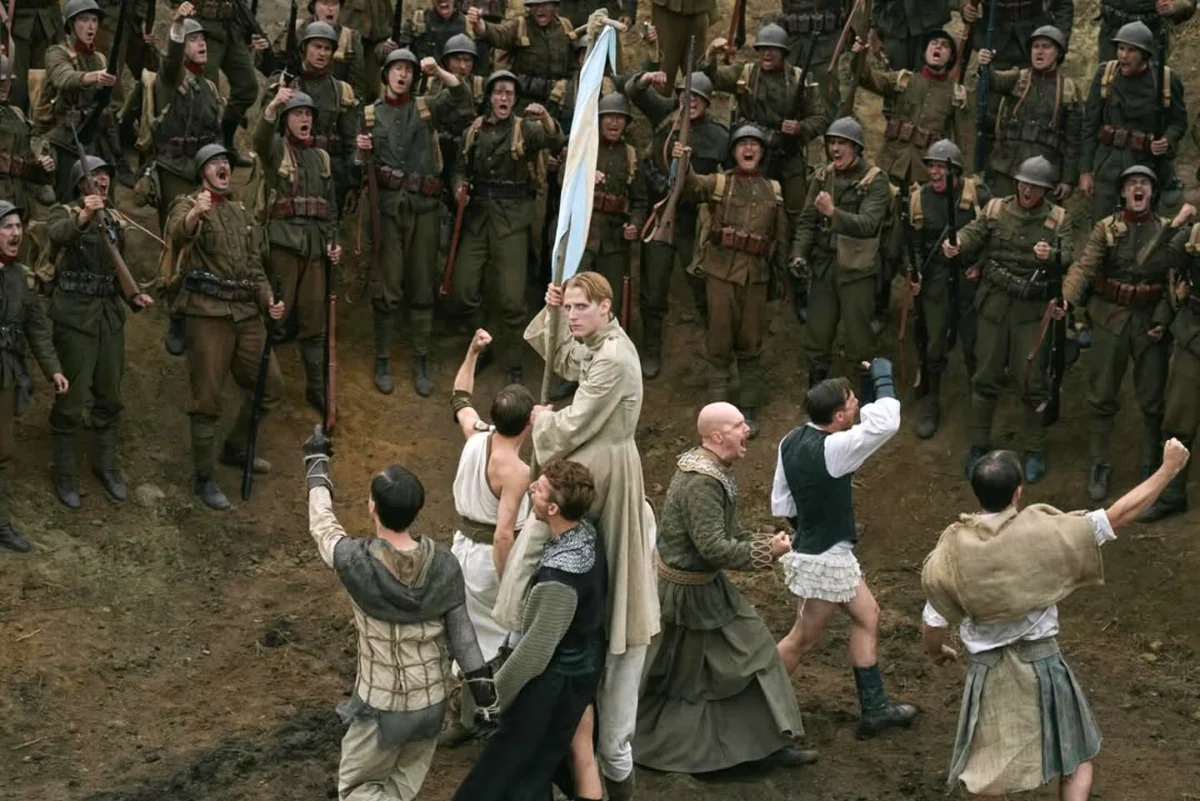
Lukas Dhont’s highly anticipated third feature film, Coward, has made a profound impact at the 79th Cannes Film Festival, premiering to critical acclaim on May 21, 2026. Heralded as a magnificent and ambitious work, the Belgian director’s latest offering delves into the harrowing trenches of World War I to unfold a tender and deeply moving love story between two Belgian soldiers. The film, which has been described as a testament to the enduring power of love amidst the brutal realities of conflict, further solidifies Dhont’s reputation as a visionary filmmaker known for his sensitive portrayal of human emotion and identity. Early reviews from the Croisette have lauded Coward for its stunning cinematography, evocative score, and the majestic performances delivered by its ensemble cast, particularly highlighting the transcendent portrayal by Valentin Campagne.
A Poignant Narrative from the Great War
Set against the desolate backdrop of the Belgian front in 1916, Coward immerses its audience in the grim daily existence of soldiers during what was then known as The Great War. The narrative centers on Pierre, a young recruit portrayed with compelling vulnerability by Emmanuel Macchia, who, like many of his peers, arrives at the front initially fueled by patriotic fervor, only to be confronted by the immediate and soul-crushing realities of trench warfare. Dhont masterfully captures the disillusionment and despair that permeate the soldiers’ lives, illustrating the stark contrast between their initial idealism and the brutal, dehumanizing conditions they face.
Amidst this hellish landscape, a beacon of hope and humanity emerges through an unexpected initiative: a soldier-led theatre revue. Organized to bolster morale, this brigade of performers stages shows for their comrades, offering a vital respite from the ceaseless trauma. The film’s opening performance, notably a drag show where men don women’s attire to entertain, serves as a powerful symbol of defiance and artistic expression. It is here that the flamboyant and charismatic Francis, played with exquisite depth by Valentin Campagne, captivates Pierre. As the war rages on, their quiet connection blossoms, forming a lifeline that sustains them both, providing solace and a reason to persevere. This nascent love story, unfolding against a backdrop of unimaginable horror, underscores the film’s central thesis: that love and human connection are paramount, even when surrounded by death and destruction.
Lukas Dhont’s Evolving Cinematic Vision
Lukas Dhont, an award-winning filmmaker whose previous work, Close, was a strong contender for the Palme d’Or in 2022, continues to push the boundaries of his craft with Coward. His earlier films, such as Girl (2018), which won the Camera d’Or at Cannes, and Close (2022), which earned the Grand Prix, established his signature style characterized by intimate character studies, a deep empathy for his subjects, and a nuanced exploration of identity, vulnerability, and tenderness. Coward represents Dhont’s most ambitious undertaking to date, moving from contemporary, personal narratives to a historical epic while retaining his distinctive artistic hallmarks.
The transition to a large-scale period piece set during World War I could have presented significant challenges, yet Dhont navigates this complex historical setting with remarkable grace and humility. While the film echoes the visceral intensity seen in other acclaimed WWI dramas like Sam Mendes’ 1917 and Edward Berger’s All Quiet on the Western Front, Dhont imbues Coward with a unique emotional resonance by foregrounding the delicate romance between Pierre and Francis. This focus allows the beauty of their love to shine brightly, offering a profound counterpoint to the surrounding devastation. His masterful direction ensures that the historical accuracy and grandeur of the setting never overshadow the deeply personal and universal themes of love, loss, and resilience.
Art as Solace and Resistance
A significant thematic thread woven throughout Coward is the transformative power of art and performance in times of extreme adversity. The soldiers’ theatre revue is not merely a plot device but a crucial element that illuminates how creative expression can provide vital joy, distraction, and solace amidst the horrors of war. These scenes, presented with a compelling naturalism, depict soldiers finding moments of genuine relief and beauty through entertainment, fostering a sense of community and shared humanity.
Historically, artistic endeavors, including theatrical performances and musical gatherings, were indeed common occurrences in military camps during World War I. These activities served as crucial psychological tools, combating the pervasive boredom, trauma, and fear that defined trench life. They provided an escape, a reminder of the world beyond the battlefield, and a means for soldiers to maintain their identity and spirit. Coward powerfully illustrates this phenomenon, suggesting that even when circumstances are dire, the human spirit’s capacity for creativity and connection can prevail. This element of the film resonates universally, reminding audiences that art can be a potent source of meaning and comfort, regardless of external strife.
Cannes 2026: A Festival of Tenderness and Queer Narratives

Coward arrives at Cannes 2026 as part of a notable thematic trend, contributing to what some critics have termed "tenderness is the new punk" – a focus on intimate, emotionally rich narratives, particularly within queer cinema. The film’s premiere aligns with several other highly anticipated features in the Main Competition that explore similar themes of love and artistic expression. Ira Sachs’ The Man I Love, also premiering at the festival, reportedly shares thematic similarities regarding the power of art in difficult times. Furthermore, Coward finds kinship with La Bola Negra, a monumental Spanish triptych of gay stories, and Flesh & Fuel, another tender gay love story that has garnered significant buzz.
This convergence of films signals a significant moment for LGBTQ+ representation in mainstream and arthouse cinema. The collective emphasis on diverse love stories, presented with sensitivity and depth, underscores a broader cultural shift towards more inclusive storytelling. Cannes, as a premier international film festival, plays a crucial role in amplifying these voices, validating their importance, and bringing them to a global audience. The festival’s programming choices in 2026 suggest a conscious effort to celebrate narratives that champion love, connection, and identity, thereby reinforcing cinema’s capacity to reflect and shape societal values.
Exceptional Performances and Emotional Depth
The critical reception for Coward has consistently highlighted the extraordinary performances, with Valentin Campagne’s portrayal of Francis being singled out as particularly transcendent. Campagne’s ability to convey a wide spectrum of emotions, from flamboyant exuberance to quiet vulnerability, has been described as captivating, making Francis an unforgettable character. Emmanuel Macchia, as Pierre, provides an equally compelling performance, anchoring the film with his raw honesty and subtle emotional shifts. The chemistry between Macchia and Campagne is central to the film’s success, allowing their tender connection to develop organically and powerfully amidst the chaos of war.
The film’s emotional arc culminates in a finale described by critics as profoundly moving, leaving audiences in tears. This emotional impact is a testament to Dhont’s directorial prowess and the actors’ dedication to their roles, creating a deeply human story that transcends its historical setting. The narrative structure, which allows the two soldiers to build their love across the war and across time, culminating in a poignant reconnection, speaks to the enduring nature of true affection and the hope for a future beyond conflict.
Challenging the Notion of "Cowardice"
Beyond its love story, Coward delves into a profound philosophical inquiry: what constitutes "cowardice" in the context of war? The film provocatively questions whether true cowardice lies with soldiers who, driven by an instinct for survival and a desire to live, might shirk their duty, or with the distant generals, captains, and politicians who dictate orders from safety, sending countless young men to their deaths. By focusing on soldiers who yearn for life and love rather than glory or sacrifice, Dhont implicitly critiques the conventional, often jingoistic, narratives surrounding wartime heroism.
In a war where millions perished, often for causes that seemed increasingly abstract or futile to those on the front lines, the film suggests that fighting for love and life itself might be the ultimate act of courage. This redefinition of bravery aligns with Dhont’s consistent thematic exploration of vulnerability and authenticity as strengths, challenging rigid societal expectations of masculinity and duty. The film invites viewers to reflect on the immense human cost of conflict and to consider the profound importance of compassion and individual well-being over nationalistic fervor.
Implications for Belgian Cinema and Global LGBTQ+ Storytelling
The strong reception of Coward at Cannes 2026 carries significant implications for Lukas Dhont’s career and for Belgian cinema. His consistent critical success and ability to tackle increasingly ambitious projects position him as one of Europe’s most important contemporary filmmakers. His works, including Coward, contribute to a growing body of Belgian films that achieve international recognition, demonstrating the vitality and diversity of the country’s cinematic output.
Furthermore, the film’s success is a landmark moment for LGBTQ+ cinema. By bringing a queer love story to the forefront of a historical epic set during one of humanity’s most devastating conflicts, Dhont not only expands the representation of queer narratives but also integrates them seamlessly into universal themes of war and human resilience. This mainstream visibility at a festival of Cannes’ stature contributes significantly to normalizing and celebrating diverse expressions of love and identity. It reinforces the idea that queer stories are not niche but integral to the tapestry of human experience, deserving of the same grand scale and profound emotional exploration as any other narrative.
In conclusion, Lukas Dhont’s Coward stands as a powerful and essential film from Cannes 2026. It is a work that dares to find beauty and tenderness amidst the grotesque brutality of war, advocating for love as the ultimate antidote to conflict. With its stunning visuals, emotional depth, and a narrative that challenges conventional wisdom, Coward not only cements Dhont’s status as a magnificent filmmaker but also leaves an indelible mark on the landscape of historical dramas and LGBTQ+ cinema, reminding all that the fight for love is a fight worth waging.